Kettlebell Double Jerk
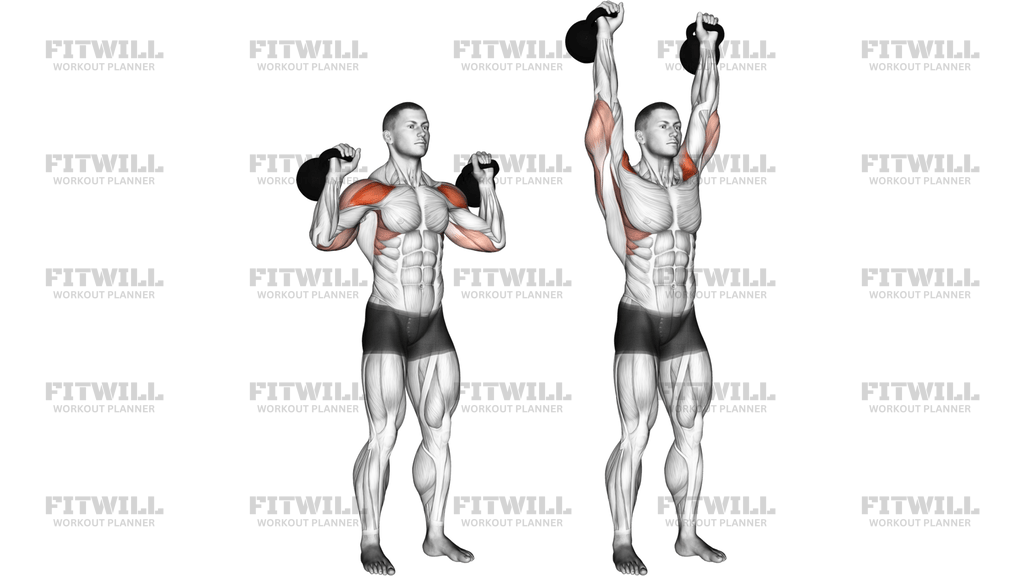
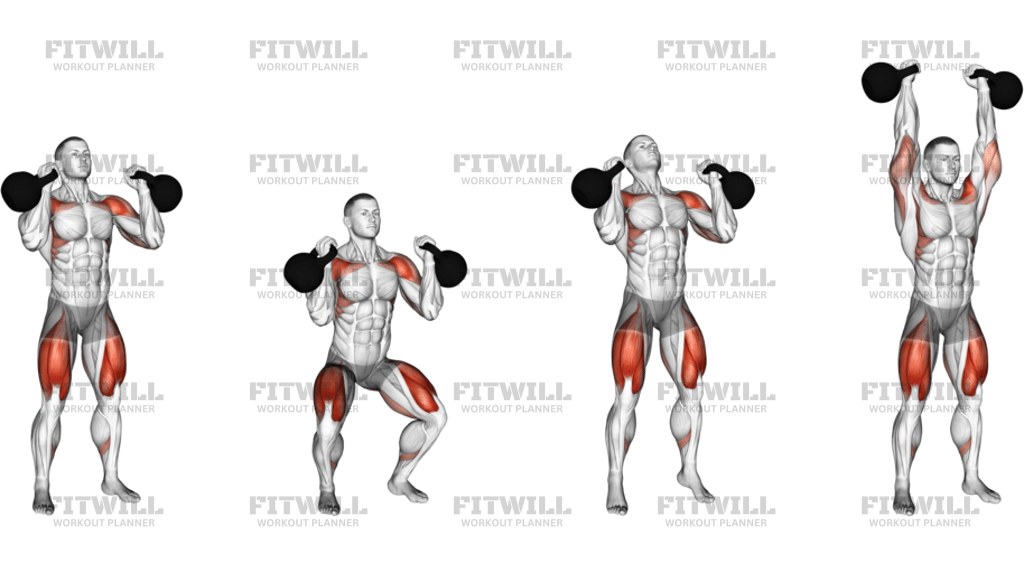
Kettlebell Double Jerk is a two-kettlebell overhead strength movement built around a fast leg drive, a brief unload, and a stable overhead catch. The image shows the bells starting in the front rack and finishing overhead in a split receive, which is the key pattern to respect. The exercise trains shoulder strength, upper-back stability, and arm lockout while also demanding timing, footwork, and trunk control.
The main work centers on the Deltoids, with the Trapezius, Rhomboids, and Triceps Brachii helping organize the rack, drive the bells upward, and finish the lockout. Because both bells move together, the lift asks more of your posture than a single-arm version. If one shoulder collapses, the bells drift forward, or the ribs flare too early, the overhead position quickly becomes unstable.
Set the bells in the front rack with the handles resting deep in the palms, wrists stacked, elbows slightly forward, and the bells sitting outside the forearms. Before each rep, keep your feet grounded and take a small vertical dip by bending the knees and hips together. That dip should stay upright and compact so the legs load like springs instead of sending the torso forward.
Drive forcefully through the floor, let the bells rise off the shoulders, and then move yourself under them as the arms finish to full lockout. In the split receive, one foot lands forward and the other back so you can absorb the load without overpressing it. Finish with the arms straight, biceps near the ears, ribs down, and the kettlebells stacked over the shoulders and hips before recovering the feet to stand tall.
Kettlebell Double Jerk is useful for lifters who want overhead power with a controlled athletic feel rather than a slow press. It fits well in strength blocks, power work, or kettlebell-specific sessions, especially when you want to teach leg drive, overhead stability, and clean bracing under load. Keep the weight honest: if the bells force you to press early, lose the split catch, or bang onto the forearms, the load is too heavy for the current set.
Treat the descent with the same care as the drive. Re-rack the bells softly, reset the feet, and repeat with the same timing on every rep. That repeatable rhythm is what turns Kettlebell Double Jerk into a productive power-strength drill instead of a sloppy overhead heave.
Fitwill
Log Workouts, Track Progress & Build Strength.
Achieve more with Fitwill: explore over 9600 exercises with images and videos, access built-in and custom workouts, perfect for both gym and home sessions, and see real results.
Start your journey. Download today!




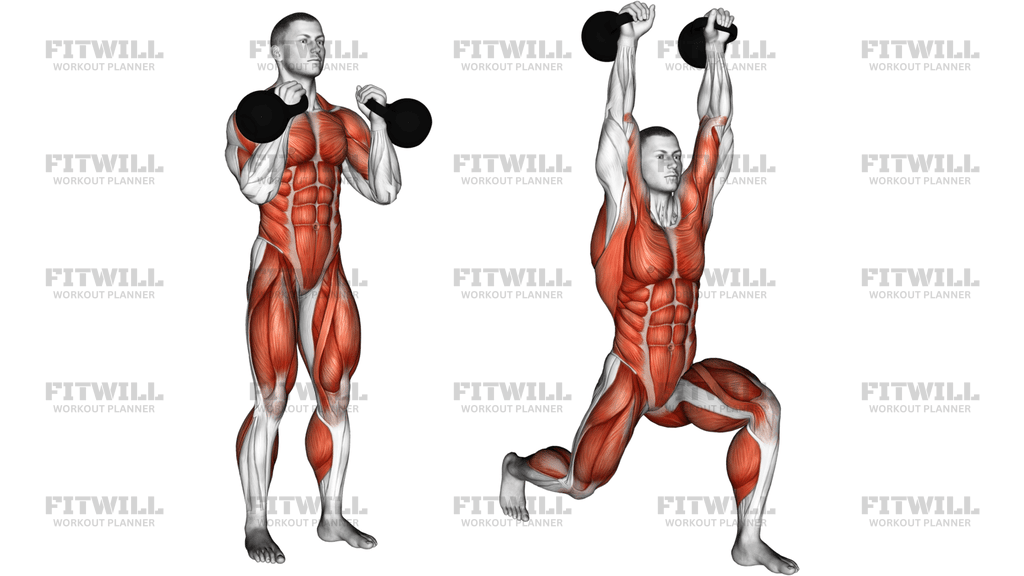
Instructions
- Stand with a kettlebell in each hand in the front rack, bells resting outside the forearms and the handles settled deep in the palms.
- Set your feet about hip-width apart, keep your chest tall, and angle the elbows slightly forward so the rack stays compact.
- Take a short vertical dip by bending the knees and hips together while keeping your torso upright.
- Drive hard through the floor to extend the hips and knees and send both kettlebells upward from the rack.
- As the bells leave the shoulders, keep them close and guide your body under them instead of trying to press them early.
- Catch the kettlebells overhead with straight elbows, stacked wrists, and a split stance so the load settles under control.
- Lock the ribs down, keep the bells over the shoulders, and hold the finish for a brief moment before recovering the feet together.
- Bring the feet back under the hips, lower both kettlebells to the front rack, and reset before the next repetition.
Tips & Tricks
- Keep the rack tight: if the kettlebells sit on the wrists instead of the meat of the palm, the catch will feel harsher and less stable.
- Make the dip short and vertical. If your torso leans forward, the bells will drift in front of the shoulders and the drive becomes harder to control.
- Drive with the legs first. The arms finish the jerk, but they should not be the first thing that tries to move the bells.
- Let the kettlebells travel close to your face and chest on the way up so they do not swing away from the midline.
- Catch with the elbows locked and the shoulder blades active, not shrugged up into the ears.
- Recover the split stance before rushing the next rep; stable feet make the next rack and dip much cleaner.
- Exhale through the drive and brief overhead hold, then reset your breath in the rack before the next rep.
- Use lighter bells than you would for a strict press, because the timing and overhead receive usually limit the load first.
Frequently Asked Questions
What muscles does Kettlebell Double Jerk target most?
The main emphasis is on the delts, with the triceps, traps, and upper back helping finish and stabilize the overhead catch.
Is Kettlebell Double Jerk too advanced for beginners?
It can be learned with light kettlebells, but beginners should first own the front rack, the vertical dip, and a stable overhead lockout.
How should the kettlebells sit in the front rack?
The bells should rest outside the forearms with the handles deep in the palms and the elbows slightly forward, not pinned straight down.
Why does the image show a split stance in the catch?
The split receive helps absorb the load and keep the kettlebells stacked overhead without needing to press them through the sticking point.
What is the biggest mistake in Kettlebell Double Jerk?
Pressing the bells early with the arms instead of driving vertically with the legs and then getting under the weight.
Do I need to recover my feet after the catch?
Yes. Bring the front and back feet back under the hips before the next rep so the rack and dip start from a balanced base.
How is Kettlebell Double Jerk different from a strict press?
The jerk uses a leg drive and a receiving position overhead, while a strict press relies almost entirely on shoulder and arm strength.
What if the kettlebells bang my forearms or wrists?
That usually means the rack is too shallow or the bells are too heavy. Re-set the handles deeper in the palms and reduce the load until the catch is clean.