Kettlebell One-Arm Jerk
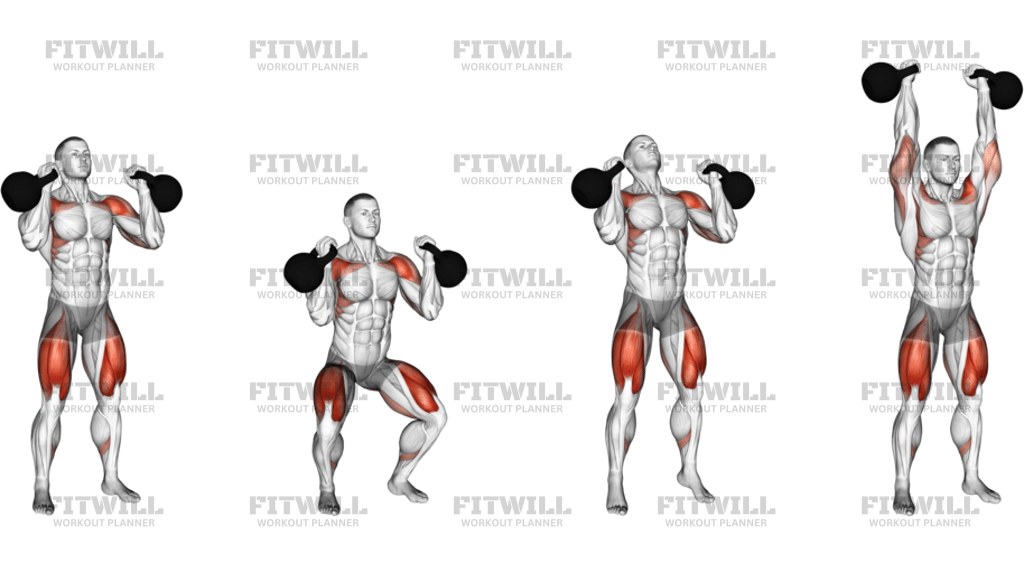
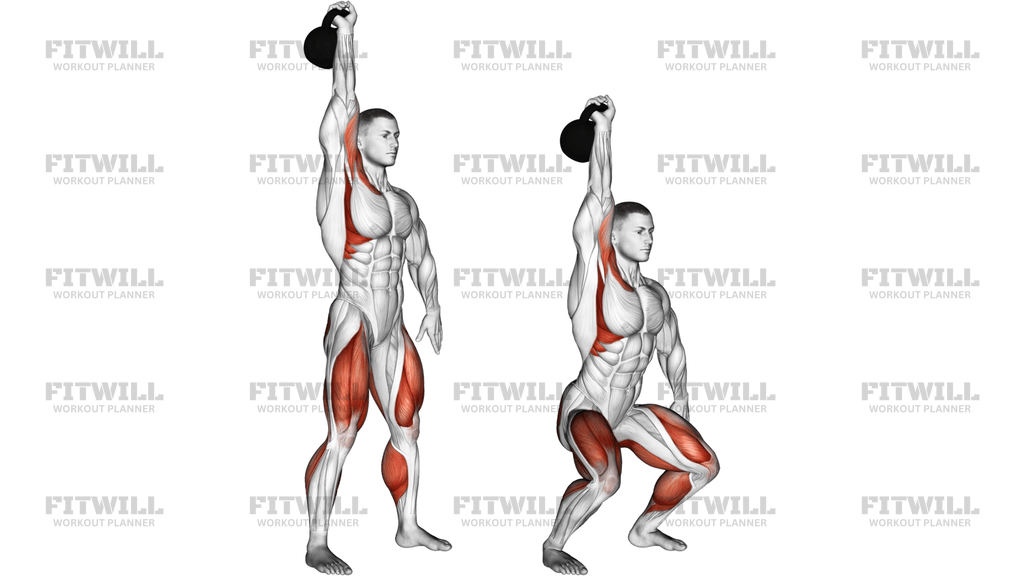
Kettlebell One-Arm Jerk is a single-side overhead power movement that uses a quick dip, a forceful leg drive, and a stable lockout overhead. It is not a strict press. The lower body creates most of the upward force, then the shoulder, triceps, and upper back finish and stabilize the bell so the rep ends overhead without a grind.
Because the kettlebell is offset to one side, the exercise also asks the trunk to resist rotation while the shoulder stays stacked under the bell. That makes it useful for building overhead strength, coordination, and bracing under load. Done well, the jerk trains the legs, core, delts, and triceps together instead of letting one joint do all the work.
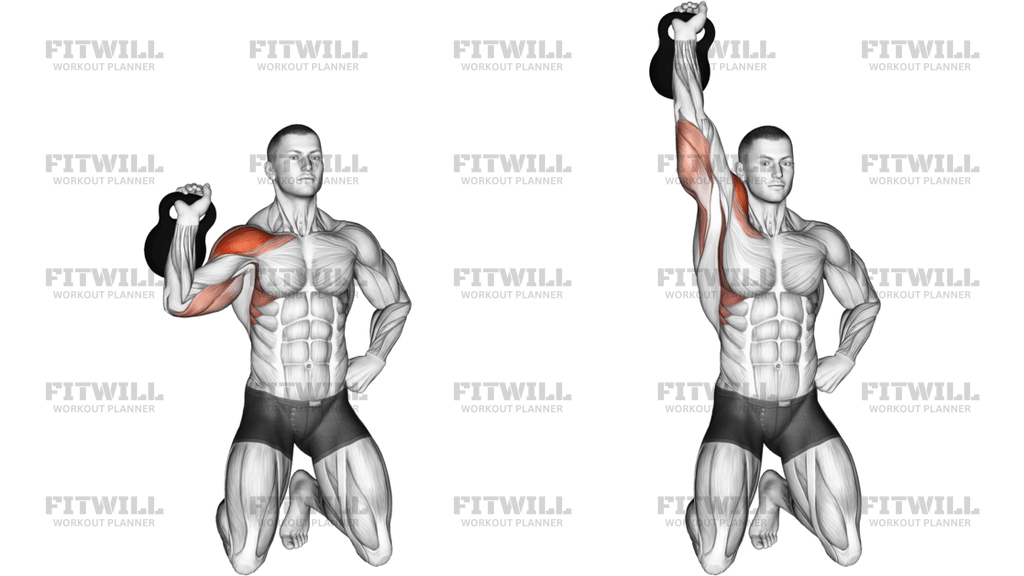
The rack position matters. The kettlebell should sit close to the forearm with the elbow near the ribs and the wrist straight, not bent back. From there, the dip is short and vertical: knees bend, torso stays tall, and the heels stay planted so the bell can ride the force from the legs instead of drifting forward.
At the top, the arm finishes the rep by punching to a locked-out overhead position while the body settles under the kettlebell. The ribs stay stacked instead of flaring up, and the shoulder remains active so the weight feels balanced over the midfoot. That receiving phase is what separates a jerk from a sloppy push press.
This movement works well in strength blocks, power sessions, or kettlebell complexes when you want an explosive overhead pattern with a single arm. Use a load that lets you move crisply, keep the bell path close, and lower it back to the rack under control. Beginners can use it, but they should first own the rack, dip timing, and overhead stability with a lighter bell before loading it heavily.
[ Workout Log & Planner ]
Put your next workout in Fitwill
Keep your plan and training log ready when you are.


Instructions
- Rack the kettlebell at one shoulder with the handle deep in the palm, the wrist straight, and the elbow tucked close to the ribs.
- Stand with feet about hip-width apart, chest tall, and your free arm relaxed so your torso starts balanced.
- Take a breath and brace your midsection before each rep without leaning back or twisting toward the weight.
- Dip straight down by bending the knees a few inches while keeping the torso upright and the heel planted.
- Drive hard through the floor and extend the hips and knees so the bell floats upward from leg power.
- As the kettlebell rises, punch the working arm to full lockout overhead and let the body settle under the weight.
- Finish with the biceps close to the ear, ribs stacked, and the shoulder active rather than shrugged forward.
- Re-bend slightly to absorb the bell, then guide it back to the rack position under control.
- Reset your stance and breathing before the next repetition, or lower the bell safely after the final rep.
Tips & Tricks
- Keep the dip shallow and vertical; if your hips sink too low, the bell usually drifts forward and the timing gets sloppy.
- Think legs first, arm second. If the shoulder starts pressing before the drive finishes, the rep turns into a slow push press.
- Let the bell stay close to the head on the way up and finish with the forearm stacked under the handle, not bent backward.
- Do not let the low back arch to chase the lockout; the ribs should stay down as the bell finishes overhead.
- A soft, controlled re-bend under the bell is better than catching it stiff-legged or crashing it into the rack.
- Keep the free arm quiet so it does not swing and rotate the torso during the drive.
- Choose a load that lets every rep look the same; if the elbow bends early or the feet shuffle, the bell is too heavy.
- Exhale as you drive and finish the lockout, then inhale again before the next dip to keep the timing clean.
- If the kettlebell bangs your forearm in the rack, adjust the path so it rolls deeper into the palm before the next rep.
Frequently Asked Questions
What muscles does Kettlebell One-Arm Jerk work most?
It mainly trains the delts, triceps, quads, glutes, and core, with the upper back helping keep the bell stable overhead.
Is Kettlebell One-Arm Jerk the same as a push press?
No. A push press uses one dip and one drive, while Kettlebell One-Arm Jerk adds a quick re-bend under the bell so the weight finishes overhead with less arm pressing.
How should the kettlebell sit in the rack position?
The bell should rest close to the forearm with a straight wrist, the elbow tucked near the ribs, and the handle lying deep in the palm instead of hanging out in front.
Should I lock my elbow at the top?
Yes. The rep finishes with the elbow fully locked, the biceps close to the ear, and the shoulder actively supporting the kettlebell overhead.
What is the most common mistake in this exercise?
Most people dip too deep or press too early. That usually makes the bell drift forward and turns the jerk into a slow, unstable press.
Can beginners do Kettlebell One-Arm Jerk?
Yes, but only after they can hold a solid rack and overhead position. Start light and practice the dip-drive timing before chasing heavier bells.
Why does my low back feel this exercise?
That usually means the ribs are flaring to finish the lockout. Keep the torso stacked and let the legs create the drive instead of leaning back.
How do I lower the kettlebell safely after each rep?
Re-bend slightly under the bell, guide it back to the rack close to the body, then reset your breath and stance before the next repetition.