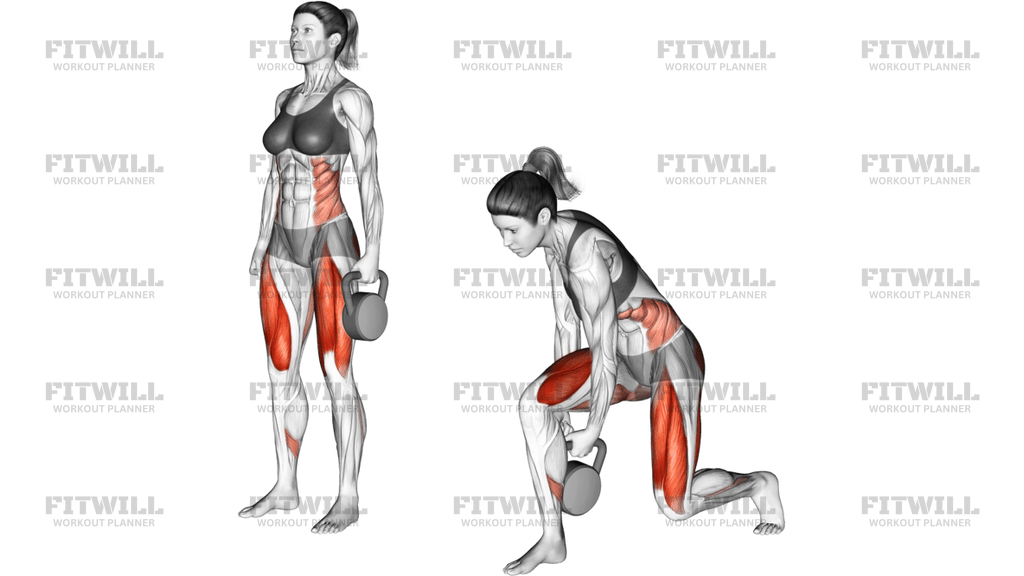
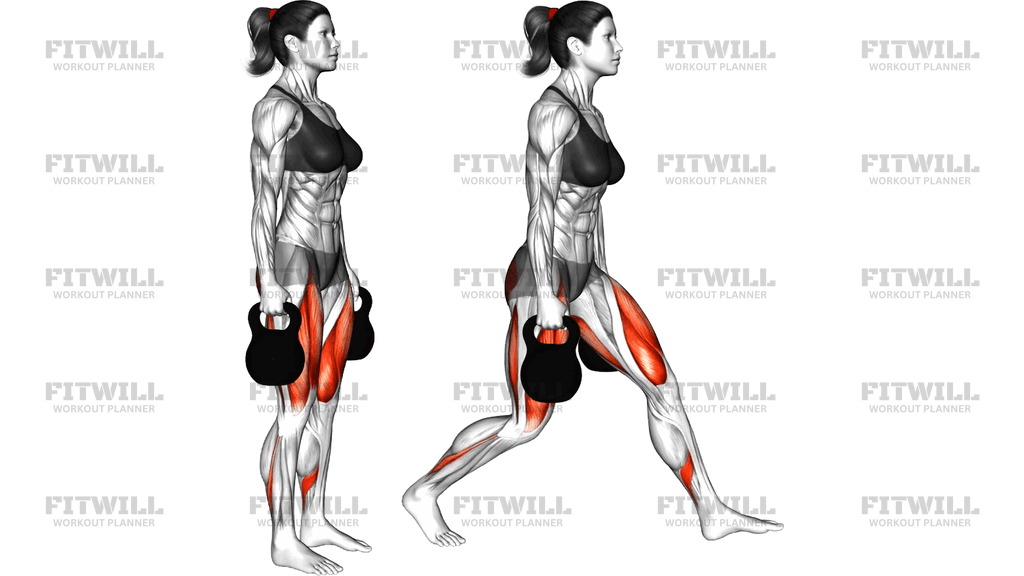
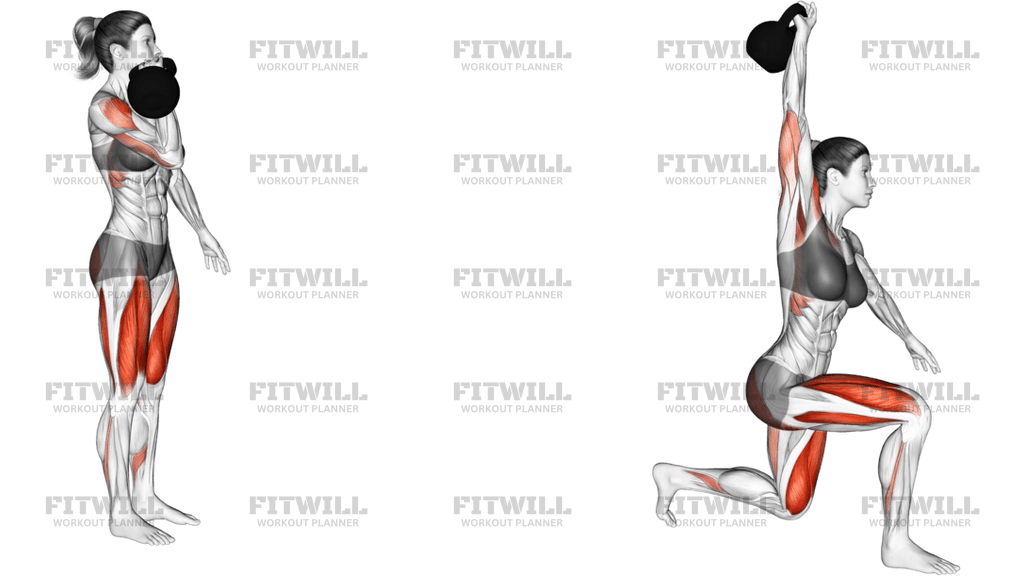
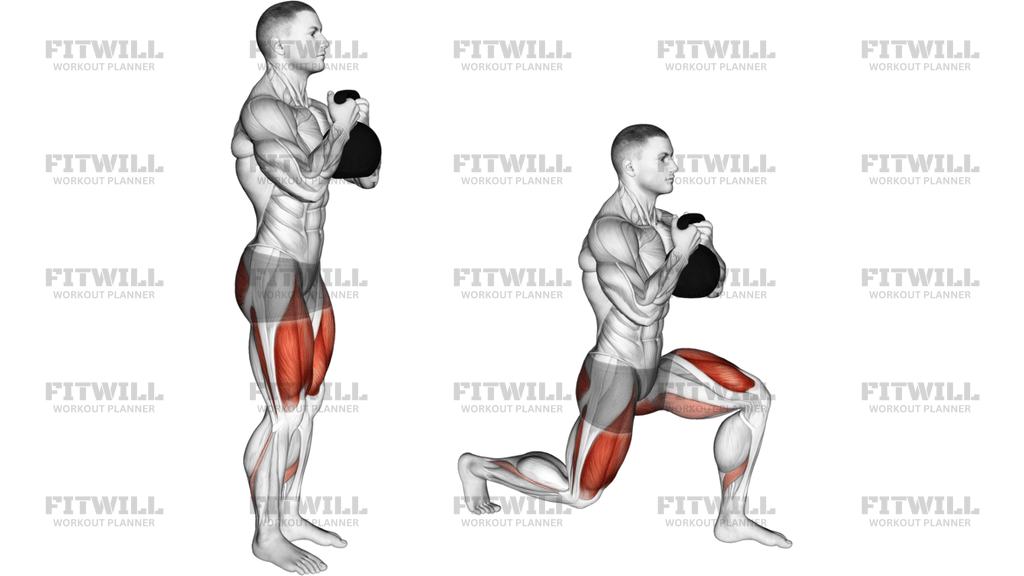
Kettlebell Gobelt Curtsey Lunge
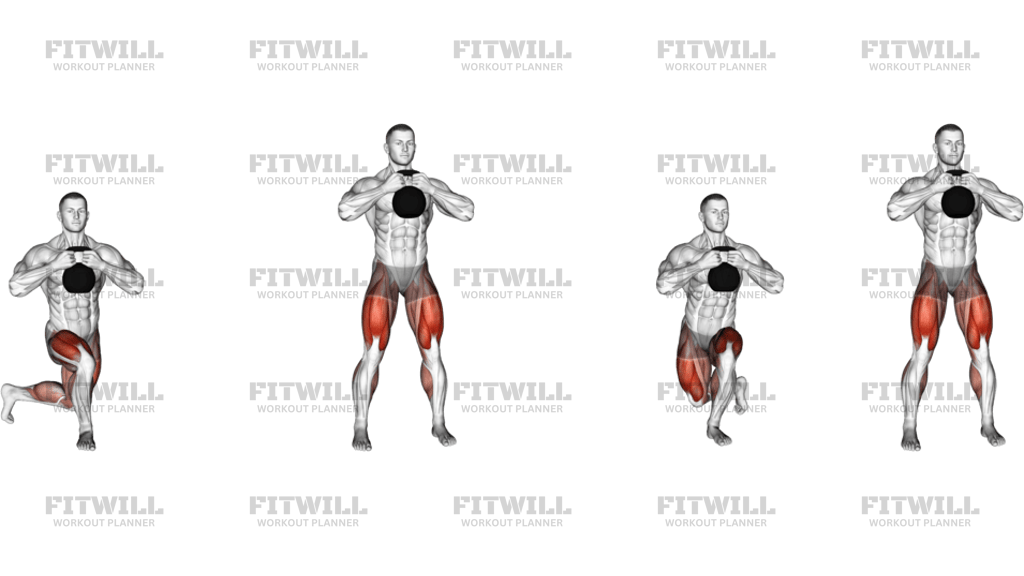
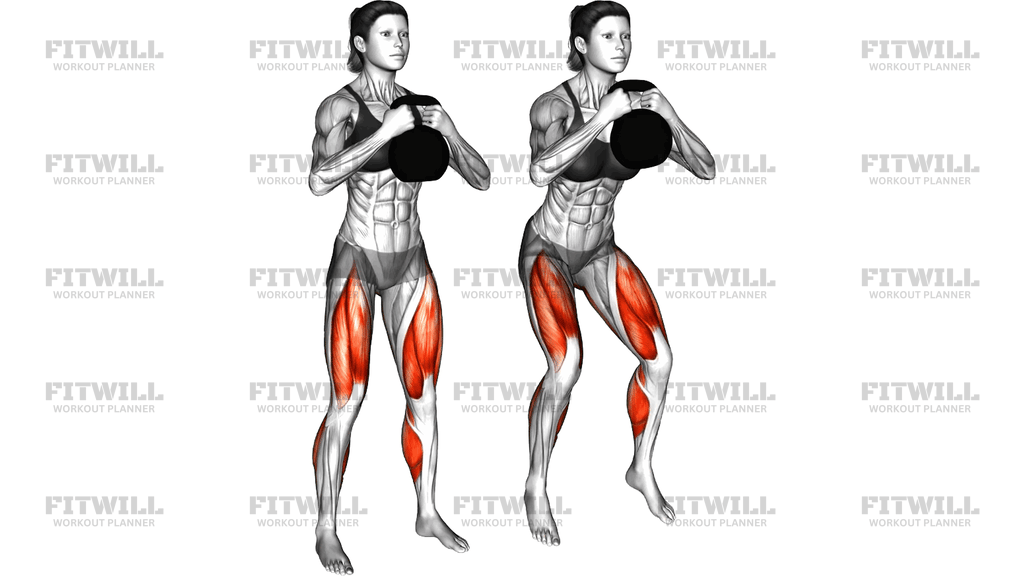
Kettlebell Gobelt Curtsey Lunge is a unilateral lower-body strength exercise that combines a front-loaded kettlebell with a diagonal lunge pattern. The stance challenges the working leg more than a straight reverse lunge because the rear leg crosses behind the body, which demands extra control from the hips, thighs, and trunk. The Kettlebell Gobelt Curtsey Lunge is especially useful when you want a glute-focused movement that also asks the adductors and stabilizers to keep the pelvis level.
The primary emphasis is on the glutes and thighs, with the hamstrings, core, and lower back contributing to balance and posture. In anatomy terms, the main work centers on the Gluteus maximus, with support from Biceps femoris, Rectus abdominis, and Erector spinae. The front leg does most of the force production, while the crossing rear leg mainly helps you load the hip through a controlled range without letting the torso twist or collapse.
Setup matters because the goblet hold naturally encourages a tall torso and makes it easier to keep the kettlebell close to your center of mass. Start with the bell at chest height, elbows down, feet set at a stance you can control, and both feet rooted before you step. From there, cross one leg behind and slightly to the outside, then lower under control so the front knee tracks in line with the toes and the front heel stays planted.
At the bottom of the Kettlebell Gobelt Curtsey Lunge, the back knee should hover near the floor or lightly approach it without bouncing. Drive back up through the front heel and midfoot, squeeze the working glute, and return to a balanced standing position before repeating. Keep the descent smooth, keep the kettlebell quiet against the chest, and breathe steadily so each rep looks the same instead of turning into a fast balance drill.
This exercise fits well in lower-body strength sessions, glute accessory work, or unilateral training blocks where control matters as much as load. It can help expose left-right differences, build hip stability, and improve single-leg mechanics for athletes and general lifters alike. If your knees cave inward, your torso folds forward, or your balance breaks down, reduce the load, shorten the step, and clean up the pattern before adding resistance.
[ Workout Log & Planner ]
Put your next workout in Fitwill
Keep your plan and training log ready when you are.


Instructions
- Hold the kettlebell in a goblet position at chest height, elbows pointed down, and stand tall with your feet about hip-width apart.
- Brace your midsection, keep your chest lifted, and root both feet into the floor before you move.
- Step one leg back and across your body so the rear foot lands behind and slightly outside the front stance leg.
- Lower by bending the front knee and sitting the hips down and back, keeping most of your weight on the front leg.
- Let the back knee travel toward the floor without letting the front heel lift or the front knee cave inward.
- Pause briefly near the bottom when you still feel balanced and controlled.
- Drive through the front heel and midfoot to stand back up, squeezing the front-side glute as you return to tall posture.
- Reset your stance, complete the planned reps on one side, then switch sides and repeat with the same tempo.
Tips & Tricks
- Keep the kettlebell tight to your sternum so the goblet hold helps you stay upright instead of tipping forward.
- Think of the front foot as a tripod: big toe, little toe, and heel should stay rooted through every rep.
- Cross the rear leg behind only as far as you can control; an exaggerated crossover often twists the pelvis and loses balance.
- Let the front knee track in the same direction as the toes instead of collapsing inward toward the midline.
- Use a shorter range of motion if the rear knee crashes into the floor or if the front heel starts to peel up.
- Choose a load that lets the hips and glutes do the work; this movement punishes sloppy loading more than a standard lunge does.
- Lower under control for a full count so the eccentric phase loads the glute and thigh instead of bouncing at the bottom.
- Exhale as you drive up from the front leg and inhale as you lower into the curtsy.
Frequently Asked Questions
What muscles does Kettlebell Gobelt Curtsey Lunge work most?
It mainly hits the glutes and thighs, with the hamstrings, core, and lower back helping you stabilize the curtsy position.
Is the kettlebell goblet hold important in Kettlebell Gobelt Curtsey Lunge?
Yes. Holding the kettlebell at chest height helps keep your torso upright and makes it easier to balance through the diagonal step.
How far should I step back in Kettlebell Gobelt Curtsey Lunge?
Step back and across just enough to load the front hip without twisting your pelvis. If the rear foot crosses so far that you wobble, shorten the step.
Should my back knee touch the floor?
Not necessarily. Aim for a controlled hover or a very light tap only if your balance, hip position, and front knee alignment stay solid.
Can beginners do Kettlebell Gobelt Curtsey Lunge?
Yes, but it is best learned with bodyweight first or a very light kettlebell so you can master the crossover step and balance demands.
Why do I feel Kettlebell Gobelt Curtsey Lunge in my outer glute?
The crossed-behind stance loads the glute on the front leg, especially the side stabilizers that keep your pelvis from dropping or rotating.
What are the most common mistakes in Kettlebell Gobelt Curtsey Lunge?
The biggest issues are letting the front knee cave in, losing the front heel, leaning the chest forward, or turning the crossover into a balance stumble.
Can I substitute a dumbbell for the kettlebell?
Yes. A single dumbbell held in a goblet-style position works well if it lets you keep the same upright torso and steady front-leg loading.