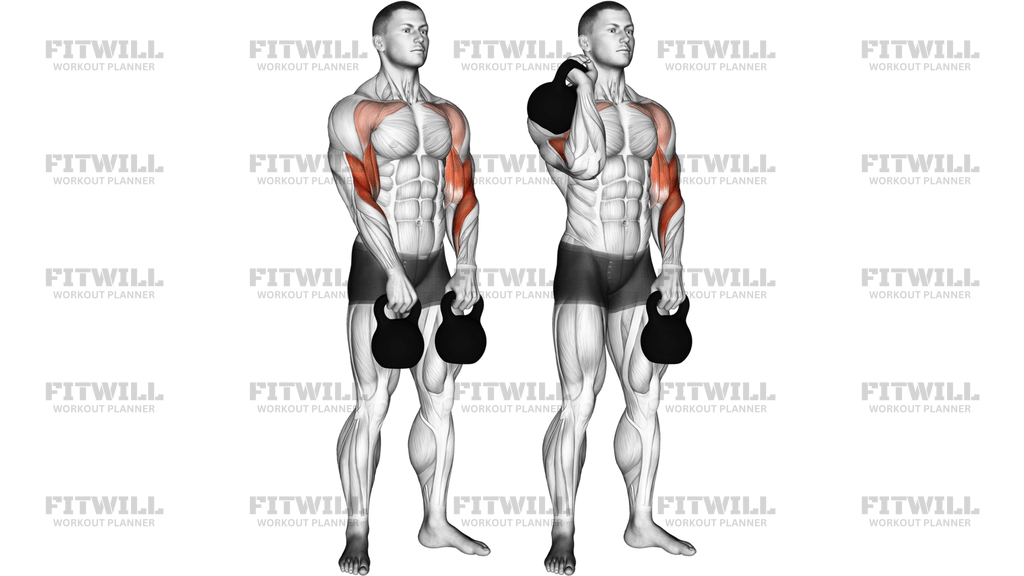
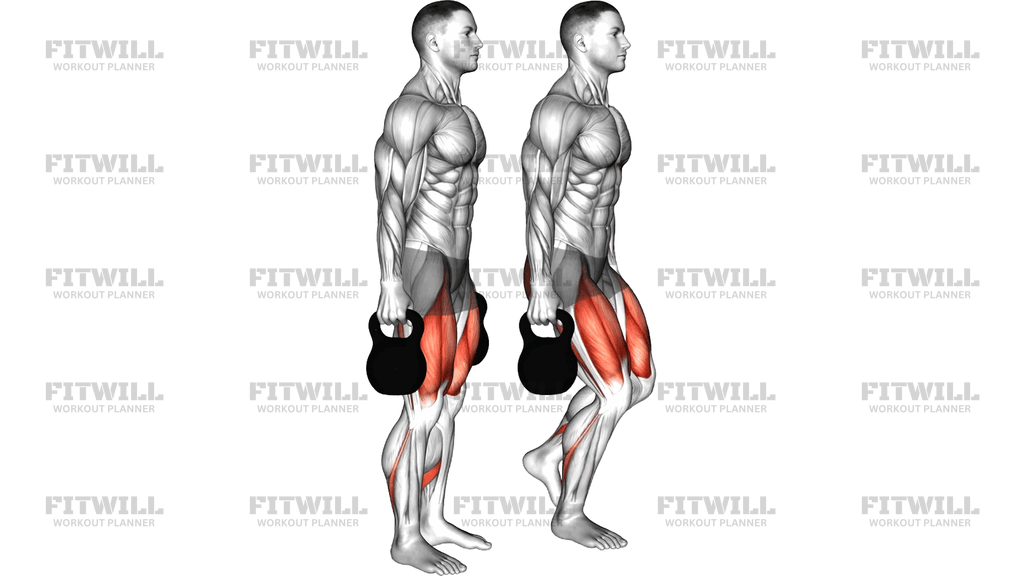
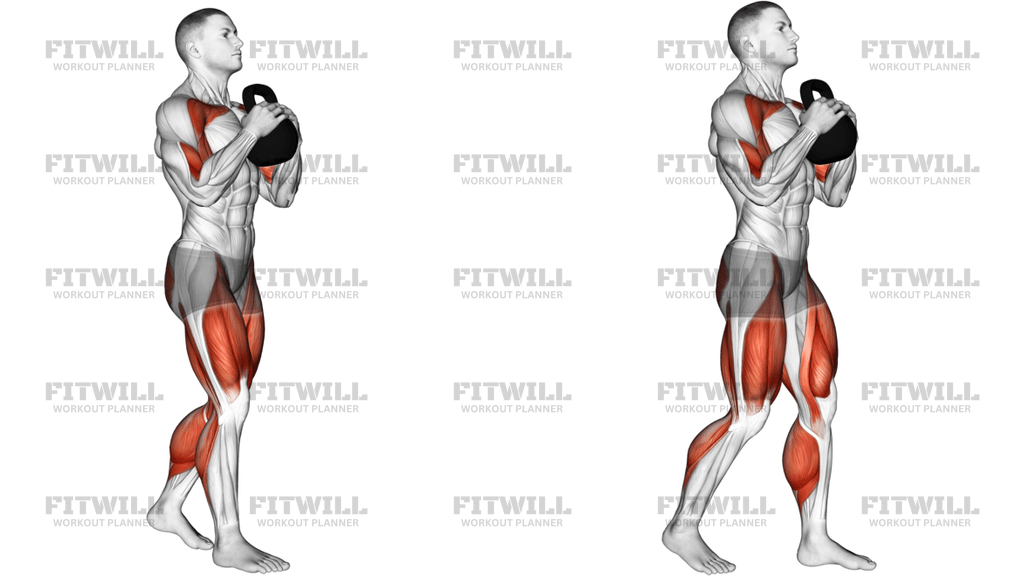
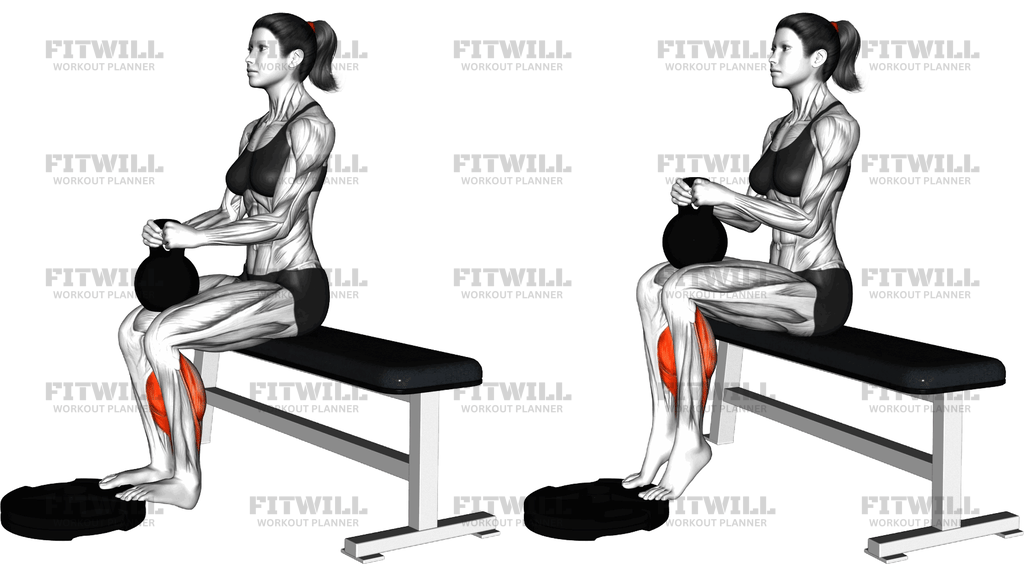
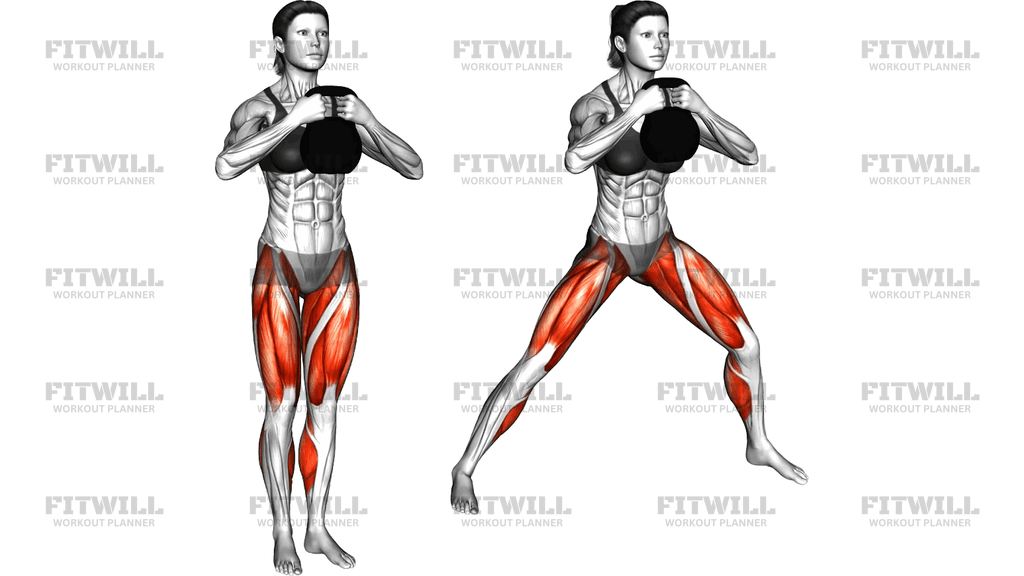
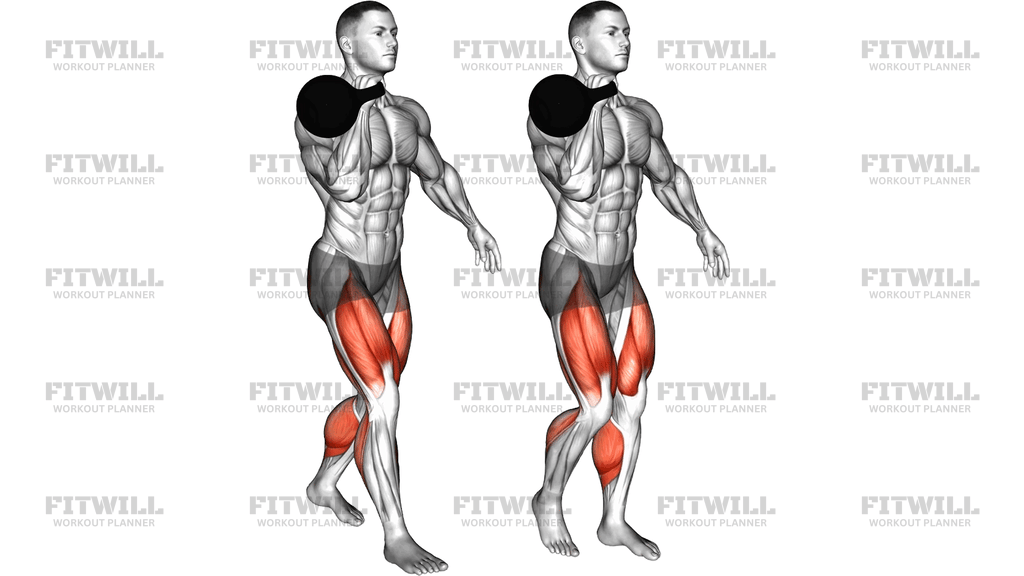
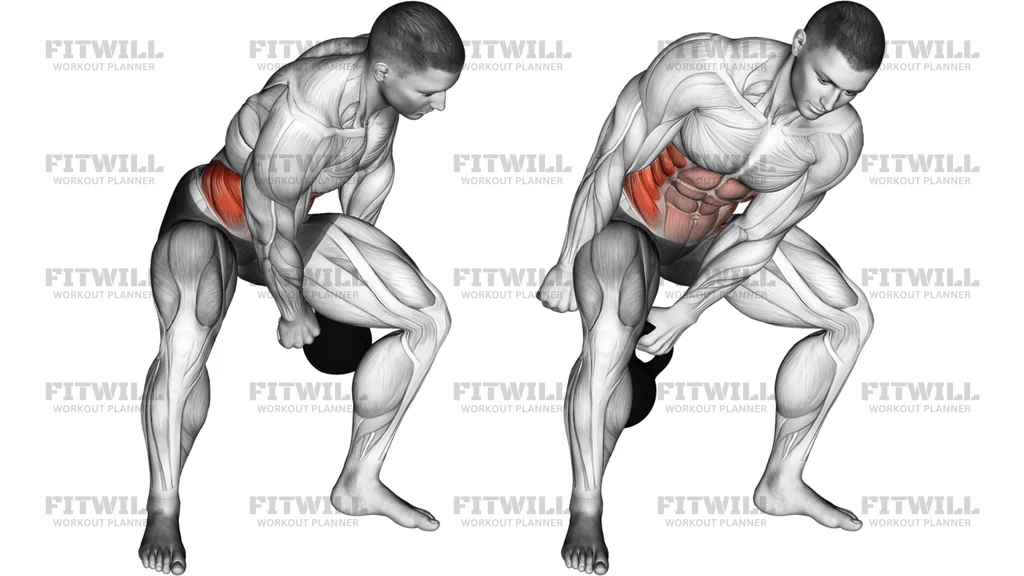
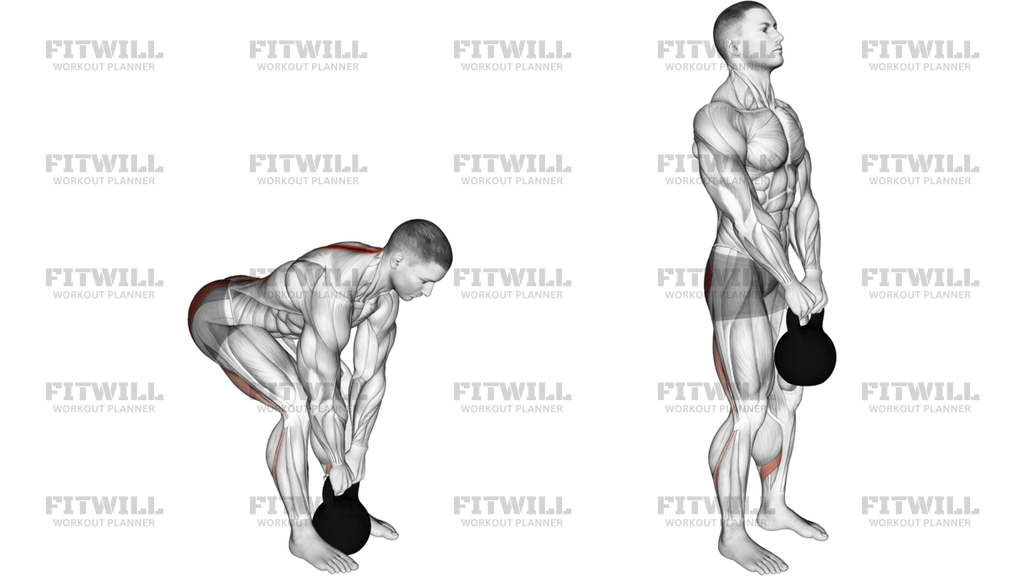
Kettlebell Side Lunge
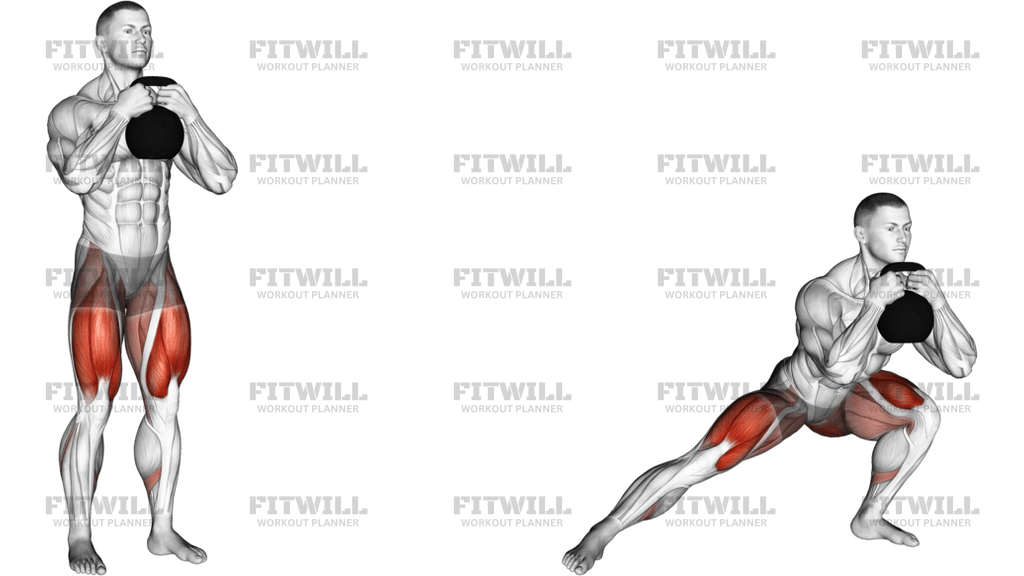
Kettlebell Side Lunge is a lateral lower-body strength exercise that loads one leg while the other leg stays long and supported. The goblet hold keeps the kettlebell close to the chest, which helps many lifters stay upright and makes it easier to own the side-to-side shift instead of folding forward.
This movement trains the thighs, especially the inner thigh and quad on the working side, while the glutes, adductors, and trunk work hard to control the descent and help you stand back up. It is useful when you want frontal-plane leg strength, better hip control, and a cleaner shift of bodyweight from side to side. The wide stance and torso position matter because they determine whether the rep feels like a controlled lunge or a collapse into one hip.
Set the feet wider than shoulder width, hold the kettlebell in a goblet position at the chest, and keep the elbows angled down. From there, send the hips toward one side while the opposite leg stays long. The working knee should track over the toes as you sit into the bent leg, and the chest should stay tall enough that the kettlebell does not pull you forward. A good rep finishes with the pelvis level, the heel planted on the loaded side, and the non-working leg still providing balance rather than resistance.
On the way down, think about sitting back into the hip instead of reaching the knee far forward. On the way up, drive the floor away with the loaded foot and bring the hips back to center before repeating. If the rep is done well, you will feel strong tension in the inside thigh, glute, and quadriceps of the working side, with the torso staying braced enough to keep the kettlebell steady at the chest. Breathing should stay deliberate: inhale as you descend, exhale as you stand.
Kettlebell Side Lunge fits well in lower-body strength sessions, unilateral leg work, athletic warmups, and accessory blocks where you want more lateral control than a straight-ahead squat can provide. Beginners can use it with a light kettlebell and a shorter range of motion, while advanced lifters can deepen the position or slow the eccentric phase. Keep every rep smooth and repeatable, and stop short of a depth that causes the inside knee, hip, or lower back to lose position.
[ Workout Log & Planner ]
Put your next workout in Fitwill
Keep your plan and training log ready when you are.


Instructions
- Stand with your feet wider than shoulder width and hold the kettlebell in a goblet position against your upper chest.
- Keep your elbows pointed down and your ribs stacked over your pelvis so the kettlebell stays close to your body.
- Turn one foot out slightly and keep the other leg long, with both feet flat before you start the rep.
- Brace your trunk, then shift your hips toward the bent-leg side without letting your chest pitch forward.
- Bend the working knee and sit back into that hip until you feel a strong stretch and load in the inner thigh.
- Keep the non-working leg long and quiet while the working knee tracks over the toes.
- Drive through the heel and midfoot of the bent leg to push yourself back to the center.
- Finish tall, reset your stance if needed, and repeat for the planned reps before switching sides.
Tips & Tricks
- Keep the kettlebell tight to your sternum so the load does not drag your shoulders and torso forward.
- Let the hips travel to the side first; do not just knee-bend and dump weight into the front of the working leg.
- The straight leg should stay long and grounded, but it should not become a rigid lockout that twists the pelvis.
- Track the working knee in line with the toes to avoid caving inward as you change direction.
- Choose a depth that lets the heel stay planted and the chest stay lifted; deeper is not better if the torso collapses.
- Use a controlled descent and a crisp push back to center so the inner thigh and glute do the work instead of momentum.
- If the kettlebell makes you lean forward, reduce the load before you chase more range.
- Breathe out as you stand, especially through the hardest part of the drive back to center.
Frequently Asked Questions
What muscles does the kettlebell side lunge work?
It mainly hits the inner thigh and quad on the bent leg, with the glutes, adductors, and trunk helping control the side-to-side load.
Why is the kettlebell held at the chest?
The goblet hold helps keep the torso upright and makes it easier to balance while you shift into one hip.
How far should I sit into the side lunge?
Go as deep as you can while keeping the heel down, the chest tall, and the bent knee tracking cleanly over the toes.
Should the straight leg stay straight the whole time?
Yes, it should stay long enough to keep tension and mobility on that side, but without locking the knee so hard that the pelvis twists.
Can beginners use this movement?
Yes. Start with a light kettlebell, a shorter range of motion, and a slow return to center.
What is the most common form mistake?
Letting the chest tip forward and the working knee collapse inward are the biggest errors.
How heavy should the kettlebell be?
Use a load that lets you stay upright and control the shift; if the bell pulls you forward, it is too heavy.
Is this exercise more about strength or mobility?
It is primarily a strength exercise, but it also asks for usable hip mobility and adductor control.
Can I alternate sides each rep?
Yes, alternating reps works well, but keep each rep controlled enough that the return to center is balanced and clean.