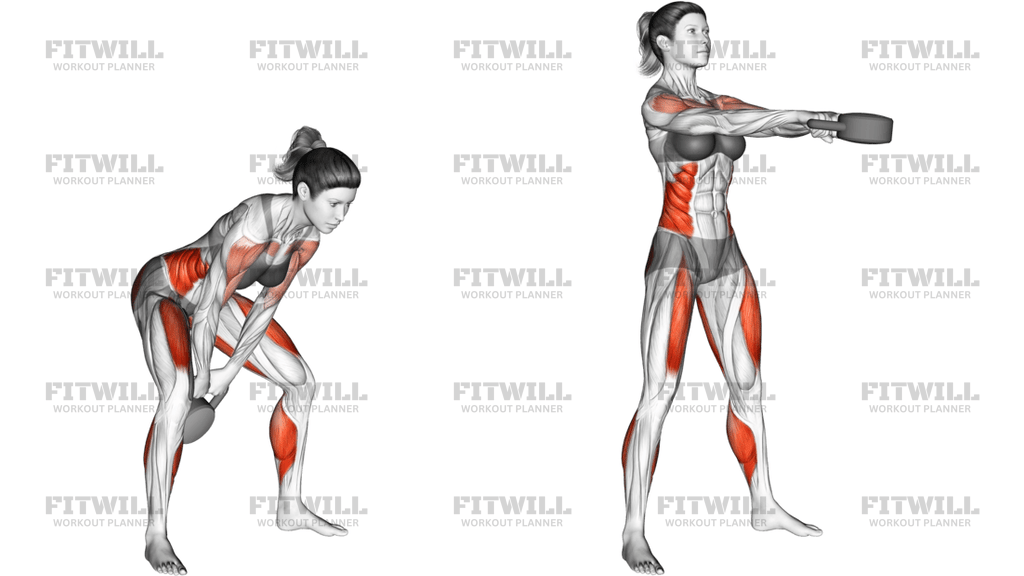
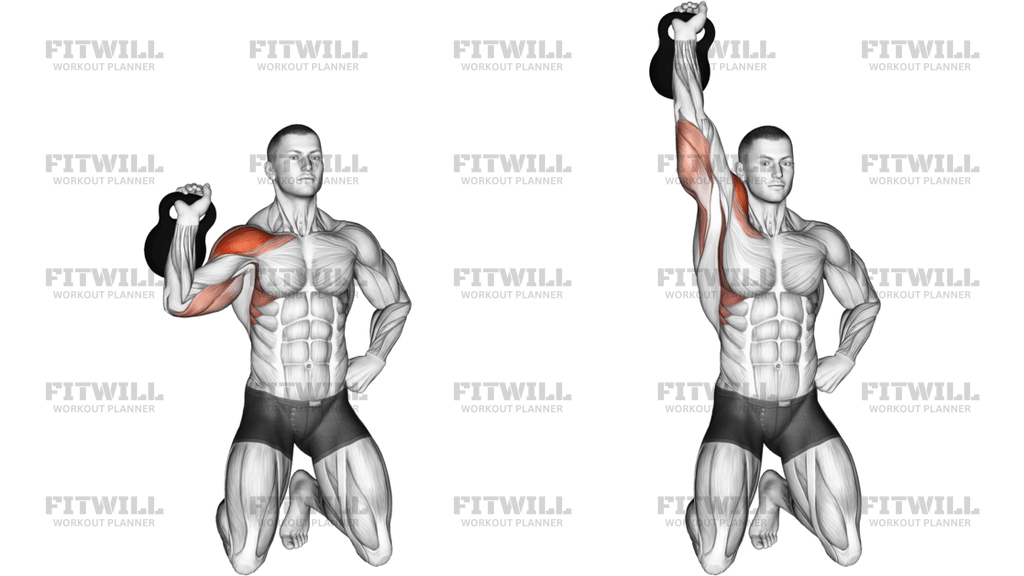
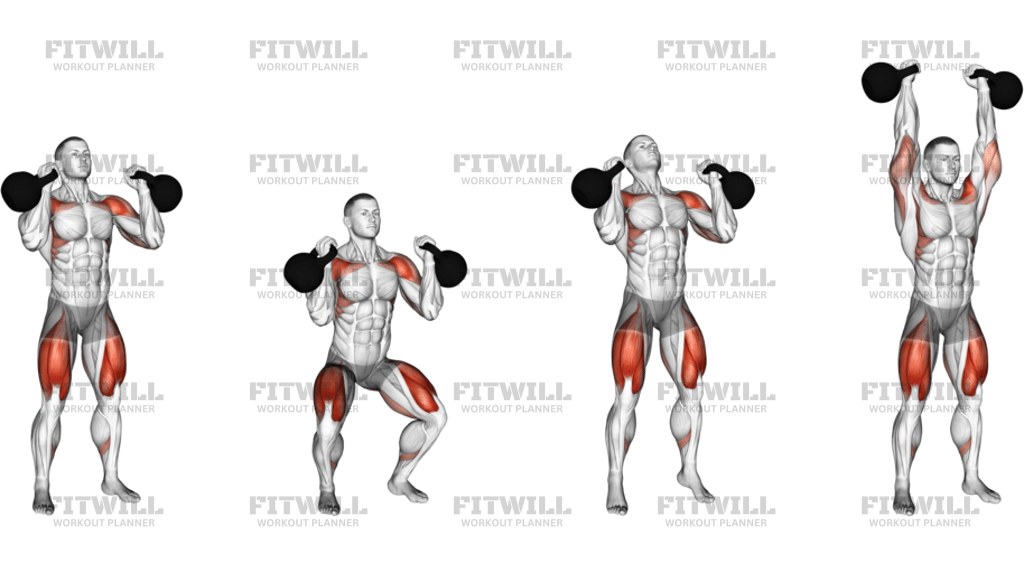
Kettlebell One-Arm Clean And Jerk
Kettlebell One-Arm Clean and Jerk is a powerful one-sided kettlebell lift that combines a clean to the rack with an overhead jerk. It trains the shoulders, upper back, triceps, legs, and core to work together, so the bell moves from the floor to overhead without losing control. The movement is useful when you want more than a simple press: it teaches you how to load the hips, catch the bell cleanly, and transfer force into a stable lockout.
The clean portion of Kettlebell One-Arm Clean and Jerk builds snap and timing through the hips, glutes, and hamstrings, while the jerk rewards a fast dip-and-drive and a strong overhead finish. Delts do the final work overhead, but traps, rhomboids, forearms, and triceps help control the path and keep the bell from crashing into the wrist. Because it is unilateral, the exercise also exposes side-to-side differences in grip, trunk stability, and overhead control.
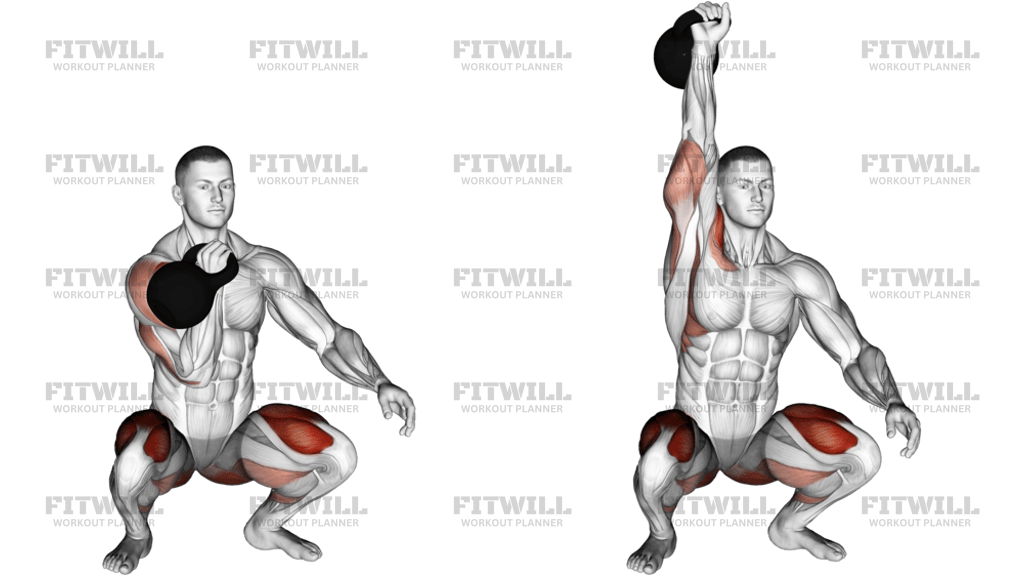
Setup matters a lot. Start with the kettlebell between your feet, hinge back with a flat spine, and keep your shoulders slightly in front of the bell before you pull it. The bell should stay close to your body as you hike it back, then float into the rack rather than looping away from you. In the rack, the forearm stays vertical, the elbow is tucked near the ribs, and the handle sits diagonally in the palm instead of forcing the wrist to bend back.
From the rack, the jerk uses a short, vertical dip and a strong leg drive to send the bell overhead. That drive should come from the legs first, not from a hard shoulder press, and the finish should end with the elbow locked, the ribcage down, and the bell stacked over the shoulder and midfoot. Lower the bell back to the rack under control, then hinge to guide it between the legs for the next repetition or to reset safely on the floor.
Kettlebell One-Arm Clean and Jerk fits well in strength, power, or conditioning sessions when you want a demanding full-body lift that still keeps one arm free for side-to-side work. It is often best performed with moderate loads and crisp reps rather than grinding through fatigue. Beginners can learn it, but they should first own the deadlift, swing, clean, and overhead rack positions separately so the bell path stays clean and the shoulder stays comfortable.
[ Workout Log & Planner ]
Put your next workout in Fitwill
Keep your plan and training log ready when you are.


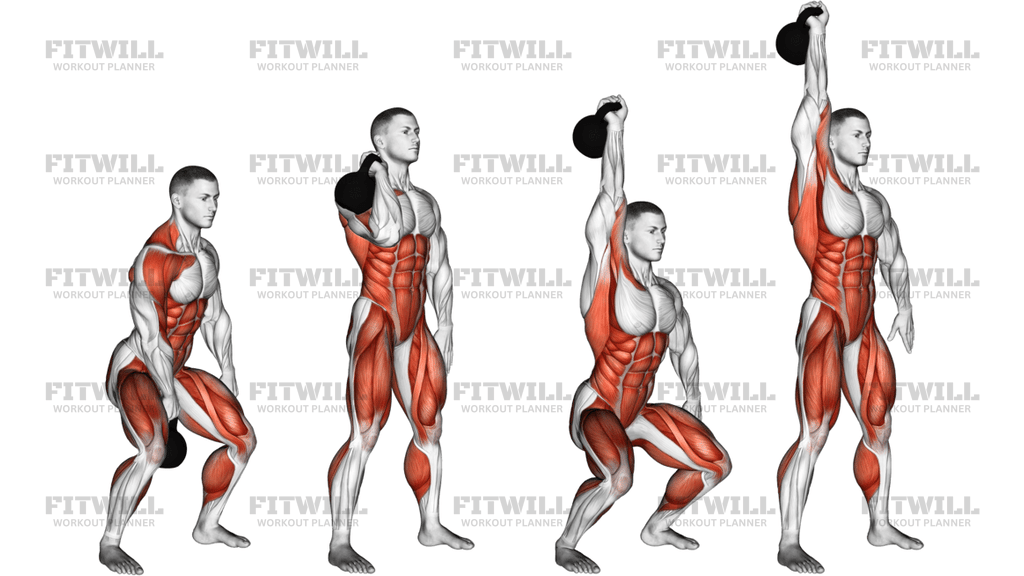
Instructions
- Stand with your feet about hip-width apart and place the kettlebell on the floor between your feet, then hinge down and grasp the handle with one hand while the other arm hangs free for balance.
- Set your shoulders slightly in front of the bell, keep your back flat, and load your hips so the bell is close to your shins before you pull.
- Hike the kettlebell back between your legs like a football snap, keeping it tight to your inner thighs so the next drive starts from your hips.
- Snap your hips forward and stand tall, letting the bell travel close to your body as your elbow rises and your hand turns over.
- Catch the bell softly in the rack with your forearm vertical, your elbow tucked near your ribs, and the handle resting diagonally across your palm.
- Take a short, straight dip by bending your knees and hips a few inches while keeping your torso upright and your heels planted.
- Drive hard through the floor and transfer that force into the bell, then punch it overhead until your arm is fully locked out and the kettlebell is stacked over your shoulder.
- Lower the bell back to the rack with control, then hinge again to guide it between your legs for the next repetition or to return it to the floor safely.
- Finish all repetitions on one side with a controlled reset before switching hands and repeating the same path on the other side.
Tips & Tricks
- Keep the bell close on the clean; if it arcs away from your thigh, the rack will feel heavy and slow.
- Let the hips create the clean instead of curling the bell with your arm.
- In the rack, the handle should sit deep in the palm so the bell does not smash the back of your forearm.
- Keep the jerk dip short and vertical; a forward dip usually sends the bell out of position overhead.
- Think about punching to the ceiling after the leg drive, not pressing the kettlebell slowly overhead.
- Lock out with the bell stacked over your shoulder and midfoot so your ribs do not flare back.
- Use a lighter bell if the clean bangs your wrist or the overhead finish turns into a press.
- Reset each rep if the bell starts swinging wide or your torso twists toward the working side.
- Breathe into the brace before the clean, then exhale as you drive the bell overhead.
Frequently Asked Questions
What muscles does Kettlebell One-Arm Clean and Jerk work most?
It mainly trains the delts, but the clean and jerk also call on the traps, triceps, upper back, glutes, and core.
Is Kettlebell One-Arm Clean and Jerk good for beginners?
Yes, but it is best learned in pieces first. Practice the hinge, clean to rack, and a light single-arm overhead drive before you try full-speed reps.
Where should the kettlebell sit in the rack position?
The bell should rest against the forearm and upper arm with the elbow tucked close to the ribs, not hanging out in front of the body.
What is the difference between a clean and jerk and a clean and press?
A jerk uses a quick dip and leg drive to send the kettlebell overhead, while a press relies mostly on the shoulder and arm to finish the rep.
Why does my wrist get beaten up during the clean?
The bell is probably looping too far away or flipping too late. Keep it tight to the body and let it roll around the hand instead of slamming into the forearm.
Do I lower the kettlebell straight down after the jerk?
No. Bring it back to the rack first, then hinge and guide it between your legs so the descent stays controlled and the shoulder does not take the whole drop.
Can I use a lighter kettlebell and still get a good workout?
Yes. A lighter bell lets you keep the clean crisp and the overhead stack clean, which is better than forcing a heavier load with a sloppy swing or press.
What is the safest way to switch sides?
Finish the last rep, set the bell down with a hip hinge, then reset your stance and grip before starting the other side rather than snatching the bell across your body.