Kettlebell Pistol Squat
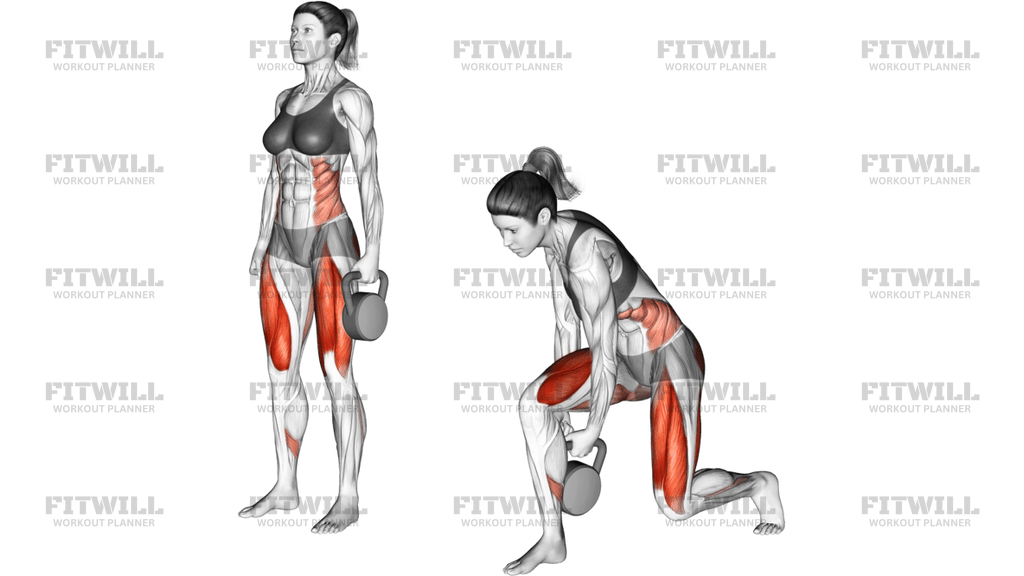
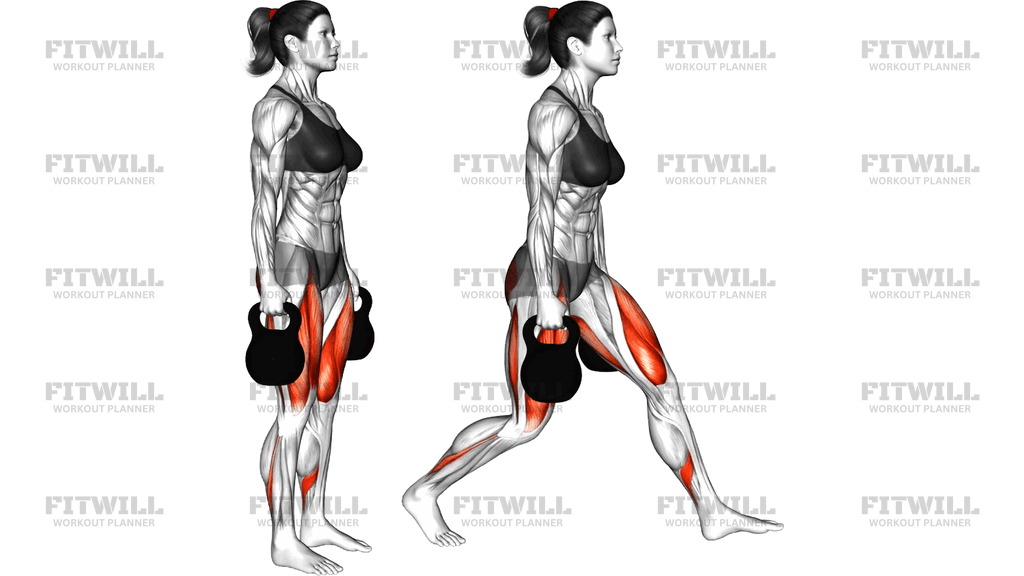
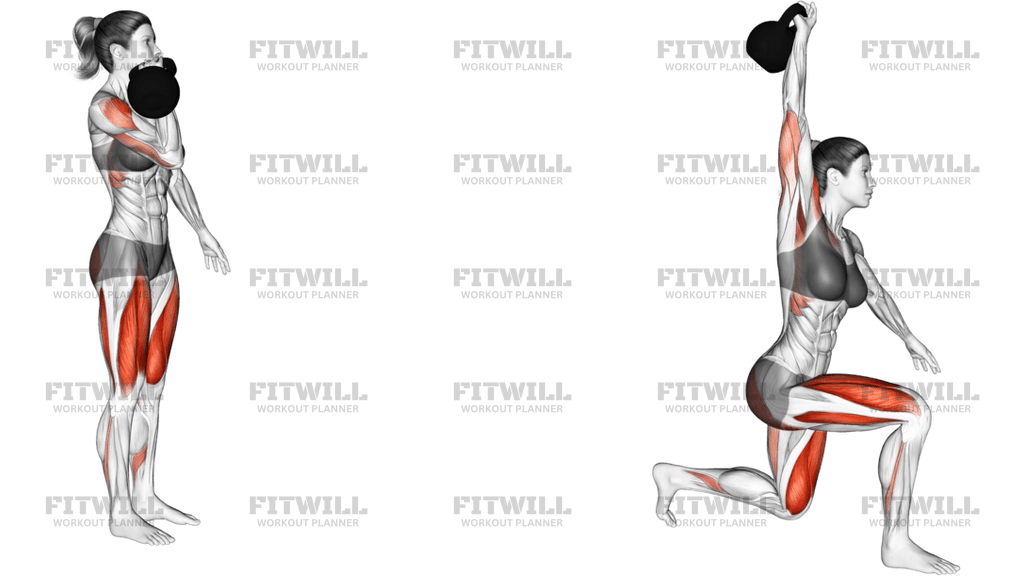
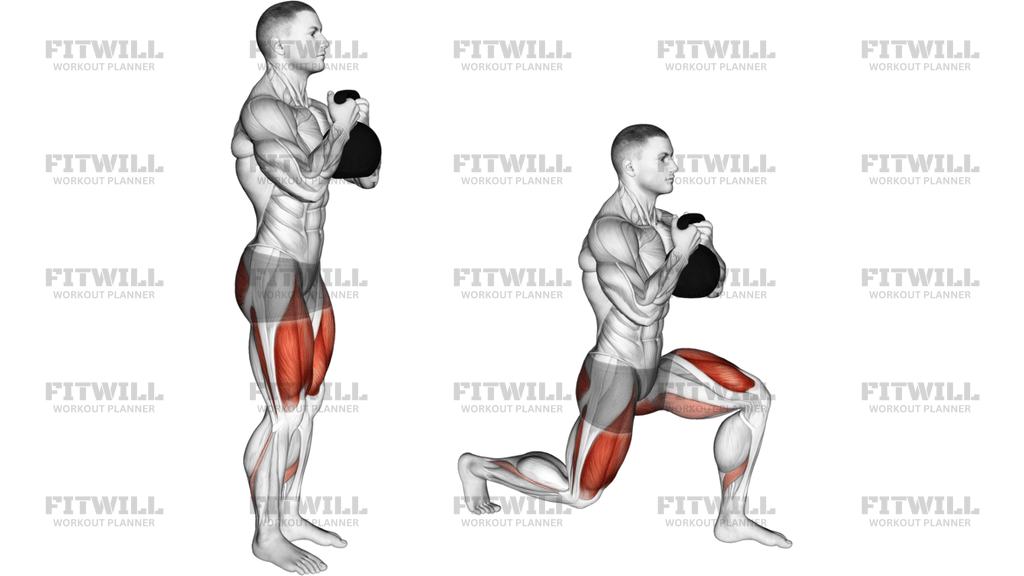
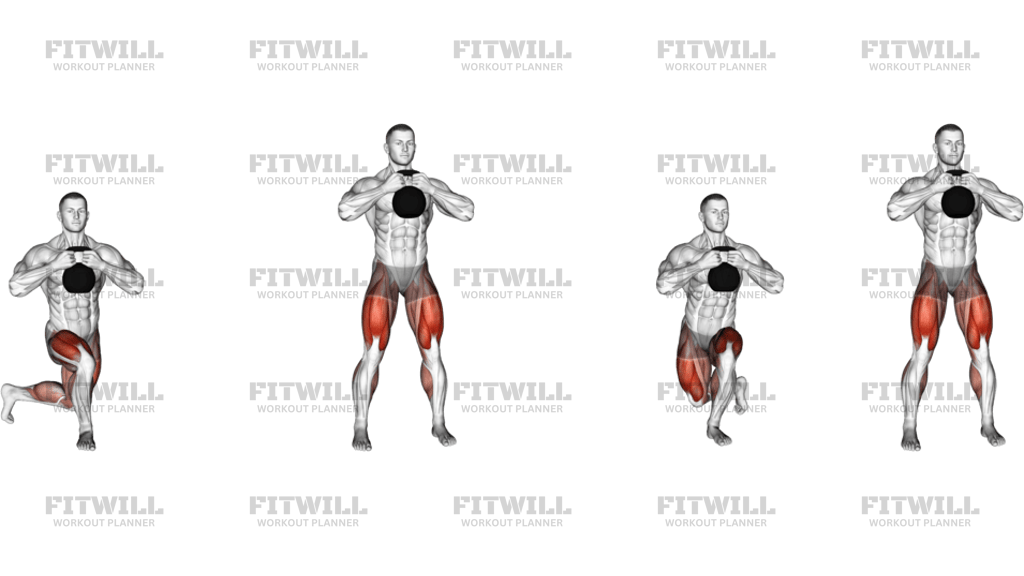
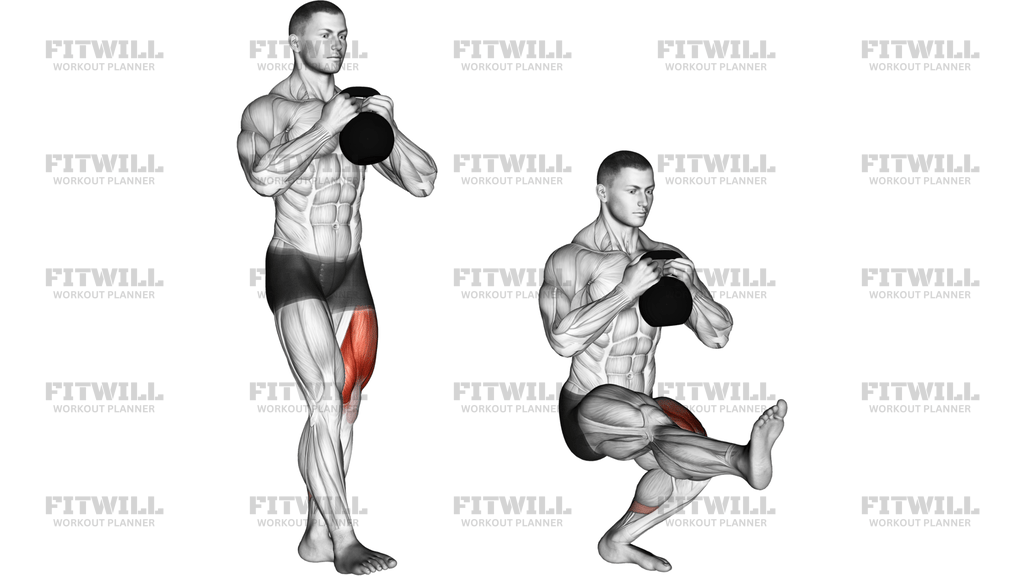
Kettlebell Pistol Squat is a single-leg squat performed while holding a kettlebell close to the chest in a goblet-style front load. The image shows the bell centered high at the sternum, the working leg bearing the body, and the free leg extending forward as you lower. That front-held load gives the torso a clear counterbalance, but it also makes posture and ankle control more obvious: if you collapse through the arch, let the knee cave in, or drift too far forward, the rep gets shaky fast.
This movement is demanding because it combines strength, balance, and mobility in the same rep. The standing leg has to produce force through a long range, while the hip, knee, ankle, and foot stay lined up well enough to keep the descent smooth. Quads and glutes do most of the work, with the hamstrings, adductors, calves, and trunk helping you stay centered. In practical terms, it is a very direct test of single-leg strength and control, not just a leg exercise you can rush through for volume.
The setup matters more here than it does in a regular squat. Hold the kettlebell tight to the chest, keep the elbows down, and root the standing foot before you descend. The non-working leg should stay active and extend forward rather than hanging loose behind you. From there, sit down between the hip and heel under control, letting the torso lean only as much as needed to keep balance while the chest stays proud and the spine stays long.
At the bottom, the goal is not to crash into the floor or bounce out of the hole. You want the working heel planted, the knee tracking over the toes, and the free leg still reaching forward. Stand up by pressing through the whole foot and driving the floor away, then finish tall without overextending the lower back. Because each repetition is so dependent on position, the exercise is best used when you want clean unilateral leg work, a mobility-strength challenge, or a technical accessory that exposes left-right differences.
Use this variation when you can keep the rep smooth and repeatable. If depth disappears, the heel lifts early, or the kettlebell starts pulling you off line, the set is too hard for the current level of control. A slight reduction in range, a lighter bell, or an assisted regression is usually a better choice than forcing full-range reps. When performed well, Kettlebell Pistol Squat builds strong legs, better foot control, and the ability to own deep single-leg positions under load.
[ Workout Log & Planner ]
Put your next workout in Fitwill
Keep your plan and training log ready when you are.


Instructions
- Hold the kettlebell with both hands at your upper chest, elbows tucked, and stand on one foot with the other leg lifted straight in front of you.
- Set the tripod of the working foot before you move: big toe, little toe, and heel stay rooted to the floor.
- Brace your trunk, keep your chest tall, and look forward so the bell stays centered over your midline.
- Sit the hips down and slightly back as the free leg reaches forward, keeping it off the floor and active.
- Lower under control until you reach your deepest stable position without the heel lifting or the knee collapsing inward.
- Pause briefly in the bottom if you can hold position without bouncing.
- Drive through the whole standing foot to rise, letting the knee and hip extend together as you stand.
- Keep the kettlebell tight to the chest and exhale as you pass the hardest part of the ascent.
- Reset fully between reps, then repeat on the same side or switch sides as programmed.
Tips & Tricks
- Keep the kettlebell glued to the chest; if it drifts forward, it will pull your torso out of balance.
- Think about reaching the free heel and toes forward, not letting the non-working leg hang loose behind you.
- Track the standing knee over the second and third toes instead of letting it cave toward the big toe.
- Stop the descent the moment the working heel starts to peel up; depth only counts if the foot stays planted.
- Use a slow lowering phase so you can own the transition out of the bottom instead of dropping into it.
- If balance is the limiter, lightly hold a rack or post with the free hand and reduce the load before chasing depth.
- Do not let the lower back arch hard at the top; finish tall by stacking ribs over pelvis, not by leaning back.
- A clean rep should feel like the standing leg is doing most of the work, not the kettlebell or the floor helping you out.
- When fatigue shows up as a wobble at the ankle or knee, end the set before the position collapses.
Frequently Asked Questions
What muscles do Kettlebell Pistol Squat reps work most?
The standing leg gets the biggest demand from the quads and glutes, with the hamstrings, adductors, calves, and core helping stabilize the bottom position.
Is the kettlebell held like a goblet squat?
Yes. Keep it high at the chest with both hands so the load stays centered and does not pull you forward.
Can beginners use this exercise?
Most beginners should start with an assisted or box pistol squat first. Use the kettlebell version only when you can keep the heel down and the knee controlled through the full range.
How should my free leg be positioned?
Keep the non-working leg extended forward and active so it helps counterbalance the descent instead of dangling behind you.
What if my heel lifts at the bottom?
Shorten the depth, use a lighter kettlebell, or regress to an assisted version. A heel that pops up usually means the current range is more than your ankle can control.
How deep should I go on each rep?
Go only as deep as you can while keeping the working foot flat, the knee tracking cleanly, and the torso under control.
What is the most common form mistake?
Letting the knee cave inward or crashing into the bottom are the two biggest problems, because both remove tension from the standing leg.
How do I make the movement easier?
Use a lighter kettlebell, hold onto a support with one hand, or squat to a box first so you can own the same single-leg pattern with less balance demand.