Kettlebell Swing
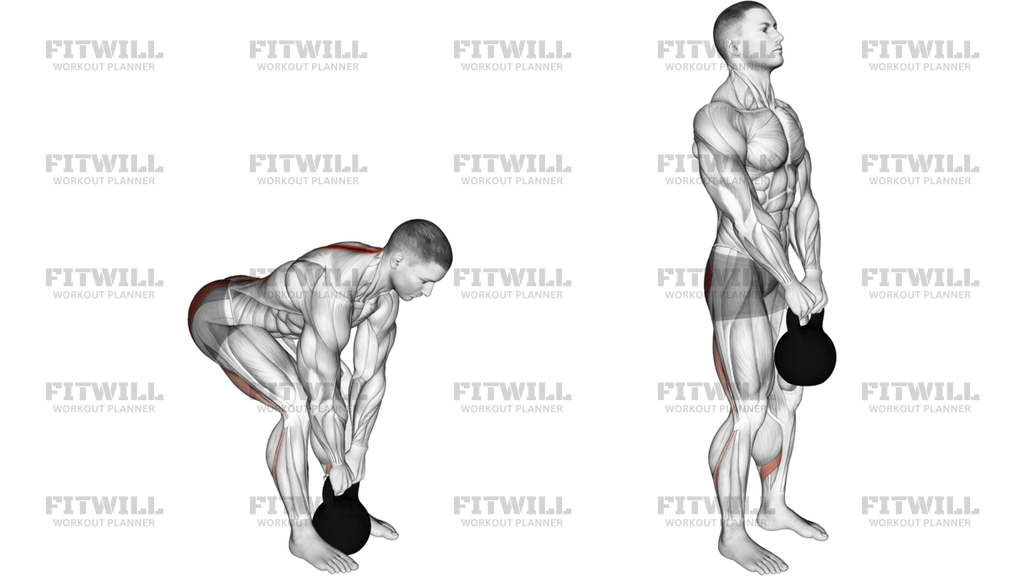
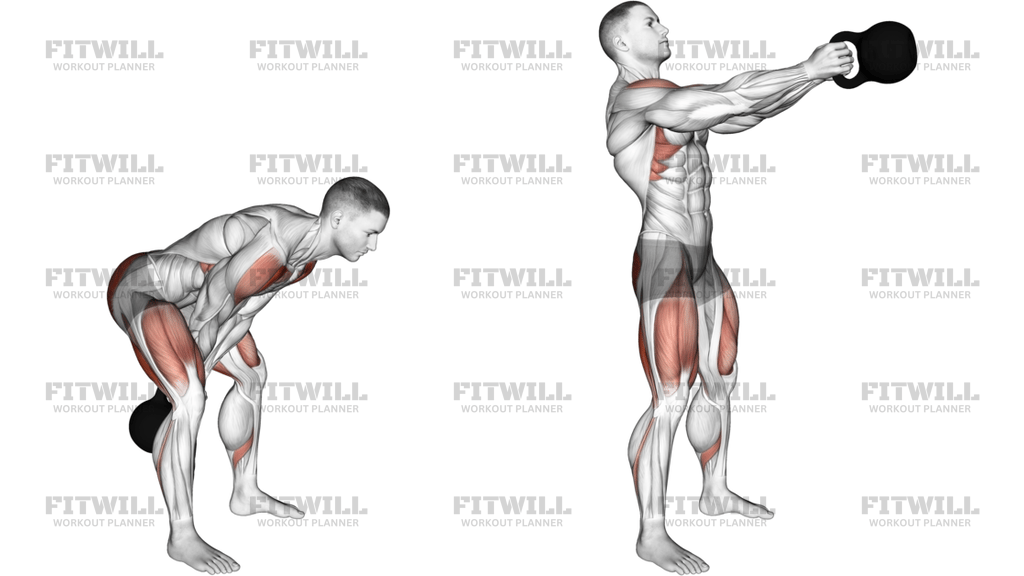
The Kettlebell Swing is a hip-hinge power exercise performed with a single kettlebell and two hands on the handle. In the image, the bell starts low between the legs and finishes at chest height with the body tall, which is the classic two-hand swing pattern. The movement trains explosive hip extension, posterior-chain strength, trunk stiffness, and rhythm under load.
What makes the swing effective is that the bell is not lifted with the arms. The hips drive the rep, while the arms stay long and act like straps connecting your body to the kettlebell. When the hinge is crisp, the glutes, hamstrings, and upper back create a fast but controlled float. When the hinge is sloppy, the exercise turns into a squat or front raise and the lower back usually takes over.
The setup matters because the bell has to start close enough to the body to load the hips without pulling the shoulders forward. A solid stance, a neutral spine, and a strong brace let you absorb the backswing and then reverse it cleanly. You should feel tension build in the hamstrings and glutes as the bell travels back, then a sharp hip snap as you stand tall and drive the bell up.
At the top of the swing, the body should finish in a straight line from head to heels: ribs down, glutes tight, knees extended, and shoulders packed rather than shrugged. The kettlebell should float to about chest height from the force of the hips, not because you curl or press it. After the float, let the bell fall back into the hinge and guide it into the next backswing instead of letting it yank your shoulders.
This exercise is useful for conditioning, power development, and posterior-chain work when you want a high-output movement without a long setup. It is also a good choice for athletes who need crisp hip extension and for lifters who want a hinge pattern with a strong breathing rhythm. Keep the rep quality high, stop the set when the hinge turns into a squat, and choose a bell that lets you own the path from the first backswing to the final float.
Fitwill
Log Workouts, Track Progress & Build Strength.
Achieve more with Fitwill: explore over 9600 exercises with images and videos, access built-in and custom workouts, perfect for both gym and home sessions, and see real results.
Start your journey. Download today!




Instructions
- Stand with your feet about shoulder-width apart and place the kettlebell on the floor a short step in front of you.
- Grip the handle with both hands, hinge at the hips, and send your hips back so your shins stay nearly vertical.
- Hike the kettlebell back between your thighs while keeping your spine neutral and your chest angled slightly forward.
- Brace your torso, keep your arms long, and let the bell swing back like a loaded pendulum rather than pulling it up.
- Drive through your hips and squeeze your glutes to snap into a tall standing position.
- Allow the kettlebell to float up to about chest height with straight arms and relaxed shoulders.
- As the bell falls, hinge again and guide it back between your legs while keeping your weight balanced over your feet.
- Repeat each rep with the same hip snap and controlled backswing, then park the bell safely on the floor when you finish.
Tips & Tricks
- Treat the kettlebell like a pendulum: if you feel yourself lifting with the shoulders, the bell is too heavy or the hinge is too shallow.
- Let the bell travel back toward the groin, not down to the floor in a deep squat position.
- Keep the arms straight but loose; they guide the bell, while the hips create the power.
- At the top, finish tall with glutes tight and ribs stacked over the pelvis instead of leaning back.
- If the bell rises above chest height, do not chase it with your arms; reduce the load and sharpen the hip snap.
- Exhale on the explosive hip extension and use the brief breath reset on the backswing to stay rhythmic.
- Keep the kettlebell close to the body on the downswing so it does not pull your shoulders forward.
- Stop the set when your low back starts doing the work or your timing slows down.
Frequently Asked Questions
What muscles do Kettlebell Swings work most?
They mainly train the glutes, hamstrings, and core, with the lats, upper back, and grip helping control the bell.
Should I bend my knees a lot during the swing?
No. The knees bend slightly as part of the hinge, but the movement should come mostly from the hips going back and then snapping forward.
Where should the kettlebell finish at the top?
For this version, the bell should float to about chest height with straight arms, not overhead.
Is this supposed to feel like a squat?
No. If your torso stays very upright and your knees keep traveling forward, you are probably squatting instead of hinging.
Can beginners learn the kettlebell swing?
Yes, if they first learn the hip hinge and start with a light bell or even a dead-stop drill from the floor.
What should I do if my lower back feels it more than my hips?
Reduce the load, shorten the set, and make the hinge cleaner so the bell is driven by the hips instead of the spine.
Do my arms pull the bell up?
No. Your arms stay long and act like ropes while the hips create the upward force.
How do I know if the weight is too heavy?
If you have to squat the bell, curl it, shrug at the top, or lose the chest-height float, the load is too much.