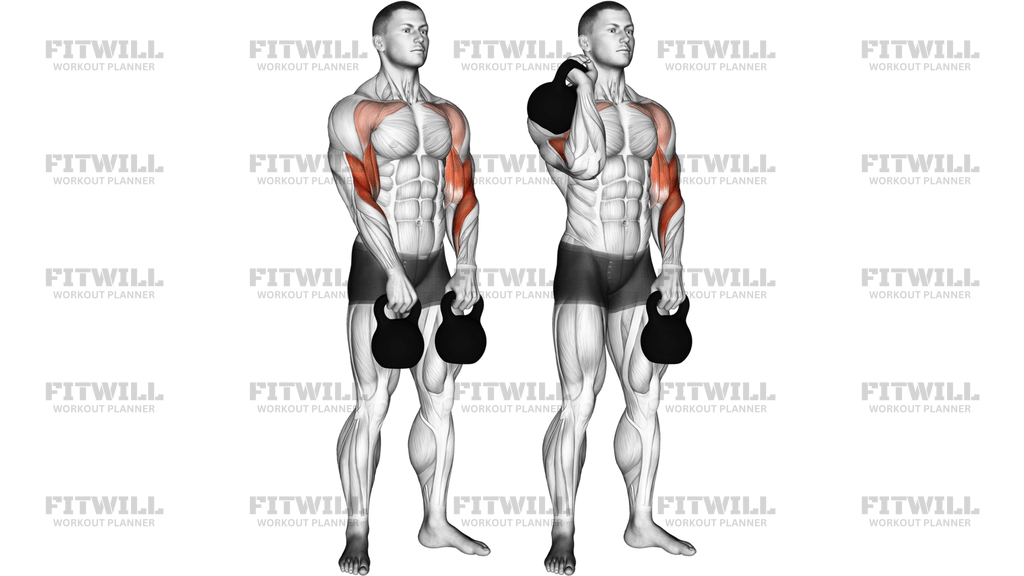
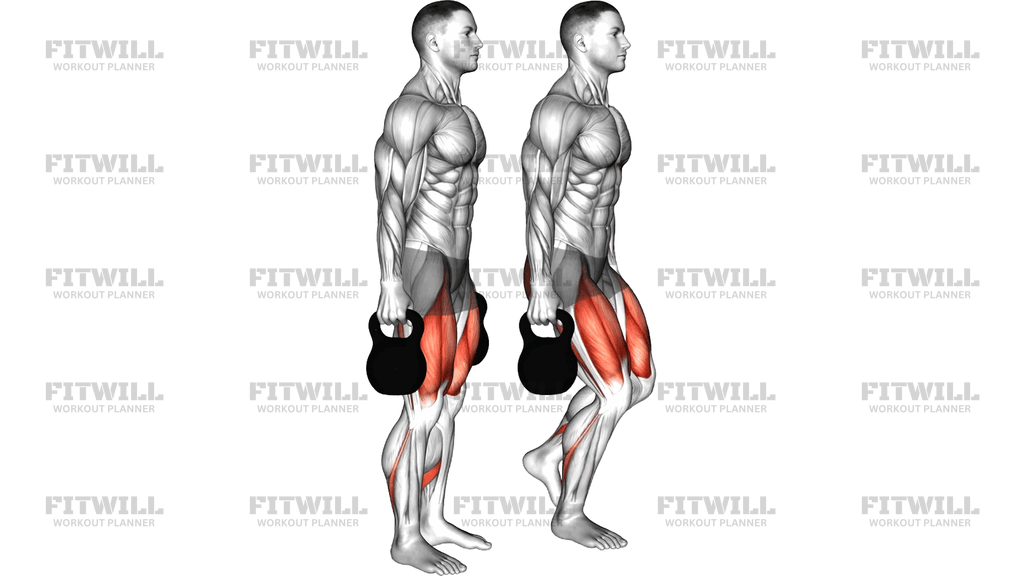
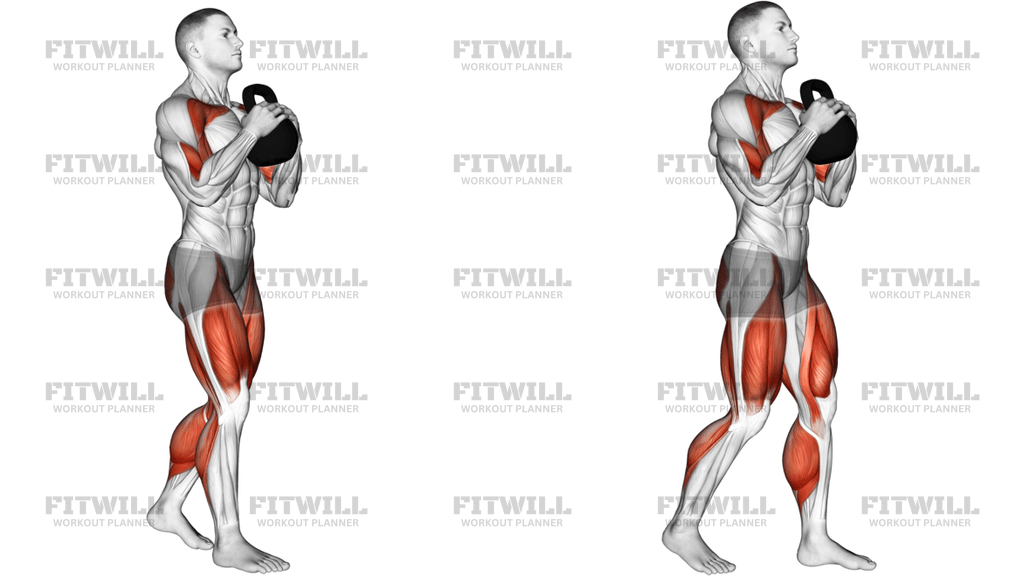
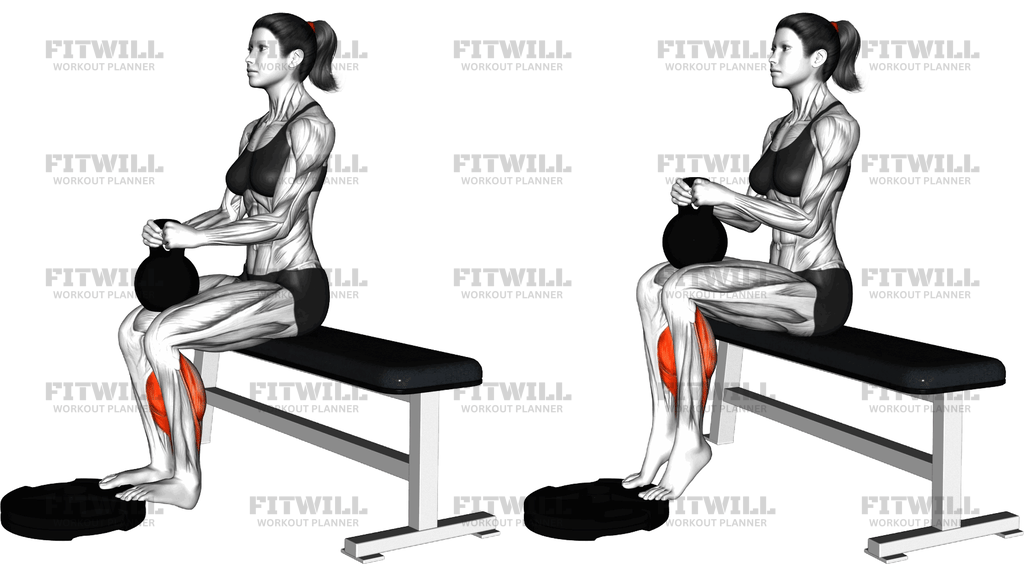
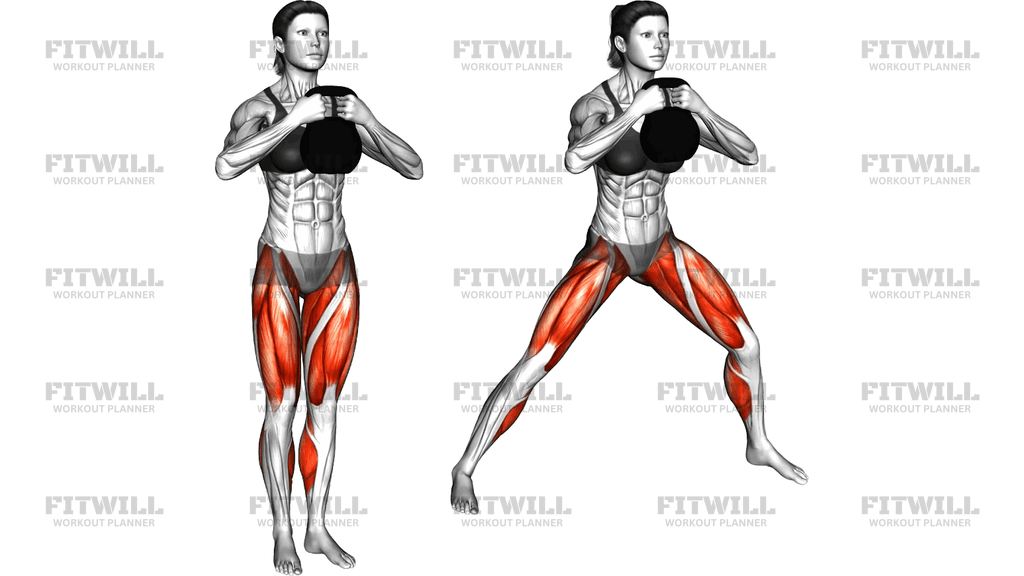
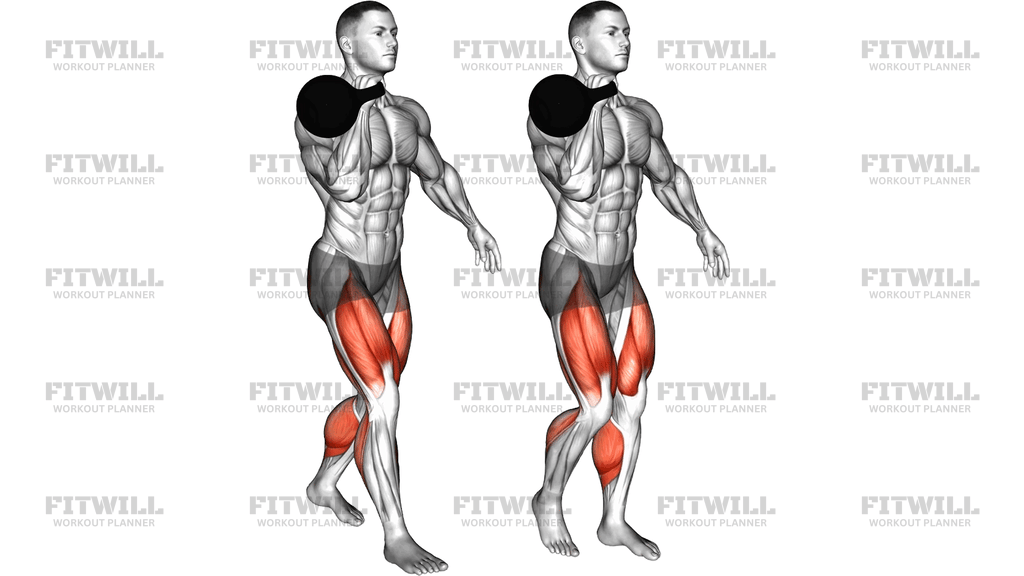
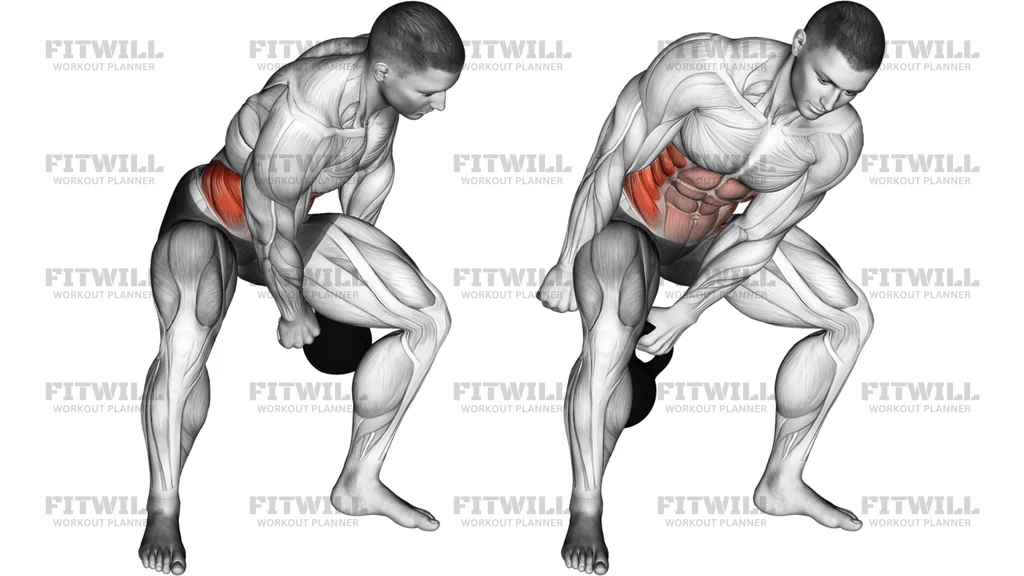
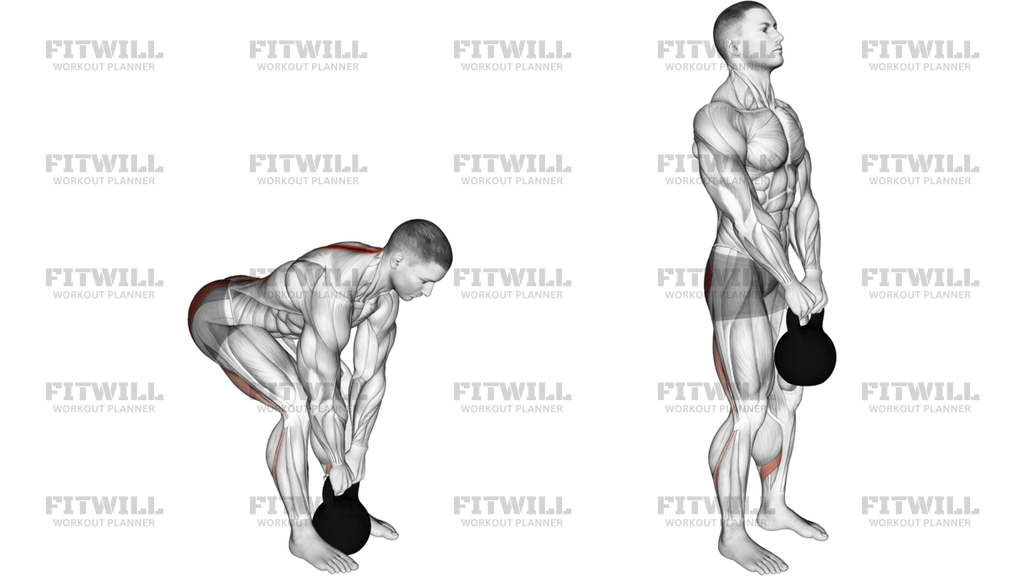
Kettlebell Split Squat
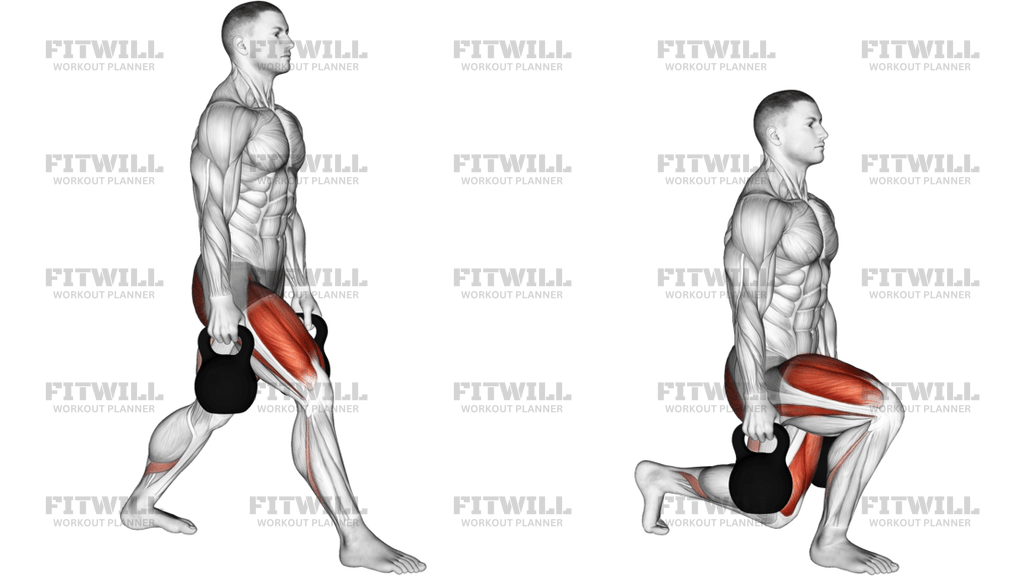
Kettlebell Split Squat is a lower-body strength exercise built around a long split stance, an upright torso, and a controlled drop of the rear knee toward the floor. With a kettlebell in each hand at your sides, the front leg does most of the work while the back leg helps with balance and position. The setup matters because small changes in stance length, torso angle, and hip position can shift the emphasis from the front thigh to the glute or turn the rep into a wobbling lunge.
This movement trains the front thigh hard, especially the quadriceps, while also asking the glute, adductors, and trunk muscles to keep the pelvis steady. That makes it useful for building single-leg strength, improving side-to-side balance, and exposing left-right differences that bilateral squats can hide. The kettlebells add load without forcing the shoulders to support a barbell, so the exercise can be a practical option when you want leg work with a simpler upper-body setup.
A good rep starts with both feet planted on separate tracks, the front foot flat, the back heel lifted, and the hips square to the front. From there, you lower straight down by bending both knees instead of stepping forward. The front knee should track over the toes, the torso should stay tall, and the weight should stay centered over the front foot rather than drifting onto the back leg. At the bottom, the rear knee should hover close to the floor without bouncing or twisting out of alignment.
Drive up by pressing through the whole front foot and standing back to the same split stance you started with. The kettlebells should hang quietly at your sides throughout the rep; if they swing, the set is usually too heavy or the descent is too fast. Breathing should stay deliberate, with a controlled inhale on the way down and a firm exhale as you stand. That rhythm helps you keep the ribs stacked over the pelvis and the trunk from collapsing forward.
Kettlebell Split Squat fits well in accessory strength work, unilateral leg training, warmups that need lower-body control, or programs that aim to improve leg symmetry. It is also a useful alternative when you want the benefits of a split squat without loading the spine with a barbell. Stay within a pain-free depth, keep the stance stable, and choose a load that lets you control every rep from the first descent to the final stand.
[ Workout Log & Planner ]
Put your next workout in Fitwill
Keep your plan and training log ready when you are.


Instructions
- Stand in a split stance with one foot forward and the other foot back, then let a kettlebell hang in each hand at your sides.
- Set the front foot flat, lift the back heel, and square your hips and ribs toward the front before starting the rep.
- Brace lightly through the trunk so the torso stays tall and the pelvis stays level as you descend.
- Lower straight down by bending both knees, letting the rear knee travel toward the floor instead of stepping forward.
- Keep the front knee tracking over the middle toes and let the front shin move only as far as you can control without wobbling.
- Descend until the rear knee is close to the floor or the front thigh is near parallel, whichever comes first with good alignment.
- Pause briefly at the bottom without bouncing, then press through the whole front foot to stand back up.
- Finish each rep by squeezing the front glute and quad, keeping the kettlebells quiet at your sides.
- Reset the stance between reps if needed, then repeat for the planned side before switching legs.
Tips & Tricks
- Take a stance long enough that the front heel stays planted; if the heel lifts, shorten the depth or widen the split.
- Keep most of the pressure on the front leg. The back foot is there for balance, not for pushing the rep up.
- Let the front knee travel naturally, but do not let it cave inward as you descend or stand.
- If the torso tips forward, reduce the load or make the split slightly shorter so you can stay stacked over the hips.
- A slower lowering phase makes the front thigh work harder and usually keeps the pelvis from twisting.
- Hold the kettlebells still. If they swing away from the body, the stance or load is probably too aggressive.
- Use a depth that keeps the rear knee just off the floor without slamming down or losing balance.
- Exhale as you drive up from the bottom so the ribs stay controlled instead of flaring open.
Frequently Asked Questions
What does the kettlebell split squat train the most?
It mainly trains the front thigh, especially the quadriceps, while the glute, adductors, and core help stabilize the split stance.
Should both kettlebells stay at my sides the whole time?
Yes. The weights should hang quietly beside your legs instead of drifting forward, swinging, or being curled up during the rep.
How close should my rear knee get to the floor?
Lower until the rear knee is close to the floor and you can keep the torso tall and the front foot planted. Do not bounce off the ground.
How is this different from a lunge?
A split squat keeps the feet in one fixed split stance for the whole set, while a lunge usually involves stepping or traveling between reps.
What if I feel it mostly in my back leg?
That usually means the stance is too short or too much weight is shifted backward. Move the front foot farther forward and keep more pressure through the front heel and midfoot.
Can beginners do this exercise?
Yes. Beginners should start with light kettlebells or even body weight first, so they can learn the balance and knee tracking.
What are the most common mistakes?
Common errors include leaning too far forward, bouncing out of the bottom, letting the front knee cave in, and pushing off the back leg too much.
How can I make the kettlebell split squat harder?
You can increase load, slow the lowering phase, pause longer at the bottom, or use a deeper but still controlled range of motion.