Kick Out Sit
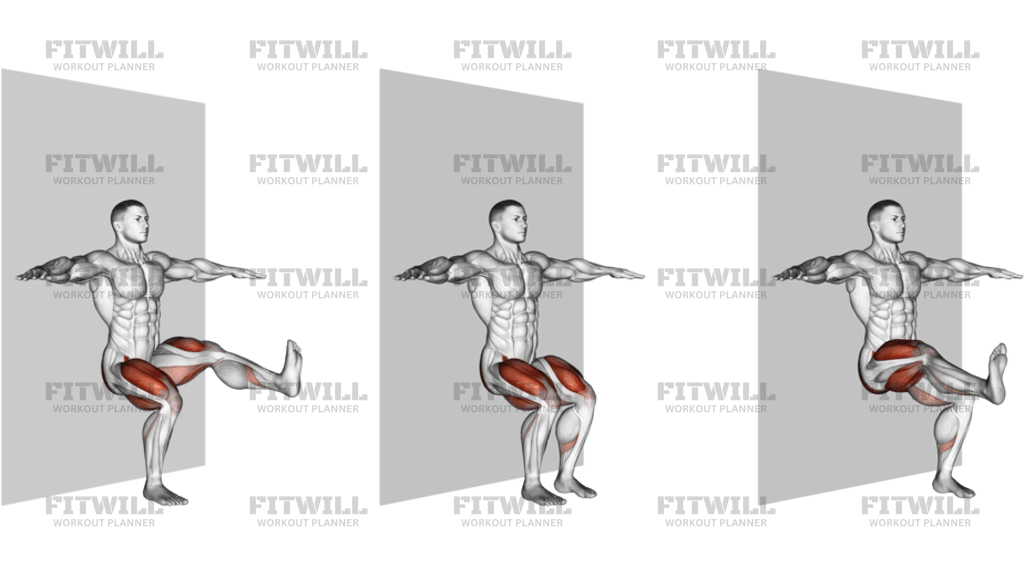
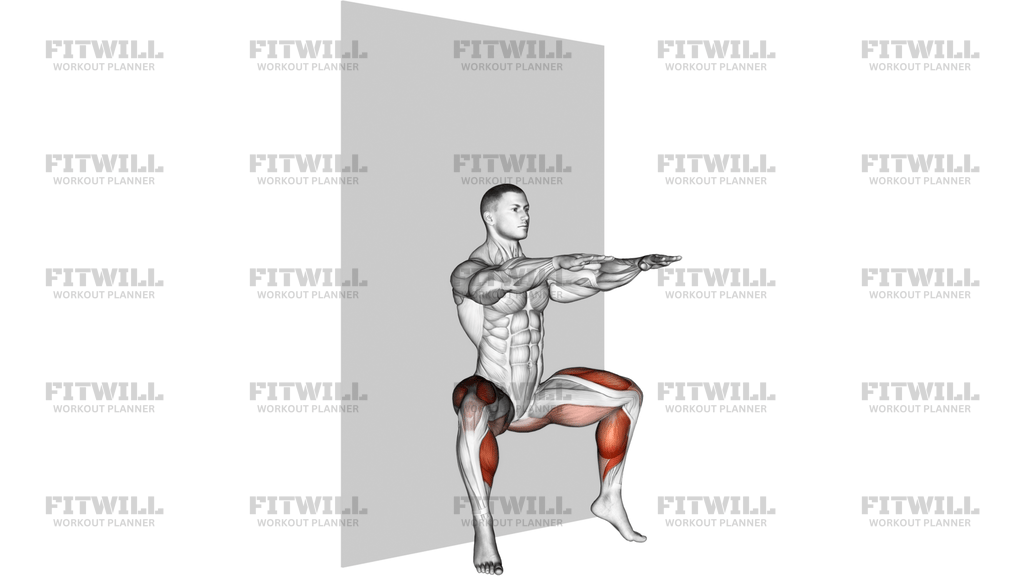
Kick Out Sit is a wall-supported bodyweight drill that keeps the thighs under constant tension while one leg kicks straight out from the wall-sit position. The movement is simple on paper, but it asks for a lot of control from the quads, hips, and trunk because the body has to stay pinned to the wall while one leg changes shape and the other leg keeps the squat hold stable.
The main training effect comes from the quadriceps, especially the leg that is holding the wall sit while the other leg extends. The glutes, hip flexors, calves, and core all help keep the pelvis level, the knees tracking well, and the torso from tipping forward. That makes the exercise useful for thigh endurance, knee-friendly quad work, warmups, and accessory work when you want local fatigue without adding external load.
The setup matters more than most people think. If your feet are too close to the wall, the knees shoot forward and the sit gets cramped; if they are too far away, the thighs lose tension and the sit turns into a rest position. Start with the back and hips supported by the wall, feet flat, and knees bent to a depth you can hold without losing a neutral trunk. The goal is to keep steady pressure through the thighs, not to chase the deepest possible squat.
Each kick-out should look clean and deliberate. Keep the supporting leg rooted, straighten the free leg forward without twisting the hips, and avoid bouncing out of the wall sit to buy extra range. A short pause at full extension is enough to make the quads work hard if the rest of the body stays still. Return the leg under control, re-establish the sit, and alternate sides at a pace that keeps the wall sit honest.
This exercise is a good fit for home training, bodyweight conditioning, knee-tracking practice, or finishers where you want a strong quad burn with minimal setup. Newer lifters can shorten the hold, reduce the squat depth, or limit the kick-out range at first. If the movement causes sharp knee pain or the back keeps peeling off the wall, the setup is too aggressive and should be scaled back before adding more reps.
[ Workout Log & Planner ]
Put your next workout in Fitwill
Keep your plan and training log ready when you are.


Instructions
- Stand with your back against a wall and walk your feet forward until you can lower into a controlled wall sit.
- Slide down until your hips and knees are bent to about 90 degrees, or to the deepest position you can hold with the low back still supported.
- Keep both heels flat, your knees tracking over your toes, and your torso tall against the wall.
- Brace your abdomen and shift just enough weight into the standing leg to free the other foot.
- Extend the free leg straight out in front of you, lifting the foot until the knee is nearly straight and the toes stay pulled back.
- Keep the hips level and the supporting leg steady; do not bounce out of the sit or twist the pelvis.
- Squeeze the quad of the kicking leg, then bring the foot back under control to the wall-sit position.
- Alternate legs or complete all reps on one side, matching the same range and tempo on every repetition.
- Exhale as the leg extends, inhale as it returns, and step out of the wall sit carefully when the set is done.
Tips & Tricks
- Set your feet slightly farther from the wall if the knees feel jammed; the sit should load the thighs without pinching the joint.
- Keep your lower back gently pressed into the wall so the kick-out does not turn into a hip flexion compensation.
- Pull the toes back on the kicking leg to keep the quad working and to avoid sloppy ankle-driven momentum.
- Use a short pause at full extension instead of a bigger swing if you want more quad tension without losing form.
- Keep the supporting knee from caving inward when the free leg leaves the floor.
- Do not let the torso lean away from the wall to help the leg come up; that usually means the wall sit is too deep.
- Match both sides carefully if you alternate legs so one side does not get an easier range than the other.
- Stop the set once you can no longer keep the hips level and the back anchored to the wall.
Frequently Asked Questions
What muscle does Kick Out Sit target most?
The quads do most of the work, especially as you hold the wall sit and straighten one leg at a time.
Can beginners perform this exercise?
Yes. Beginners should use a shallower wall sit and a smaller kick-out range until they can keep the hips and back steady.
Should my back stay on the wall during the kick-out?
Yes. Keep the upper back and low back supported so the thighs do the work instead of the torso swinging forward.
How far should I extend the kicking leg?
Straighten it as far as you can without losing the wall sit, twisting the hips, or arching the low back away from the wall.
What is the most common mistake with this exercise?
People usually kick the leg out with momentum and let the sitting position collapse, which removes tension from the quads.
Is this exercise good for knee stability work?
It can help teach cleaner knee tracking and thigh endurance, but it should stay pain-free and controlled.
How can I make Kick Out Sit harder without adding weight?
Hold the wall sit deeper, pause briefly at the end of each kick-out, or slow the return so the quads stay under tension longer.
What should I do if my knees hurt in the wall sit?
Move your feet a little farther from the wall, reduce the squat depth, or shorten the set. Sharp pain is a sign to stop and reset the position.