Lateral Twist Box Jump
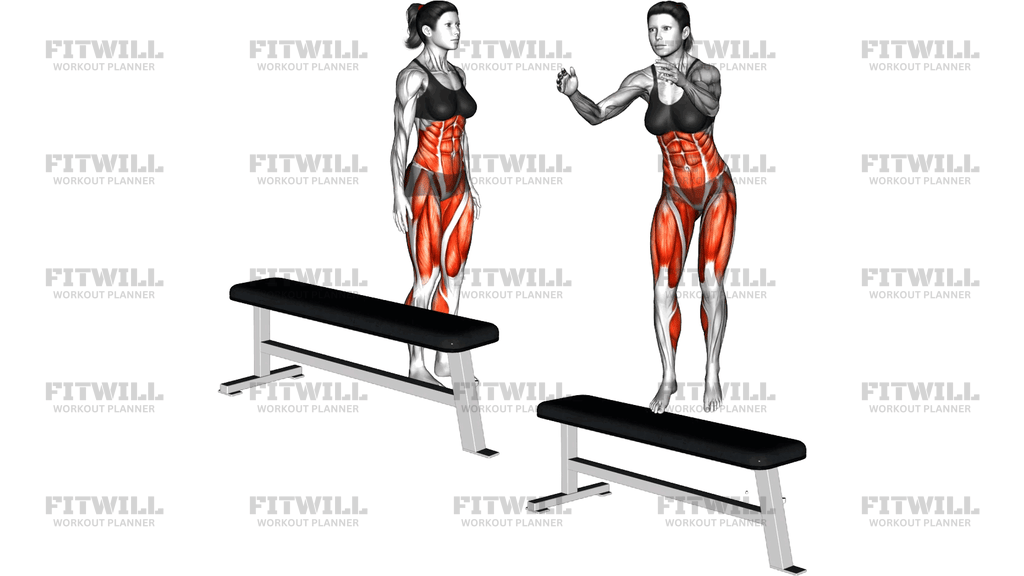
Lateral Twist Box Jump is a bodyweight plyometric that combines a sideways drive with a quick rotational landing on a box or bench. It is used to develop lower-body power, coordination, and the ability to control force as you move across and up onto a raised surface. The movement is demanding because the jump, twist, and landing all happen together, so the quality of the landing matters just as much as the height of the jump.
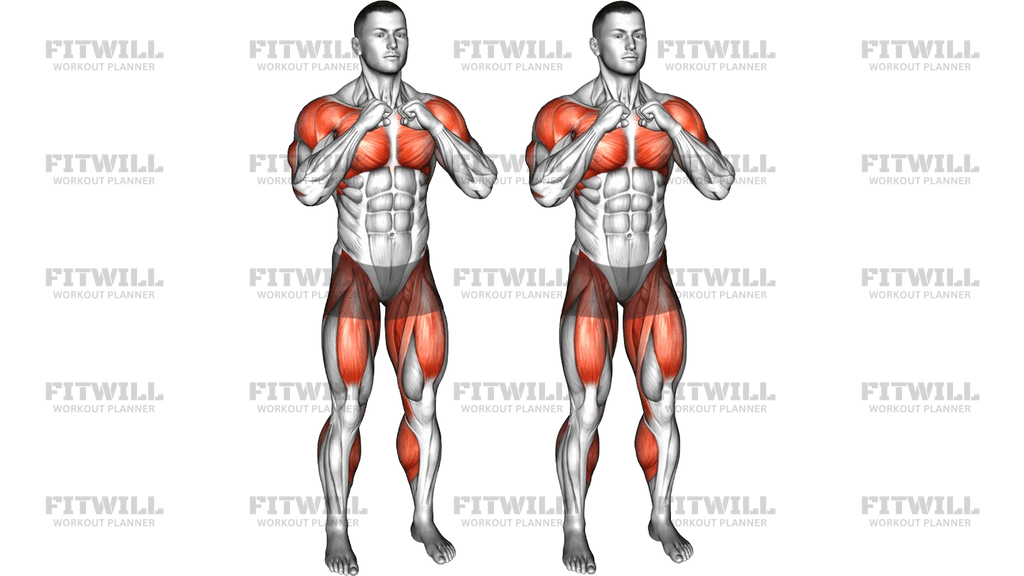
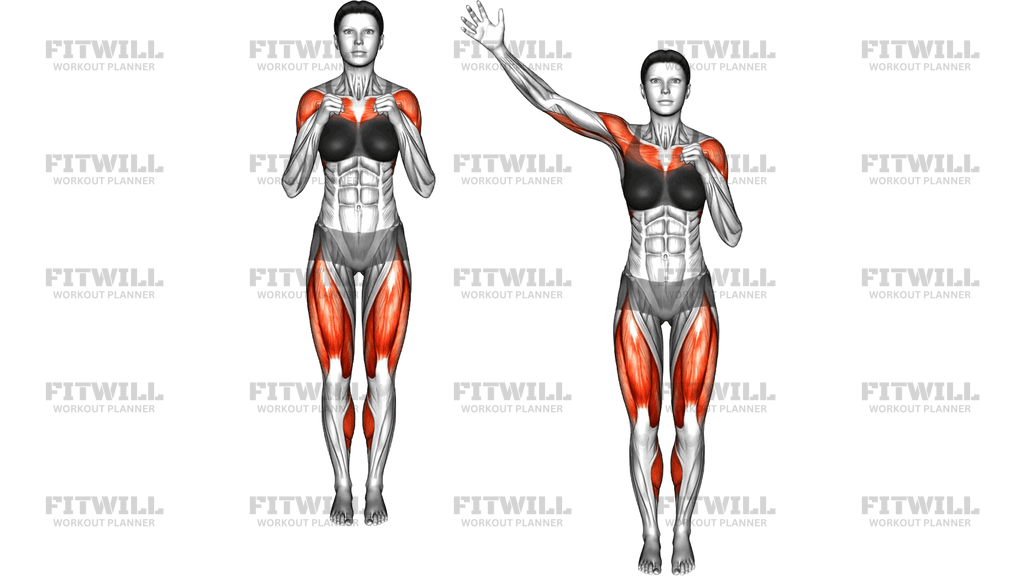
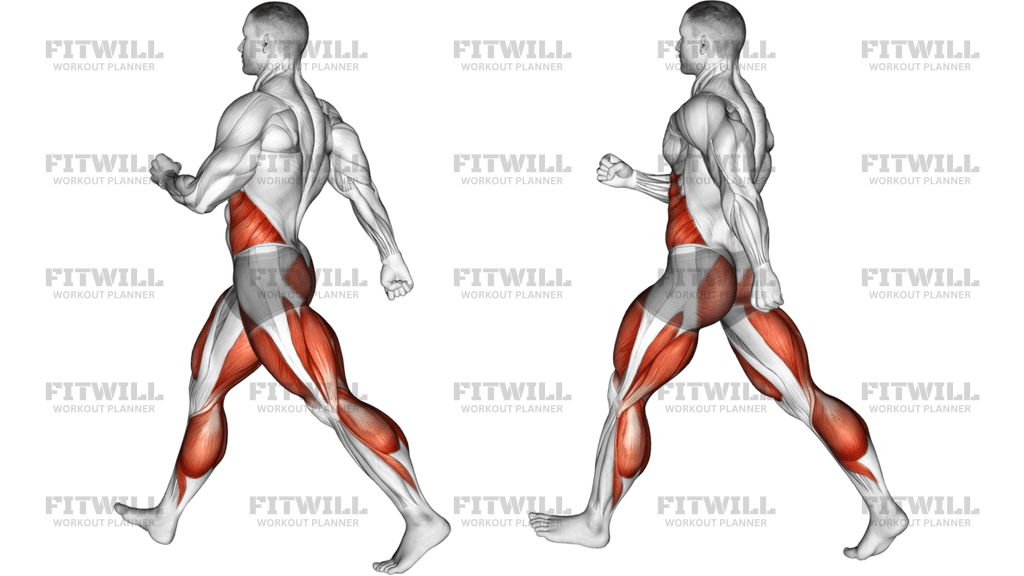
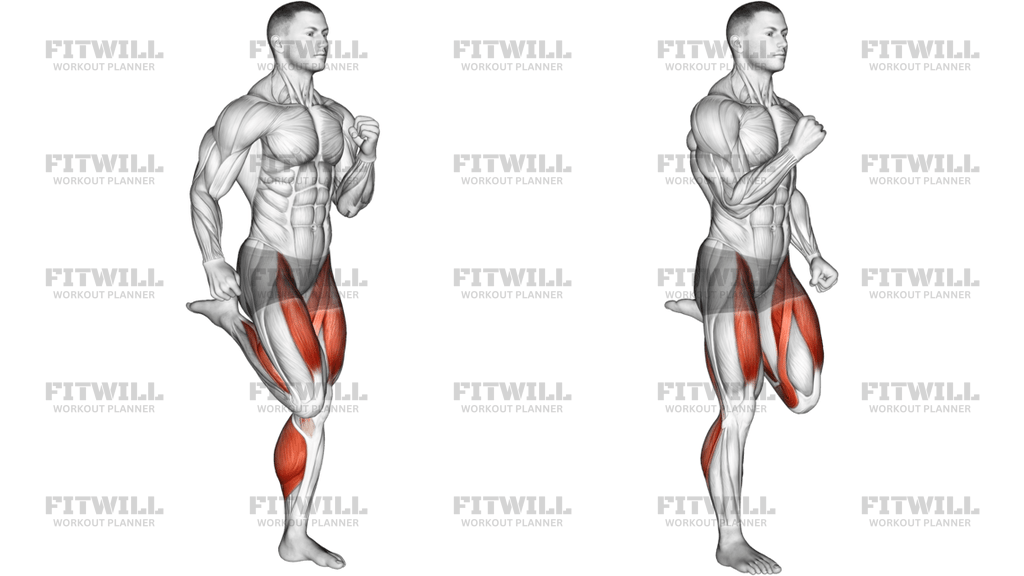
This exercise places the biggest demand on the legs and hips, with the core and smaller stabilizers working hard to keep the trunk organized while the body changes direction in the air. The twist should come from the hips and shoulders turning together, not from yanking the low back or letting the knees cave in. When the landing is clean, the movement teaches you how to absorb force through the ankles, knees, and hips instead of crashing onto the box.
The setup matters because the box height, your stance, and the direction you approach from all affect whether the jump feels sharp or sloppy. Stand beside a stable box or flat bench, load into a small athletic squat, and keep your chest proud enough to see the landing spot. A controlled arm swing helps you create momentum, but the jump should still feel like an explosive step across and up rather than a wild leap.
As you leave the floor, drive laterally and let the body rotate just enough to land balanced on top of the box. Land softly with both feet planted, then settle the hips so the knees stay aligned over the toes. The goal is a quiet, controlled catch that shows you own the movement, not a hard stomp that bounces you out of position.
Lateral Twist Box Jump is useful in power sessions, agility work, conditioning circuits, and athletic warmups when you want a fast, athletic pattern instead of heavy loading. Keep the reps crisp and stop before speed, balance, or landing quality drops. If the twist starts to come from the lower back, the knees cave inward, or you cannot step down safely, lower the box and clean up the rep before increasing intensity again.
Fitwill
Log Workouts, Track Progress & Build Strength.
Achieve more with Fitwill: explore over 9600 exercises with images and videos, access built-in and custom workouts, perfect for both gym and home sessions, and see real results.
Start your journey. Download today!




Instructions
- Stand beside a sturdy box or flat bench with your feet about shoulder width apart and your shoulders square to the long edge of the platform.
- Bend your knees and hips into a small athletic squat, then let your arms sweep back to load the jump without rounding your lower back.
- Brace your midsection and keep your chest lifted so you can drive laterally across and up onto the box in one explosive motion.
- Swing your arms forward and jump onto the platform, letting your hips and shoulders turn together just enough to match the landing.
- Land softly on both feet with your weight centered over the box and your knees tracking over your toes.
- Absorb the landing by bending at the ankles, knees, and hips, then hold the top position long enough to feel stable.
- Stand tall to finish the rep, then step down one foot at a time instead of jumping off the box.
- Reset your stance beside the box, take a breath, and repeat for the planned number of repetitions.
Tips & Tricks
- Pick a box height that lets you land with both feet flat instead of having to tuck your knees aggressively to make the platform.
- Keep the twist small and coordinated; the hips and shoulders should turn together instead of the pelvis spinning ahead of the chest.
- A quiet landing is the goal. If the box sounds loud under your feet, you are dropping onto it instead of absorbing the jump.
- Drive the jump with the same-side arm swing you would use for an athletic bound, but do not let the arms whip you off balance.
- Keep your knees from collapsing inward on the catch by pushing them gently out in line with the toes.
- Step down after each rep so the box stays for landing practice, not rebounding practice.
- If your torso leans too far forward, lower the box and keep your chest more stacked over your hips on takeoff and landing.
- Stop the set when the twist becomes jerky or the landing turns into a hop, because that means the jump is getting too fast to control.
Frequently Asked Questions
What muscle does Lateral Twist Box Jump target most?
It mainly trains the legs and hips, especially the glutes, quads, and calves, while the core and hip stabilizers help control the twist and landing.
Is Lateral Twist Box Jump more of a power exercise or a cardio drill?
It is primarily a plyometric power drill, but short sets also raise heart rate quickly because the movement is explosive and full-body.
How high should the box be for Lateral Twist Box Jump?
Use a height that lets you land with both feet secure on top without folding into a deep tuck. If the landing feels rushed or unstable, lower the box.
Should I jump back down after each rep?
No. Step down one foot at a time so you can protect the landing pattern and avoid extra impact on the way down.
Do I twist my whole body or just my hips?
Turn the hips and shoulders together. The twist should be small and controlled, not a hard spin that pulls on the lower back.
Can a beginner do Lateral Twist Box Jump safely?
Yes, if the box is low and the jump is conservative. Beginners should prioritize a clean lateral landing before trying for more speed or height.
What should I watch for in the landing position?
Your feet should land flat and your knees should stay in line with your toes. If the knees cave inward, the box is probably too high or the jump is too aggressive.
What if I do not have a box or bench?
Use a low, stable step or platform with the same side-on setup. The key is a firm surface that will not move when you land.