Low Jacks
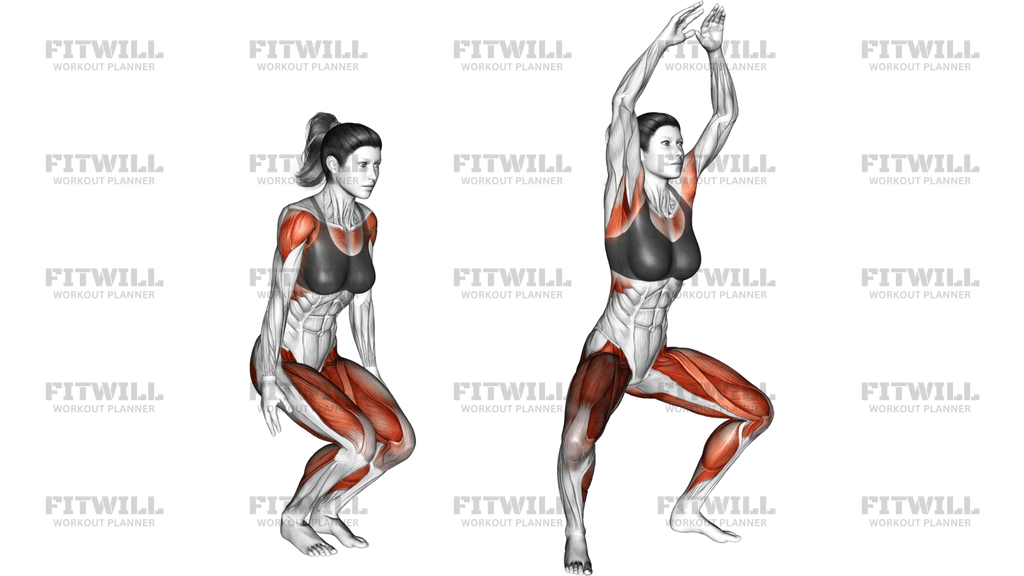
Low Jacks are a low-impact cardio drill that combines an athletic stance with quick side-to-side footwork and overhead arm travel. They keep the rhythm and coordination demand of a jumping-jack pattern while reducing the bounce and landing stress of full jumping jacks. That makes them useful when you want to raise heart rate, build lower-body endurance, or keep moving between strength sets without turning the session into a high-impact plyometric workout.
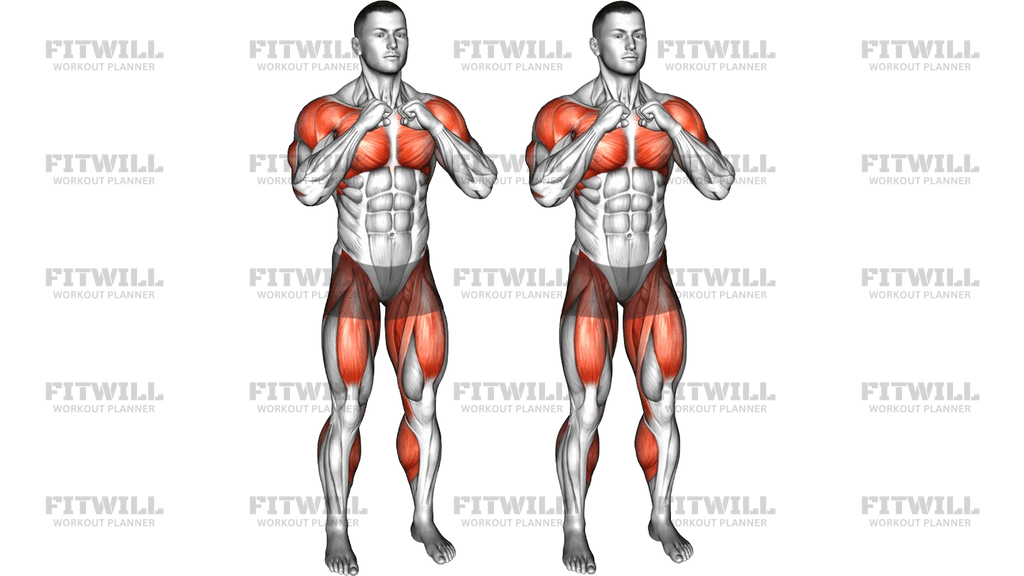
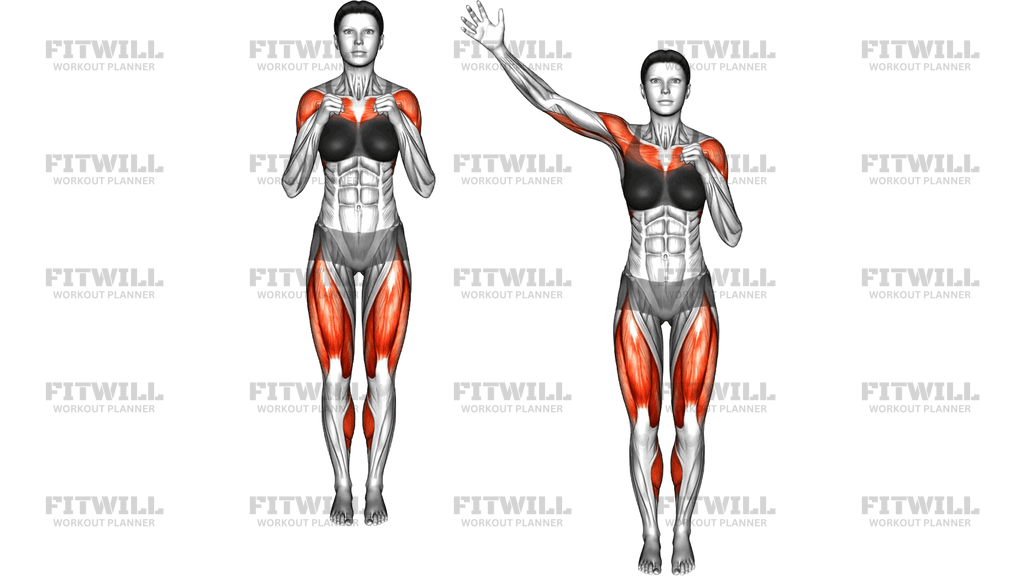
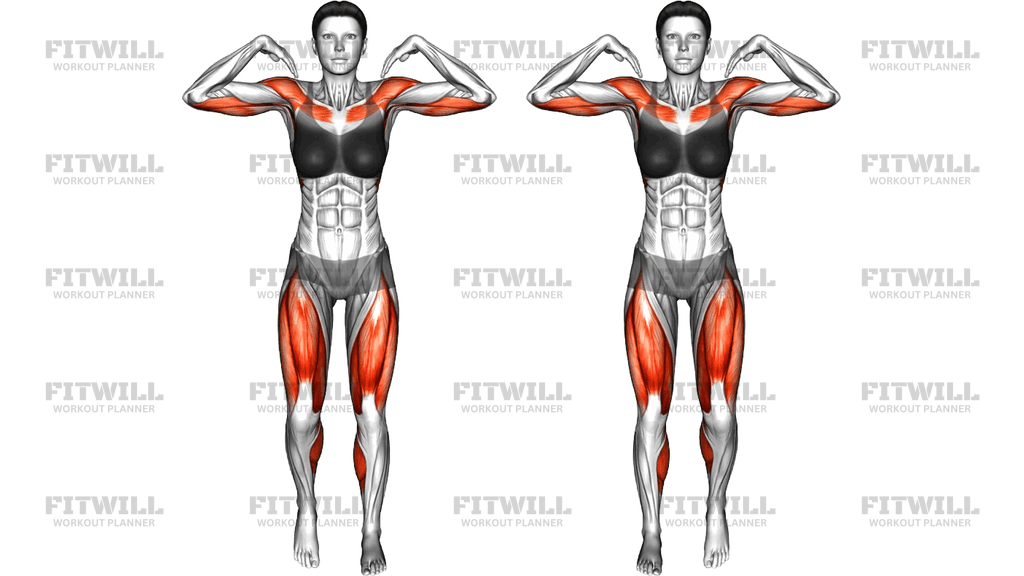
The movement is driven by the legs, shoulders, and trunk working together. The quads and glutes absorb the repeated lowering and rising, the calves and feet control each landing, and the shoulders and upper back guide the arms overhead. The core helps keep the ribs stacked over the pelvis so the torso does not sway or over-arch as the arms move.
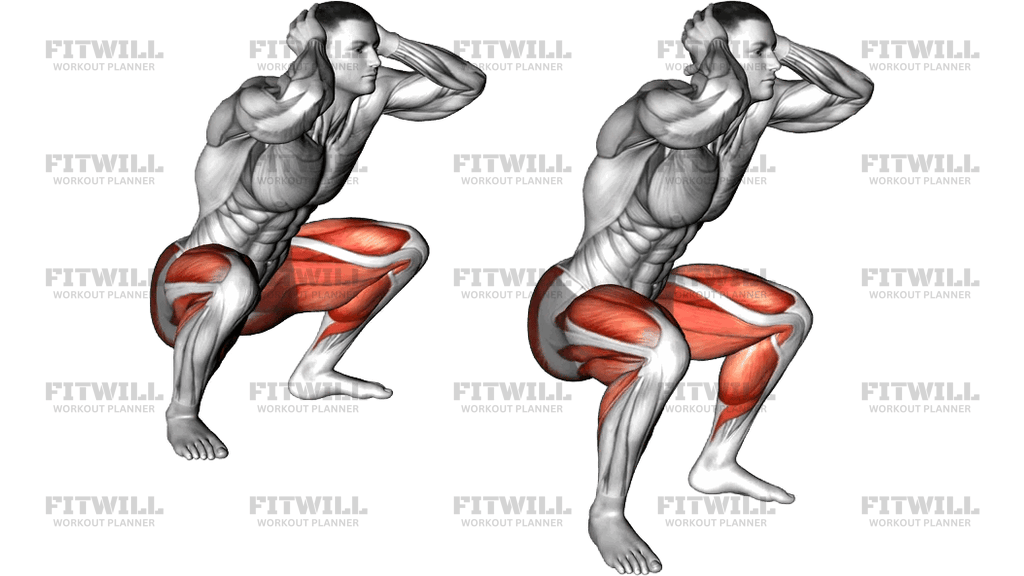
The setup matters because Low Jacks only stay smooth when the stance is light and springy. Start in a shallow squat or athletic stance with soft knees, weight centered over the midfoot, and chest lifted. From there, step or hop one foot out while the arms sweep overhead, then bring the feet back under you as the arms return to the sides. The goal is a quick, clean pattern with quiet landings rather than a big jump or a deep squat.
Low Jacks are a good option for warm-ups, conditioning circuits, active recovery intervals, or any session where you want repeated full-body movement without excessive impact. They are especially useful for people who want a lower-impact alternative to standard jumping jacks, or for athletes who need to keep the cadence high while staying in control of the knees, ankles, and shoulders.
Keep the motion pain-free and scaled to your mobility. If overhead reaching bothers the shoulders, reduce the arm height instead of forcing range. If jumping feels too aggressive, turn the movement into a step-out pattern and keep the feet close to the floor. The best version is the one you can repeat smoothly for the full set without losing posture, timing, or breathing rhythm.
Fitwill
Log Workouts, Track Progress & Build Strength.
Achieve more with Fitwill: explore over 9600 exercises with images and videos, access built-in and custom workouts, perfect for both gym and home sessions, and see real results.
Start your journey. Download today!




Instructions
- Stand tall with your feet together or just outside hip width, then soften your knees and brace your midsection.
- Settle into a shallow athletic squat with your chest lifted, ribs stacked over your pelvis, and weight centered over the midfoot.
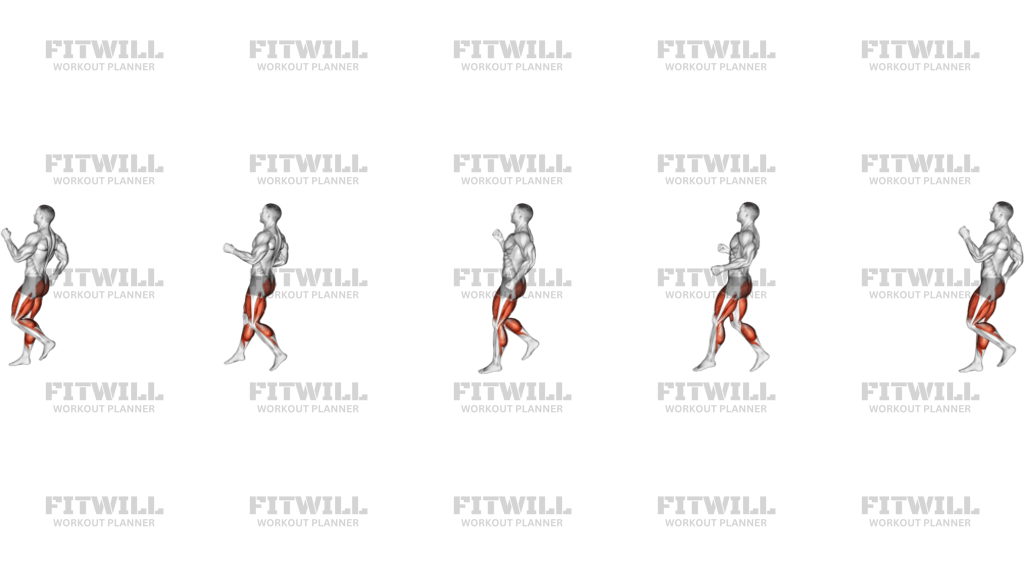
- Step or hop one foot out to the side while both arms sweep up overhead in a smooth arc.
- Keep the landing quiet and controlled, with the working knee tracking in line with the toes.
- Bring the foot back under your hips as the arms return to your sides without letting your torso sway.
- Alternate sides each rep, or continue the same rhythm if the set is programmed as a timed interval.
- Exhale as the arms rise and the feet move out, then inhale as you return to the start.
- Stop the set if your shoulders shrug, your heels slam down, or the squat turns into a bounce.
Tips & Tricks
- Stay in a shallow squat the whole time; the movement should feel springy, not like a full squat repetition.
- If you need less impact, step the foot out instead of hopping and keep both feet close to the floor.
- Reach the arms only as high as your shoulders allow; a smaller overhead range is better than arching the lower back.
- Keep the ribs down as the arms lift so the torso does not flare forward or overextend.
- Land softly through the midfoot and let the knees bend to absorb force instead of locking out each rep.
- Move at a cadence you can repeat evenly for the full interval rather than sprinting early and fading hard.
- Keep the shoulders relaxed and let the arms travel smoothly instead of pinching the traps at the top.
- Use Low Jacks as a warm-up or conditioning finisher when you want to raise heart rate without heavy impact.
Frequently Asked Questions
What do Low Jacks work?
They mainly train the quads, glutes, calves, shoulders, and core while also raising heart rate.
How are Low Jacks different from jumping jacks?
Low Jacks keep the same jack-style rhythm but use a lower stance and lighter landing, so they are usually easier on the joints.
Do I have to jump during Low Jacks?
No. You can step one foot out at a time if you want a lower-impact version.
How low should I squat for this exercise?
Only low enough to stay athletic and springy. A shallow knee bend is enough.
Should my hands touch overhead?
Only if your shoulders can reach comfortably. The important part is a smooth arm drive, not touching the hands together.
What are the most common mistakes with Low Jacks?
Landing too hard, over-arching the lower back, and letting the knees cave inward are the biggest ones.
Are Low Jacks good for beginners?
Yes. Beginners usually do best with the step-out version and a slower rhythm.
When should I use Low Jacks in a workout?
They fit well in warm-ups, conditioning circuits, or between strength sets when you want steady movement without heavy impact.