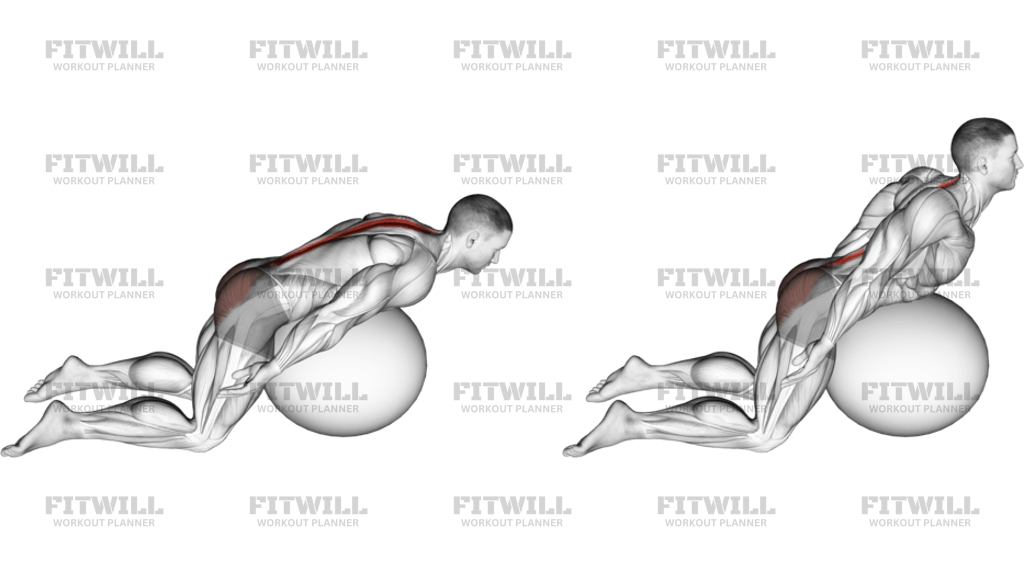
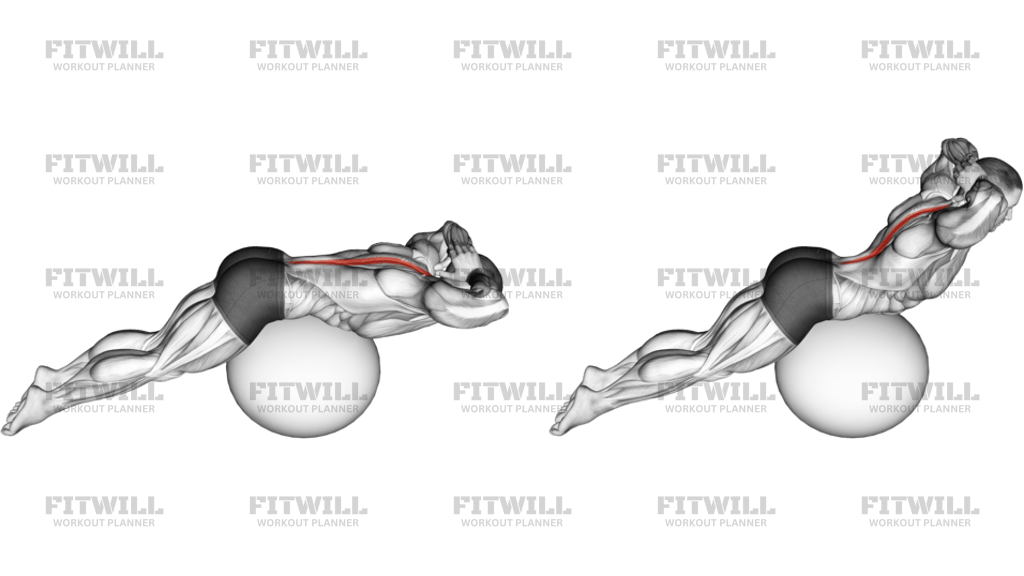
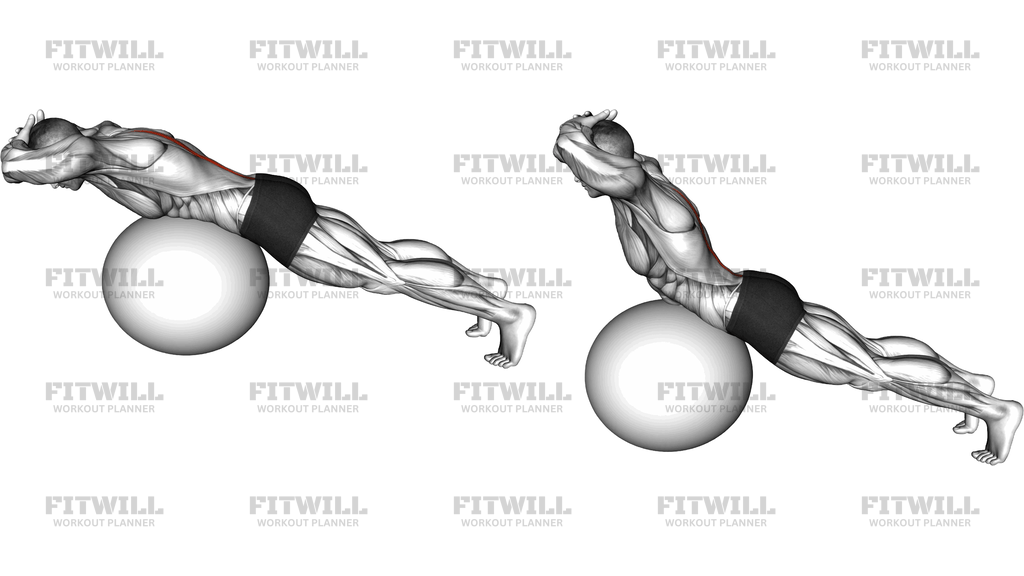
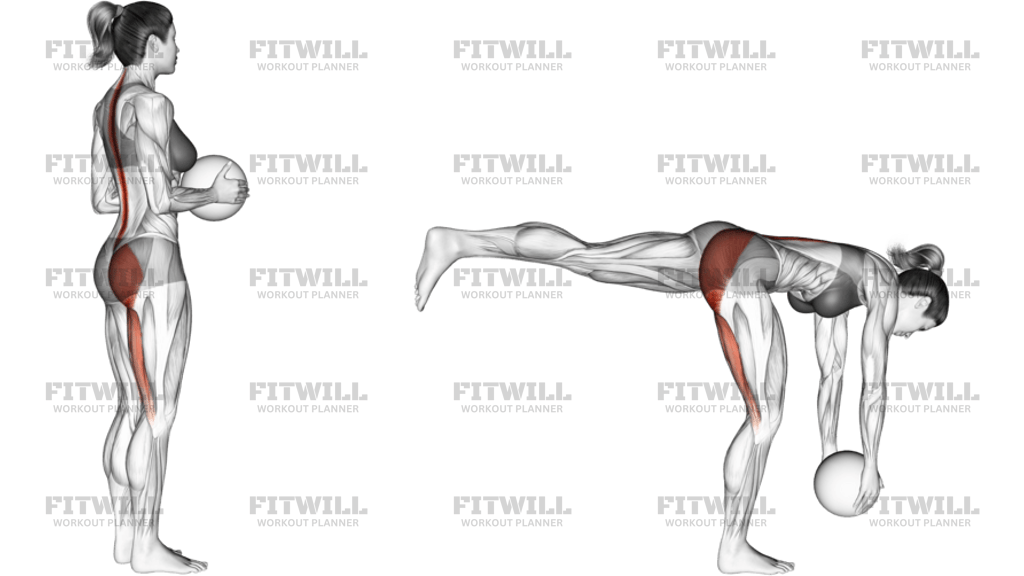
Lying Hip Lift On Stability Ball
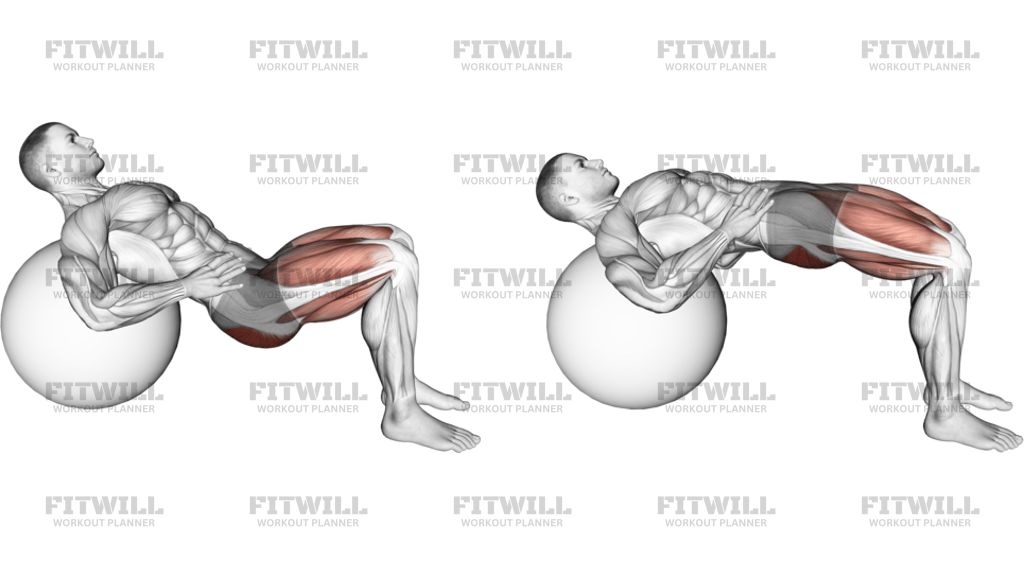
Lying Hip Lift On Stability Ball is a glute-focused bridge variation that puts the upper back and shoulders on a stability ball while the feet stay planted on the floor. The unstable support changes the feel of the classic hip lift: your glutes still drive the movement, but your trunk and hamstrings have to help keep the ball and pelvis steady while you raise and lower the hips.
The exercise is useful when you want a posterior-chain movement that is challenging without needing heavy external load. Gluteus maximus does most of the work, with the hamstrings, rectus abdominis, and spinal erectors helping control the pelvis and keep the ribs from flaring. Because the ball can roll, the quality of the setup matters as much as the range of motion. If your feet are too far away, the hamstrings tend to take over; if they are too close, the knees can feel cramped and the lift becomes awkward.
Set the shoulders and upper back on the ball, place the feet about hip-width apart, and find a position where the shins are close to vertical at the top of the rep. From there, the hips should travel up by squeezing the glutes, not by throwing the ribs up or arching the low back. The top position should feel like a strong line from shoulders to knees, with the pelvis level and the ball staying under control rather than shifting side to side.
Lying Hip Lift On Stability Ball works well as accessory work, glute activation, or a lower-load strength builder in programs that already include squats, deadlifts, or lunges. It is especially helpful if you want to improve hip extension control, build glute endurance, or train the posterior chain without loading the spine heavily. The movement should stay smooth and deliberate, with the descent controlled enough that you can feel the hamstrings and glutes lengthen without losing balance.
The main risks are overextending the lower back, letting the ball roll too far, or turning the movement into a hamstring cramp instead of a glute-driven lift. Keep your head supported, breathe steadily, and stop the set if the ball starts sliding or your pelvis twists. Done well, this exercise builds strong hip extension mechanics and clean bracing in a compact, joint-friendly format.
[ Workout Log & Planner ]
Put your next workout in Fitwill
Keep your plan and training log ready when you are.


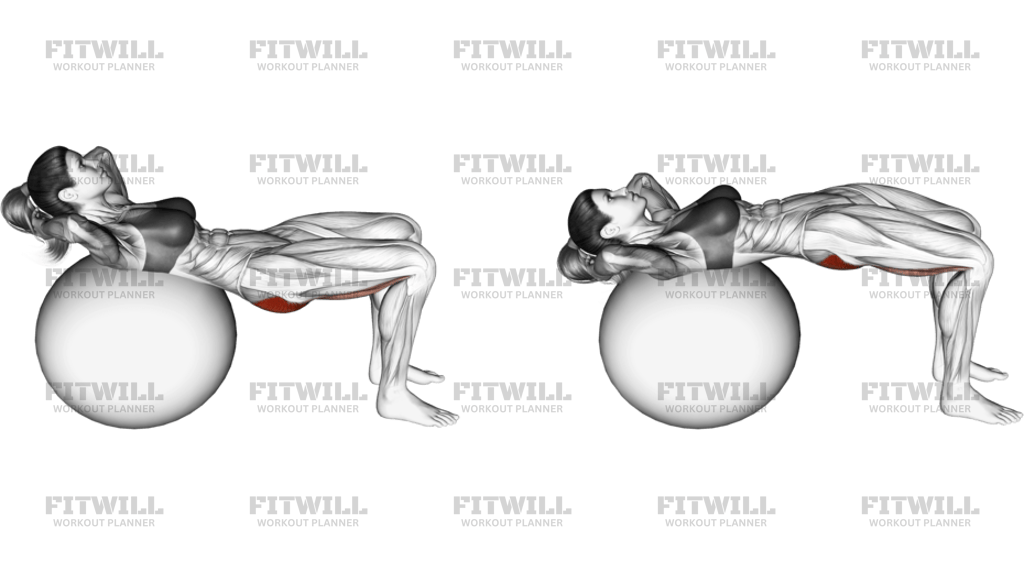
Instructions
- Sit on the floor in front of the stability ball, then roll yourself back so your upper back and shoulders are supported on the ball.
- Plant both feet flat on the floor about hip-width apart and walk them until your shins are close to vertical at the top of the lift.
- Rest your head and upper neck on the ball, keep your gaze up, and let your ribs stay down before you start.
- Brace your core and press through your heels to lift your hips without letting the ball roll away from you.
- Raise your hips until your torso forms a straight line from shoulders to knees and squeeze the glutes at the top.
- Pause briefly at the top, keeping the pelvis level and the lower back from over-arching.
- Lower your hips slowly until you feel the glutes and hamstrings lengthen, but keep control of the ball and feet.
- Reset each rep by re-bracing, then repeat for the planned number of repetitions with smooth breathing.
Tips & Tricks
- If you feel the hamstrings cramping, bring your feet a little closer so the heels sit more directly under the knees.
- If the ball keeps sliding, shorten the range of motion and reduce the hip height until both feet stay planted.
- Keep your chin slightly tucked and your head heavy on the ball so you do not strain your neck while bridging.
- Think about tucking the pelvis slightly at the top instead of arching the low back to make the glutes do the work.
- Press through the heels and midfoot, not the toes, to keep the lift centered through the posterior chain.
- Do not let the knees cave inward as the hips rise; keep them tracking over the second or third toe.
- Use a slower lowering phase to make the ball and hips stay organized through the full range.
- Stop a rep short of the point where your ribs flare or the ball begins to wobble side to side.
- A small pause at the top is more useful here than chasing extra height with momentum.
- Choose a rep range that lets you keep the feet quiet and the pelvis level from start to finish.
Frequently Asked Questions
What muscles does Lying Hip Lift On Stability Ball work?
The glutes are the main target, with the hamstrings and core helping keep the hips level and the ball stable.
Where should my shoulders be on Lying Hip Lift On Stability Ball?
Your upper back and shoulders should rest on the center of the ball, with your head supported and your feet flat on the floor.
How far away should my feet be from the ball?
Set your feet so your shins are close to vertical when the hips are lifted. If the heels are too far away, the hamstrings usually take over.
Why does the stability ball make this harder than a normal hip bridge?
The ball can roll, so your glutes have to drive the lift while your core and hamstrings keep your pelvis and shoulders from drifting.
Can beginners do Lying Hip Lift On Stability Ball?
Yes, but it works best with a short range of motion and slow reps until the feet stay planted and the ball feels controlled.
What is the most common mistake on this exercise?
Raising the hips by arching the lower back instead of squeezing the glutes is the biggest form error.
Should I feel this in my hamstrings too?
Some hamstring work is normal, but the top of the rep should still feel like a glute squeeze rather than a hamstring curl.
How can I make Lying Hip Lift On Stability Ball easier?
Move your feet a little closer, lower the hips less between reps, and focus on a slower tempo before adding more reps.