Push-Up One-Arm On Stability Ball
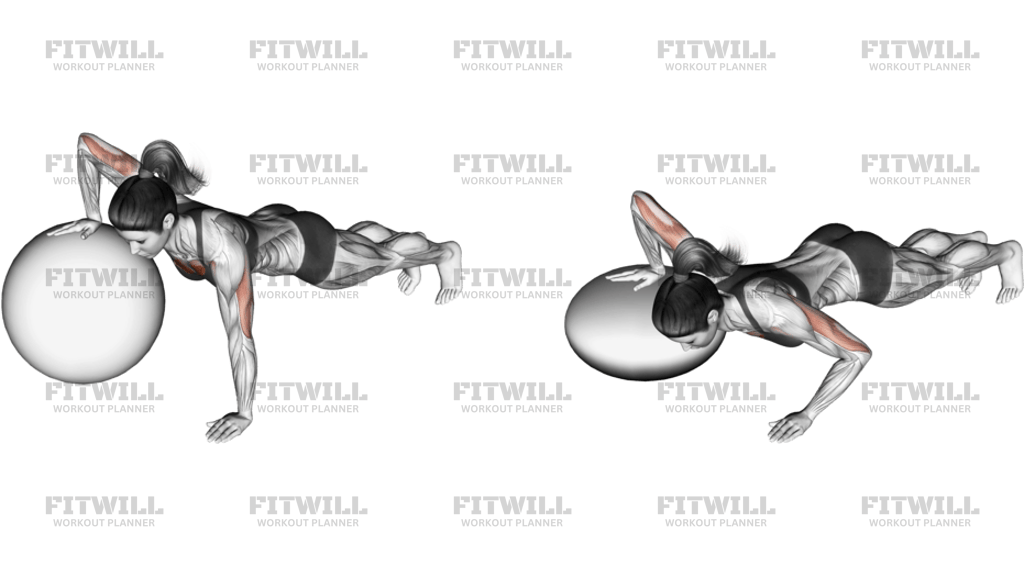
Push-Up One-Arm On Stability Ball is a unilateral push-up variation that pairs a floor hand with a hand supported on a stability ball. The unstable side forces the chest, triceps, front shoulders, and core to work together so the torso does not twist as you lower and press. It is a strength and control exercise more than a speed exercise, and the ball adds a strong anti-rotation demand that makes each repetition more technical than a standard push-up.
The setup matters because the support surface changes the moment the ball hand takes load. Place one palm in the center of the ball and the opposite palm under the shoulder on the floor, then walk the feet back into a long plank with a wider-than-normal stance. Keep the rib cage tucked, glutes tight, and hips level so the ball side does not collapse inward or drift away from the body. A steady setup makes the pressing path cleaner and keeps the shoulder packed instead of wobbling through the rep.
As you lower, bend both elbows and guide the chest between the hands rather than diving straight toward the floor. The ball should roll only a little under the palm, not shoot forward or sideways. On the way up, press the floor away and actively push into the ball at the same time so the torso rises as one unit. Exhale through the press, inhale as you descend, and keep the neck long so the head does not crane toward the floor.
This exercise fits well in accessory strength work, unilateral pressing blocks, or core-focused sessions when you want chest work with a balance and stability challenge. It is useful for athletes and lifters who need better control under asymmetrical loading, but it should be kept strict. If the ball hand slips, the shoulders rotate, or the lower back starts sagging, shorten the range, widen the feet, or regress to a more stable push-up pattern until you can own the movement cleanly.
[ Workout Log & Planner ]
Put your next workout in Fitwill
Keep your plan and training log ready when you are.


Instructions
- Place one palm in the center of the stability ball and the other palm on the floor under your shoulder line.
- Walk your feet back into a long plank and set them wider than you would for a standard push-up.
- Spread the fingers on the ball, stack the wrist under the palm, and look at the floor between your hands.
- Brace your abs, glutes, and quads before the first rep so your hips stay level.
- Bend both elbows and lower your chest between the ball hand and the floor hand.
- Keep the ball from drifting by pressing evenly through the full palm and holding your shoulders square.
- Lower until you reach a controlled depth, then press the floor away and drive through the ball hand to rise.
- Exhale as you press up, inhale as you lower, and reset your brace before the next repetition.
- Step forward or lower to your knees to exit the plank safely when the set is done.
Tips & Tricks
- Set your feet wide enough that your pelvis does not rotate toward the ball side.
- Keep the ball under the heel of the palm, not on your fingers or wrist crease.
- If the ball rolls forward, shorten the rep before you add more load or speed.
- Let the elbows track about 30 to 45 degrees from the torso instead of flaring hard out to the sides.
- Press a little harder through the floor hand on the way up if the ball side feels shaky.
- Use a firmer, well-inflated ball so the hand has a cleaner support point.
- Stop the set the moment the ball-side shoulder starts to shrug or collapse inward.
- Keep the chin off the chest and the neck long so you do not chase the floor with your head.
- Use shorter sets because the stability demand rises quickly even when the chest is not completely fatigued.
Frequently Asked Questions
What muscles does Push-Up One-Arm On Stability Ball work?
The chest is the primary mover, with the triceps, front shoulders, and deep core working hard to keep the body from twisting.
Which hand should go on the stability ball?
The exercise can be done with either hand on the ball, but keep the stance wide and switch sides so both sides get equal work.
How low should I go on each rep?
Lower only as far as you can keep the chest between the hands and the shoulders square. Stop the rep before the ball drifts or the hips rotate.
Why does this feel much harder than a normal push-up?
The ball removes some stability from one side, so your chest has to press while the shoulder and core fight rotation at the same time.
Can beginners use this movement?
Yes, but only after they can hold a solid plank and control standard push-ups. Start with a wide foot stance and slow reps.
What is the most common form mistake?
Letting the ball-side shoulder collapse or letting the hips open up toward the ball are the biggest errors to watch for.
What can I do if the ball feels too unstable?
Widen your feet, shorten the range, or regress to a more stable pressing variation until you can keep the torso level.
Should my chest touch the floor?
No. Only lower to the deepest position you can control without twisting, sagging, or losing pressure through the palm on the ball.