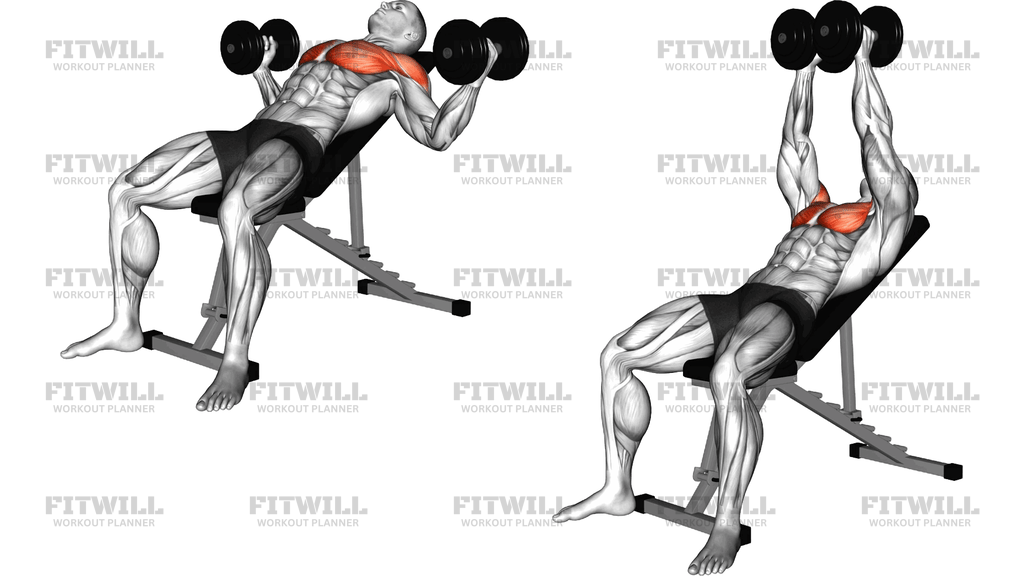
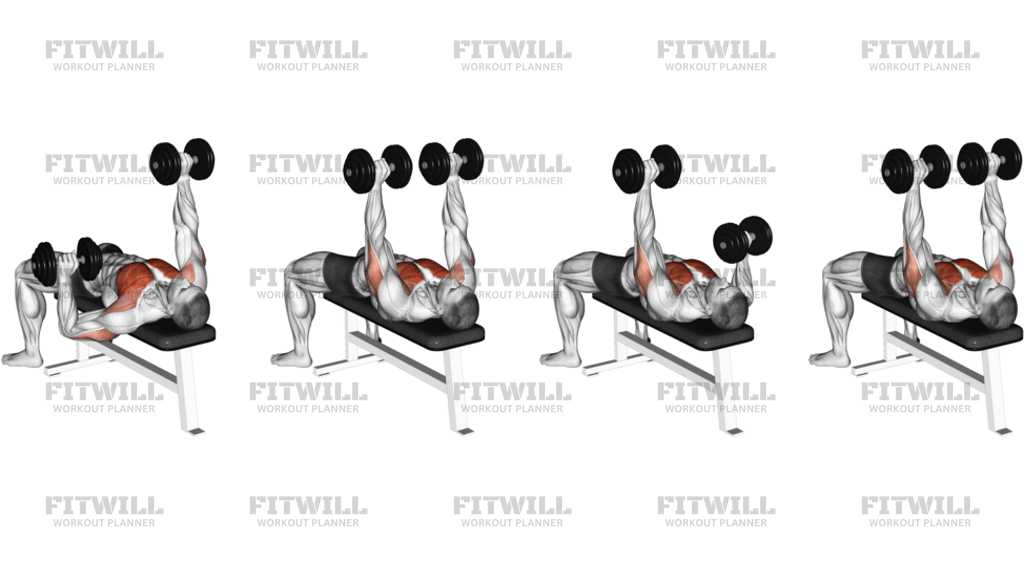
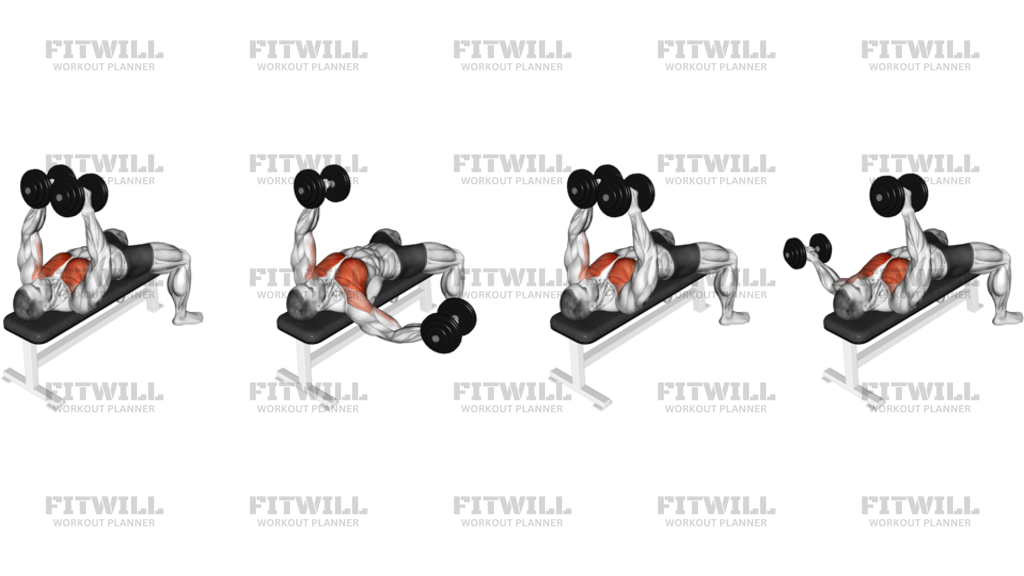
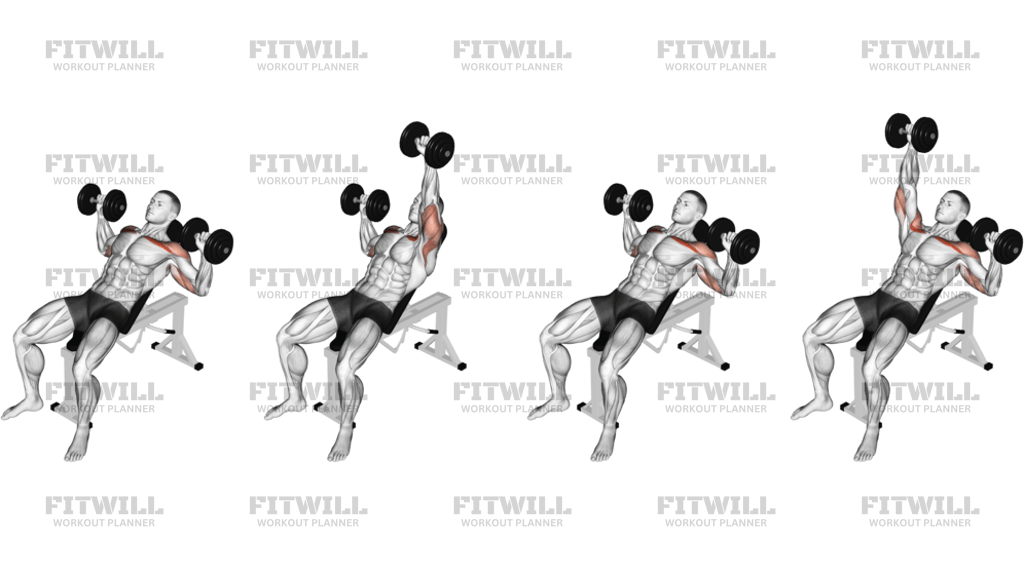
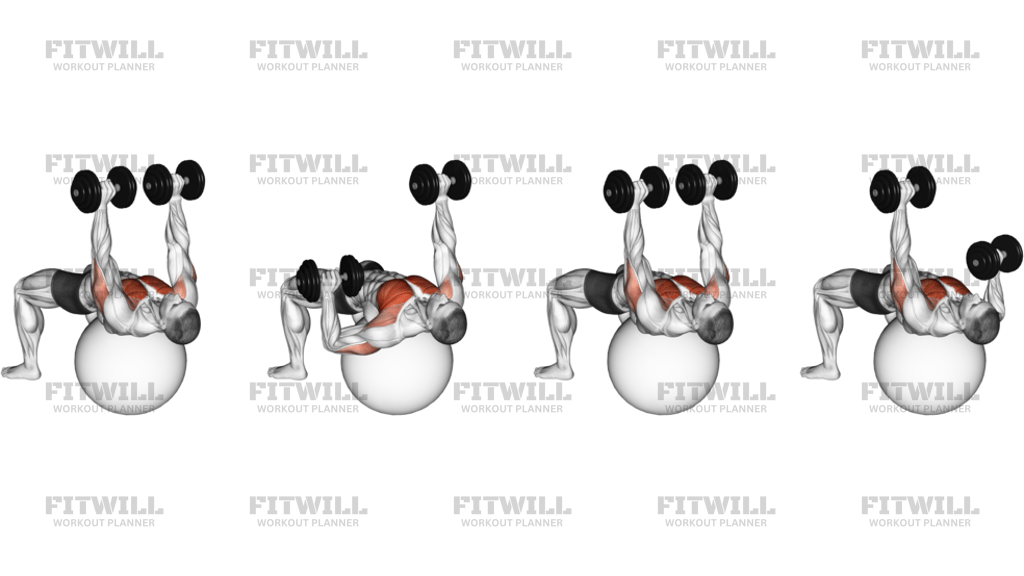
Dumbbell Press On Exercise Ball
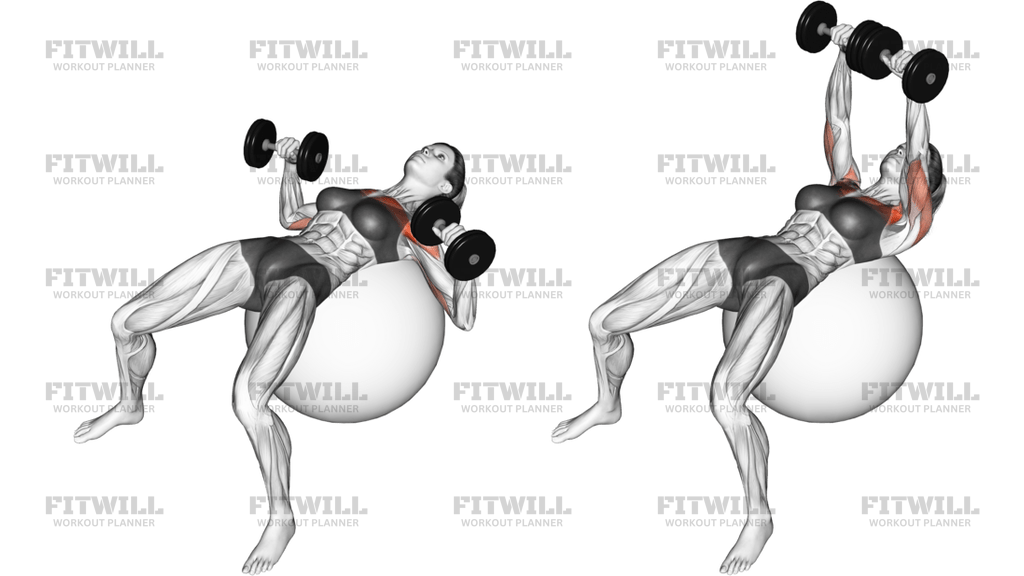
Dumbbell Press On Exercise Ball is a stability-ball chest press that combines a horizontal pressing pattern with a strong isometric hold through the trunk and glutes. The ball removes the support of a bench, so every rep asks you to organize your shoulders, ribs, hips, and feet before the dumbbells ever leave the bottom position. That makes the exercise useful when you want pressing strength plus a demand for balance and body control.
The main training goal is to press the dumbbells while keeping the torso from twisting, the ribs from flaring, and the hips from sagging. Chest, triceps, and front shoulders still do the pressing work, but the exercise ball adds a big stability challenge through the core, glutes, and upper back. If the ball is moving around, the press becomes less about pushing the weights and more about learning to stay stacked and controlled under load.
Set the ball so your upper back and shoulders are supported, plant your feet wide, and lift your hips into a firm bridge before the first rep. The dumbbells should start above the chest with wrists stacked over elbows. From there, lower under control until the upper arms are just below parallel or close to the line that feels safe on your shoulders, then press back up in a smooth arc so the bells finish over the chest without slamming together.
This exercise is best used when you want a press that also trains balance, pelvic control, and anti-extension strength. It works well as accessory chest work, as part of an athletic program, or as a lighter pressing variation when a flat bench is not available. Keep the load conservative, because the ball limits how aggressively you can grind reps. If your shoulders feel unstable, your neck tightens, or your lower back starts to arch, reduce the weight or switch to a more supported press.
Fitwill
Log Workouts, Track Progress & Build Strength.
Achieve more with Fitwill: explore over 9600 exercises with images and videos, access built-in and custom workouts, perfect for both gym and home sessions, and see real results.
Start your journey. Download today!




Instructions
- Sit in front of the exercise ball with a dumbbell in each hand, then roll your upper back onto the ball until your shoulders and head are supported.
- Plant both feet wider than your hips so the ball stays steady, then lift your hips until your torso forms a firm bridge from shoulders to knees.
- Hold the dumbbells above the middle of your chest with wrists stacked over elbows and your shoulder blades set against the ball.
- Brace your abs and glutes before the first rep so your ribs stay down and your hips do not sag as you press.
- Lower the dumbbells slowly toward the sides of your chest, keeping your forearms close to vertical and your elbows angled about 30 to 60 degrees from your torso.
- Pause briefly near the bottom when you feel a stretch across the chest without letting the shoulders roll forward off the ball.
- Press the dumbbells up and slightly inward until your arms are straight, finishing the rep over the chest without banging the weights together.
- Repeat for the planned reps, breathing in on the way down and exhaling as you drive the dumbbells back up.
- Set the dumbbells down carefully only after your hips lower and your shoulders are stable on the ball.
Tips & Tricks
- Start lighter than you would on a flat bench, because the ball makes each rep less stable and more demanding on the shoulders and trunk.
- Keep your feet wide enough that the ball cannot drift when you lower the dumbbells, especially near the bottom of the rep.
- Hold the bridge with your glutes, not by over-arching your lower back; if your ribs flare up, reset before the next rep.
- Let the dumbbells travel in a slight arc so they finish over the mid-chest rather than straight above the face.
- Keep your wrists neutral and stacked over the elbows so the pressing force stays through the forearms instead of bending the wrists back.
- Do not chase an overly deep stretch if your shoulders tip forward; the ball already increases instability, so shoulder control matters more than range.
- If the ball wobbles when you descend, pause and re-brace instead of trying to save the rep with momentum.
- Keep your neck relaxed and your gaze fixed upward so you do not crank your head back while pressing.
- Stop the set when the dumbbells start drifting unevenly, because uneven paths usually mean the ball position or load is no longer appropriate.
Frequently Asked Questions
What muscles does Dumbbell Press On Exercise Ball work most?
It mainly trains the chest, triceps, and front shoulders, with the abs, glutes, and upper back working hard to keep the body stable on the ball.
Why use an exercise ball instead of a bench?
The ball turns a standard dumbbell press into a stability challenge, so you train pressing strength while also working on balance and trunk control.
How should my feet and hips be positioned?
Plant the feet wide on the floor and keep the hips lifted in a firm bridge so the torso stays steady while you press.
How far should I lower the dumbbells?
Lower until you feel a controlled chest stretch and the upper arms are near the level of the torso, but stop before the shoulders roll forward or the ball shifts.
Should my elbows flare out wide?
No. Keep them angled about 30 to 60 degrees from the torso so the press stays strong and the shoulders stay in a safer position.
Can beginners do this exercise safely?
Yes, but only with light dumbbells and a very stable setup. If balance is the limiting factor, a bench or floor press is usually a better starting point.
What is the most common mistake on this movement?
The most common mistake is letting the hips drop or the ribs flare while trying to press too heavy for the unstable setup.
What is a good progression for this exercise?
Progress by cleaning up the setup first, then adding small amounts of weight only when every rep stays even and the ball remains still.