Stability Ball Reverse Hyperextension Off A Bench
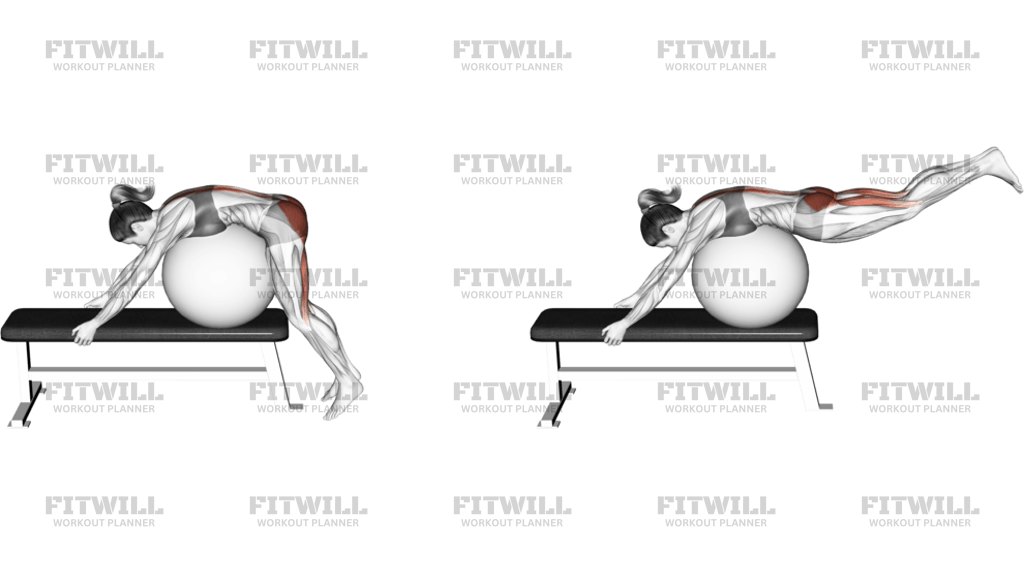
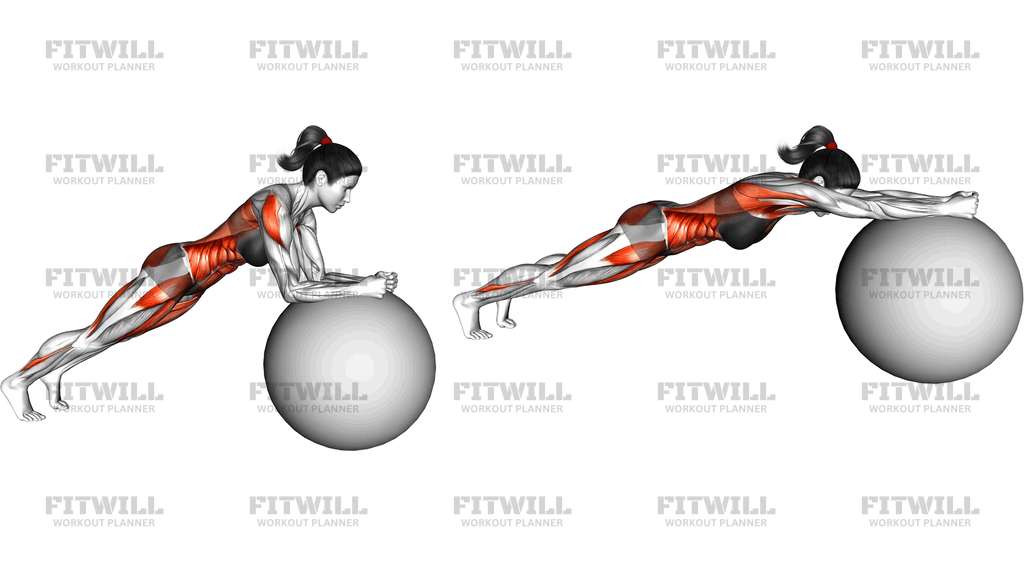
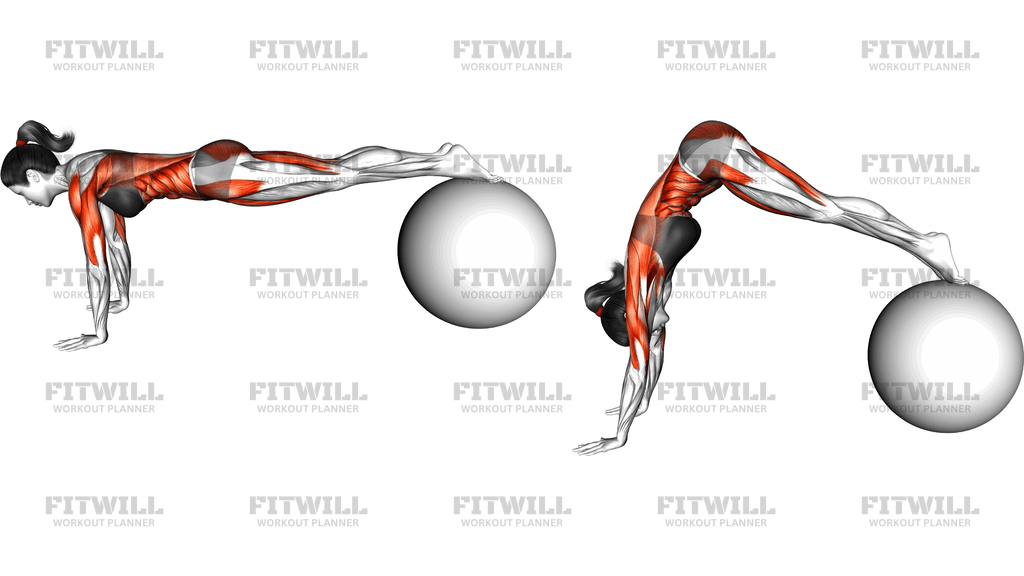
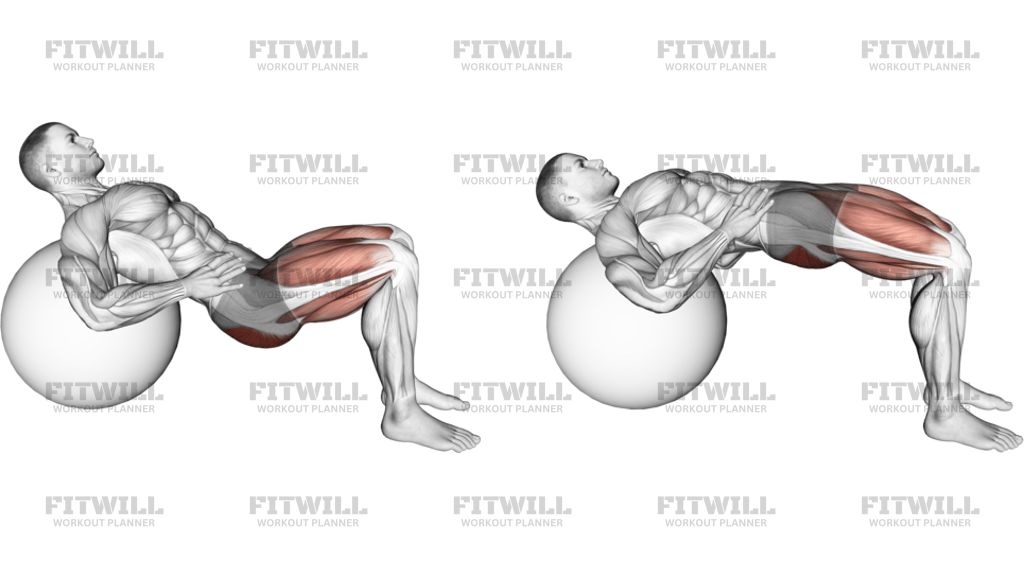
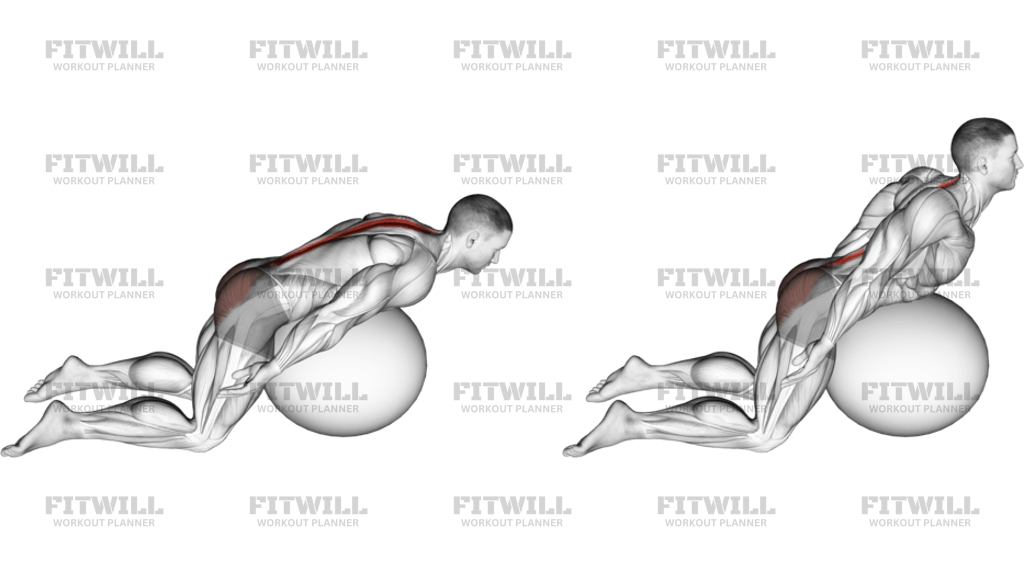
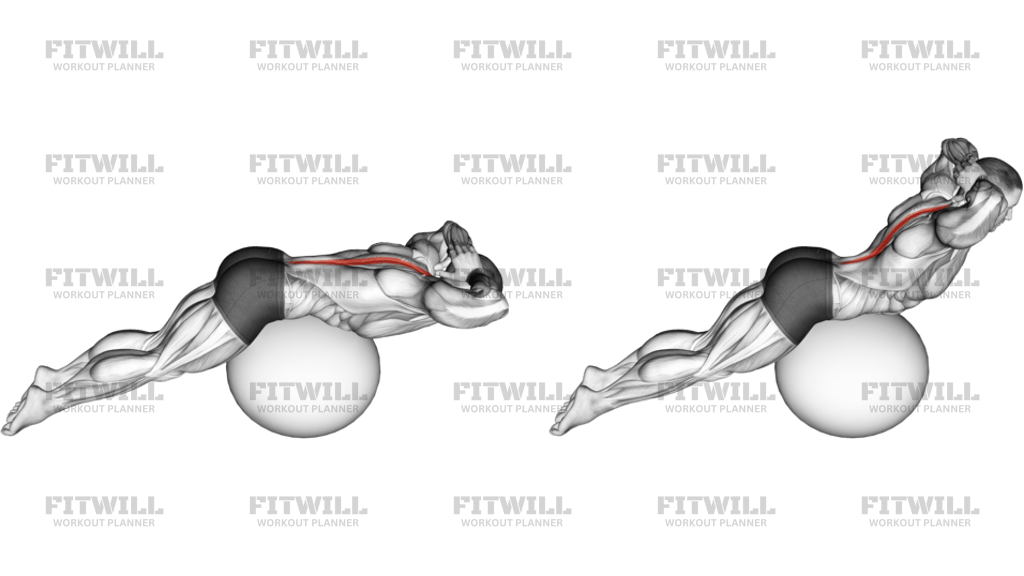
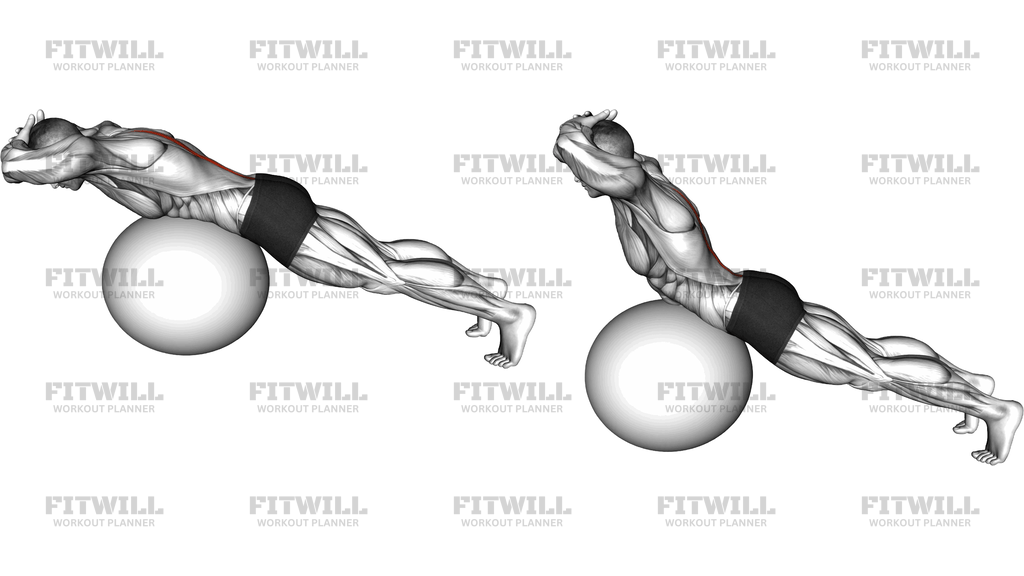
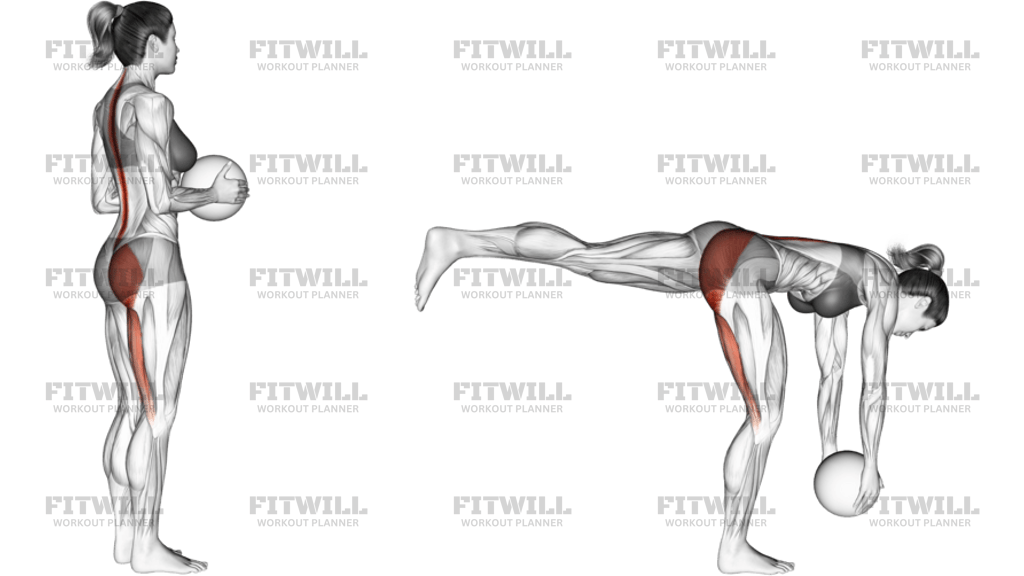
Stability Ball Reverse Hyperextension off a Bench is a prone hip-extension exercise that uses a stability ball and a bench to train the glutes through a long, controlled range of motion. In the setup shown here, the upper body is anchored on the bench with the hands taking support while the hips and lower torso rest across the ball, and the legs hang freely so the glutes have to do the work of lifting them back into line with the torso.
The exercise is useful when you want glute-focused posterior-chain work without loading the spine the way a barbell hinge or machine reverse hyperextension can. The gluteus maximus is the main mover, with the hamstrings, erector spinae, and deep abdominal muscles helping to steady the pelvis and keep the ribs from flaring. Because the ball reduces the amount of fixed support, the setup and body position matter as much as the lift itself.
A good repetition begins with the ball centered under the hips, the chest long, and the bench close enough that the hands can brace firmly without the shoulders collapsing. From there, the legs should start hanging under control before the hips extend to raise the feet behind you. The goal is to bring the legs up until the body forms a straight line, not to crank the lower back into extra extension.
This movement is especially valuable as accessory work for glute development, warm-up activation, or posterior-chain conditioning. It rewards patience more than load, and the best reps look smooth rather than explosive. If the bench is too high, the ball is too far forward, or the range is forced past neutral, the exercise quickly shifts away from the glutes and into the low back.
Treat each rep as a controlled hip extension with a stable upper body and quiet torso. Keep the neck neutral, avoid swinging the legs, and lower with the same control you used on the way up. When performed well, the exercise creates a strong glute contraction at the top and a clear hamstring and posterior-hip stimulus through the descent.
[ Workout Log & Planner ]
Put your next workout in Fitwill
Keep your plan and training log ready when you are.


Instructions
- Place a stability ball beside a bench and lie face down over the ball with your hips centered on top and your hands gripping the bench for support.
- Walk your body forward or back until your torso feels balanced on the ball and your legs can hang straight down without your chest sliding off the bench.
- Keep your ribs down, neck long, and core braced before you start the first rep.
- Begin with your legs hanging under the ball and your knees only slightly bent.
- Drive your heels up and back by squeezing your glutes, lifting the legs in a smooth arc behind you.
- Raise until your legs are in line with your torso or just slightly above it, without arching your low back.
- Pause for a beat at the top while keeping the bench grip, ball contact, and pelvis steady.
- Lower your legs slowly to the start position and let the hips open under control before the next rep.
Tips & Tricks
- Center the ball under your hip crease; if it sits too high on the stomach, the lift turns into a low-back extension.
- Keep both hands on the bench and press lightly through the palms so your upper body does not slide forward as the legs rise.
- Think about lifting the thighs from the hip, not kicking the feet upward with momentum.
- A small bend in the knees is fine, but keep the bend consistent so the hamstrings do not take over the set.
- Stop the rep when the body reaches a straight line; going higher usually means the ribs are flaring and the lumbar spine is extending.
- Exhale as the legs rise and keep the abdomen firm so the pelvis does not tip forward on the ball.
- Use a slower lowering phase if you want more glute and hamstring tension without adding load.
- If the bench feels unstable or the ball is rolling, reset before continuing; this movement only works when the support points stay fixed.
Frequently Asked Questions
What does Stability Ball Reverse Hyperextension off a Bench work most?
It mainly targets the glutes, with the hamstrings, lower back, and core helping to stabilize the movement.
Can beginners perform this exercise?
Yes. Beginners should start with bodyweight, a small range, and a stable bench grip before trying to lift higher.
Where should the stability ball sit during the setup?
The ball should be centered under the hips so the torso can stay supported while the legs hang freely and extend behind you.
How high should I lift my legs?
Lift until your legs match your torso or only slightly pass it. If you keep going by arching the low back, the set has gone past the useful range.
Why are my hands on the bench?
The bench gives you an anchor so your upper body stays long and steady while the glutes drive the lift.
What is the most common mistake in this exercise?
Letting the feet swing up fast or turning the top of the rep into a lower-back arch instead of a controlled hip extension.
How can I make the exercise harder without changing the setup?
Slow the lowering phase, add a brief pause at the top, or keep every rep identical instead of using momentum to cheat the range.
What should I feel at the top of the rep?
You should feel a hard glute contraction and a stable torso, not a pinch in the low back or a wobble through the ball.