Neck Bridge Prone
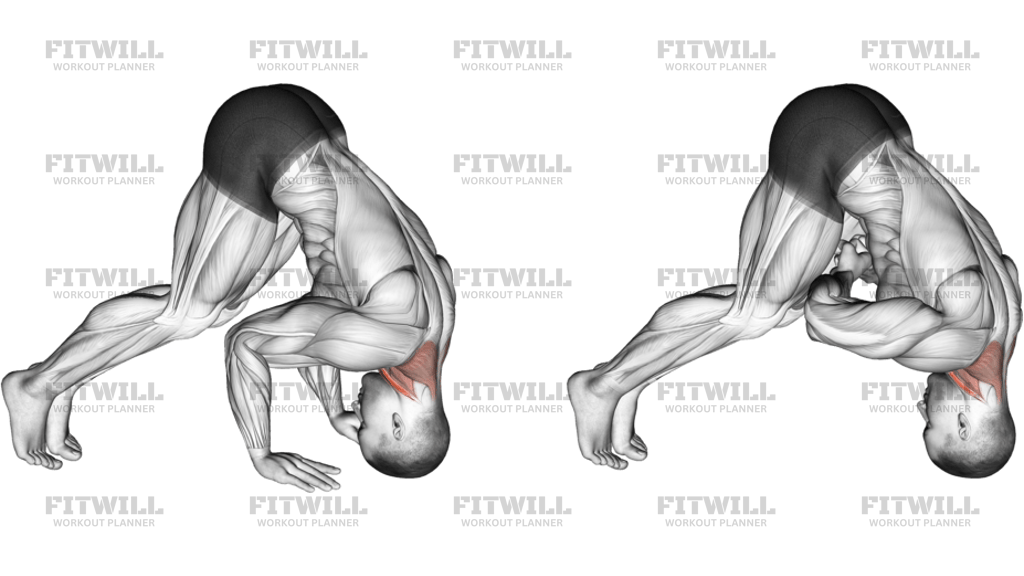
Neck Bridge Prone is a prone neck-strength drill performed from a head-supported bridge with the hands assisting on the floor. The setup in the image matters more than the range: the top of the head, both hands, and the upper body all share the load so the neck can work hard without collapsing into a twist or sudden drop. It is a focused way to build neck control, isometric strength, and tolerance for sustained pressure through a very specific body position.
The exercise is less about moving far and more about organizing the body before the neck takes on load. When the hands are planted close enough to help and the hips stay lifted, the neck extensors, deep stabilizers, upper back, shoulders, core, and glutes can all contribute to a stable bridge. If the torso or pelvis sags, the cervical spine has to absorb more of the demand, which is exactly what you do not want in a drill like this.
Use a controlled bridge rather than a loose arch. Keep the chin slightly tucked, press the floor evenly, and make every shift into the bridge smooth enough that you could stop at any point. If the version you are doing includes small rocks or pulses, keep them short and deliberate instead of chasing a bigger arc. Exhale as you settle into the hardest part of the hold, then breathe shallowly and steadily until you are ready to come back out.
This is usually best used as accessory work after a warm-up, especially for athletes or lifters who need targeted neck endurance and stronger positional control. Build the hold time first, then reduce how much the hands help before you try to make the bridge more demanding. A thicker mat or folded towel can reduce pressure on the head, but technique still needs to stay precise.
Treat any sharp pain, dizziness, or tingling as a sign to stop and reset immediately. A good repetition should feel like a controlled, supported neck effort with the torso braced around it, not like you are forcing your bodyweight into the floor. If the bridge cannot stay smooth and symmetrical, shorten the range or keep more weight in the hands until the position is stable.
[ Workout Log & Planner ]
Put your next workout in Fitwill
Keep your plan and training log ready when you are.


Instructions
- Kneel on a mat and place the top of your head on the floor, with both palms planted beside your head for support.
- Walk your knees back and lift your hips so your torso forms a controlled inverted bridge.
- Keep your chin slightly tucked and your gaze down at the floor.
- Brace your abs and squeeze your glutes so the low back does not overarch.
- Share the load evenly between your head and hands before you move.
- Hold the bridge or perform the prescribed small rock or pulse without letting your head roll to one side.
- Breathe steadily and keep pressure broad across the head rather than dumping onto the forehead.
- Lower your knees or hips back to the floor, then lift your head only after the neck is unloaded.
Tips & Tricks
- Use a thick mat or folded towel if the floor pressure feels too sharp.
- Keep your hands close enough to help, but do not push so hard that the neck does nothing.
- Keep the chin gently tucked; looking forward will jam the cervical spine.
- Squeeze the glutes to stop the pelvis from drifting and stealing the bridge.
- Keep the movement symmetrical; if weight shifts to one side, reset.
- Short, clean holds are better than long shaky holds.
- Add time under tension before you reduce hand support or increase range.
- Stop for sharp pain, headaches, or dizziness.
Frequently Asked Questions
What does Neck Bridge Prone train most?
It mainly trains the muscles that keep the neck steady and extended, with the shoulders, upper back, core, and glutes helping to hold the bridge.
Should my hands take weight in this bridge?
Yes. The hands should act like a spotter so you can control the load and bail out safely if the neck gets tired.
Where should the pressure sit on my head?
Keep it on the top of the head, spread broadly and evenly, not rolled forward onto the forehead or shifted to one side.
Can I turn this into moving reps?
Yes, if the program calls for it, but the movement should stay small and deliberate. The bridge itself matters more than a big range.
Is Neck Bridge Prone good for beginners?
Only if the neck already tolerates this position and the hold stays very short. If you have neck pain or uncertainty, use an easier neck drill first.
What is the most common mistake?
Letting the torso sag or twisting the head so the neck takes the load unevenly instead of staying braced and centered.
How do I make this exercise harder?
First hold the bridge longer, then use less hand support, and only after that increase the demand on the neck position.
What should I do if the neck feels compressed?
Stop the set, reduce the range, and keep more weight in the hands. Sharp pain, tingling, or dizziness is a reason to stop immediately.