Push-Up Knee Chest
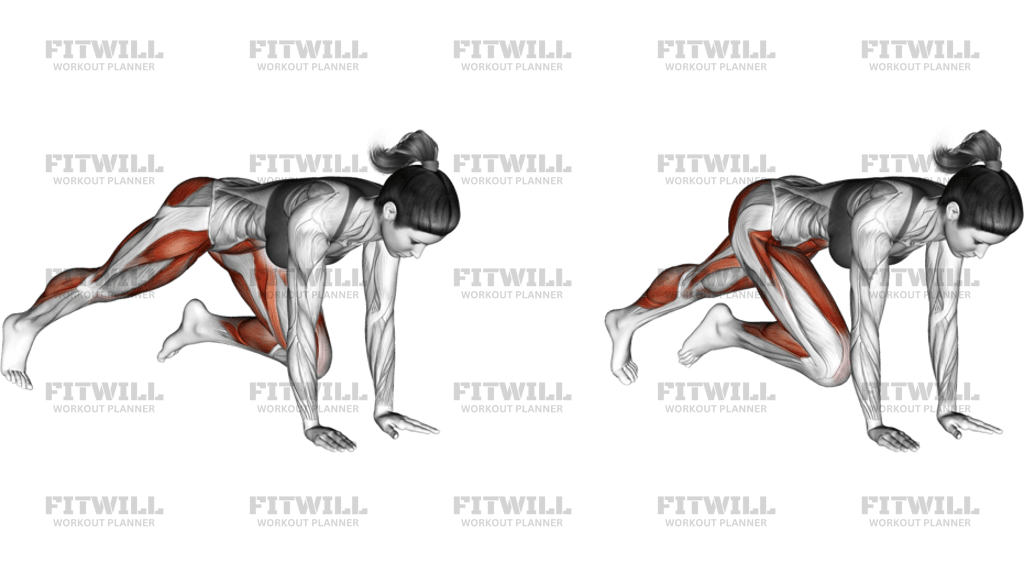
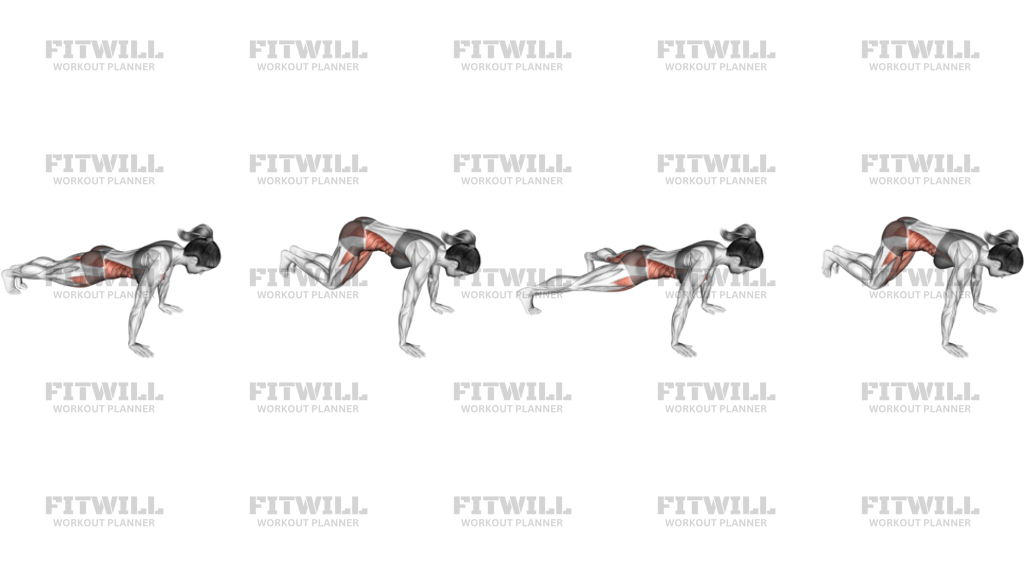
Push-Up Knee Chest is a bodyweight plank drill built around driving one knee toward the chest while the shoulders stay stacked over the hands. The image shows a high-plank start with one leg extended long and the other knee tucked under the torso, which makes this more of a knee-drive or mountain-climber style exercise than a true push-up. The goal is to keep the trunk quiet while the hips and legs create the movement.
Because the exercise is fast enough to become sloppy quickly, the setup matters. A solid hand position, a long line from head to heel on the extended leg, and a braced midsection keep the shoulders, hips, and pelvis organized. When the body stays aligned, the drill trains core stiffness, hip flexion control, and shoulder stability instead of turning into a bouncing sprint with the lower back sagging.
This movement is usually used for conditioning, warm-ups, core activation, or circuits where you want to raise the heart rate without loading the spine. The working leg should travel from the extended plank position into a strong knee-toward-chest drive, then switch sides with control. The best reps look smooth and deliberate at first, then faster only if you can keep the hips from rocking and the shoulders from drifting behind the wrists.
Treat each rep as a stability test as much as a conditioning drill. If the hands slip forward, the shoulders collapse, or the lower back starts to arch, shorten the range and slow the rhythm down. Beginners can regress the movement by stepping the knee in and out instead of snapping it through. More advanced lifters can increase speed or time under tension, but the quality standard stays the same: stable shoulders, controlled hips, and a clean return to the plank each time.
[ Workout Log & Planner ]
Put your next workout in Fitwill
Keep your plan and training log ready when you are.


Instructions
- Place both hands flat on the floor under your shoulders and set up in a strong high-plank position.
- Walk your feet back until your body forms a straight line from head to heel on the straight leg.
- Spread your fingers, press through the full palm, and keep your shoulders stacked over your wrists.
- Brace your abs and glutes before the first drive so your hips do not drop.
- Drive one knee forward under your torso toward your chest while the other leg stays long behind you.
- Keep the lifted knee traveling close to the floor and avoid bouncing your hips side to side.
- Return that leg back to the plank under control, then switch legs and repeat on the other side.
- Keep breathing rhythmically through the set and stop the drill if your low back starts sagging or the shoulders lose position.
Tips & Tricks
- Push the floor away through your palms so the shoulders stay active instead of sinking between the hands.
- Keep the extended leg long and firm; a loose back leg usually leads to hip wobble and lost trunk tension.
- Think of the knee as traveling forward under the torso, not up toward the ceiling, so the abs do the work.
- Use a shorter range if your knee cannot get close to the chest without rounding the upper back.
- Keep the head in line with the spine and avoid looking forward, which often drops the hips.
- Exhale as the knee drives in and inhale as the leg returns to plank to help keep the rhythm steady.
- Step the feet more slowly if the set turns into a jumpy cardio scramble with no trunk control.
- Stop the set when your wrists, shoulders, or lower back start failing before the legs do.
Frequently Asked Questions
What does Push-Up Knee Chest work most?
It mainly trains the core, hip flexors, shoulders, and the stabilizers that keep a high plank rigid.
Is this actually a push-up?
No. The image shows a high-plank knee drive or mountain-climber style drill, not a chest-to-floor push-up.
How should my hands and shoulders be set up?
Place your hands under your shoulders, spread your fingers, and keep the shoulders stacked over the wrists for the whole rep.
How close should the knee come to the chest?
Bring it in as close as you can without letting the hips pike up or the lower back collapse.
Can beginners do this exercise?
Yes, but a slower step-in version is usually better than a fast alternating rhythm at first.
What is the most common form mistake?
Letting the hips bounce or twist side to side usually means the drill has become too fast or the core is losing tension.
Where does this fit in a workout?
It works well in warm-ups, conditioning circuits, athletic core blocks, or as a short finisher.
How do I make it harder without changing the movement?
Increase the pace only after you can keep the plank rigid, or extend the set while maintaining clean shoulder and hip position.