Raise Single-Arm Push-Up
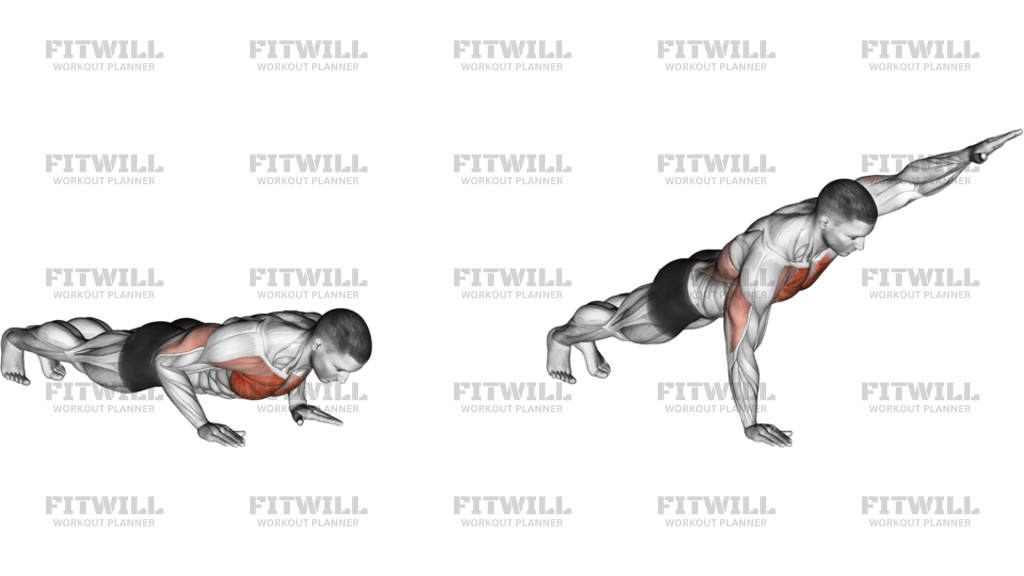
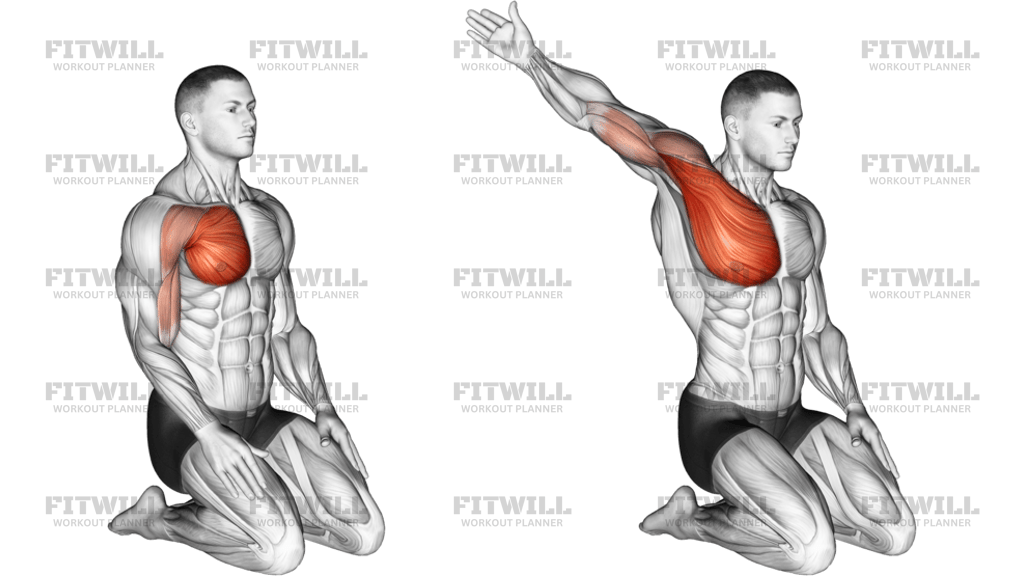
Raise Single-Arm Push-Up is a demanding bodyweight pressing exercise that loads one side of the chest, shoulder, and triceps while forcing the trunk to resist twisting. In the pictured version, one hand supports the body under the shoulder and the free arm reaches forward, which shifts your center of mass and makes the rep more about control than just raw pressing strength.
The main training effect is concentrated in the pecs, with the anterior deltoid and triceps helping to press you away from the floor. The long lever created by the raised arm also brings the rectus abdominis and obliques into the set, because the torso has to stay square while the body lowers and rises as one unit. That combination makes the movement useful for advanced upper-body strength, anti-rotation control, and shoulder stability.
Setup matters more here than with a standard push-up. Place the working hand under or slightly outside the shoulder, spread the feet wide enough to keep the pelvis steady, and extend the non-working arm straight forward at shoulder height. Keep the head, rib cage, hips, and heels in one line before the first rep so the lowering phase starts from a braced position instead of a collapsed one.
Each repetition should descend in a controlled arc until the chest approaches the floor, then press back up without letting the torso spin open or the hips sag. If the free arm starts dropping, the shoulder rolls forward, or the lower back twists, the set is too hard or the stance is too narrow. This is not a speed exercise; it rewards clean tension, careful breathing, and an honest range of motion.
Use Raise Single-Arm Push-Up when you want a bodyweight strength challenge that is more specific and more stable than a floor press variation, but harder and more athletic than a regular push-up. It fits well in upper-body strength work, calisthenics progressions, or accessory work for pressing control. Keep the rep smooth, stop before form leaks, and treat every repetition as a test of unilateral pressing strength plus total-body stiffness.
[ Workout Log & Planner ]
Put your next workout in Fitwill
Keep your plan and training log ready when you are.


Instructions
- Set one hand on the floor directly under or slightly outside the shoulder, then step the feet wide enough to keep the hips from rotating.
- Reach the free arm straight forward at shoulder height and keep it there for the whole set.
- Stack the head, rib cage, pelvis, and heels in one line before you bend the elbow.
- Brace the abs and glutes, then lower the chest toward the floor with the working elbow tracking back at about a 30 to 45 degree angle.
- Keep the body rigid as you descend; do not let the raised arm drift down or the hips twist open.
- Pause briefly near the bottom if you can still hold the torso square and the shoulder stable.
- Press the floor away through the working hand until the elbow is fully extended without locking out hard.
- Exhale through the press, inhale on the way down, and reset the body position before the next rep.
- Stop the set when the shoulder shifts, the trunk rotates, or the chest no longer lowers under control.
Tips & Tricks
- A wider foot stance makes the anti-rotation demand manageable; bring the feet in only when the torso stays level throughout the set.
- Keep the free arm actively reaching forward instead of letting it hang, because that forward reach changes balance and keeps the torso honest.
- If your working shoulder drifts toward your ear on the way down, shorten the range slightly and keep the scapula controlled.
- Think about pressing your sternum away from the floor rather than driving the hips up; piking turns this into a different movement.
- The elbow on the working side should not flare straight out to the side, especially near the bottom of the rep.
- Use a smooth 2 to 4 second lowering phase so you can feel where the torso wants to rotate.
- If the lower back sags, squeeze the glutes harder and shorten the set before the lumbar spine takes over.
- Wrists and hands take a lot of load here, so slightly turn the working hand out if that feels better on the wrist.
- This variation is advanced; a reduced range, elevated hand, or standard push-up regression is better than grinding ugly reps.
Frequently Asked Questions
What muscles does Raise Single-Arm Push-Up train most?
It primarily loads the chest, with the front shoulder and triceps assisting the press.
Why is the other arm held straight out in front?
The forward reach shifts your center of mass and makes your torso resist rotation while one arm does the pressing.
How do I keep my body from twisting on the way down?
Set the feet wide, brace hard through the ribs and hips, and keep the raised arm reaching forward instead of drifting.
Should my working elbow flare out to the side?
No. Let it track back at a moderate angle so the shoulder stays more stable and the press feels smoother.
Is this exercise appropriate for beginners?
Usually not as a first push-up variation. Most beginners should build strength with a normal push-up or an elevated-hands version first.
What should I do if I cannot stay level through the rep?
Widen the stance, reduce the range of motion, or switch to a supported push-up variation until you can control the torso.
Can I feel this in my core as well as my chest?
Yes. The abs and obliques work hard to keep the body square while the chest and triceps do the pressing.
What is the most common mistake with this push-up?
The usual errors are letting the hips rotate, shortening the free-arm reach, or cutting the depth short to escape the hard part.