Raise Single Leg Push-Up
Raise Single Leg Push-Up is a bodyweight pressing exercise that combines a standard push-up with a single lifted leg to make the torso work harder to stay square. It is a useful strength builder for the chest, shoulders, triceps, and core, but the real challenge is keeping the hips level while one foot is off the floor. That extra stability demand makes the exercise more demanding than a regular push-up even before you add reps.
The main muscular focus is on the pecs, with the anterior deltoids and triceps helping drive the press and the rectus abdominis and glutes working to stop rotation through the trunk. In practice, that means the movement trains pressing strength and anti-rotation control at the same time. Raise Single Leg Push-Up is especially useful when you want a push-up variation that feels athletic, requires very little equipment, and rewards clean body lines over brute force.
Setup matters more here than in a basic push-up because the lifted leg changes your balance point. Place your hands slightly wider than shoulder width, stack your shoulders over your wrists, and extend one leg straight behind you while the other foot stays planted. Keep your ribs tucked, your glutes firm, and your head in line with your spine so the body stays in one long line from shoulders to heel.
On each repetition, lower the chest between the hands with the elbows angled slightly back instead of flaring straight out. Press the floor away smoothly, then return to the top without letting the hips twist toward the lifted leg or sag toward the floor. The best reps look quiet and controlled, with the lifted leg staying straight and the torso remaining square the entire time.
Raise Single Leg Push-Up fits well in strength circuits, upper-body sessions, or core-focused work when a standard push-up no longer feels challenging enough. It can also be used as a regression from more advanced single-leg or unstable pressing drills because the load is still your body weight and the movement pattern is easy to recognize. If your shoulders shrug, your lower back arches, or your hips swing, shorten the range and clean up the line before adding reps.
[ Workout Log & Planner ]
Put your next workout in Fitwill
Keep your plan and training log ready when you are.


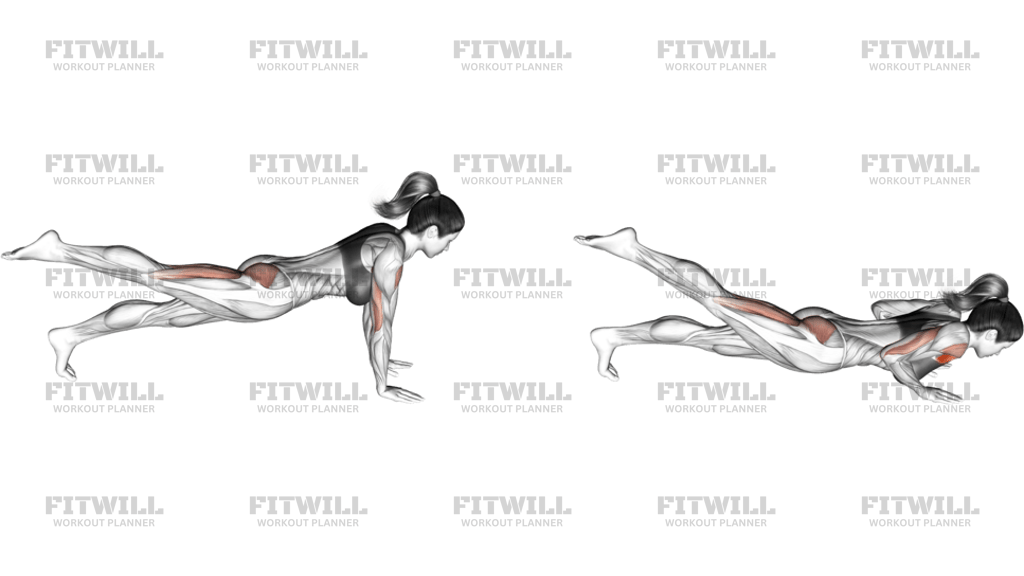
Instructions
- Place your hands on the floor slightly wider than shoulder width, with your shoulders stacked over your wrists and your fingers spread for stability.
- Extend one leg straight behind you and keep the other foot planted so your body starts in a long push-up position with one leg lifted.
- Brace your abs, squeeze your glutes, and keep your hips level before the first rep so your torso does not twist.
- Lower your chest toward the floor by bending your elbows back at about a 30 to 45 degree angle from your torso.
- Keep the lifted leg straight and the planted foot grounded while your chest travels between your hands.
- Stop when your chest is just above the floor or touches lightly, without letting your lower back sag.
- Press through both palms to drive back up to full elbow extension, exhaling as you rise.
- Reset your body at the top before the next rep so your shoulders, hips, and lifted leg stay aligned.
- Switch the lifted leg on the next set or on the planned side to keep both sides balanced.
Tips & Tricks
- Keep the lifted leg straight and active; a bent knee makes it easier to rotate the hips.
- Think about squeezing the glute on the lifted side so the pelvis stays square to the floor.
- If your lower back starts to arch, shorten the depth and keep the ribs pulled down.
- A slightly narrower hand position usually feels more stable than a very wide push-up stance in this variation.
- Do not let the elbow flare straight out; aim it back at roughly 30 to 45 degrees to spare the shoulders.
- Move slower on the way down than on the way up so you can feel whether the torso is twisting.
- If one shoulder sits higher than the other, reduce the range and restart with a tighter plank position.
- Use an elevated surface such as a bench or box if the floor version causes the hips to wobble.
- Stop the set when the lifted leg can no longer stay in line with your torso.
Frequently Asked Questions
What muscles does Raise Single Leg Push-Up work most?
It primarily targets the chest, with the shoulders and triceps helping press the body up. The core and glutes work hard to keep the lifted leg from pulling the torso open.
Why do I need to keep one leg lifted during Raise Single Leg Push-Up?
Lifting one leg shifts your balance and forces the hips to stay square. That makes the exercise more demanding for the core without changing the basic push-up pattern.
Can beginners do Raise Single Leg Push-Up?
Yes, but many beginners should start with their hands on a bench or use a regular push-up first. The single-leg version is harder because it reduces stability and makes torso control more important.
How should my hands be positioned for this push-up?
Place your hands slightly wider than shoulder width and keep your wrists under your shoulders at the top. That usually gives you a stable base without putting the shoulders in an extreme position.
How low should I go on Raise Single Leg Push-Up?
Lower until your chest is just above the floor or lightly touches it, as long as your hips stay level. If the lifted leg causes twisting before that, shorten the range and keep the rep clean.
What is the most common mistake with the lifted leg?
The most common issue is bending the lifted knee or letting the hip rotate upward. Keep the leg straight and active so the whole body stays in one line.
Can I alternate legs every rep?
You can, but most people keep the same lifted leg for a full set and then switch sides on the next set. That makes it easier to keep the rhythm and compare sides fairly.
What should I do if my shoulders or wrists feel stressed?
Use a higher surface, keep the elbows closer to the torso, and make sure the hands are not too far forward. If wrist pressure is still a problem, do the exercise on push-up handles or fists.