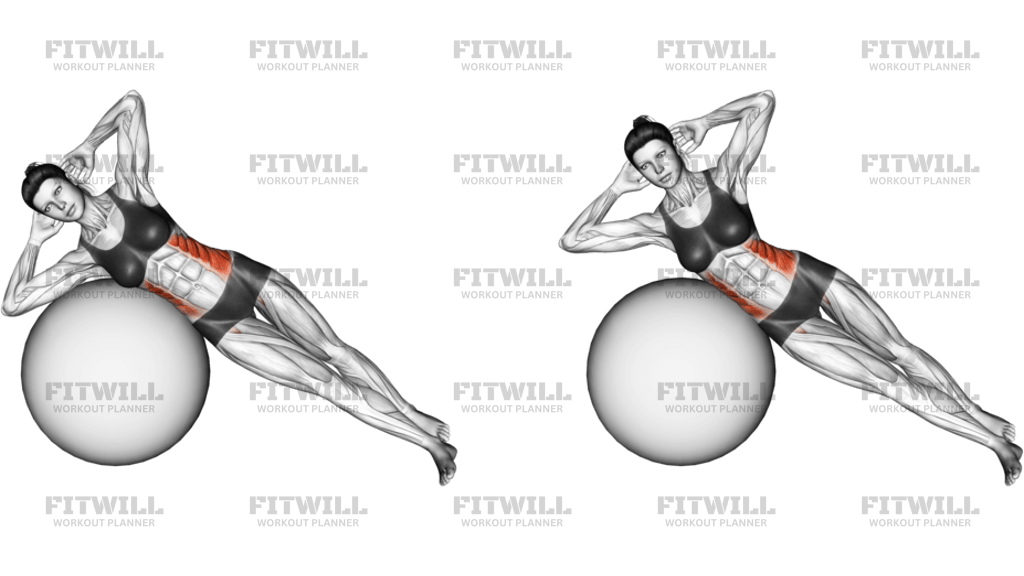
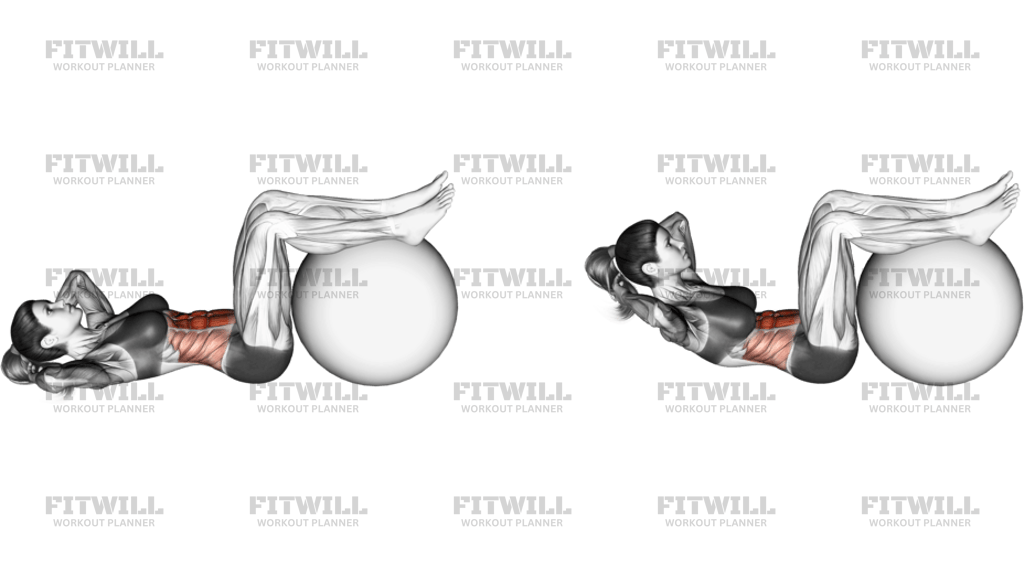
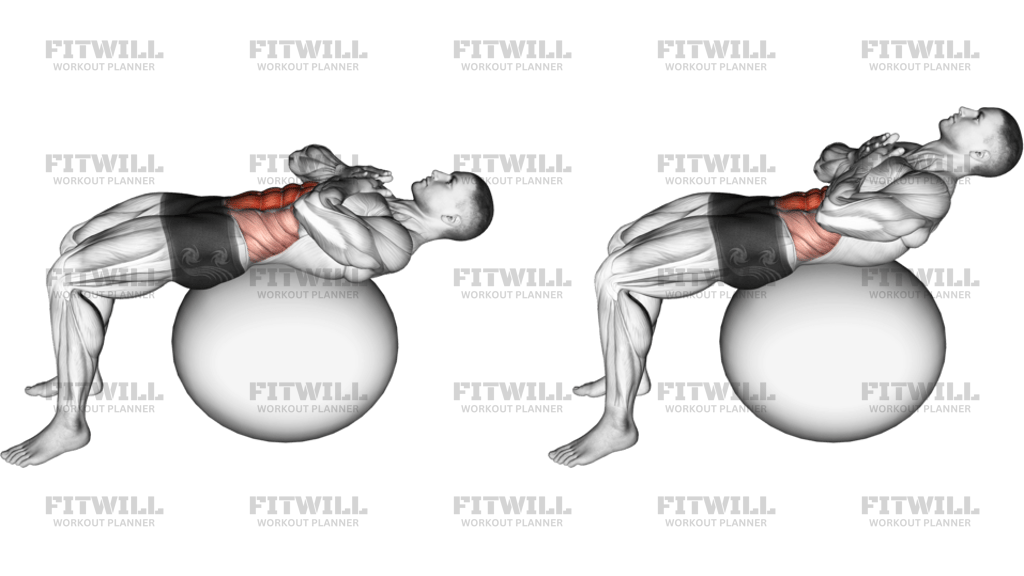
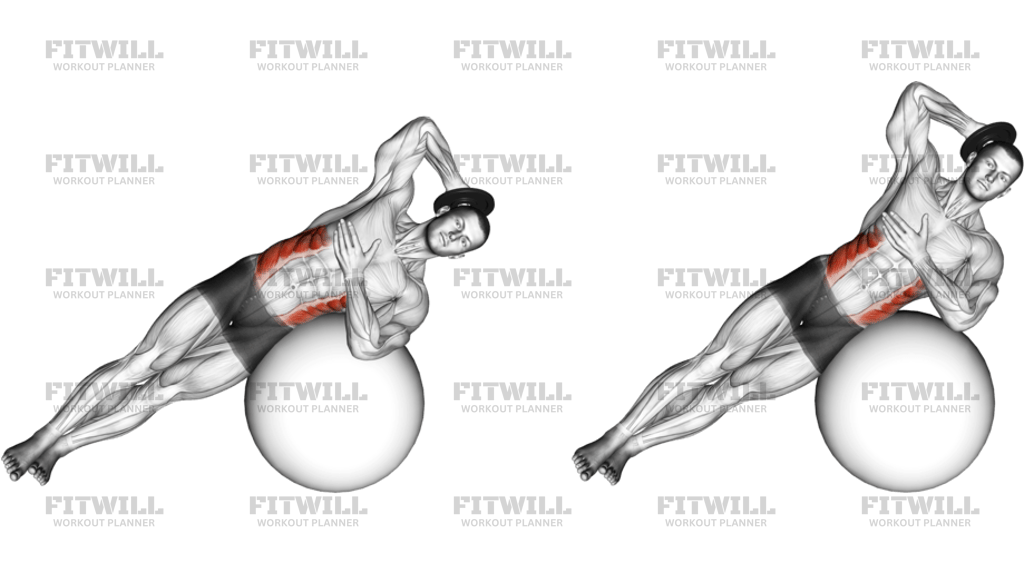
Russian Twist On Stability Ball Arms Straight
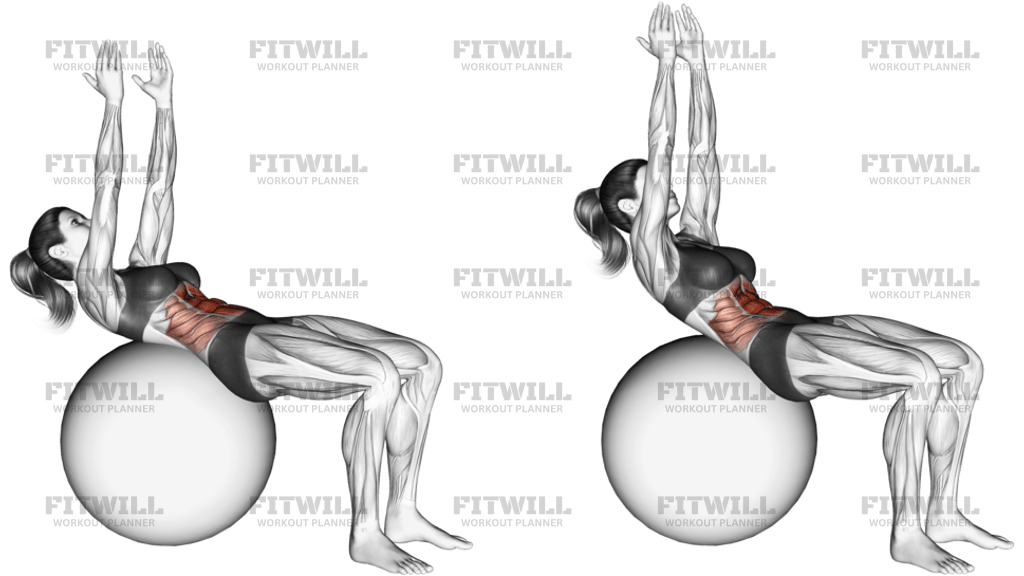
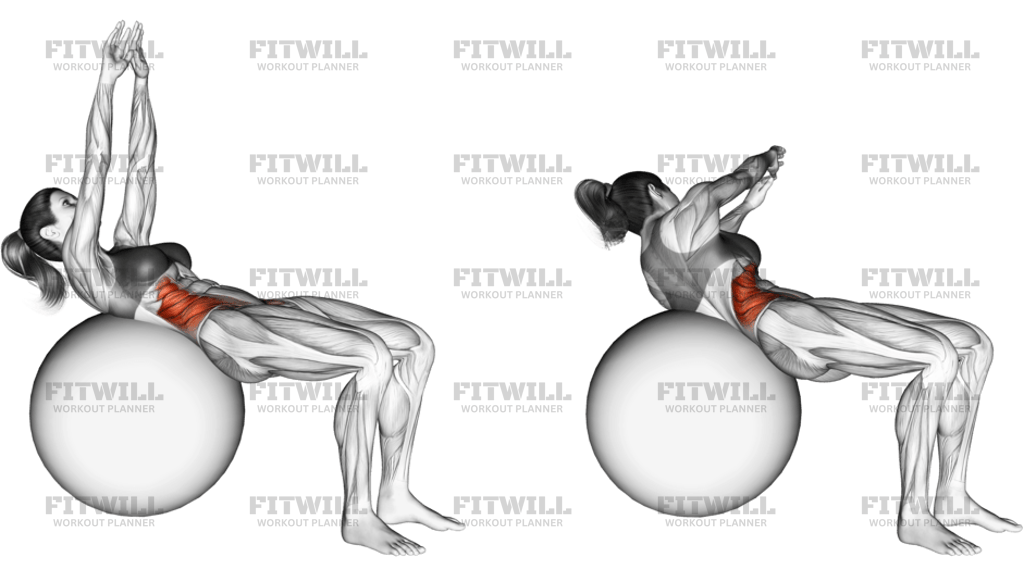
Russian Twist On Stability Ball Arms Straight is a trunk-rotation exercise that uses the support of a stability ball to train the obliques through a longer lever and a more demanding balance position. With the upper back draped across the ball, the feet planted, and the arms held straight, the exercise asks you to control rotation through the rib cage instead of just swinging the arms from side to side. It is useful when you want direct oblique work with enough instability to make each repetition intentional.
The main muscles involved are the obliques, with the rectus abdominis and deep abdominal wall helping resist unwanted arching and rib flare. The hip stabilizers and lower back also contribute by keeping the pelvis steady while the torso twists. Because the ball changes your base of support, the exercise rewards a measured setup: if your feet are too narrow or the ball is too high on your back, the movement quickly turns into a wobble instead of a clean rotation.
The best version starts with the shoulders and upper back supported on the ball, knees bent, and feet firmly rooted into the floor. From there, you keep the arms straight, rotate the shoulders and rib cage to one side, then return through center before moving to the other side. The goal is not to chase the biggest possible range; it is to keep the hips level, the neck relaxed, and the torso moving smoothly around a stable ball position.
Russian Twist On Stability Ball Arms Straight fits well in core circuits, accessory work, or warmups when you want controlled trunk rotation without loading the spine in a standing position. It can be scaled for beginners by shortening the twist and widening the stance, or made harder by slowing the tempo and extending the lever farther away from the chest. When it is done well, the exercise should feel like the obliques are steering the motion while the ball, feet, and shoulders stay organized from rep to rep.
[ Workout Log & Planner ]
Put your next workout in Fitwill
Keep your plan and training log ready when you are.


Instructions
- Sit in front of the stability ball, then walk your feet forward until your upper back and shoulder blades are supported on the ball.
- Plant your feet hip-width apart with your knees bent and your heels flat so the ball stays centered under your torso.
- Let your hips settle so your body forms a stable line from shoulders to knees, then tuck your ribs slightly down instead of flaring your chest.
- Reach both arms straight up above your chest with your elbows soft and your hands together or aligned over the sternum.
- Brace your midsection and rotate your shoulders and rib cage to one side while keeping your hips level on the ball.
- Let the straight arms travel in a controlled arc as far as you can without sliding off the ball or twisting your knees.
- Exhale through the twist, pause briefly at the end of the range, then bring the arms back through center with control.
- Repeat the rotation to the other side, keeping the feet, neck, and lower body quiet as the torso moves.
- Continue for the planned reps, then lower your hips, step your feet closer, and sit up carefully when the set is finished.
Tips & Tricks
- Keep the ball under your upper back, not your neck; too high makes the twist feel unstable and awkward.
- Widen your stance if the ball rolls when you rotate, especially during the first few reps.
- Think about turning the rib cage over the hips, not just swinging the arms from side to side.
- A slight soft bend in the elbows is fine, but do not turn the movement into a bent-arm crunch.
- If your low back arches, shorten the range and keep the front ribs stacked rather than chasing a bigger twist.
- Move slowly enough that you can feel the obliques decelerate the return through center.
- Keep your gaze neutral and avoid cranking the neck toward the moving hands.
- Stop the set when your hips start drifting or your shoulders lose contact with the ball.
Frequently Asked Questions
What muscles does Russian Twist On Stability Ball Arms Straight target most?
The obliques do most of the work, with the rectus abdominis and deep core helping keep the torso from arching or wobbling on the ball.
How should my upper back sit on the stability ball?
Your upper back and shoulder blades should be supported on the ball so the chest can rotate without your neck taking the strain. If the ball is too high, reset lower on the torso.
Should my arms stay straight during Russian Twist On Stability Ball Arms Straight?
Yes, keep them long to create the lever shown in the image. A soft elbow is fine, but bending the arms too much turns it into a different exercise.
Can beginners do this on a stability ball?
Yes, but start with a small twist and a wide stance until you can keep the ball steady. If balance is shaky, reduce the range before adding more reps.
What is the biggest mistake in this Russian twist variation?
Letting the hips slide or the lower back arch as the torso rotates. The movement should come from the ribs and shoulders, not from a body swing.
How far should I rotate side to side?
Rotate only until you feel the obliques working strongly while the ball and feet stay controlled. Bigger is not better if the pelvis starts shifting.
Can I hold a weight with Russian Twist On Stability Ball Arms Straight?
You can add a light plate or medicine ball later, but only after the unweighted version stays smooth. Extra load makes the straight-arm lever much harder to control.
Why use a stability ball instead of the floor?
The ball adds instability and forces more control through the trunk and hips. It also changes the support point, so the exercise feels more dynamic than a basic floor Russian twist.