Seated Twist On Stability Ball
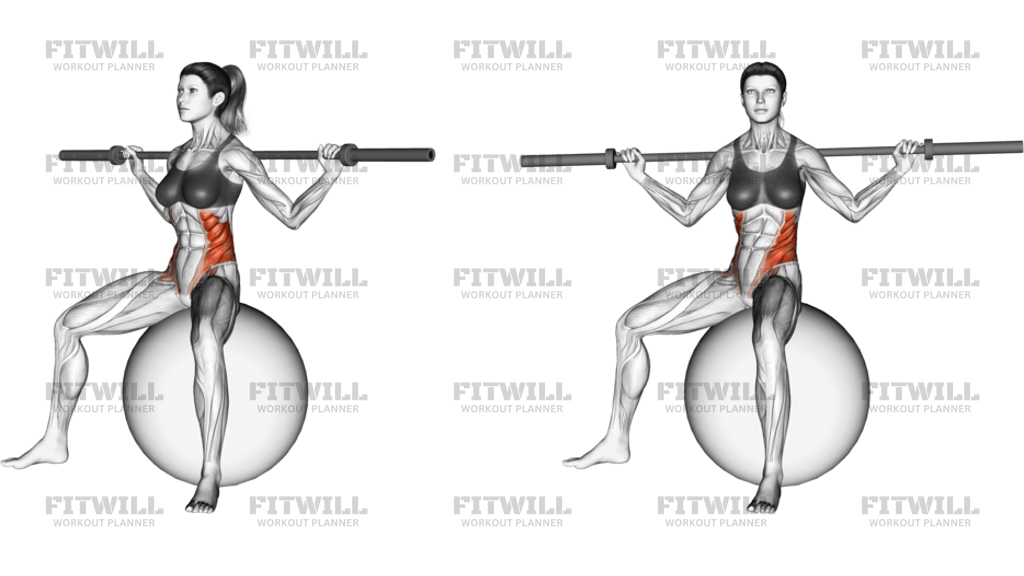
Seated Twist On Stability Ball is a controlled trunk-rotation exercise that places the obliques at the center of the work while the rest of the core keeps you balanced. Sitting on the stability ball forces your torso to stay tall and organized as you rotate from side to side, so the movement is useful for building waist control, rotational strength, and better posture under load.
The unstable surface changes the feel of the exercise in a useful way. Your abs, lower back, and hips have to steady the body while the rib cage turns, which makes the exercise a good fit for core work, warm-ups, accessory circuits, or lighter conditioning sessions where you want quality reps instead of heavy resistance.
The setup matters more than the range. Sit near the center of the ball with both feet flat on the floor, knees bent, and your weight evenly shared between both sit bones. Keep the chest lifted and the ribs stacked over the pelvis so you are not already leaning or collapsing before the first twist. If the ball shifts or your feet want to lift, reset and make the base wider before you continue.
From there, place your hands lightly behind your head, brace the midsection, and rotate the torso as one unit until the shoulders and rib cage turn to one side. The hips should stay mostly pointed forward while the waist does the work. Exhale as you turn, pause briefly at the end of the rep, and then come back through center under control before twisting to the other side.
Clean reps matter more than speed. A smaller, smoother twist with a steady ball is better than a big swing that pulls the head, rocks the hips, or arches the low back. Seated Twist On Stability Ball works best when you use it as focused rotation training: controlled, symmetrical, and repeatable. It is especially helpful if you want core strength that carries over to lifting, athletic movement, and daily turning tasks without a lot of impact.
[ Workout Log & Planner ]
Put your next workout in Fitwill
Keep your plan and training log ready when you are.


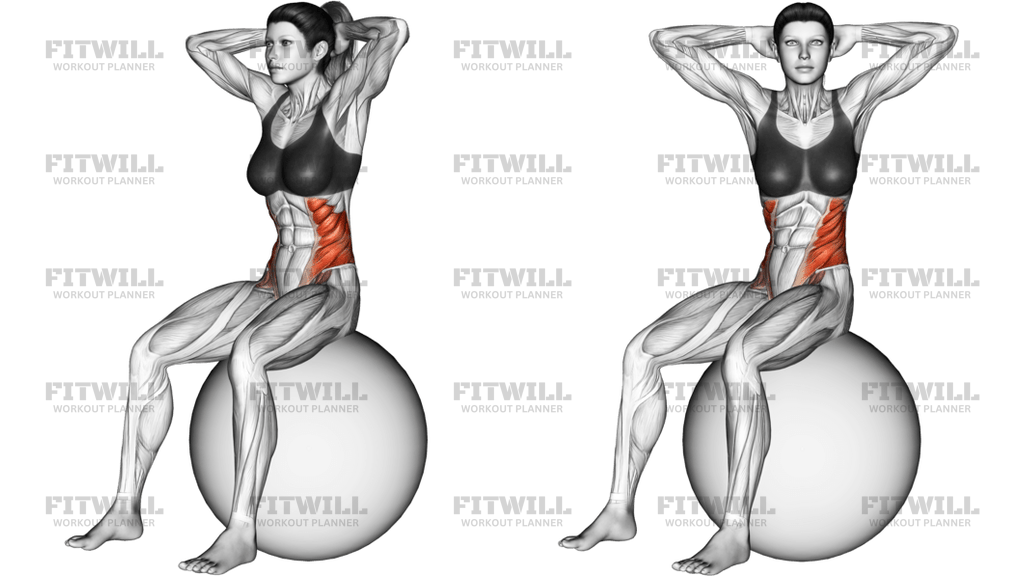
Instructions
- Sit centered on the stability ball with your feet flat on the floor, knees bent, and feet about hip-width apart.
- Keep your weight balanced over both sit bones and sit tall with your chest up and ribs stacked over your pelvis.
- Place your fingertips lightly behind your head or at your temples and keep your elbows open.
- Brace your midsection without leaning back or letting the ball roll under you.
- Rotate your torso to one side, letting the shoulders and rib cage turn together while the hips stay mostly forward.
- Turn only as far as you can while keeping the ball steady and your neck relaxed.
- Exhale at the end of the twist, then return through center under control.
- Rotate to the other side and keep alternating for the planned number of repetitions.
- Place your feet down and step off the ball carefully after the set.
Tips & Tricks
- Widen your feet a little if the ball shifts when you twist.
- Keep the elbows open so you do not pull your head forward with your hands.
- Think about turning your ribs over your hips instead of swinging your shoulders.
- Use a smaller twist if your pelvis starts to drift on the ball.
- Exhale as you rotate so the waist stays engaged through the turn.
- Keep the rep tempo slow enough that both sides feel equally controlled.
- If your neck tightens, lower the hands to a light cross-arm position.
- Stop the set when the ball starts bouncing or your low back begins to arch.
Frequently Asked Questions
What muscles does Seated Twist On Stability Ball work most?
The obliques do most of the work, with the abs and deeper core muscles helping you keep the torso steady on the ball.
Can beginners do Seated Twist On Stability Ball?
Yes. Start with no added weight, keep your feet planted wider for balance, and use a smaller twist until you can stay stable.
Should my feet stay planted during Seated Twist On Stability Ball?
Yes, keep both feet flat and use them as your base. Lifting them changes the exercise and makes it much harder to control the ball.
How far should I twist on the stability ball?
Twist only as far as you can while the ball stays steady and your low back stays long. If the hips start to slide, the range is too big.
Why does my neck feel tense during this exercise?
Usually the hands are pulling too hard on the head. Keep the fingertips light, open the elbows, and let the torso rotate instead of cranking the neck.
Can I hold weight for Seated Twist On Stability Ball?
You can hold a light plate or medicine ball at your chest, but only after you can keep the ball steady and rotate without leaning back.
How is Seated Twist On Stability Ball different from a Russian twist?
In this version your feet stay on the floor and the ball adds instability. A Russian twist usually places more demand on balance and often changes the torso angle.
How many reps should I use for Seated Twist On Stability Ball?
Controlled sets of about 8-15 twists per side are a good starting point. Choose a pace that keeps both sides smooth instead of rushing through the rotation.