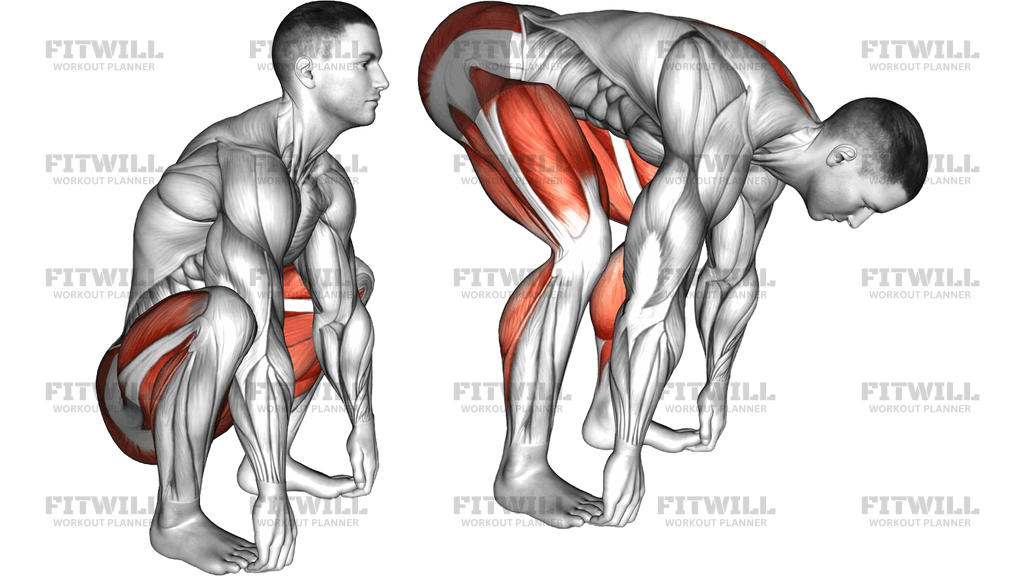
Self Assisted Inverse Leg Curl
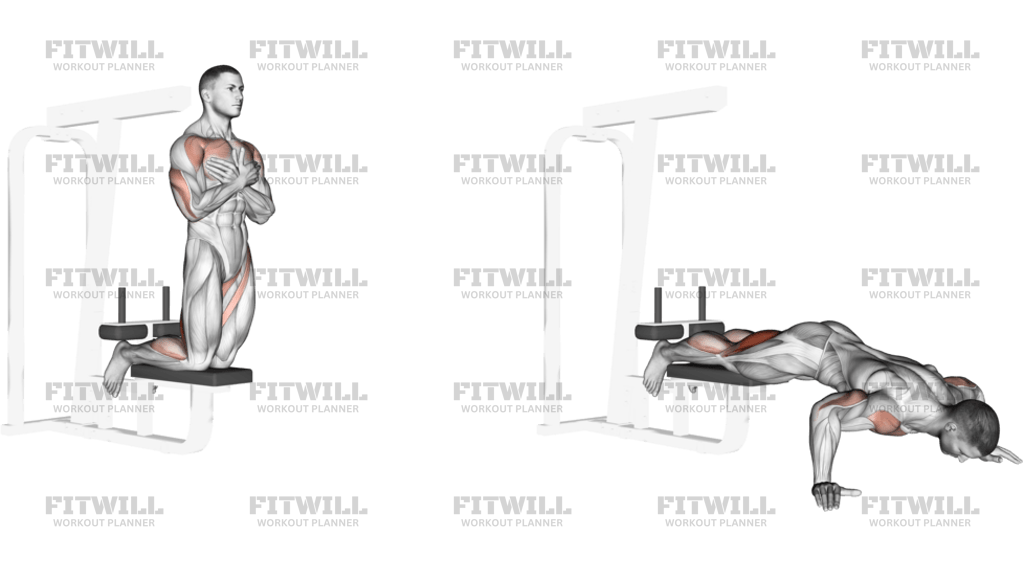
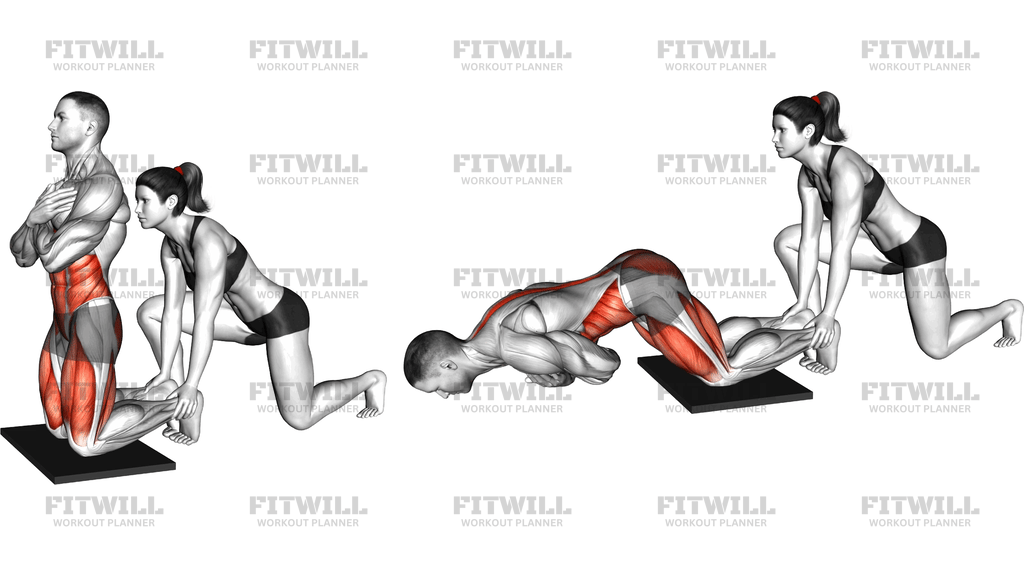
Self Assisted Inverse Leg Curl is a bodyweight hamstring exercise performed on an inverse leg curl or GHD-style station with the knees on the pad and the feet anchored behind you. The self-assisted version lets you use your hands or light floor contact to reduce the load, which makes the movement easier to learn and easier to control. It trains knee-flexion strength through the hamstrings while also asking the glutes, core, and upper body to keep your body position organized.
The setup matters because the machine does most of the stabilization for you, but only if your knees, shins, and ankles are lined up correctly. Start tall with your hips centered on the pad, feet secured under the rollers, and your torso stacked over your knees. If you drift forward or lose the anchor, the set turns into a swing instead of a hamstring curl. A good setup lets you feel the back of the thighs working from the first inch of motion.
From the top, lower your torso forward under control while the knees stay planted and the hamstrings lengthen. Keep the ribcage down and avoid breaking at the hips; think about hinging at the knees and keeping the body as one long line. As you come back up, curl through the hamstrings and use just enough assistance from the hands or floor to keep the rep smooth. The goal is to create a clean curve of tension, not to snap yourself upright.
This exercise is useful for beginners who need an easier entry into inverse curl work, and for lifters or runners who want hamstring strength without a heavy machine stack. It also fits well as accessory work after squats, deadlifts, sprinting, or jumping. Because the hamstrings work hardest near knee extension and on the return to the upright position, the tempo matters more than load.
Keep every repetition honest. Shorten the range if your lower back arches, your ankles slip, or you need to jerk with the arms to get through the rep. For most people, the best version is the one that keeps tension on the back of the thighs while the torso stays quiet and the movement looks smooth from start to finish.
[ Workout Log & Planner ]
Put your next workout in Fitwill
Keep your plan and training log ready when you are.


Instructions
- Set your knees on the pad of the inverse curl or GHD station and secure your ankles or lower legs under the rollers behind you.
- Start tall with your hips centered over the pad, your torso stacked over your knees, and your hands crossed over your chest or lightly touching the floor for assistance.
- Brace your abdomen and squeeze your glutes so your trunk stays long before the first rep.
- Lower your torso forward in a slow arc, keeping the knees planted and the ankles secured.
- Continue until your body reaches the deepest position you can control without losing the line from shoulders to knees.
- Curl back up by driving the hamstrings into the pad and bringing your torso back to the upright position.
- Use your hands or floor contact only as much as needed to smooth the rep, not to yank yourself through it.
- Reset at the top, exhale, and repeat for the planned number of repetitions.
Tips & Tricks
- Keep the knees centered on the pad; if they slide forward, shorten the range and re-anchor before the next rep.
- Use your hands for light assistance only. If the arms are doing most of the work, the hamstrings are no longer the limiter.
- Lower under control for 2 to 4 seconds so the eccentric phase stays on the back of the thighs instead of on momentum.
- Keep the ribs down and the pelvis from dumping forward; a hard arch in the lower back usually means the range is too deep.
- Let the ankles stay snug under the rollers so the legs do not kick out or drift during the return.
- Stop the set when you need to yank with the arms, because that is usually the point where the hamstrings have already lost tension.
- If the hamstrings cramp, reduce the range and slow the tempo rather than forcing a deeper rep.
- Choose a position and amount of assistance that lets every repetition look the same from the first rep to the last.
Frequently Asked Questions
What muscles does Self Assisted Inverse Leg Curl work?
The hamstrings are the main target, with the glutes, core, and upper body helping to keep you stable on the station.
How is this different from a regular inverse leg curl?
The self-assisted version lets you use your hands or the floor for a little help, so the movement is easier to control and regress.
Where should I feel the exercise most?
You should feel it mainly in the back of the thighs, especially as you lower and again when you pull back to the top.
Can beginners do Self Assisted Inverse Leg Curl?
Yes. Beginners usually do best with a shorter range and more hand assistance until the body stays smooth on its own.
How do I use my hands during the rep?
Use them only to reduce the load or smooth the return. If you are pushing hard with the arms, the set has become too easy or too messy.
Why does my lower back take over on this exercise?
Usually the range is too deep, the ribs are flaring, or the hips are drifting out of position. Shorten the rep and keep the torso long.
What is a good substitute if I cannot control the full range?
A shorter-range assisted inverse leg curl or a hamstring curl machine will usually let you build the same pattern with less load.
How many reps should I use?
Use a rep range that keeps the motion slow and clean, often moderate sets of about 6 to 12 controlled reps.