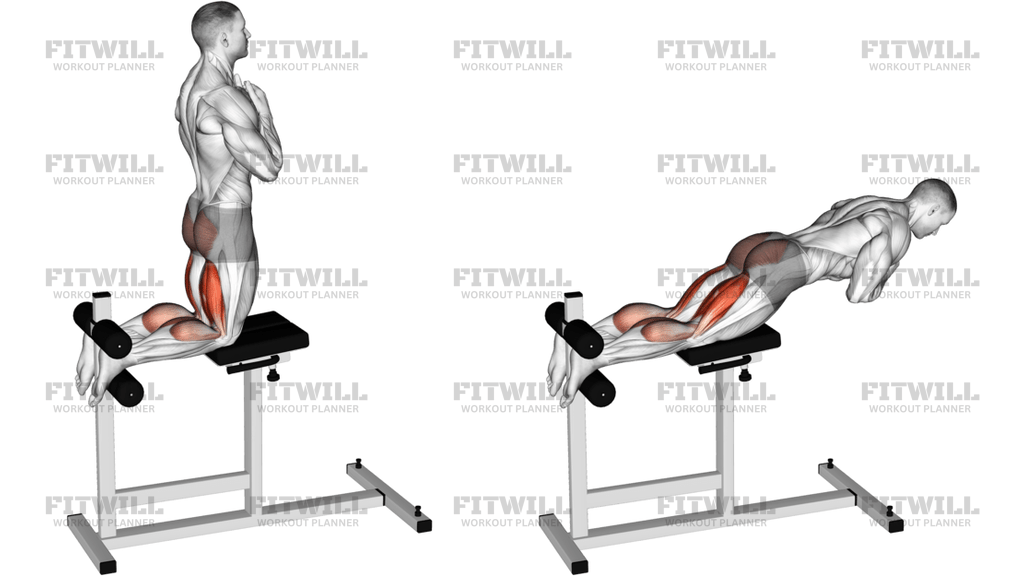
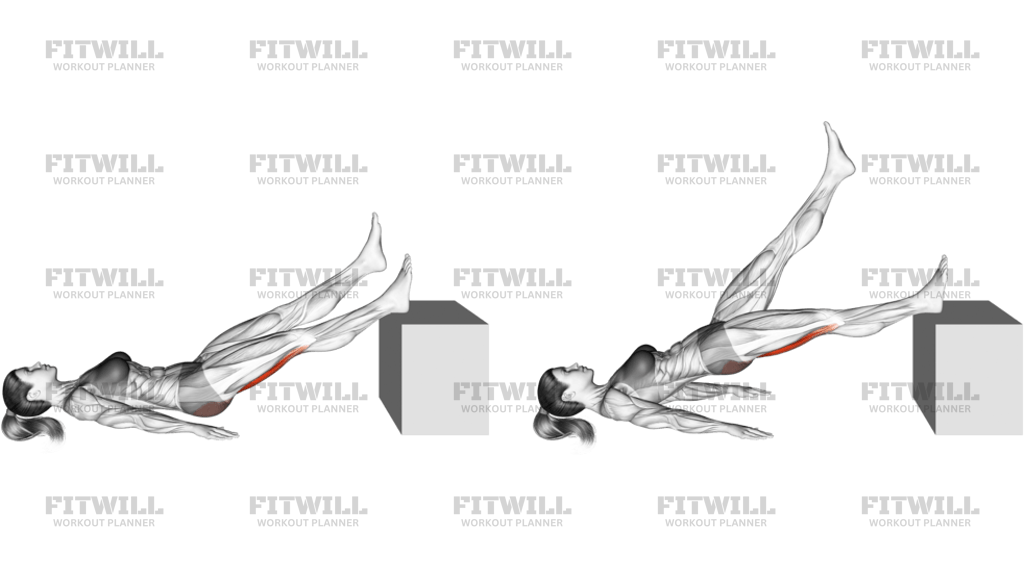
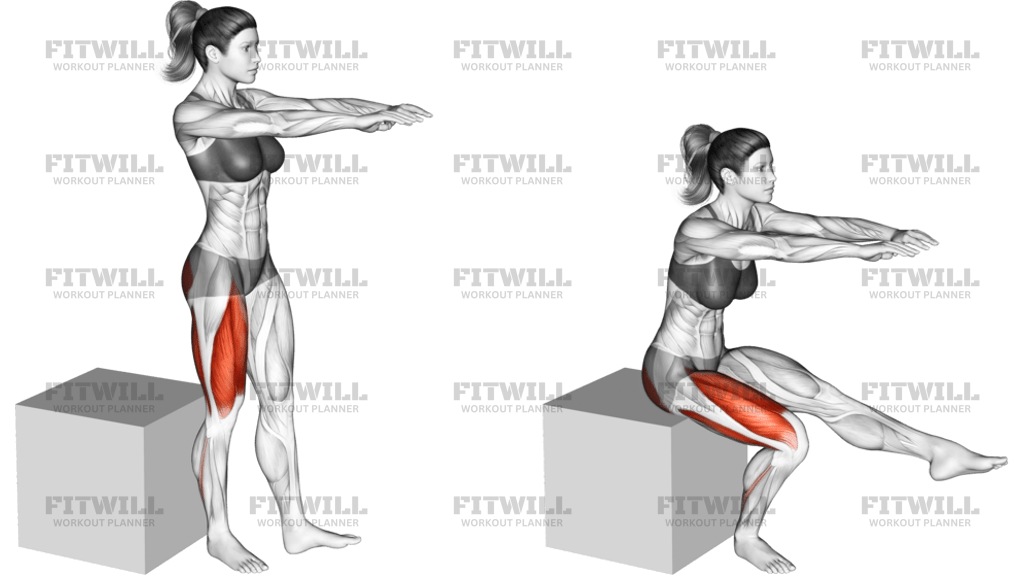
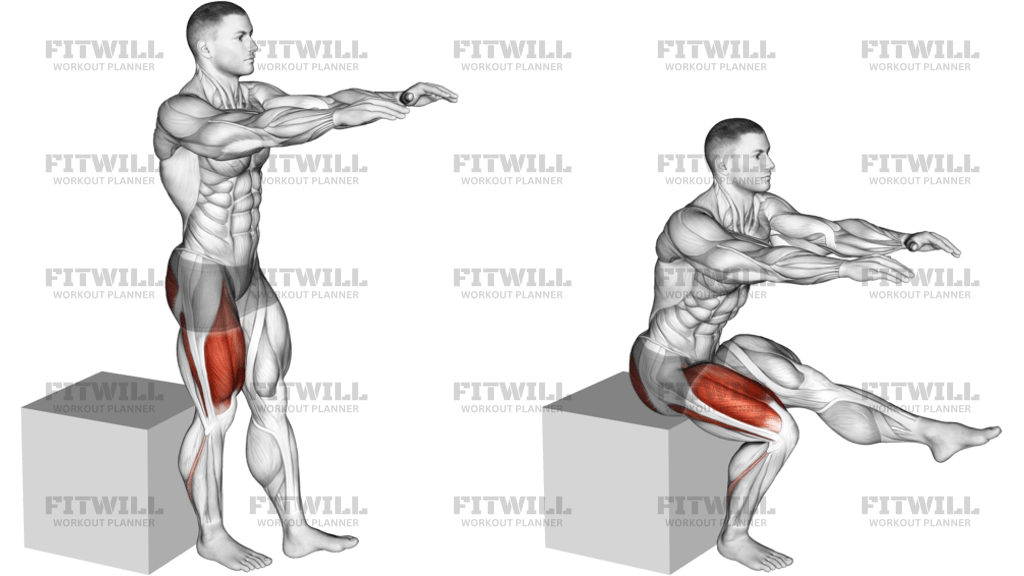
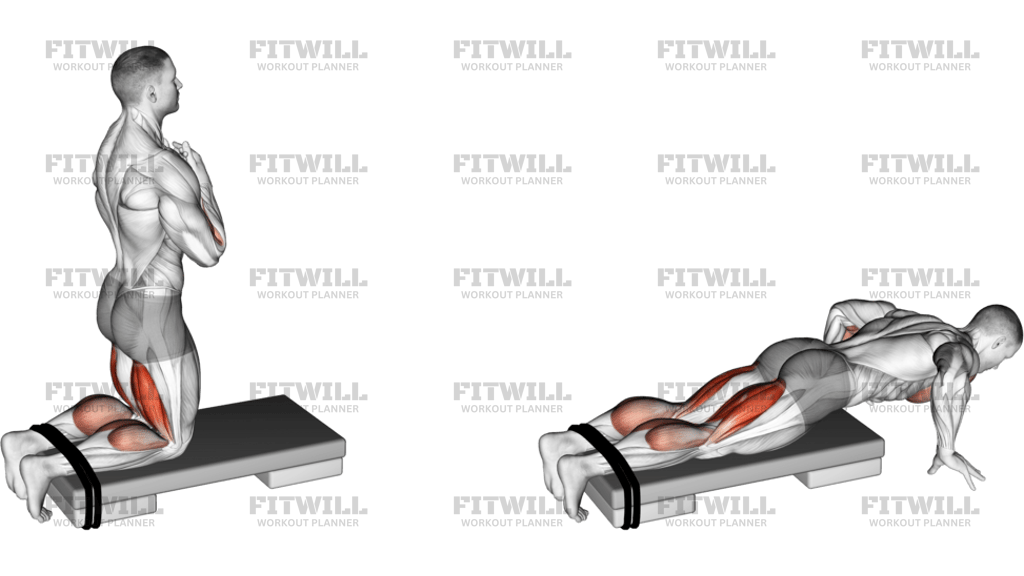
Bodyweight Lying Legs Curl
Bodyweight Lying Legs Curl is a prone hamstring-focused curl that uses your own bodyweight to train knee flexion with very little spinal loading. It is a useful accessory movement when you want to build posterior-thigh strength, improve control at the knee, or add a lighter hamstring drill after heavier squats or hinge work. Because the body stays supported while only the lower legs move, the exercise rewards precise setup and strict tempo more than brute force.
The exercise works best when your hips are anchored on a flat bench, pad, or similar support and your knees can bend freely off the edge. That setup keeps the curl honest: if your hips drift, the movement turns into a back-arching cheat, and if you are too far back on the pad, the range gets cramped. Bodyweight Lying Legs Curl is at its best when the torso stays quiet and the hamstrings do the work of pulling the heels in.
Each repetition should feel like a smooth knee curl, not a kick or swing. Start with the legs long, brace lightly through the midsection, and curl the heels toward the glutes until the hamstrings shorten hard without the pelvis lifting. The return should be slower than the lift so the hamstrings stay under tension all the way back to full extension. That controlled lowering is usually where the exercise becomes challenging, even before the rep count gets high.
This movement fits well in hamstring or posterior-chain sessions, as well as in circuits where you want a bodyweight option that still gives a strong local muscle challenge. It can also be a good regression if a machine curl is too much or if you need something that feels friendlier on the joints than heavy loaded leg curl work. When Bodyweight Lying Legs Curl is performed well, it gives you a clean hamstring contraction without relying on momentum or a big load.
Safety and quality matter more here than chasing range. Keep your neck relaxed, your ribs settled, and your hips pressed into the support so the lower back does not take over at the top. If your calves cramp or your pelvis starts to lift, shorten the range and slow the tempo until the hamstrings are clearly driving the motion. A controlled set with consistent body position is a better training stimulus than a longer set with sloppy reps.
[ Workout Log & Planner ]
Put your next workout in Fitwill
Keep your plan and training log ready when you are.


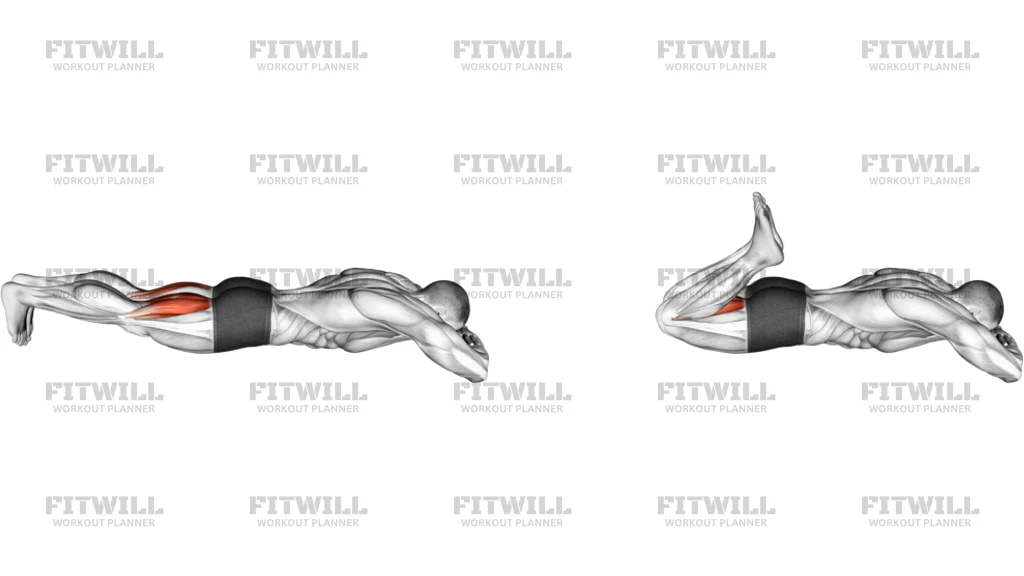
Instructions
- Lie face down on a flat bench or padded support with your hips close to the edge and your lower legs hanging free.
- Keep your pelvis pressed into the pad and rest your forearms or hands under your head so your upper body stays relaxed.
- Extend both legs straight behind you and make sure your knees can bend without the support blocking the movement.
- Set your ribs down, lightly brace your midsection, and keep your thighs quiet before you start the first rep.
- Exhale and bend both knees to curl your heels toward your glutes, letting only the lower legs move.
- Keep your hips anchored and stop the curl when the hamstrings are fully shortened without arching your lower back.
- Squeeze briefly at the top, then lower your legs slowly until your knees are straight again.
- Repeat for the planned reps, then lower the legs to the pad and reset without bouncing.
Tips & Tricks
- If your hips drift, move a little farther forward on the bench so the knees can bend freely off the edge.
- A slower lowering phase makes Bodyweight Lying Legs Curl much harder than fast, rushed reps.
- Think about dragging the heels back instead of kicking the feet upward; that keeps the hamstrings in charge.
- Keep the pelvis glued to the pad. If the hips lift, the low back starts stealing the rep.
- Shorten the top range if your calves cramp before the hamstrings finish working.
- Choose a pad height that leaves enough room for the knees to flex; a cramped setup cuts the range short.
- Point the toes slightly away if you want less calf involvement and a cleaner hamstring contraction.
- Add ankle weights only if the torso stays still and every rep looks identical from the side.
Frequently Asked Questions
What muscles does Bodyweight Lying Legs Curl work?
It mainly targets the hamstrings through knee flexion, with the glutes, calves, and midsection helping to keep the body stable on the bench or pad.
Can beginners perform this exercise?
Yes, beginners can use it if they keep the range short and the lowering phase slow. Start with bodyweight only and focus on keeping the hips pinned down.
How do I keep my hips down during Bodyweight Lying Legs Curl?
Set your hips close enough to the edge that the knees can bend freely, then keep your ribs down and press the pelvis into the pad. If the hips start lifting, shorten the curl immediately.
What is a common mistake on the bench setup?
The biggest setup mistake is lying too far back on the support, which blocks knee flexion and makes the curl feel cramped. Move forward until the lower legs can hang freely off the edge.
Why do my calves cramp during Bodyweight Lying Legs Curl?
Calves often cramp when the feet are pulled too aggressively or the range is too high. Ease off the top range, point the toes slightly away, and let the hamstrings drive the curl.
Can I do Bodyweight Lying Legs Curl without a machine?
Yes. A flat bench, sturdy pad, or glute-ham style support can work as long as your hips stay anchored and your lower legs have room to move freely.
How can I make Bodyweight Lying Legs Curl harder without adding a lot of load?
Slow the lowering phase, add a pause at the top, or wear light ankle weights. Those changes increase time under tension without changing the basic setup.
Where should I feel Bodyweight Lying Legs Curl the most?
You should feel it behind the thighs, especially as the heels travel toward the glutes. If the low back is doing most of the work, the setup or range is off.