Side Lunge Stretch
Side Lunge Stretch is a body-weight mobility drill that opens the inner thigh, groin, hips, and ankles through a wide lateral stance. The movement looks simple, but the setup changes the whole feel of the stretch. When one knee bends deeply and the other leg stays long, you get a useful combination of adductor stretch on the straight side and loaded hip work on the bent side.
This exercise is useful when your hips feel stiff in side-to-side patterns, after lower-body training, or as part of a warm-up before squats, lunges, or lateral sports work. It also teaches you how to shift weight without collapsing the foot, knee, or torso. The goal is not to rush into a huge range, but to find a controlled position where the inside of the thigh and the bent-side hip can open without pain.
The setup matters because the stance determines which side stretches and how stable the rep feels. Start with both feet turned mostly forward, take a wide step out, and keep the standing foot flat so the arch does not cave in. As you sit into one side, the bent knee should track in the same line as the toes while the other leg stays straighter and the foot stays planted.
The best repetitions stay smooth from side to side. Drop your hips back and down into the bent leg, keep the chest lifted enough that you can breathe, and avoid twisting or bouncing through the bottom position. A light pause can help you feel the adductor and hip opener more clearly, then you shift back to center and repeat on the other side with the same control. If your ankles are stiff, let the heel of the straight leg stay grounded and reduce depth until both feet can remain flat.
Use Side Lunge Stretch when you want a lateral movement that combines mobility, balance, and lower-body readiness in one drill. It is especially helpful for athletes, lifters, and anyone who spends too much time in straight-ahead movement. If a side feels tighter than the other, stay honest with the range and let the movement gradually open the hips instead of forcing depth. Over time, a cleaner shift and a slightly deeper sit usually matter more than chasing a dramatic stretch.
[ Workout Log & Planner ]
Put your next workout in Fitwill
Keep your plan and training log ready when you are.


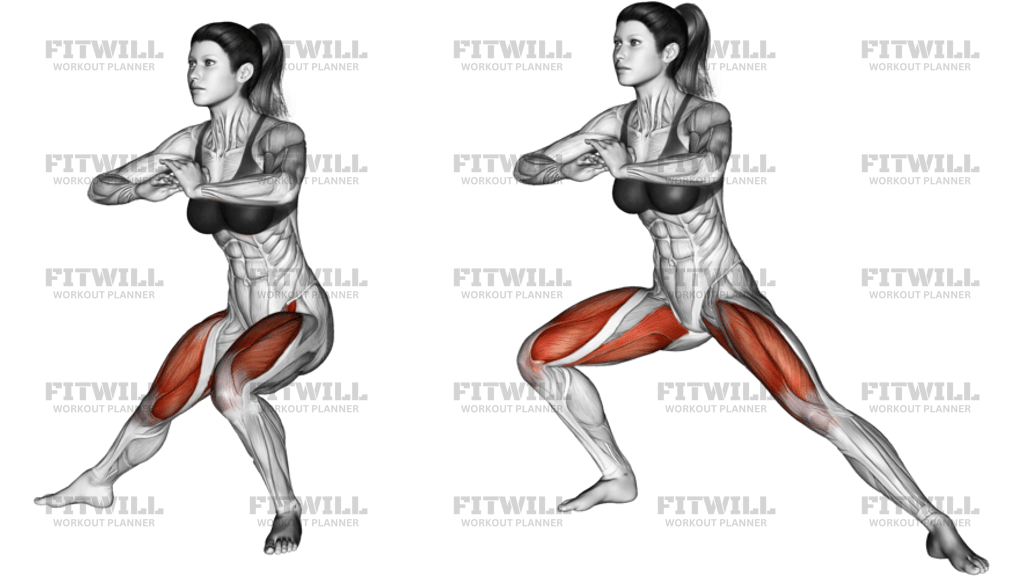
Instructions
- Stand tall on an exercise mat with your feet a little wider than shoulder width and your toes turned mostly forward.
- Brace lightly and keep your chest lifted before you shift to one side.
- Take a long step out to the right and let your right foot stay flat on the floor.
- Bend your right knee and sit your hips back and down while keeping your left leg straight.
- Keep both heels down and track the bent knee in line with the right toes.
- Lower until you feel a strong stretch through the inner thigh and groin of the straight leg, then pause briefly.
- Push through the bent-side foot to shift your hips back to the middle without rising onto your toes.
- Repeat the same side-to-side shift to the other side, breathing steadily throughout.
- Finish by bringing your feet back under you and standing up slowly before changing position.
Tips & Tricks
- Keep the straight leg’s foot flat so the inner-thigh stretch stays honest instead of slipping into a toe-up balance drill.
- Turn both toes mostly forward if you want more adductor stretch; turn them out only a little if your hips pinch at the bottom.
- Sit the hips back, not just straight down, so the bent-side glute can share the load with the groin stretch.
- If the bent knee collapses inward, shorten the stance and track the knee over the middle toes.
- A small pause in the deepest position usually works better than bouncing for a bigger range.
- Keep the chest proud enough to breathe easily, but do not lean so far forward that the lower back takes over.
- Use a shallower range on the tighter side and let that side catch up over time instead of forcing symmetry on day one.
- Move slowly enough that each rep feels like a deliberate weight shift, not a quick side shuffle.
Frequently Asked Questions
What does Side Lunge Stretch target most?
It mainly stretches the inner thighs and groin while also opening the hips and ankles.
Is Side Lunge Stretch good before squats or lunges?
Yes. It works well in a warm-up because it prepares the hips for lateral weight shifts and deeper leg positions.
Should my straight leg stay completely locked?
Keep it long and mostly straight, but do not force the knee hard into lockout if that creates discomfort.
Why do I feel Side Lunge Stretch more on one side?
That usually means one adductor or hip is tighter, so use a smaller range on that side and keep the foot flat.
Can beginners do Side Lunge Stretch safely?
Yes, as long as they use a short range, keep both feet grounded, and avoid dropping too fast into the bottom position.
What is the most common mistake in Side Lunge Stretch?
The biggest mistake is letting the bent knee cave inward or bouncing at the bottom instead of settling into a controlled hold.
Do I need equipment for Side Lunge Stretch?
No. A mat is enough, although it helps if the floor is hard or cold.
How can I make Side Lunge Stretch feel easier?
Take a narrower stance, reduce how far you sit into the bent leg, and keep the torso a little taller.