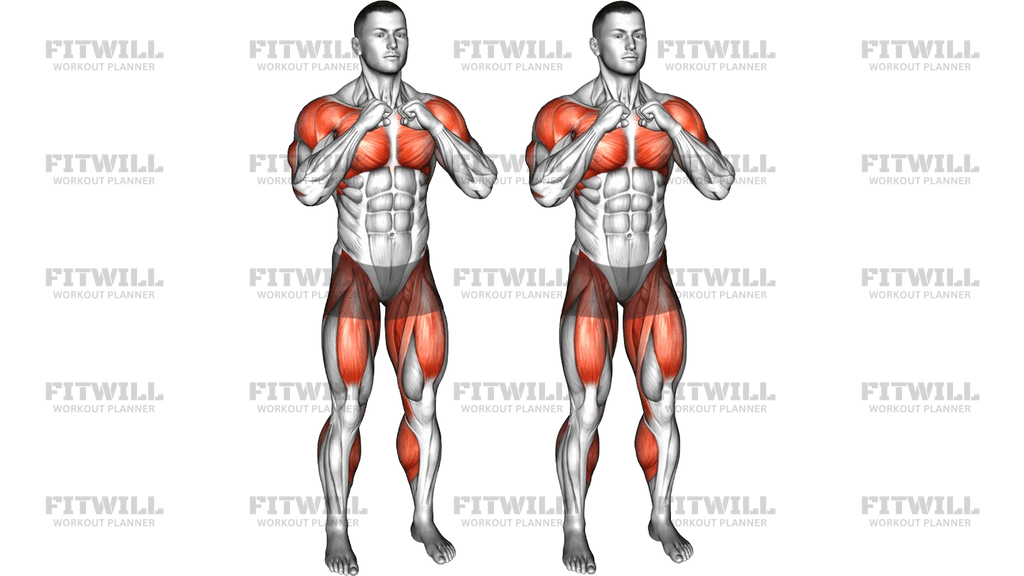
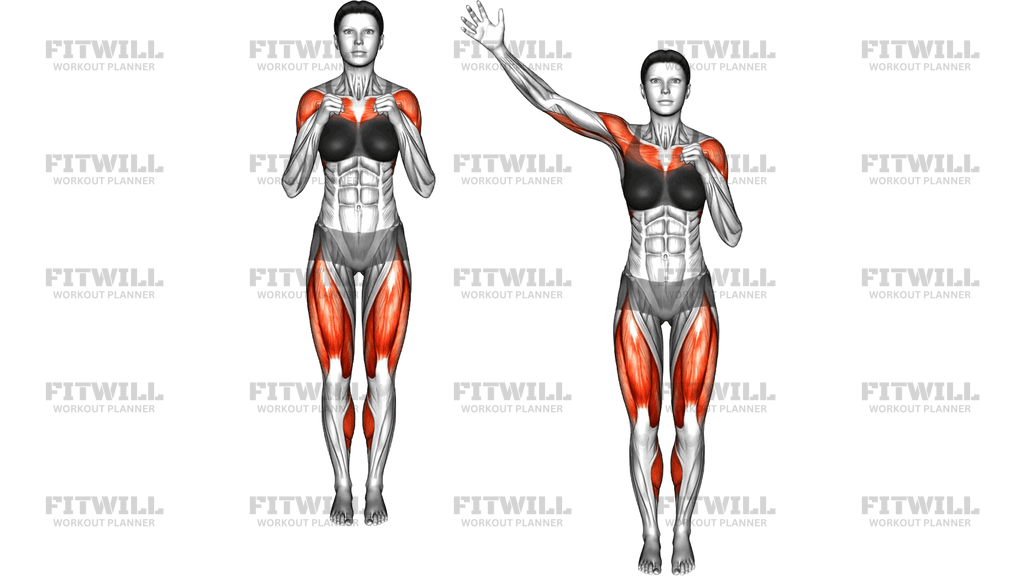
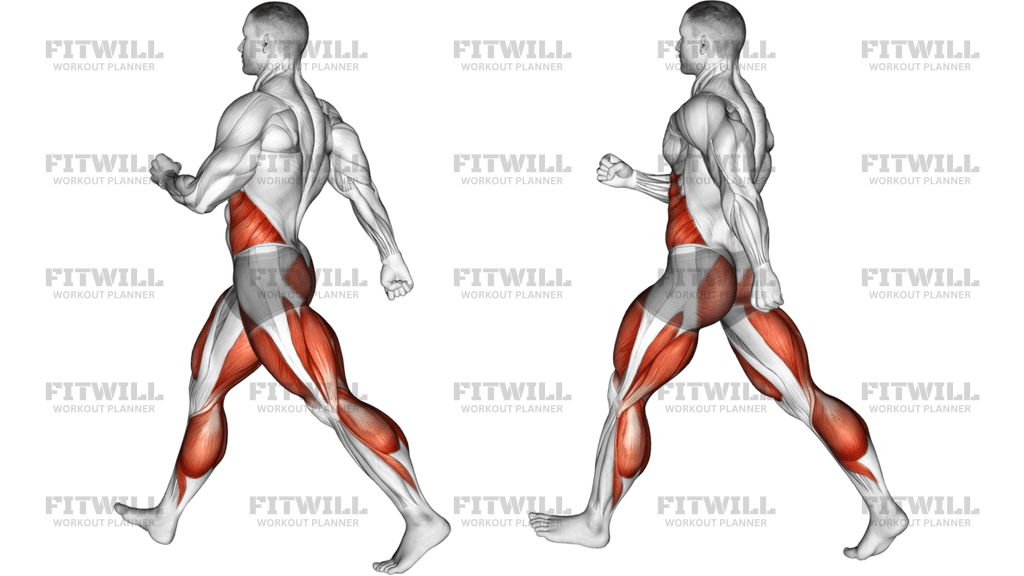
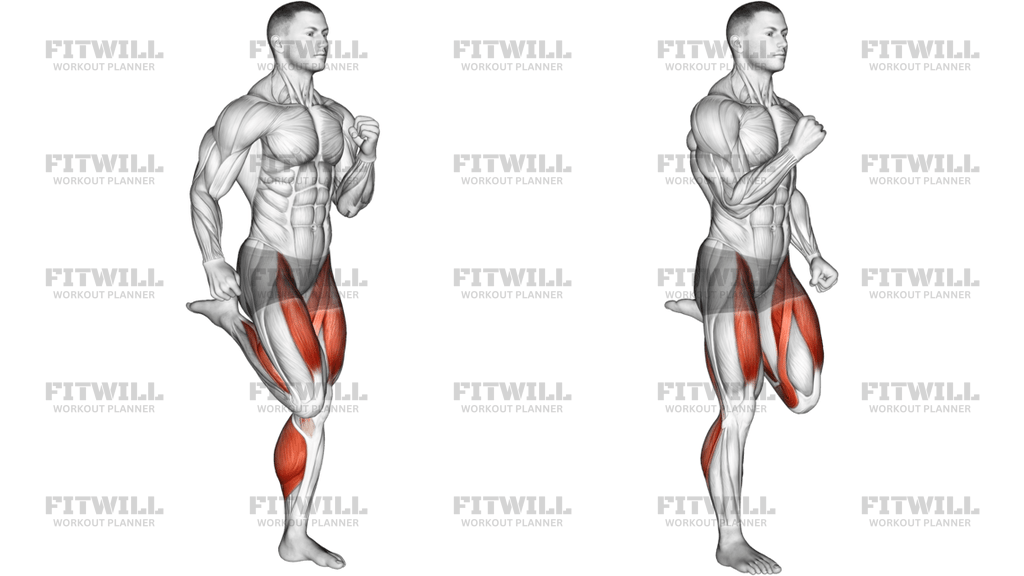
Skater
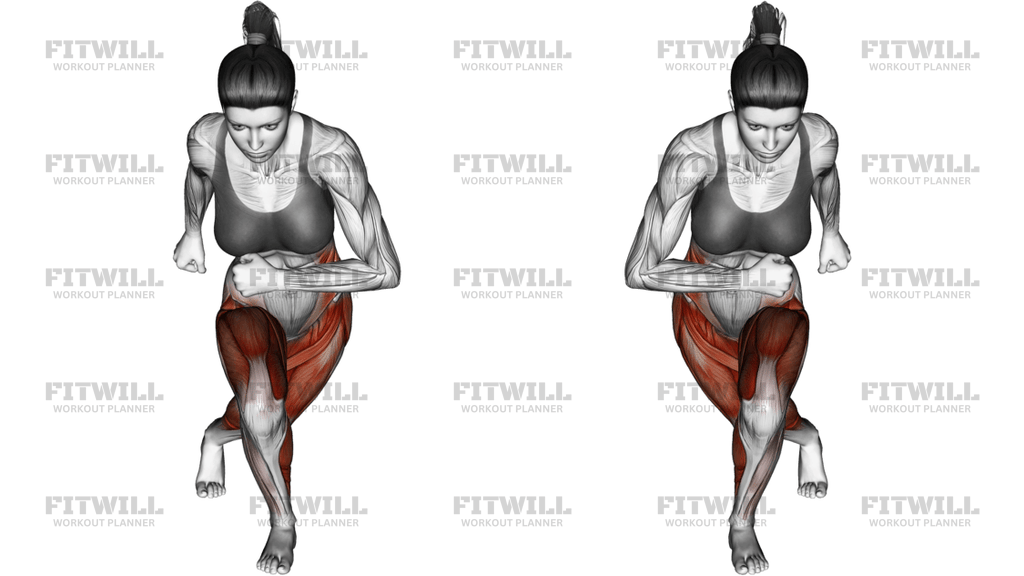
Skater is a lateral bodyweight cardio drill built around quick side-to-side bounds and a controlled single-leg landing. It looks simple, but the value comes from how well you can absorb force, keep your pelvis level, and change direction without letting the knees cave or the torso twist. When it is done well, it trains more than conditioning: it also challenges balance, reactive control, and lower-body coordination.
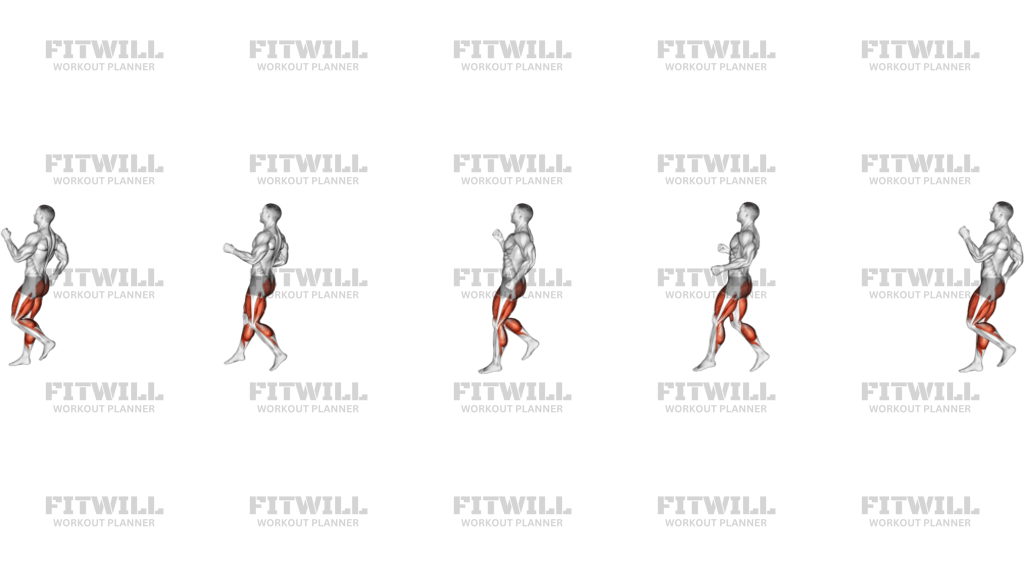
The exercise places the main demand on the glutes, quads, calves, and the small stabilizers that keep the ankle, knee, and hip lined up during each landing. Your core works to stop the trunk from swaying as you move from one leg to the other, and the trailing leg helps counterbalance the jump. That makes Skater useful for sports prep, athletic warm-ups, and conditioning sessions where you want lateral power instead of straight-ahead jumping.
Start in a light athletic stance with the chest slightly forward, knees soft, and weight centered over one leg before you bound to the other side. The landing leg should catch your weight quietly, with the knee tracking over the toes and the hip sitting back enough to absorb the impact. The free leg crosses behind the body in a smooth sweep, but it should not yank you out of position or force your torso to rotate.
Each rep should feel springy, not frantic. Push off the floor from the outside leg, travel sideways with enough distance to challenge balance, then stick the landing briefly before rebounding or resetting. If the landing gets loud, the knees cave inward, or the torso collapses toward the floor, shorten the hop and clean up the mechanics before speeding up again.
Skater fits well in conditioning circuits, plyometric prep, or any workout where lateral movement matters more than raw load. It is especially useful for runners, court-sport athletes, and anyone who needs to improve single-leg control under fatigue. Keep the movement crisp and repeatable, and treat every landing as a test of position, not just a chance to rack up reps.
[ Workout Log & Planner ]
Put your next workout in Fitwill
Keep your plan and training log ready when you are.


Instructions
- Stand in an athletic stance with your feet about hip-width apart, knees slightly bent, and your chest angled forward over the balls of your feet.
- Shift your weight onto one leg and let the other leg trail lightly behind you so you can load the outside hip before the jump.
- Swing both arms naturally to help create rhythm, keeping your shoulders level and your torso braced.
- Push sideways off the loaded leg and travel laterally toward the opposite side in one quick bound.
- Land softly on the opposite foot, with the knee tracking over the toes and the hip back enough to absorb the impact.
- Let the trailing leg cross behind the landing leg without letting it pull your torso open or twist your hips.
- Hold the landing for a beat if you need to regain balance, then rebound into the next skater to the other side.
- Breathe out as you drive off the floor and inhale as you absorb each landing.
- Finish by stepping to a stop when your form or landing quality starts to fade.
Tips & Tricks
- Think of Skater as a lateral bound, not a jump straight up.
- Keep the hips facing mostly forward so the torso does not spin with each landing.
- Land on a quiet foot strike; a loud slap usually means you are dropping too hard.
- Let the free leg hover behind you instead of swinging wildly across the body.
- If the knee caves inward, shorten the hop and push harder through the glute of the landing leg.
- Use a smaller side-to-side distance when fatigue makes the trunk lean or the balance wobble.
- Keep your eyes forward so you do not over-rotate toward the landing side.
- Treat each rep like an athletic stop-and-go drill, not a max-height jump.
Frequently Asked Questions
What muscles does Skater work?
Skater mainly trains the glutes, quads, calves, and core, with the ankle and hip stabilizers working hard on every landing.
Is Skater good for beginners?
Yes, but beginners should start with short side hops or step-behind skaters before trying bigger bounds.
How low should I stay during Skater?
Stay in a light athletic quarter-squat, with enough bend at the hips and knees to absorb the landing without turning it into a deep squat.
Should my back leg touch the floor in Skater?
It can brush the floor lightly for balance, but it should not drag or swing so hard that it pulls your torso off line.
What is the biggest mistake in Skater?
The most common error is landing too heavy with the knee collapsing inward or the torso twisting toward the floor.
Can I do Skater without jumping?
Yes, you can turn it into a step-behind skater by moving laterally and lightly tapping the back leg behind you instead of bounding.
What should a good landing feel like?
A good landing is quiet, balanced, and controlled, with the knee tracking over the toes and the hip staying back enough to absorb force.
Where does Skater fit in a workout?
It works well in warm-ups, plyometric blocks, or conditioning circuits where you want lateral power and single-leg control.