Smith Deadlift
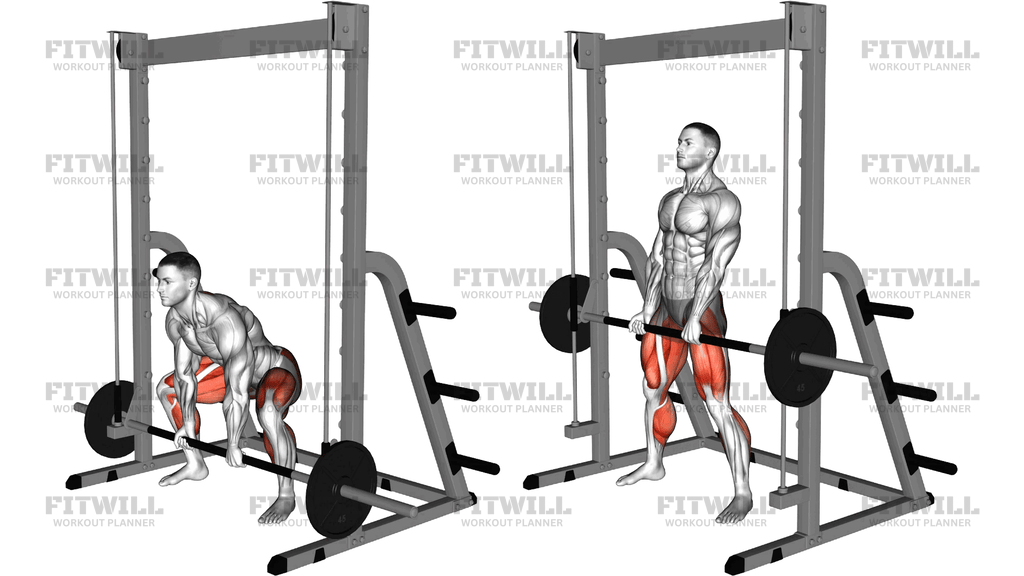
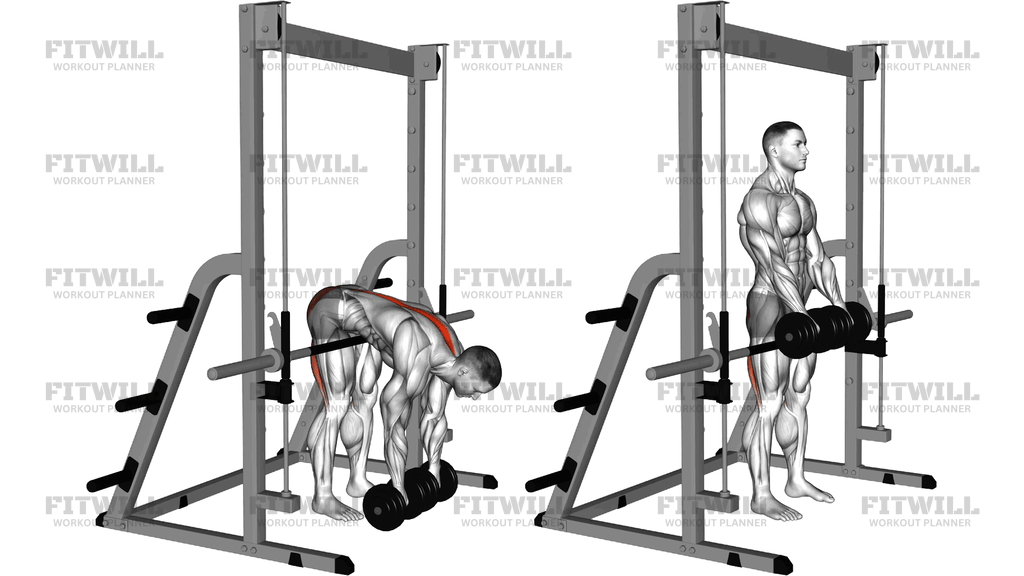
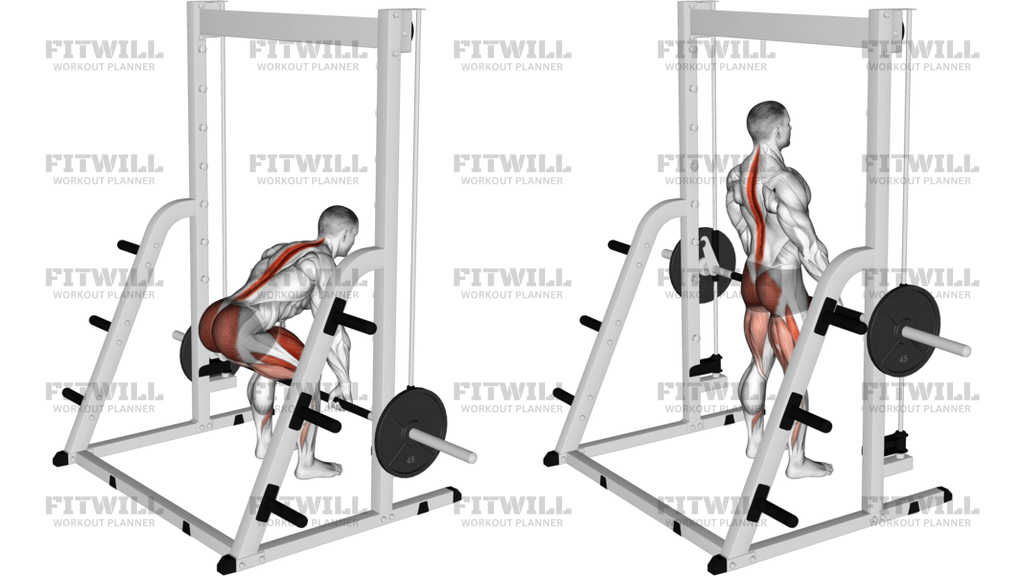
Smith Deadlift is a Smith machine hip-hinge exercise built to strengthen the glutes, hamstrings, core, and lower back with a more guided bar path than a free-weight deadlift. The fixed rails reduce the balance demand, which makes it useful for learning how to sit the hips back, keep the bar close, and drive through the floor without worrying about side-to-side drift.
The main emphasis is on the glutes, but the hamstrings and spinal erectors work hard to control the lowering phase and bring you back to standing. Because the machine controls the track of the bar, the setup matters more than on a free barbell. If your feet are too far forward or too far under the bar, the hinge can turn into a squat or a low-back pull instead of a clean hip drive.
A good Smith Deadlift begins with the bar set low enough that you can reach it with a neutral spine and flat feet. Stand centered in the machine, brace before the first pull, and keep your shoulders slightly in front of the bar as you hinge down. From there, the repetition should feel like a strong push through the midfoot and heel while the torso rises as one piece instead of jerking up first.
On the way down, send the hips back, keep the bar sliding close to the legs, and stop the descent before the lower back rounds or the shoulders collapse forward. The fixed path can feel smoother than a free deadlift, but it can also punish a sloppy stance because the machine will not let the bar travel around a bad setup. That makes Smith Deadlift a useful option for controlled strength work, accessory posterior-chain training, or lifters who want a simpler way to rehearse the hinge pattern.
Use Smith Deadlift when you want a strong glute-and-hamstring stimulus with less balance challenge than a barbell deadlift. It is especially useful for beginners learning the hinge, for lifters training around limited stabilization capacity, or for sessions where the goal is clean reps and consistent tension rather than maximal load. Keep the repetition smooth, finish each rep by standing tall with the glutes tight, and reset your hinge before the next pull.
[ Workout Log & Planner ]
Put your next workout in Fitwill
Keep your plan and training log ready when you are.


Instructions
- Set the Smith bar low enough that you can reach it with a neutral spine, then stand centered with your feet about hip-width apart.
- Place the bar over the midfoot and grip it just outside your legs with both wrists straight and your arms long.
- Hinge your hips back, bend your knees slightly, and let your shins come close to the bar without letting your chest collapse.
- Brace your core, pull your shoulders down and back, and keep your neck long before you start the lift.
- Drive through your heels and midfoot to stand up, keeping the bar close to your thighs as it travels straight on the rails.
- Finish tall with your hips and knees fully extended, squeezing your glutes without leaning back at the top.
- Lower the bar under control by pushing your hips back first, then bending your knees as the bar passes your knees and approaches mid-shin.
- Keep the bar path smooth and repeat the same hinge for each rep, then re-rack the bar only after you are fully upright and stable.
Tips & Tricks
- If the bar starts too far in front of your shins, the Smith Deadlift turns into a forward pull that overworks the lower back.
- Keep the bar close enough that it grazes your thighs on the way up; drifting it forward makes the lift harder and less stable.
- Use a stance that lets your hips drop just enough to reach the bar without rounding your back or turning it into a squat.
- Think about pushing the floor away instead of yanking the bar with your arms, which should stay straight from start to finish.
- A controlled pause at the top helps you finish with the glutes, but do not lean back into the lockout.
- If your lower back feels more loaded than your glutes and hamstrings, shorten the range and reset the hinge lower in the movement.
- Keep your shoulders slightly in front of the bar on the descent so your torso stays organized and the hinge stays clean.
- Use straps only if grip is limiting your posterior-chain work; the machine path already reduces the need for extra stability.
Frequently Asked Questions
What muscles does Smith Deadlift work most?
Smith Deadlift mainly trains the glutes and hamstrings, with the lower back and core helping you hold a strong hinge position.
Is Smith Deadlift good for beginners?
Yes, the guided bar path can make it easier to learn hip hinging, as long as the feet, grip, and bar height let you keep a neutral spine.
Where should my feet be in Smith Deadlift?
A hip-width stance with the bar over the midfoot usually works best. If your feet are too far forward, the bar becomes a forward reach instead of a straight hinge.
Should the bar touch my legs during Smith Deadlift?
It should stay very close and usually skim the thighs or shins during the rep. If it swings away from you, the load shifts onto the lower back and away from the hips.
How low should I lower the bar?
Lower it until you feel a strong hamstring stretch while your spine stays neutral. For most lifters that is around mid-shin, but the exact depth depends on mobility and torso position.
Do I need to lock out hard at the top?
Stand tall and squeeze the glutes, but do not lean back or overextend the lower spine. The finish should feel firm, not forced.
What is the biggest mistake in Smith Deadlift?
Rounding the back or turning the movement into a squat is the most common issue. Start with the hips back, keep the chest proud, and let the knees bend only as much as needed.
Can I use Smith Deadlift instead of a barbell deadlift?
It can be a useful alternative for hypertrophy or technique work, but the fixed bar path changes the feel. If your goal is pure deadlift practice, include some free-bar hinge work too.