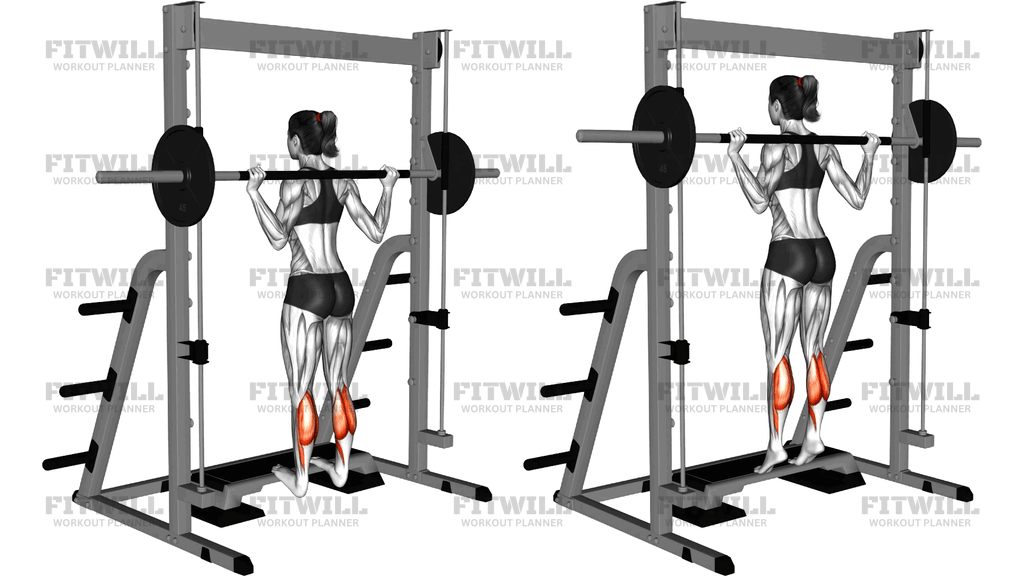
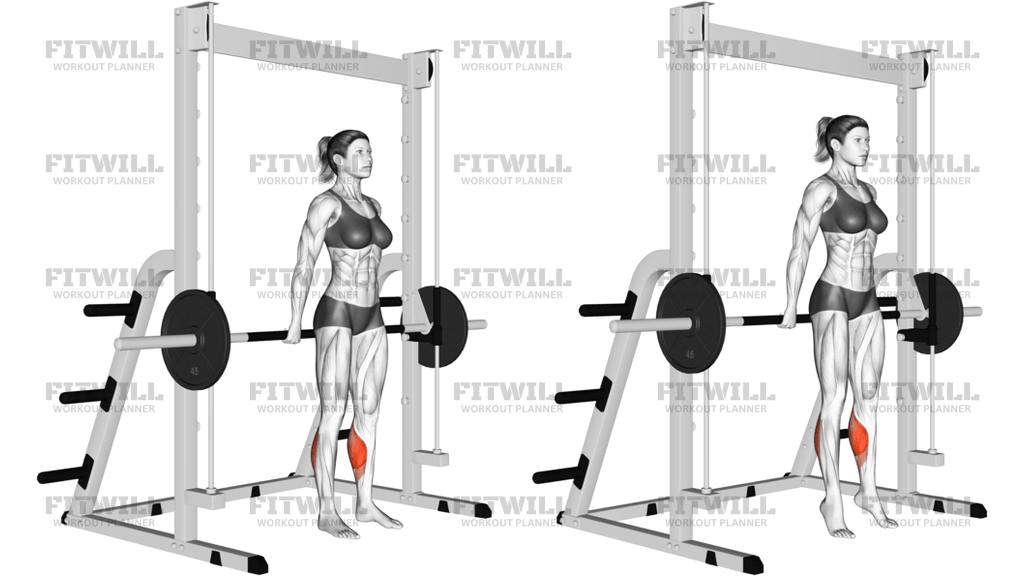
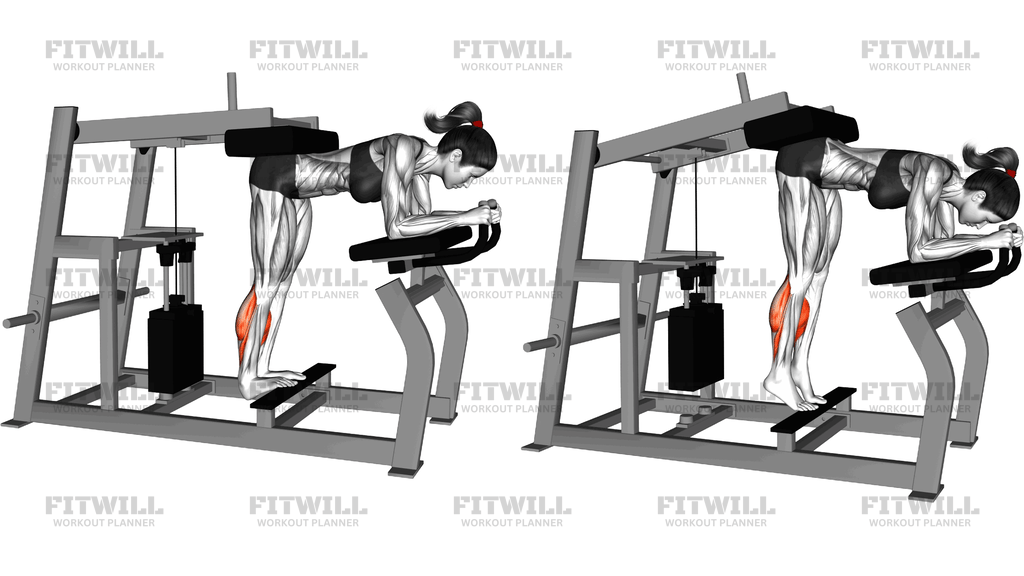
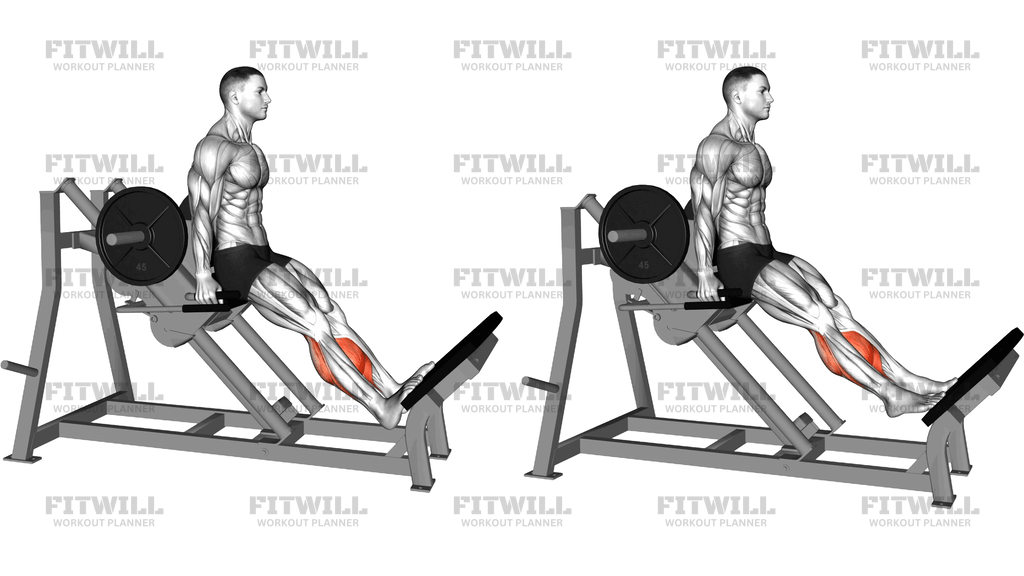
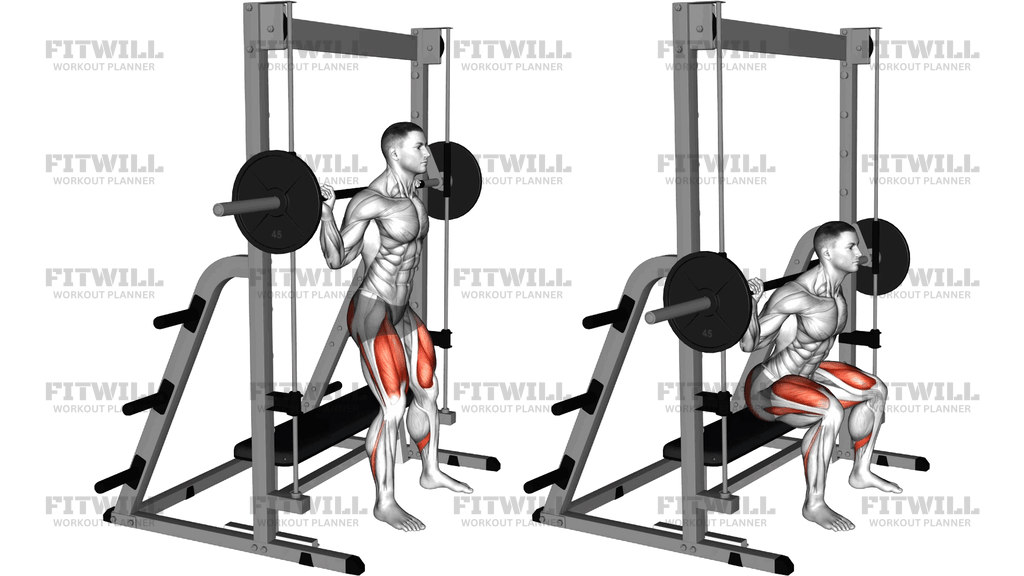
Smith Reverse Calf Raises
Smith Reverse Calf Raises on the Smith machine train the ankle dorsiflexors and the muscles along the front of the lower leg, so the movement helps balance out standard calf raises and improves control when the foot has to pull upward instead of press downward.
The fixed bar path is useful here because reverse calf raises are easy to rush, bounce, or turn into a loose ankle motion. Setting your feet so the heels can stay planted while the forefoot moves freely gives you a clean range of motion and makes it easier to feel the shin muscles doing the work.
A good rep starts with the bar resting comfortably across the upper back, the torso tall, and the hands steady on the bar. From there, let the toes drop into a controlled stretch, then pull the forefoot upward toward the shins without rocking the body, leaning back, or shifting the load out of the feet.
The top of the rep should feel like a crisp contraction in the front of the lower leg, not a shrug or a body swing. Lower back down slowly until you reach the starting stretch again, and keep the tempo smooth so the target muscles stay loaded through the full set.
Use the exercise as accessory work for lower-leg strength, ankle control, and shin conditioning, especially if you want better balance between toe-up work and heel-raise work. Keep the range pain-free, start light, and stop if the front of the ankle or top of the foot feels pinched.
Fitwill
Log Workouts, Track Progress & Build Strength.
Achieve more with Fitwill: explore over 9600 exercises with images and videos, access built-in and custom workouts, perfect for both gym and home sessions, and see real results.
Start your journey. Download today!




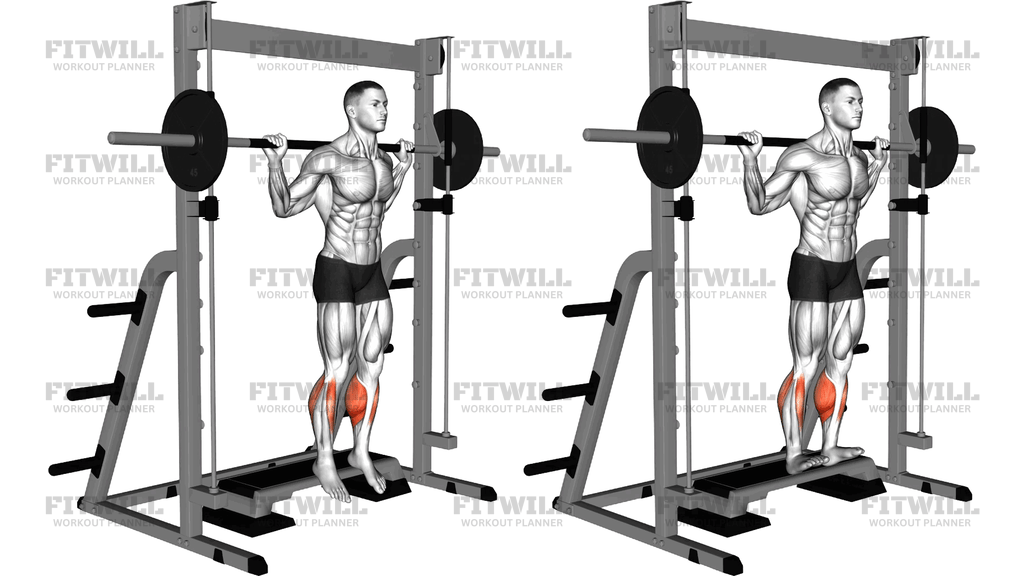
Instructions
- Set the Smith bar across your upper back and stand with your heels planted and your forefoot free to move through the rep.
- Place your feet hip-width apart on the platform, keep your hands steady on the bar, and stand tall before you start.
- Unlock your knees slightly so the legs stay soft without turning the movement into a squat.
- Let your toes lower into a controlled stretch while the heels stay anchored.
- Pull your toes and forefeet up toward your shins as high as you can without rocking your body.
- Pause briefly at the top and feel the front of the lower leg contract.
- Lower the toes slowly back to the start until you feel the stretch return.
- Keep your breathing steady, exhaling as you lift and inhaling on the way down.
- Re-rack the bar or step off the platform only after the last rep is fully controlled.
Tips & Tricks
- Keep both heels heavy and still; if they lift, the set stops being a reverse calf raise.
- Use a slow lowering phase so the front of the shin gets time under tension.
- Do not yank the toes up with a body lean; the motion should come from the ankles.
- A short pause at the top makes the shin contraction much clearer than bouncing through reps.
- Keep your knees only slightly unlocked so the movement stays isolated to the lower leg.
- Choose a load that lets you reach the top without twisting the hips or shifting onto one side.
- If the top of the foot or ankle feels pinched, reduce the range and lower the load.
- A smaller platform or a lower foot position usually makes the start position easier to control.
- Stop the set before the toes start flinging up faster than the heels can stay planted.
Frequently Asked Questions
What muscles do Smith Reverse Calf Raises work?
They mainly train the shin muscles that pull the foot upward, especially the tibialis anterior and other ankle dorsiflexors.
Can beginners perform this exercise?
Yes. Start with very light loading or bodyweight-style resistance and focus on keeping the heels still through the entire set.
Where should my feet be on the platform?
Set the feet so the heels can stay planted while the forefoot and toes can move freely through a full, controlled range.
What is the biggest form mistake on the Smith bar?
Most people let the body sway or lean back to fake the lift. Keep the torso tall and let the ankles do the work.
Should I feel this in my shins?
Yes. A strong effort in the front of the lower leg is expected. Sharp pain on the top of the foot or ankle is not.
Is this the same as a regular calf raise?
No. A regular calf raise lifts the heel. This reverse version lifts the toes and targets the front of the lower leg.
How heavy should I load Smith reverse calf raises?
Use a load that lets you move slowly, pause at the top, and lower under control without bouncing or twisting.
What can I use instead of the Smith machine?
You can use a tibialis raise machine, a wall-supported tib raise, or a dumbbell between the feet if you need a simpler option.