Smith Seated One Leg Calf Raise
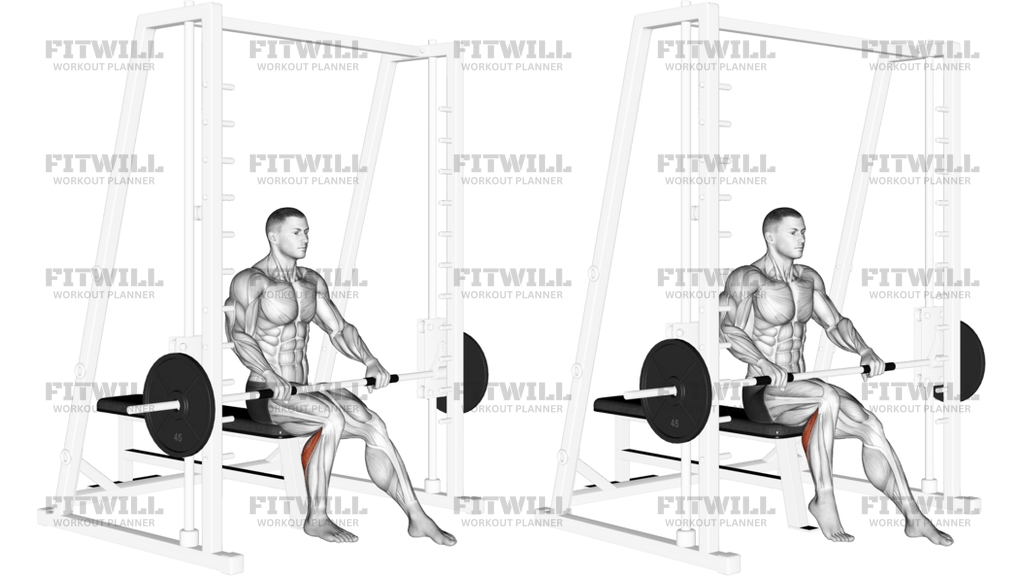
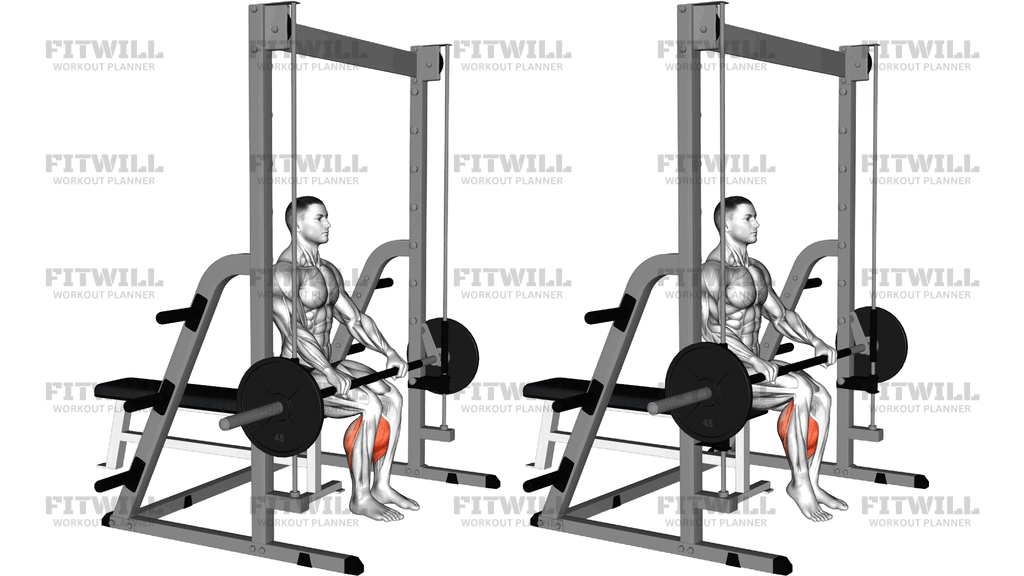
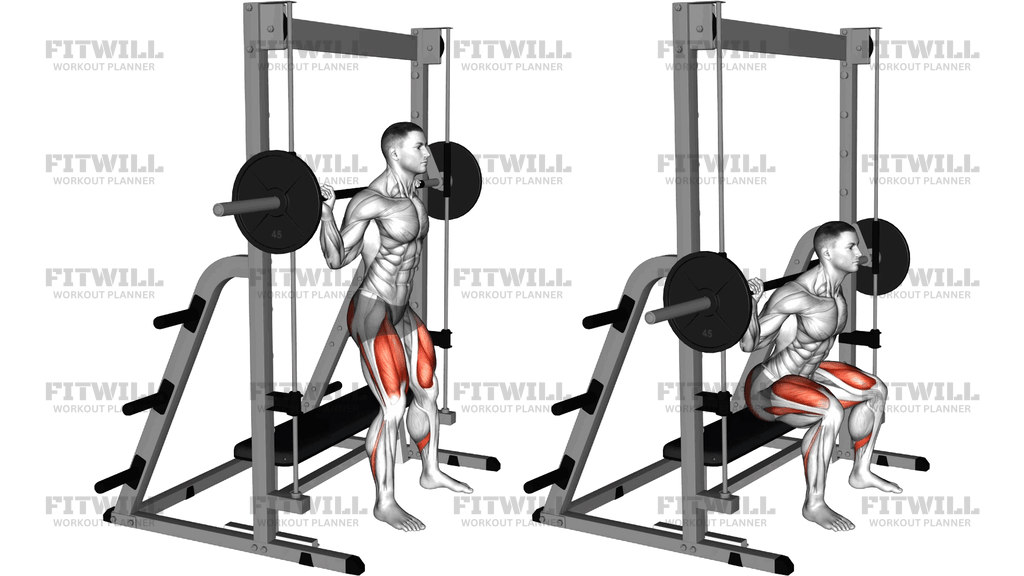
Smith Seated One Leg Calf Raise is a single-leg calf exercise performed with a Smith machine bar resting across the thighs while you sit upright on a bench. It is built to isolate ankle motion and make the working calf do most of the work, which is why the setup matters as much as the rep itself. A stable seat, a steady grip on the bar, and a foot position that lets the heel move freely will determine whether the exercise feels precise or awkward.
The bent-knee seated position shifts the emphasis toward the soleus, while the calf still works through the full ankle range. Because only one leg is working at a time, this variation is useful for finding side-to-side differences, cleaning up tempo, and keeping the rep honest. The Smith machine removes most of the balance demand, so the training effect stays on plantarflexion rather than on fighting to keep the bar stable.
Set the bar across the upper thighs, just above the working knee, and keep your torso tall so the bar does not drift as the heel rises and lowers. The working foot should stay planted under the knee with pressure centered through the ball of the foot and big toe. The non-working leg should stay relaxed and out of the way so it does not help the lift or change the line of force.
A good rep starts from a controlled stretch, rises smoothly to a hard squeeze at the top, and returns slowly without bouncing off the bottom. The movement should stay in the ankle while the knee, hips, and shoulders remain quiet. If the bar shifts, the heel twists, or the rep shortens to avoid the stretch, the load is too heavy or the setup needs adjustment.
Use this exercise when you want direct calf work with a clear range of motion and a stable machine setup. It works well for moderate to higher reps, pauses, and controlled eccentrics, especially when you are trying to bring up one side or improve calf control without the extra coordination demands of standing variations. Keep every rep strict enough that the calf, not momentum, defines the set.
[ Workout Log & Planner ]
Put your next workout in Fitwill
Keep your plan and training log ready when you are.


Instructions
- Sit on a flat bench inside the Smith machine and place the bar across your upper thighs just above the working knee.
- Plant the working foot under that knee with the ball of the foot on the floor, and let the other leg relax forward so it does not help the lift.
- Hold the bar lightly for balance, sit tall, and keep both hips level on the bench before you start the first rep.
- Lower the heel under control until you feel a solid calf stretch without letting the bar slide or your knee wobble.
- Exhale and drive through the big toe and second toe to raise the heel as high as you can.
- Keep the ankle moving while the knee, hips, and shoulders stay quiet and stacked.
- Squeeze the calf at the top for a brief pause without bouncing the bar.
- Lower the heel slowly back to the starting stretch, then reset before the next rep.
- Finish the set by guiding the bar fully to rest before you switch sides or stand up.
Tips & Tricks
- A bent knee shifts more work to the soleus, so keep the working leg comfortably flexed instead of straightening it.
- Place the bar high enough on the thighs that it does not dig into the knee cap when the heel rises.
- If the bar keeps sliding, use a pad or towel and reset the foot before adding load.
- Keep pressure centered through the big toe and second toe so the ankle does not roll outward at the top.
- Let the heel travel as low as your ankle allows, but do not lose tension by bouncing off the bottom.
- Use the Smith machine as a stability aid, not as something to push or lean against.
- A short pause at the top makes the calf work harder than rushing through more reps.
- Choose a load that lets you keep the non-working leg relaxed and the torso still for every rep.
Frequently Asked Questions
What muscles does the Smith seated one leg calf raise work?
It mainly targets the calf muscles, with the bent-knee seated position biasing the soleus more than a straight-leg standing raise.
Why is the bar placed across the thighs?
The Smith bar anchors the body so the ankle can do the work while the torso stays upright and the rep stays controlled.
Should my non-working leg stay on the floor?
No, keep it relaxed and out of the way so it does not help push the heel up or change your balance.
How low should the heel drop?
Lower until you feel a clear calf stretch, but stop before the bar shifts or the ankle loses control at the bottom.
What is the most common mistake on this exercise?
The usual errors are bouncing out of the bottom, rolling the ankle, or letting the hips shift to cheat the rep.
Can beginners use this movement?
Yes. The Smith machine makes it a good choice for learning calf isolation with light to moderate loads.
Is this a good exercise for left-right imbalances?
Yes. Training one leg at a time makes it easier to match range, tempo, and effort on each side.
What rep range works best here?
Moderate to higher reps usually work well because the calf responds strongly to strict range, pauses, and controlled lowering.