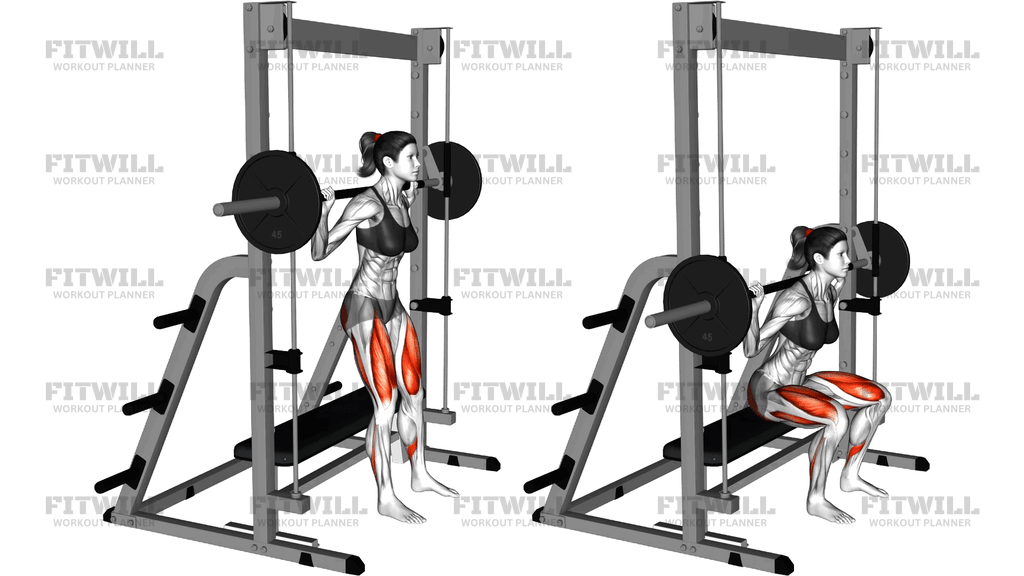
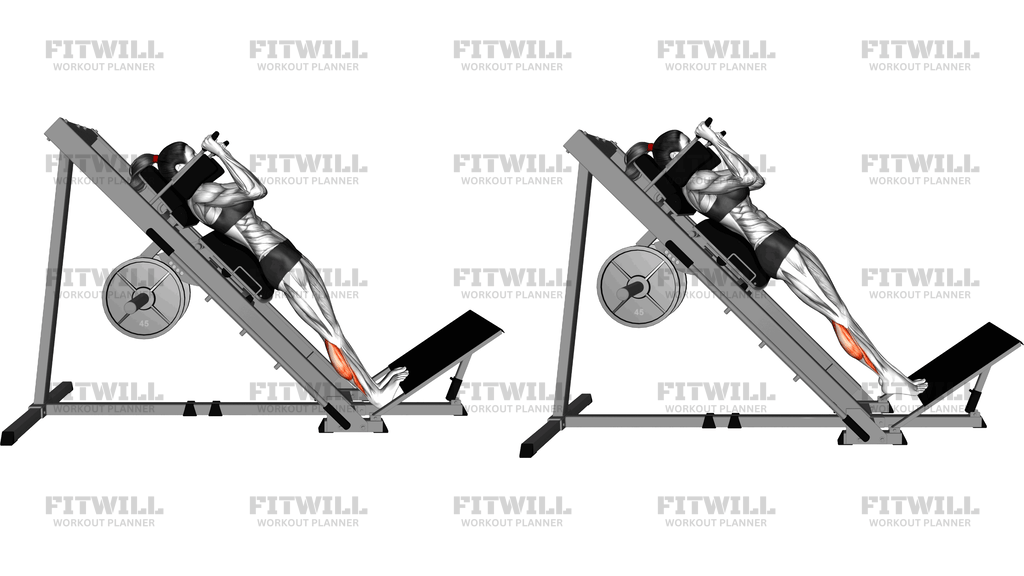
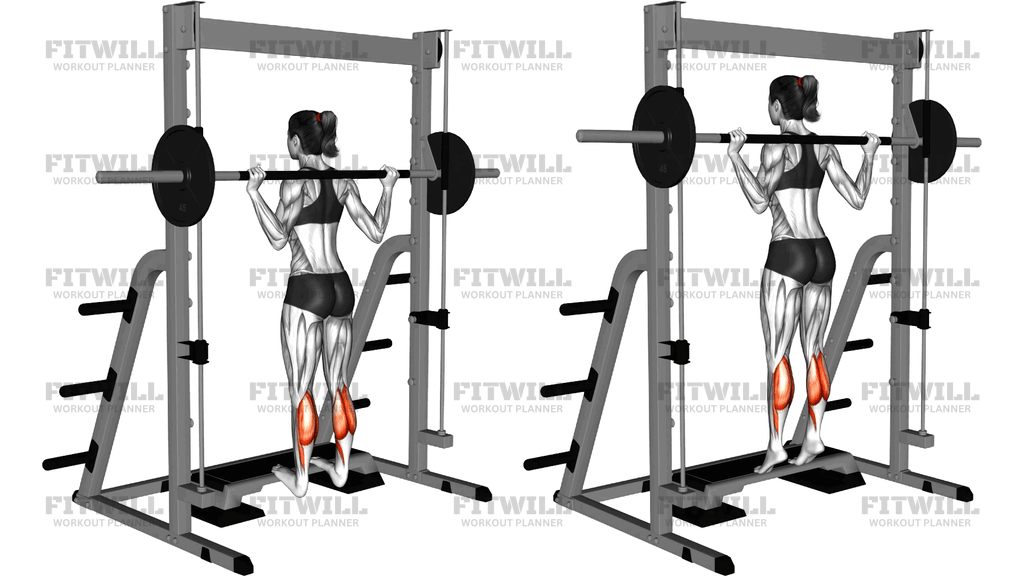
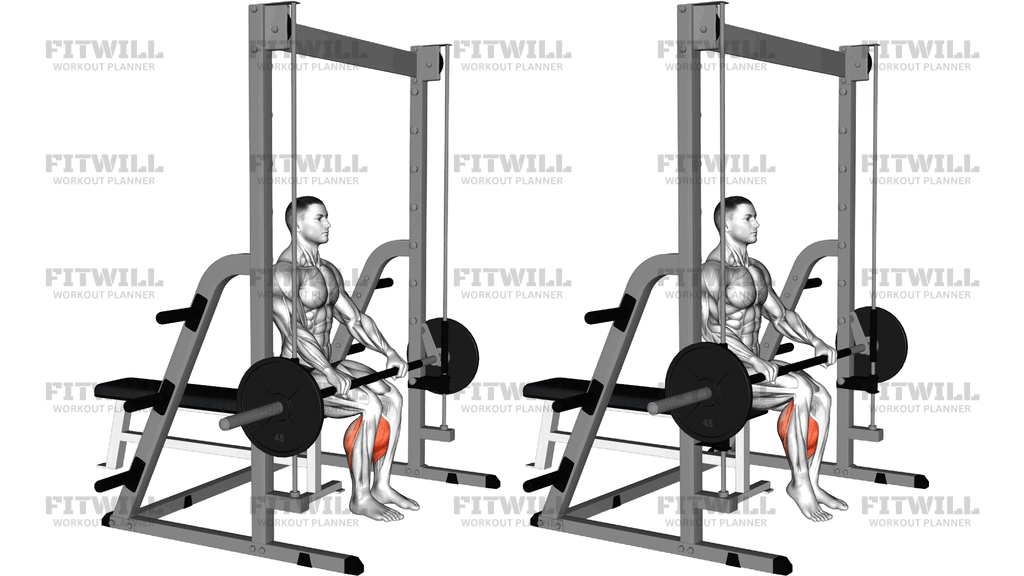
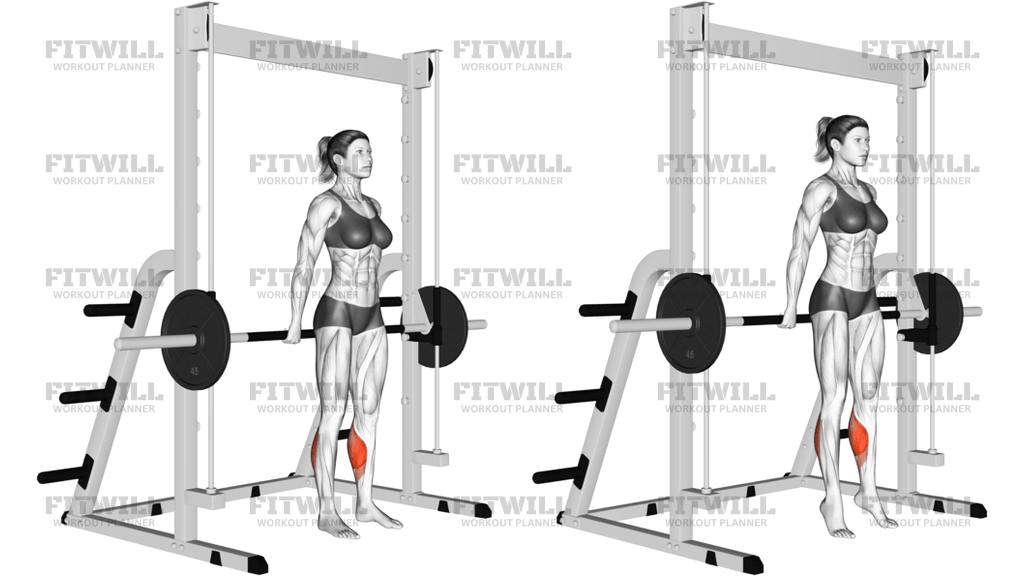
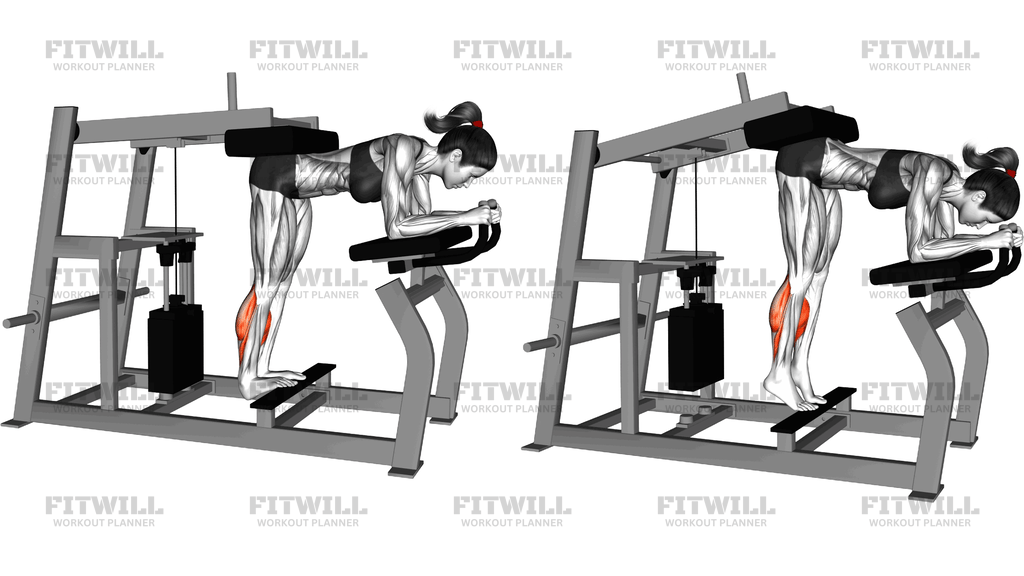
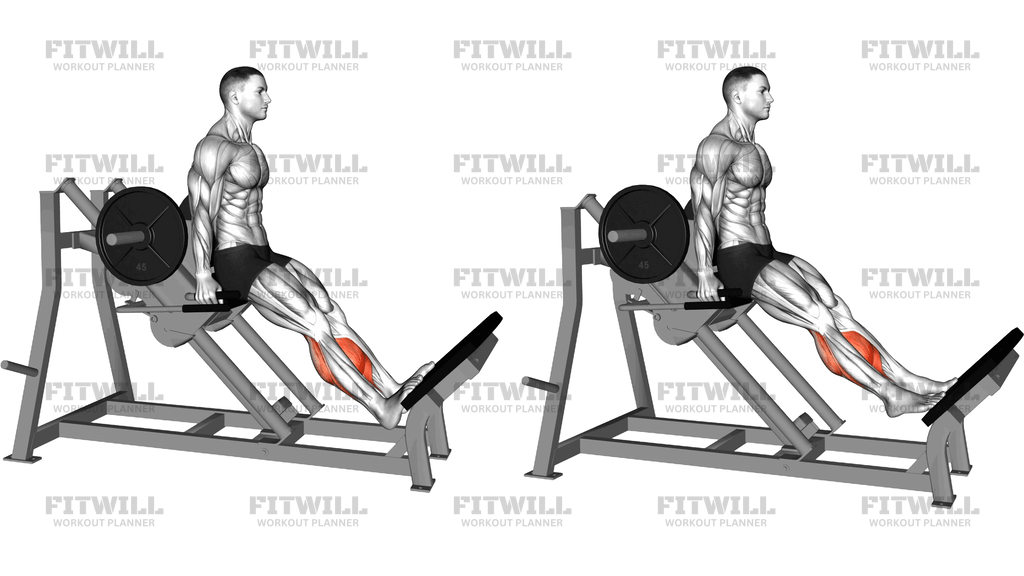
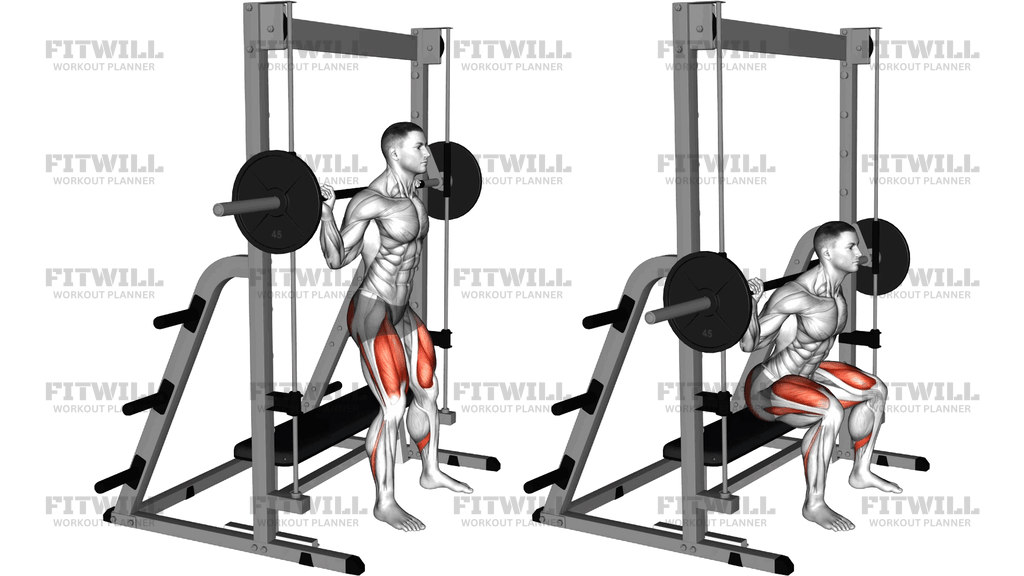
Smith Seated Calf Raise
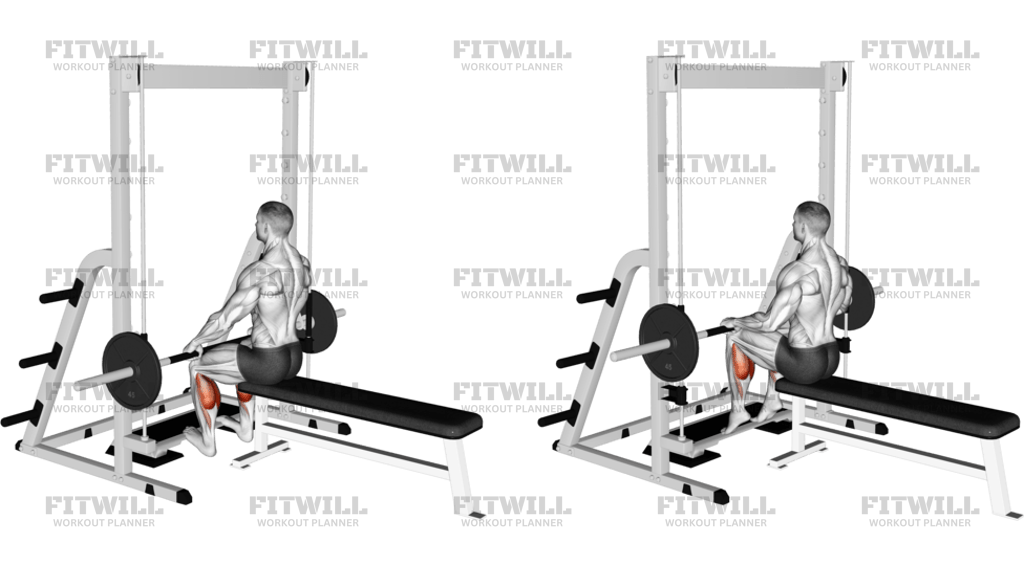
Smith Seated Calf Raise is a seated lower-leg exercise that uses a Smith machine for guided resistance while your knees stay bent and your heels move through ankle flexion. That bent-knee position shifts emphasis toward the soleus and still trains the full calf complex, making the movement useful for calf size, ankle strength, and better control in positions where the lower leg has to work steadily under load.
The setup matters because the bar has to sit securely across the thighs just above the knees while the feet are positioned so the balls of the feet can press down and the heels can drop freely. In the correct position, your torso stays tall on the bench, your shins stay fairly vertical, and the load should feel like it is driving through the calves rather than bouncing off the knees or hips. A stable seat and a steady foot platform make the movement much easier to feel and control.
Each rep should start from a full stretch at the bottom, then rise by lifting the heels as high as you can without letting the knees shift or the pelvis rock forward. The top of the rep is a short, hard calf contraction, not a bounce. Lower slowly until you feel the calves lengthen again, but keep the bar settled and avoid letting the heels crash down or the ankles roll outward.
Smith Seated Calf Raise is often used as accessory work after heavier leg training or as a focused calf block when you want simple loading and repeatable technique. Because the Smith machine fixes the bar path, the exercise can be a good option when you want to isolate the calves without balancing the bar yourself, but the fixed track also makes foot placement and seat height more important. Small changes in where the bar rests on the thighs and how far the heels hang off the platform can noticeably change the tension you feel.
Treat the set like precision work. Smooth reps, a controlled pause at the top, and a deliberate lowering phase usually produce better calf tension than chasing speed or turning the movement into a knee-driven bounce. If the bar starts shifting on your thighs, the heels stop dropping evenly, or your upper body has to lean to keep the bar in place, the load is too heavy or the setup needs to be reset.
[ Workout Log & Planner ]
Put your next workout in Fitwill
Keep your plan and training log ready when you are.


Instructions
- Sit on a flat bench inside the Smith machine and place the bar across your thighs just above the knees.
- Set the balls of your feet on a low platform or step so your heels can hang off the back edge.
- Sit tall with your chest up, knees bent, and hands holding the bar for balance and control.
- Let your heels drop until you feel a stretch through the calves without losing the bar position on your thighs.
- Drive through the balls of your feet to raise your heels as high as possible.
- Pause briefly at the top and squeeze the calves hard without bouncing the bar.
- Lower your heels slowly back into the stretch while keeping your knees still and your torso upright.
- Keep breathing steady and repeat for the planned reps, then guide the bar back to rest before standing up.
Tips & Tricks
- Place the bar high enough on the thighs that it feels secure, but not so high that it jams into the hip crease.
- Keep the balls of your feet on the platform and let the heels hang fully off the back edge for a real calf stretch.
- Do not let the knees drift forward and backward; this should be an ankle movement, not a seated leg press.
- A short pause at the top helps you feel the soleus work instead of bouncing through the rep.
- Lower slowly enough that the heels do not slap the platform or lose tension at the bottom.
- If the bar slides on your thighs, reduce the load or add a towel/pad for a steadier seat.
- Keep your torso tall and your ribs stacked so you do not turn the rep into a forward lean.
- Use a moderate load and higher reps when you want the calves to burn without forcing sloppy ankle range.
Frequently Asked Questions
What muscle does Smith Seated Calf Raise target most?
It mainly targets the calves, with the bent-knee position placing extra emphasis on the soleus.
Can beginners perform this exercise?
Yes. The Smith machine makes it easy to learn if you start light, keep the bar stable on your thighs, and control the heel drop.
Where should the Smith bar sit during Smith Seated Calf Raise?
It should rest across the upper thighs just above the knees, where it stays stable without forcing your hips or lower back to compensate.
How far should my heels drop off the platform?
Drop them until you feel a strong calf stretch, but stop before your feet roll outward or the bar shifts on your thighs.
Why are my quads doing more work than my calves?
Usually the knees are moving too much or the bar is set too low/high on the thighs. Keep the knees fixed and think about lifting the heels, not driving the legs.
Is Smith Seated Calf Raise better than standing calf raises?
It is not better, just different. The seated version biases the soleus more because the knees stay bent, while standing calf raises usually hit the gastrocnemius harder.
What should I do if the bar keeps sliding on my thighs?
Use a lighter load, reposition slightly higher on the thighs, and add a pad or towel if needed so the bar stays planted through the set.
How heavy should I train Smith Seated Calf Raise?
Use a load that lets you pause at the top and lower under control; if you have to bounce the bottom, it is too heavy.
Can I use Smith Seated Calf Raise after leg day?
Yes. It works well as a higher-rep accessory exercise after squats, presses, or lunges when you want direct calf work without much setup.