Smith Calf Raise With Block
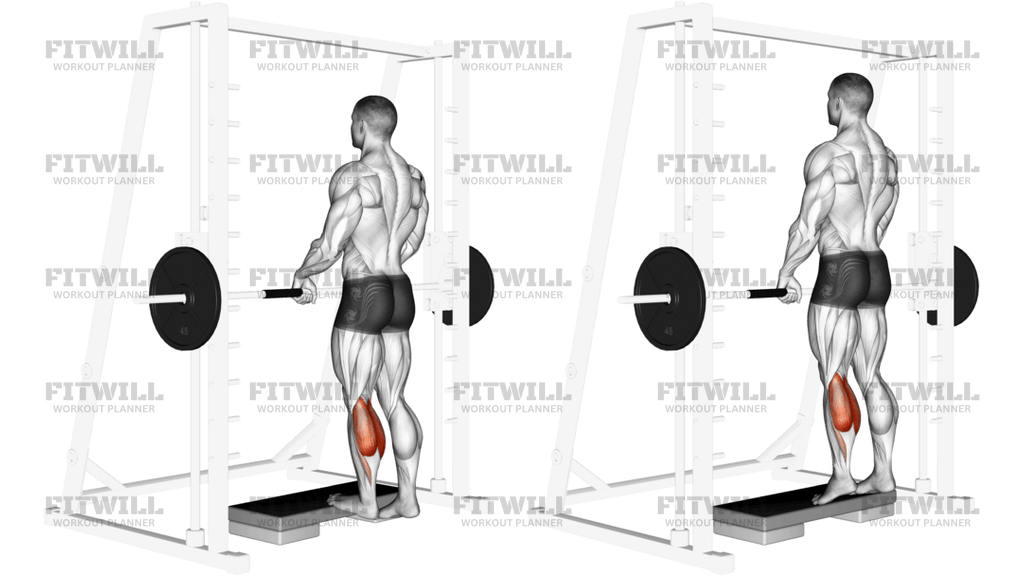
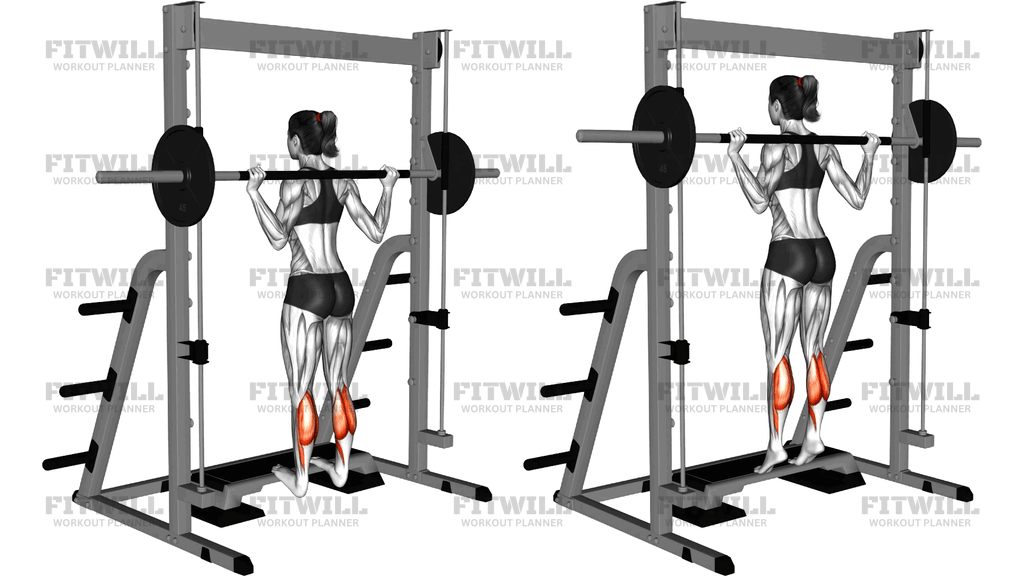
Smith Calf Raise With Block is a standing calf exercise performed in a Smith machine with the balls of the feet on a block or raised platform so the heels can drop lower between reps. The fixed bar helps you keep the torso upright and lets you focus on the ankle movement instead of balancing the load. That combination makes the exercise useful for building calf size, lower-leg strength, and better control through a deep stretch and a hard top contraction.
The block matters because it increases the range of motion. Letting the heels sink below the level of the forefoot loads the calf through a longer length, and finishing each rep with a strong rise on the toes trains the plantar-flexion pattern more completely. If the feet are too far forward, too far back, or the block is too high for your ankle mobility, the rep turns into a bounce or shifts effort away from the calves. A clean setup should feel stable before the first repetition starts.
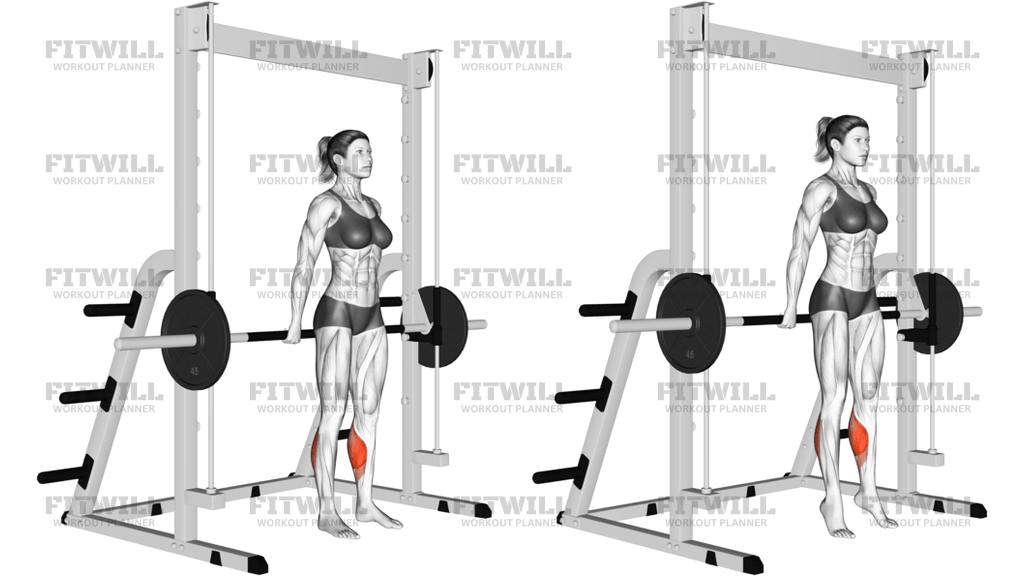
In the image, the lifter stands tall inside the Smith machine, holds the bar lightly for balance, and keeps the legs mostly straight while the ankles do the work. That is the key idea here: the bar is support, not the driver. Keep the knees soft but not bent into a squat, keep the chest stacked over the hips, and move the heels straight up and down without rolling onto the outside edge of the foot. The best reps look smooth and deliberate from the first heel drop to the final peak contraction.
Use this exercise when you want direct calf work after heavier leg training, as part of a lower-body accessory block, or on days when you need a simple, repeatable isolation movement. It is especially useful for lifters who struggle to load calf raises freely or who want a steadier path for progressive overload. Treat the descent as part of the exercise, pause briefly in the bottom stretch if your ankles tolerate it, and stop the set if you have to bounce, lose balance, or shorten the range to keep the bar moving.
[ Workout Log & Planner ]
Put your next workout in Fitwill
Keep your plan and training log ready when you are.


Instructions
- Place a block or raised step inside the Smith machine and stand on it with the balls of your feet on the edge and your heels hanging free.
- Set the Smith bar at about hip height, step under it, and hold the bar lightly in front of your thighs for balance.
- Stand tall with your feet about hip-width apart, knees softly unlocked, ribs stacked over your pelvis, and your weight centered over the big toe and second toe.
- Lower your heels under control until you feel a strong calf stretch without losing balance or letting your arches collapse.
- Press through the balls of your feet and rise as high as you can onto your toes.
- Squeeze the calves hard at the top for a brief pause without bouncing the bar.
- Keep the bar path steady and let the ankles move while the upper body stays quiet.
- Lower back into the stretch with control and repeat for the planned reps.
Tips & Tricks
- Keep the bar as a balance point only; if you are pulling with the arms, the load is too heavy.
- Use a block height that lets your heels drop below the forefoot without forcing your ankles into a painful range.
- Do not bend the knees into a squat pattern; a small unlock is enough to keep the calves working.
- Let the pressure stay on the big toe and second toe so the foot does not roll outward at the top.
- Pause for a second in the stretched position if your ankles and Achilles tolerate it well.
- Drive straight up instead of rocking forward onto the toes and losing tension at the bottom.
- Exhale as you rise and keep the torso stacked so the rep does not turn into a hip thrust.
- Choose a load that lets every rep hit the same bottom depth and top height.
Frequently Asked Questions
What muscle does Smith Calf Raise (with block) target most?
The calves are the main target, especially the gastrocnemius and soleus working through ankle extension.
Why use a block under the forefoot?
The block lets your heels drop below the level of the toes, which increases the stretch and range of motion for the calves.
Where should my feet be on the block?
Place the balls of your feet near the front edge so the heels can travel freely while the weight stays centered over the forefoot.
Should the bar rest on my shoulders like a squat?
No. In this version the bar is held lightly for balance while the calves do the work and the body stays upright.
Can I bend my knees during the set?
Keep the knees softly unlocked, but avoid turning the movement into a bent-knee squat or bounce.
What are the most common mistakes?
Cutting the heel drop short, bouncing through the bottom, rolling the ankles outward, and using the arms to pull on the bar.
Is this a good exercise for beginners?
Yes, because the Smith machine gives a stable path, but beginners should start light and learn the full stretch before adding load.
When should I use Smith Calf Raise With Block in a workout?
It works well as accessory calf work after heavier leg training or as a focused lower-leg finisher.