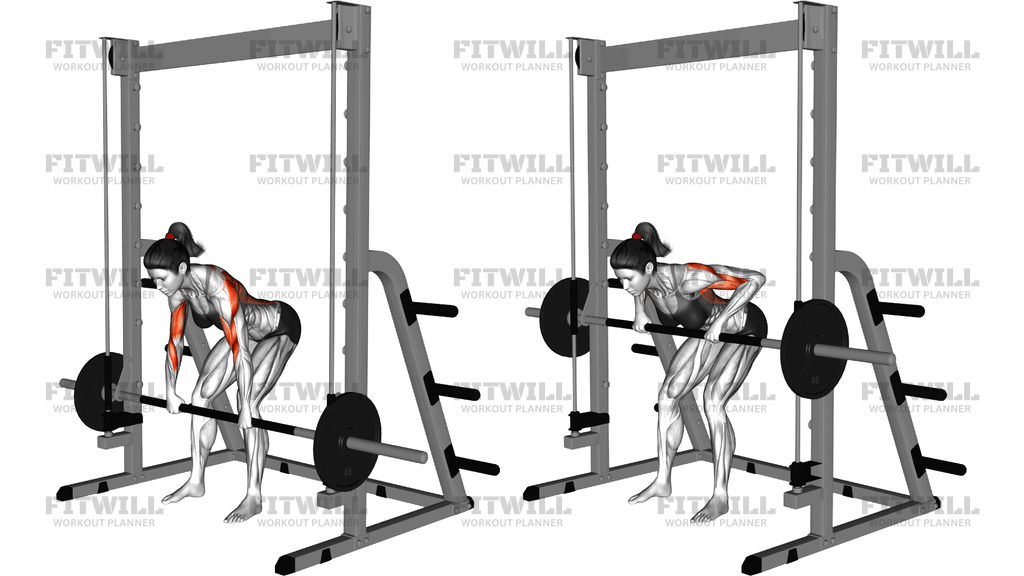
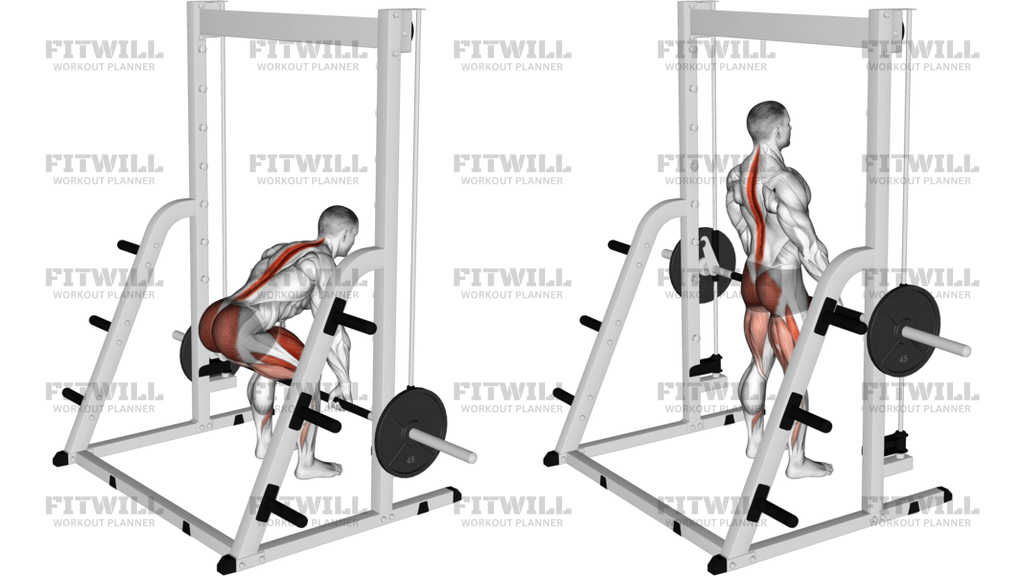
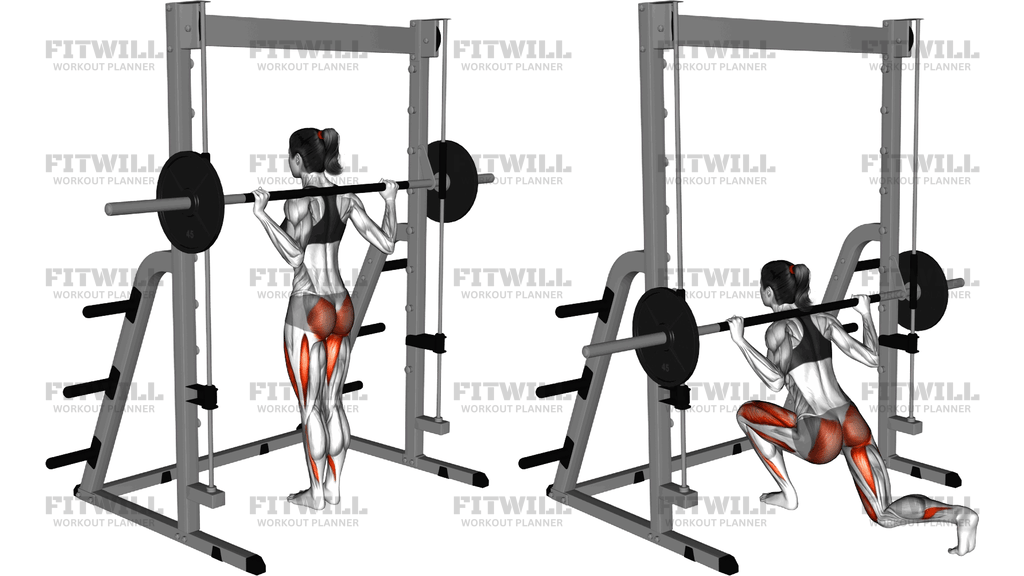
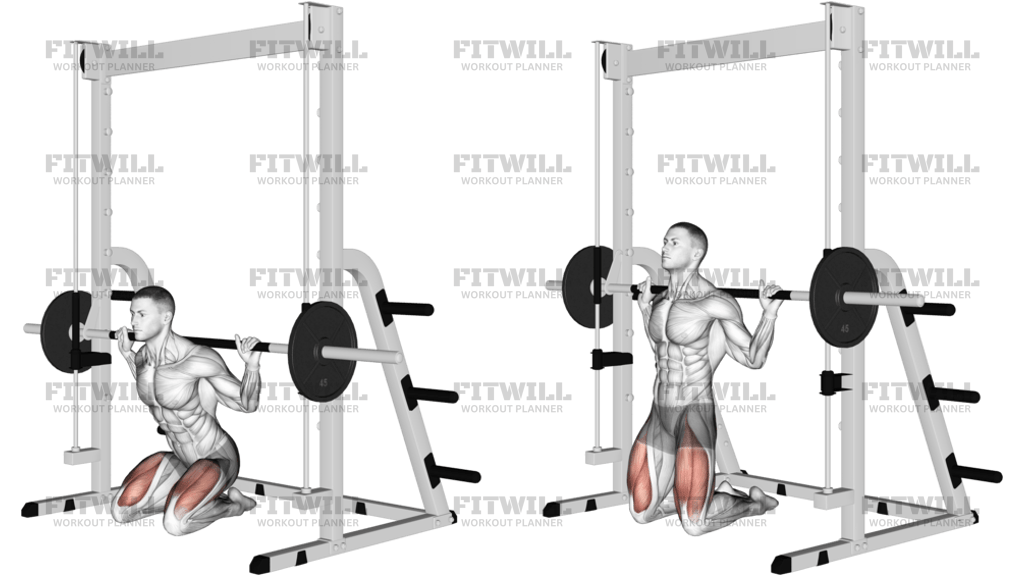
Smith Squat
Smith Squat is a guided squat performed on a Smith machine, with the bar traveling on fixed rails instead of freely through space. That fixed path makes the exercise especially sensitive to foot placement, stance width, and how far your hips sit from the bar, because a small setup change can shift the work from a glute-dominant squat to a more quad-heavy pattern. Done well, it builds strong lower-body strength with a controlled range of motion and a very repeatable bar path.
The primary emphasis here is the glutes, with the hamstrings, quads, and core helping stabilize the torso and control the descent. In anatomy terms, the main work centers on the Gluteus maximus, with help from Biceps femoris, Rectus abdominis, and Erector spinae. Because the machine dictates the track, the goal is not to force your body straight up and down at any cost; it is to place your feet where the bar path stays balanced over the midfoot and the torso can stay braced without collapsing forward.
A good Smith Squat starts before the first rep. Set the bar at a height that lets you unrack it without rising onto your toes, place the bar across the upper traps or rear delt shelf, and step your feet into a stance that feels stable and lets the knees track cleanly. Many lifters prefer the feet slightly in front of the bar path so they can sit down and back while keeping the heels rooted. That setup matters because it determines whether the squat feels smooth, balanced, and glute-driven or jammed into the front of the knees and lower back.
During the repetition, descend under control, keep the ribs stacked over the pelvis, and let the knees bend in line with the toes as the hips travel down. Lower until you reach a depth you can own without the lower back rounding or the heels lifting. Drive back up through the whole foot, squeeze the glutes near the top, and finish each rep with a tall but not overarched posture. Inhale on the way down, exhale through the hardest part of the ascent, and re-rack the bar carefully after the set.
Smith Squat is useful for lifters who want a stable squat pattern, a glute-focused lower-body accessory, or a way to train hard when balance is a limiting factor. It is also practical for controlled hypertrophy work because the fixed track makes it easier to repeat tempo and depth from rep to rep. The tradeoff is that the machine can punish poor foot placement, so the safest and most effective version is the one where your stance matches the rail angle and your knees, hips, and feet stay organized the whole set.
[ Workout Log & Planner ]
Put your next workout in Fitwill
Keep your plan and training log ready when you are.


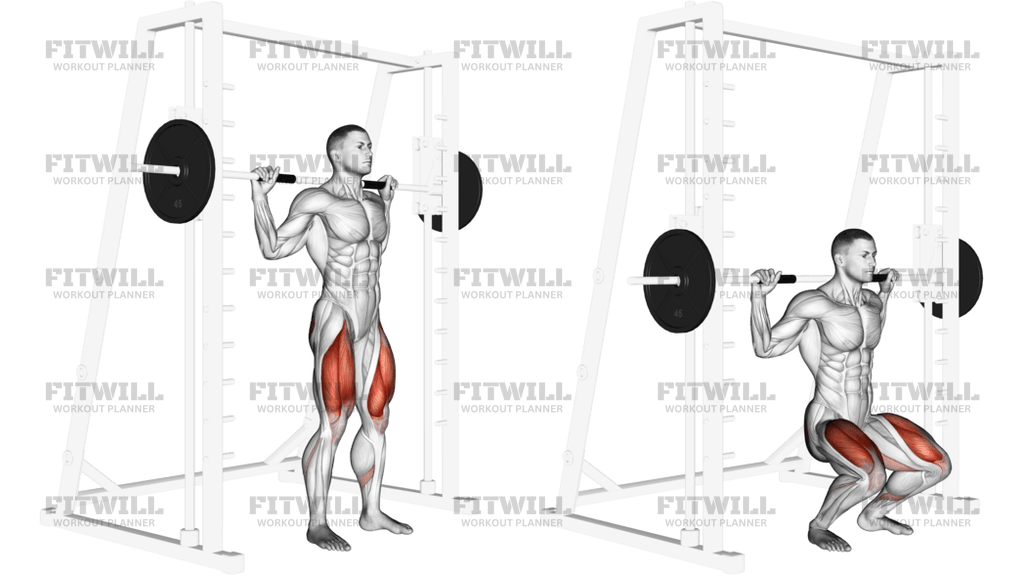
Instructions
- Set the Smith bar so it starts just below shoulder height, then place it across your upper traps or rear delts and step under it with a shoulder-width stance.
- Unrack the bar and take small foot adjustments until your feet feel balanced under the fixed bar path, with the heels flat and the toes turned out slightly if needed.
- Stand tall, brace your abs, and keep your ribs stacked over your pelvis before every rep.
- Lower by bending the hips and knees together, letting the knees travel in line with the toes as the bar moves straight down the rails.
- Keep the weight over the midfoot and descend only as deep as you can without your heels lifting or your lower back rounding.
- Drive upward through the whole foot, squeeze the glutes near the top, and finish with a tall spine instead of leaning back.
- Breathe in on the way down and exhale through the hardest part of the ascent while keeping the torso tight.
- After the final rep, guide the bar back into the hooks and make sure it is fully seated before you let go.
Tips & Tricks
- If the Smith bar feels like it wants to pull you forward, move your feet slightly farther in front of the rails rather than forcing a more upright torso.
- Keep the bar on the upper traps or rear delt shelf; resting it on the neck turns the set into unnecessary pressure on the cervical spine.
- The fixed track does not forgive sloppy stance width, so spend a rep or two finding a foot position where your knees track cleanly and both heels stay down.
- A shoulder-width stance with the toes slightly out usually helps the hips drop between the feet instead of folding inward.
- Lower under control for at least two seconds so the machine does not pull you into the bottom position.
- Stop the descent when your pelvis starts to tuck under; depth is only useful if you can keep the spine organized.
- Do not bounce off the bottom or slam the safety stops, because the rails can make that habit feel easier than it should.
- Choose a load that lets you repeat the same bar path from the first rep to the last, not one that forces you to search for balance.
Frequently Asked Questions
What muscle does Smith Squat target most?
The glutes are the primary target, with the quads, hamstrings, and core assisting through the squat pattern.
Can beginners perform this exercise?
Yes. The fixed bar path can help beginners learn squat mechanics, as long as the foot placement and depth are set up carefully.
Where should my feet be on the Smith machine?
Start with a shoulder-width stance and adjust the feet slightly forward or back until the bar stays balanced over the midfoot.
How deep should I go in a Smith Squat?
Go as deep as you can while keeping the heels flat, the knees tracking cleanly, and the lower back from rounding.
Is Smith Squat the same as a barbell back squat?
No. The rails force a fixed bar path, so balance demands are lower, but foot placement and torso angle matter more.
How can I make it more glute-focused?
Place your feet a little farther forward, sit the hips back as you descend, and keep pressure through the heels and midfoot.
What is the most common mistake?
Letting the feet drift too close under the bar or losing the chest and pelvis position as the bar travels down.
How should I re-rack the bar?
Walk the bar back into the hooks slowly, make sure it is fully seated, and only then release your grip.