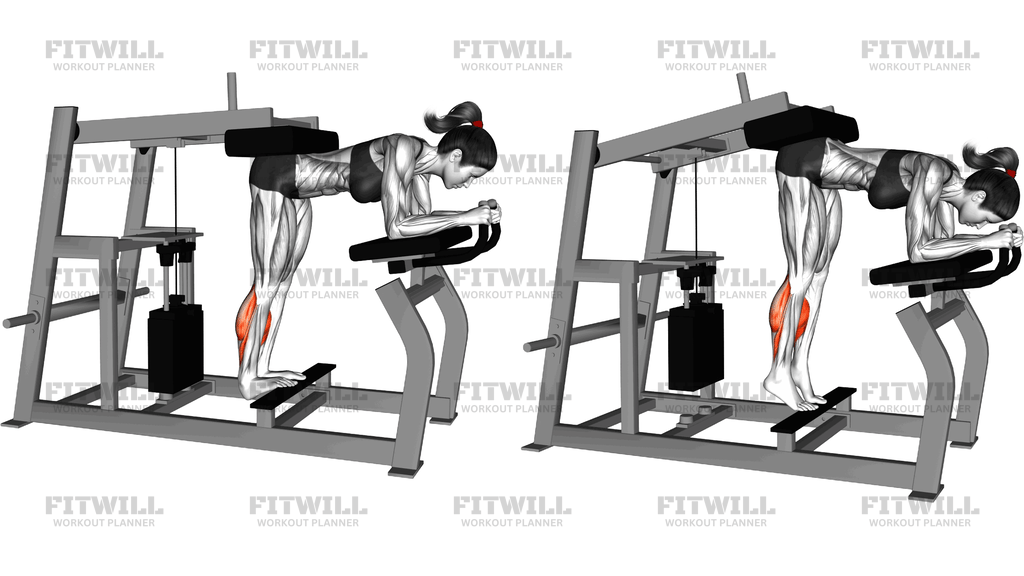
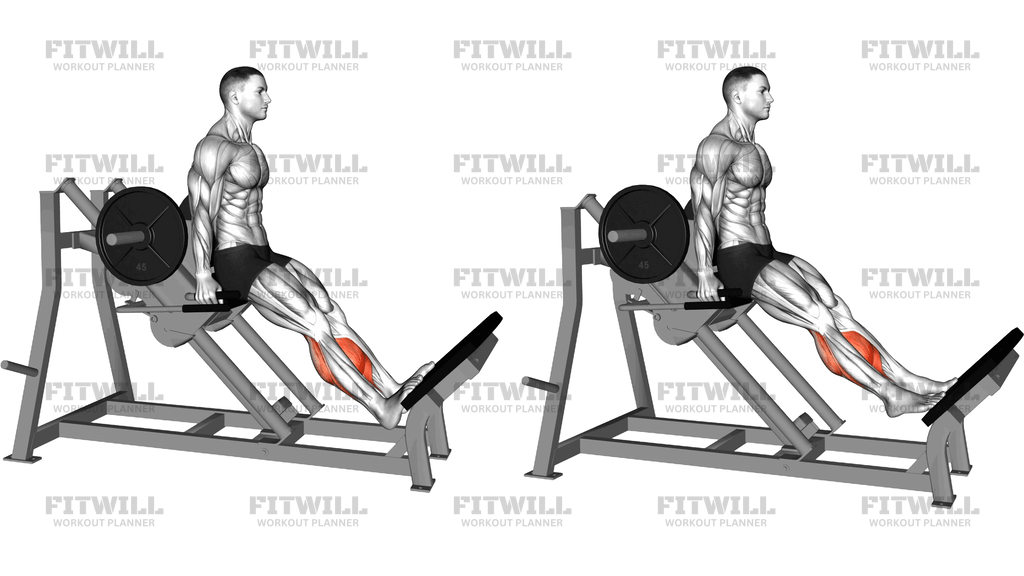
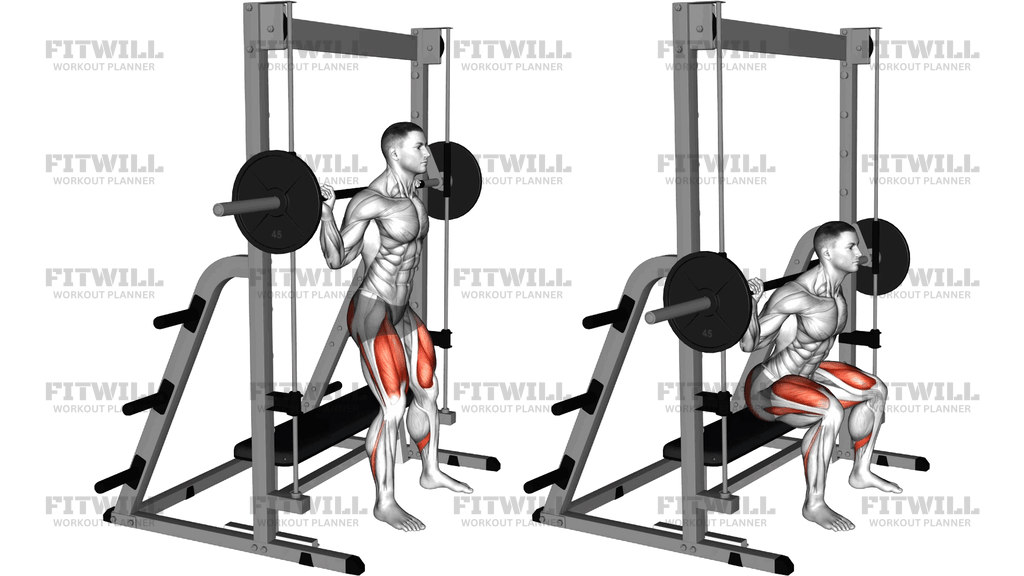
Smith Standing Leg Calf Raise
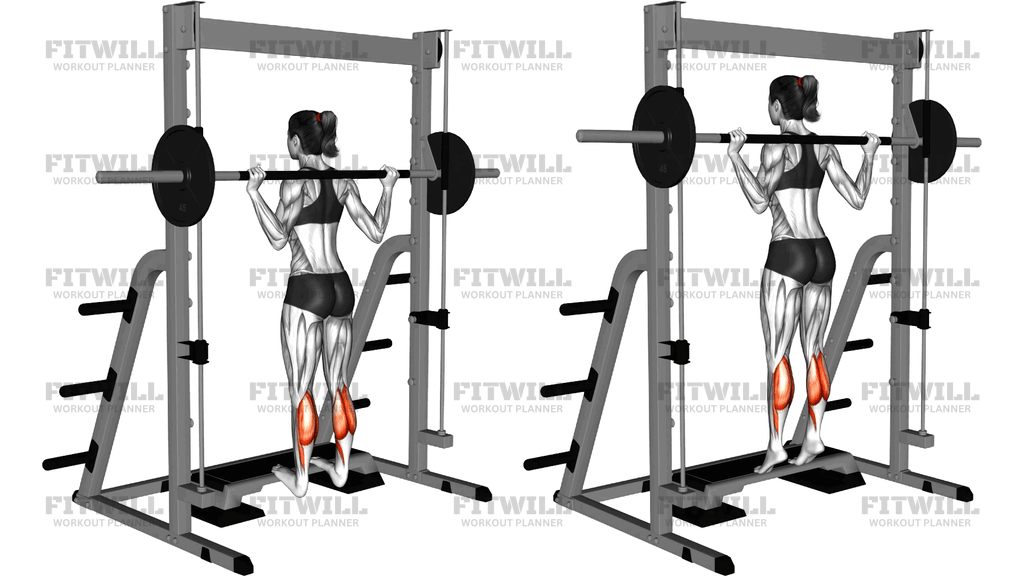
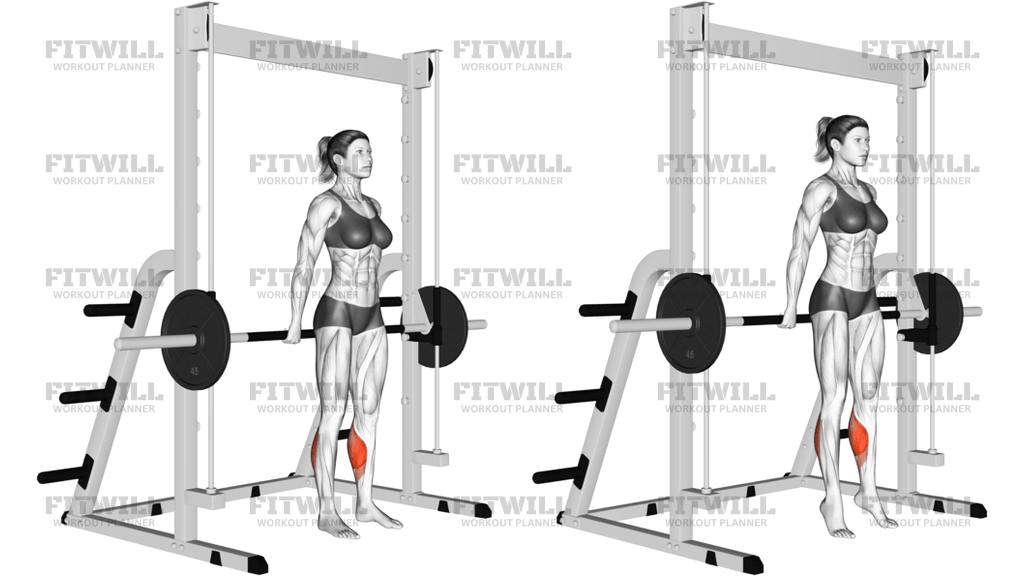
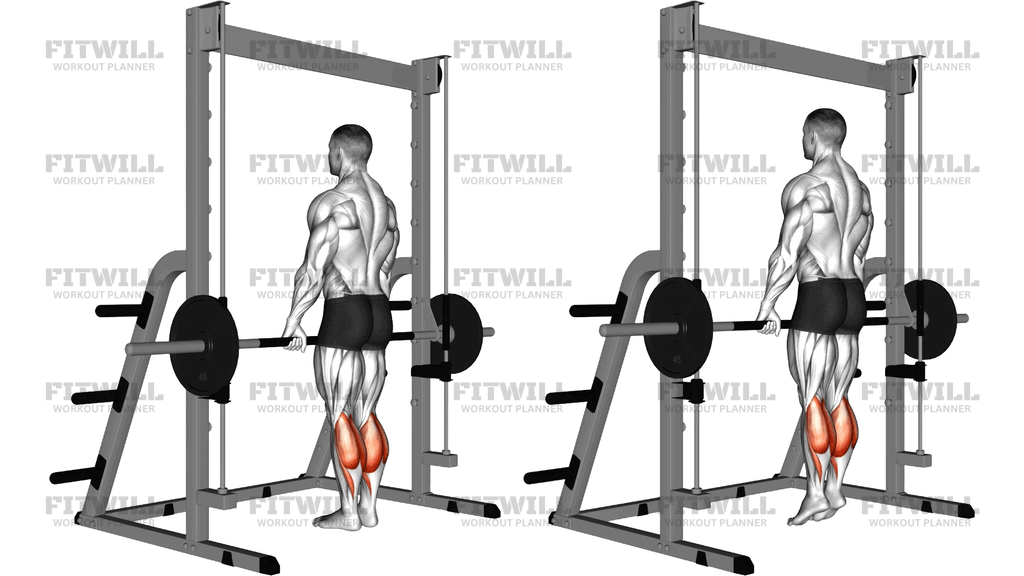
Smith Standing Leg Calf Raise is a standing calf exercise performed inside a Smith machine while you use the bar for light balance and controlled resistance. The movement is driven almost entirely by the ankles: you rise onto the balls of your feet, squeeze the calves at the top, and lower with control. Because the bar path is fixed, the exercise works best when the setup is strict and the torso stays quiet.
Stand centered in the machine with your feet about hip-width apart and the bar held lightly in front of your thighs. Keep the knees softly bent, the chest stacked over the hips, and the weight spread across the big toe, little toe, and base of the heel before the heels leave the floor. From there, the calves do the work. If you start rocking, shifting the hips, or pressing only through the toes, the set turns into momentum instead of ankle work.
Each rep should look smooth: press the heels up as high as you can, pause briefly at the top, then lower slowly until you feel a strong calf stretch without losing balance. Do not bounce off the bottom. Keep breathing steady and let the machine stay quiet while the ankles move through the rep. A slower lowering phase usually makes the exercise more effective than simply loading the bar heavier.
This variation is useful for building calf size, ankle strength, and lower-leg endurance, especially when you want a controlled standing pattern with easy load changes. It fits well as accessory work after compound lower-body lifts or as a focused calf block. Use a range of motion you can repeat cleanly, and stop the set if your arches collapse, your knees lock hard, or the movement turns into a hip-driven bounce.
[ Workout Log & Planner ]
Put your next workout in Fitwill
Keep your plan and training log ready when you are.


Instructions
- Stand centered inside the Smith machine and place your feet hip-width apart with the bar held lightly in front of your thighs.
- Keep your torso tall, shoulders relaxed, and knees softly bent but not locked.
- Shift pressure to the balls of your feet before the heels move.
- Brace lightly and lift both heels straight up.
- Rise as high as you can without leaning back or swinging the hips.
- Pause for a second at the top and keep the bar steady in your hands.
- Lower your heels under control until you feel a clear calf stretch and the feet stay flat and stable.
- Reset your balance, breathe, and repeat for the planned reps.
Tips & Tricks
- Keep the bar as a balance point, not something you pull on to help the rep.
- Think ankles only; if your hips drift, the load is too heavy.
- Hold the top position long enough to feel both calves contract, not just the feet.
- Lower slowly to load the calves through the eccentric phase.
- Keep pressure centered over the big toe and second toe so the arches do not cave.
- A slight knee bend protects the joint and keeps tension on the calves.
- Choose a load that lets you reach the same heel height on every rep.
- Stop the set when the ankles start bouncing or the bar begins to sway.
Frequently Asked Questions
What muscle does Smith Standing Leg Calf Raise target most?
It primarily targets the calves, especially the gastrocnemius, with the soleus and foot stabilizers helping during the movement.
How do I hold the Smith bar during this exercise?
Hold the bar lightly at about thigh height with straight arms. The grip should steady you, not turn the exercise into a row.
Should my knees be straight or bent?
Keep a soft bend in the knees. Locking them hard can shift tension away from the calves and make the rep feel less stable.
Do I need to stand on a platform?
A small step or block can increase the stretch at the bottom, but the floor version still works if your setup is stable and controlled.
How high should I raise my heels?
Raise them as high as you can without leaning back or losing balance. The top of the rep should be a true ankle raise, not a hip sway.
What is the most common mistake?
Bouncing through the bottom and using body sway instead of a clean heel raise. That usually means the load is too heavy or the tempo is too fast.
Can beginners use this exercise?
Yes. Start light and focus on balance, even foot pressure, and a controlled lowering phase before adding load.
Where should I feel it?
You should feel a strong contraction in the calves and a stretch near the lower leg and Achilles area, but not pain in the ankle or lower back.