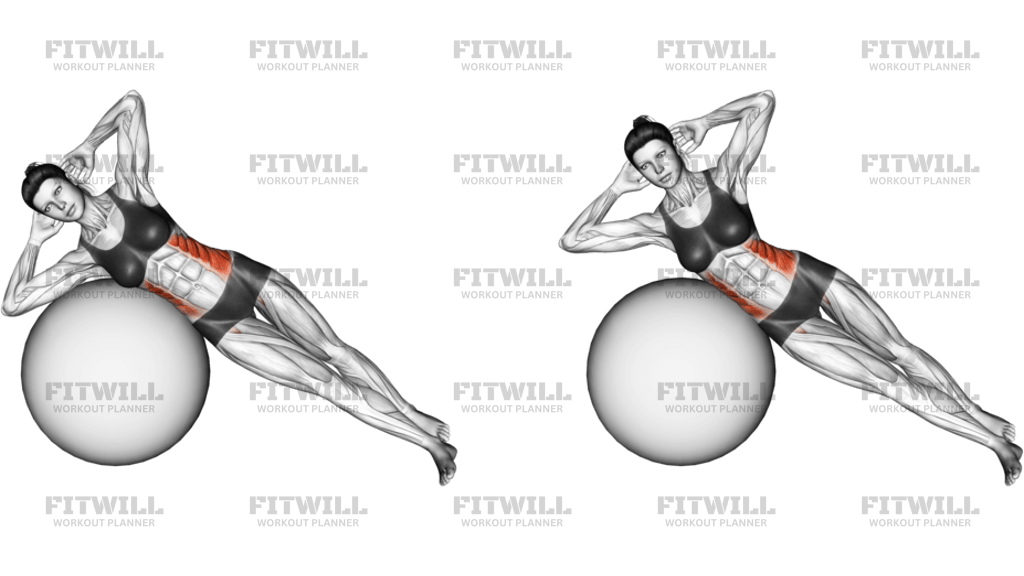
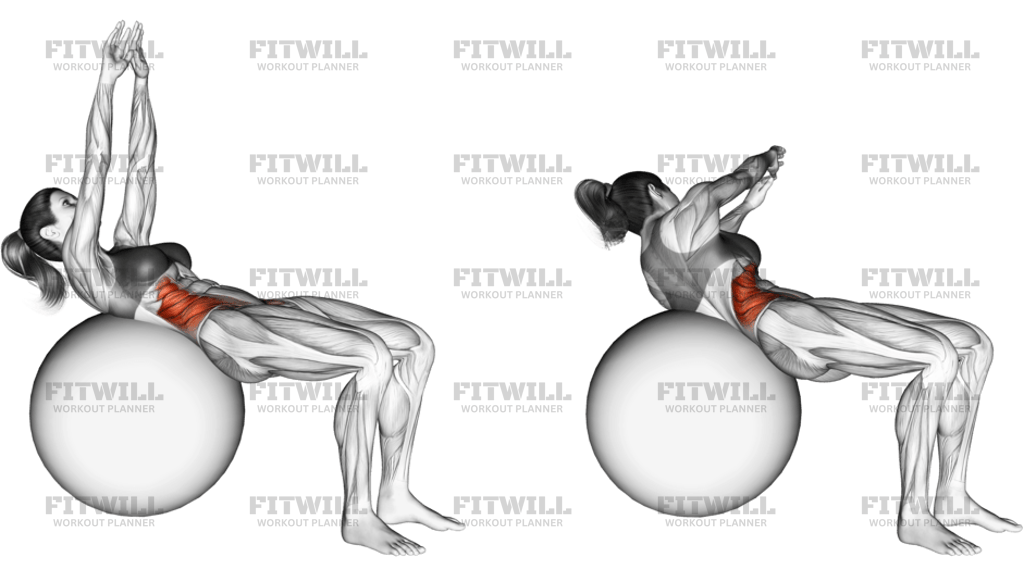
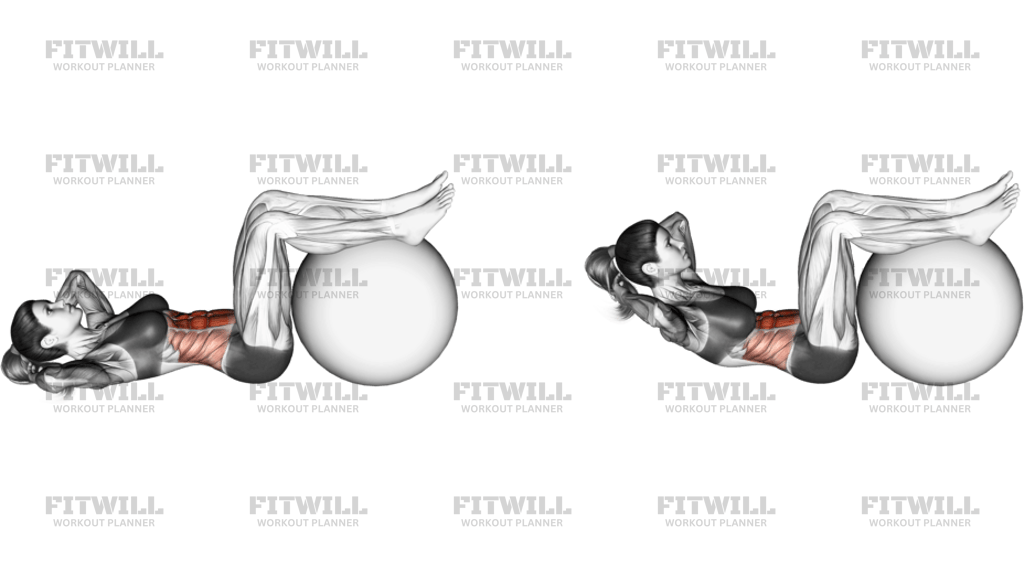
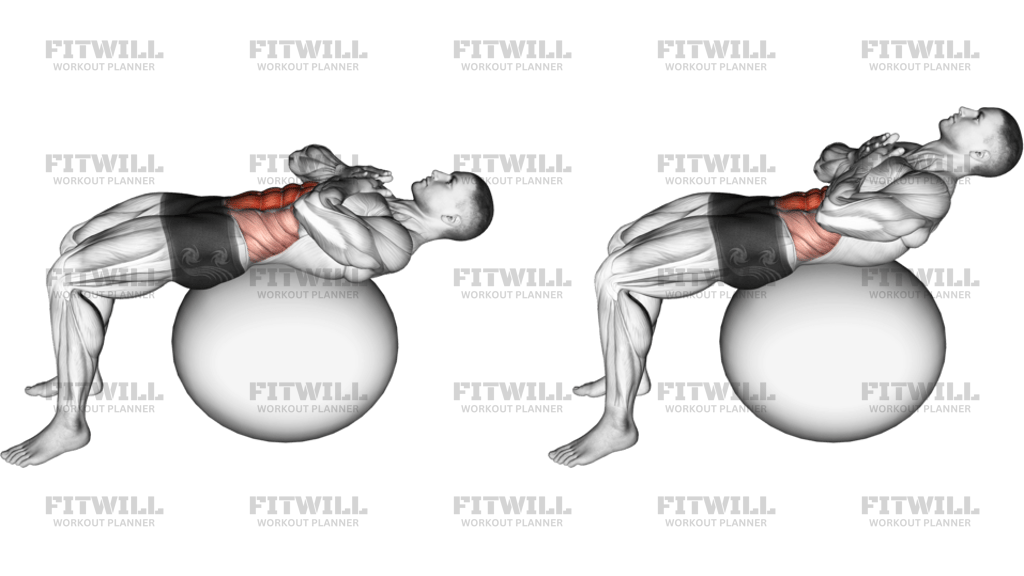
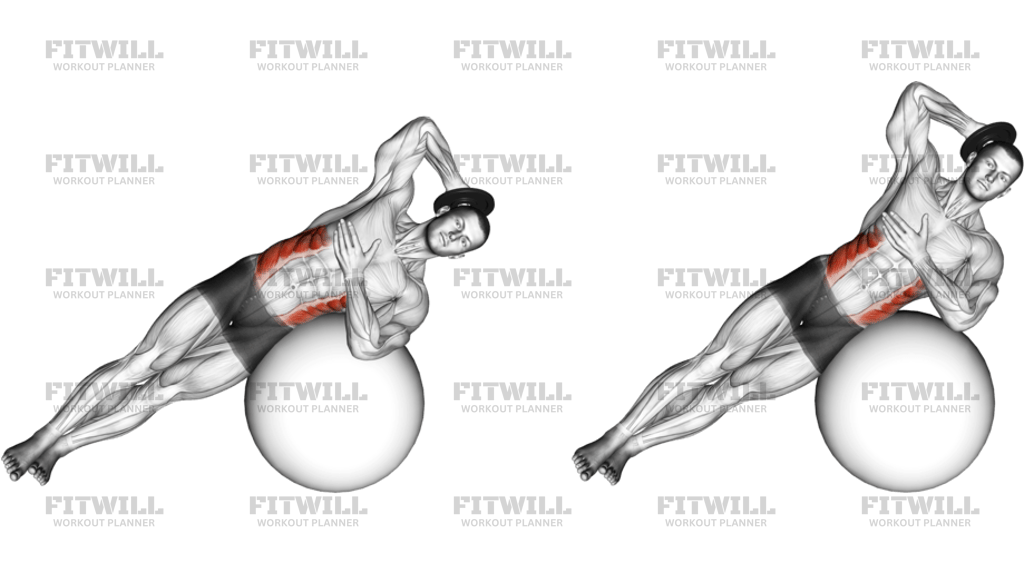
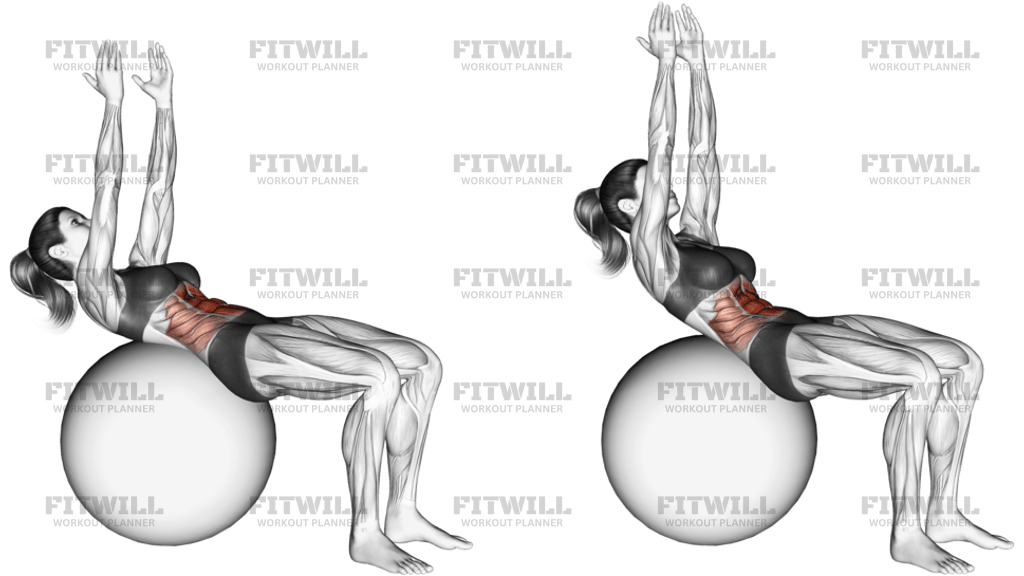
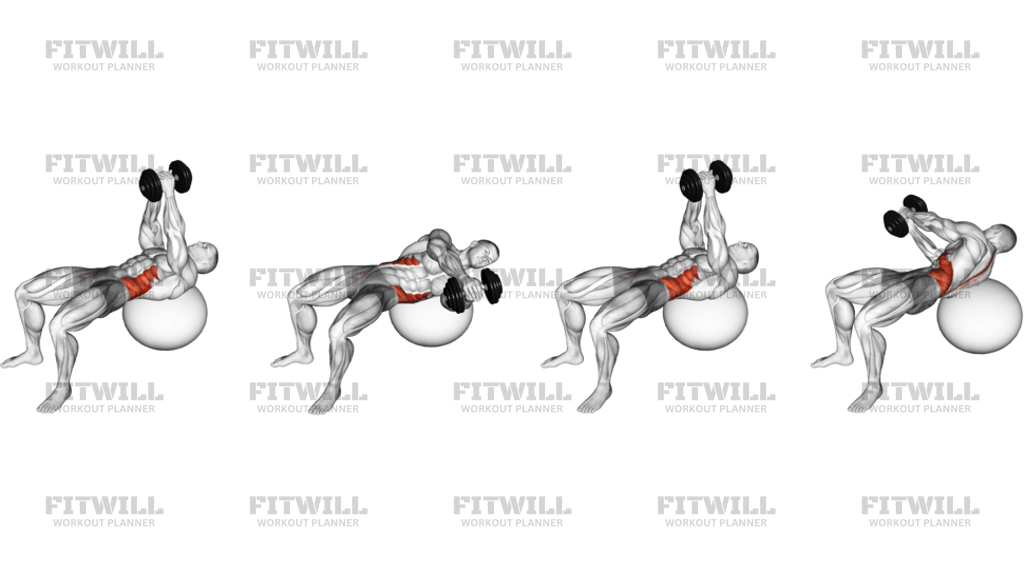
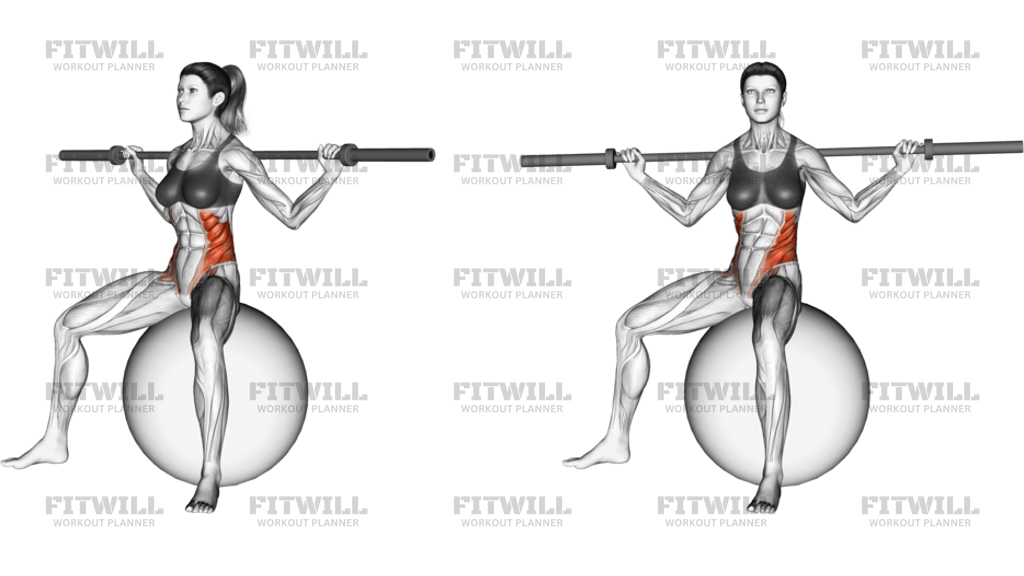
Spinal Stretch On Stability Ball
Spinal Stretch On Stability Ball is a seated side-bending mobility drill that opens the obliques, lateral trunk, and rib cage while giving the torso a supported surface to move against. Sitting on the ball changes the stretch from a floor-based reach into a more upright, controlled position, which makes it easier to feel where the side body is tightening and where the spine should stay long. The exercise is especially useful when the waist feels stiff from sitting, pressing, or rotational work.
The main target is the obliques, with the rectus abdominis, deep core, and spinal stabilizers helping keep the torso organized as you lean. Because the ball is unstable, the hips and feet must stay active enough to keep you centered while the rib cage moves away from the pelvis. That support matters: if the ball drifts or the pelvis twists, the stretch turns into a compensation pattern instead of a clean side bend.
Use a tall seated posture to begin, then bend from the rib cage rather than collapsing through the low back. The free hand position behind the head helps you keep the chest open and discourages shrugging or folding forward. As you lean to one side, think about creating length through the opposite side waist instead of trying to force depth. The goal is a smooth arc that stretches the side body without losing balance or pinching the spine.
This movement works well in warm-ups, mobility blocks, recovery sessions, or as a reset between harder core and upper-body lifts. It can also help lifters who feel tightness during pressing, overhead work, or rotational drills because it restores side-bending capacity through the trunk. Keep the range comfortable, breathe steadily into the stretched side, and avoid turning it into a fast sit-up or crunch pattern.
Because the exercise is guided by position more than load, the quality of the setup matters more than the number of reps. A controlled side bend on the stability ball should feel smooth, quiet, and repeatable. If the stretch becomes sharp, unstable, or overly compressed in the low back, reduce the range and re-center before continuing.
[ Workout Log & Planner ]
Put your next workout in Fitwill
Keep your plan and training log ready when you are.


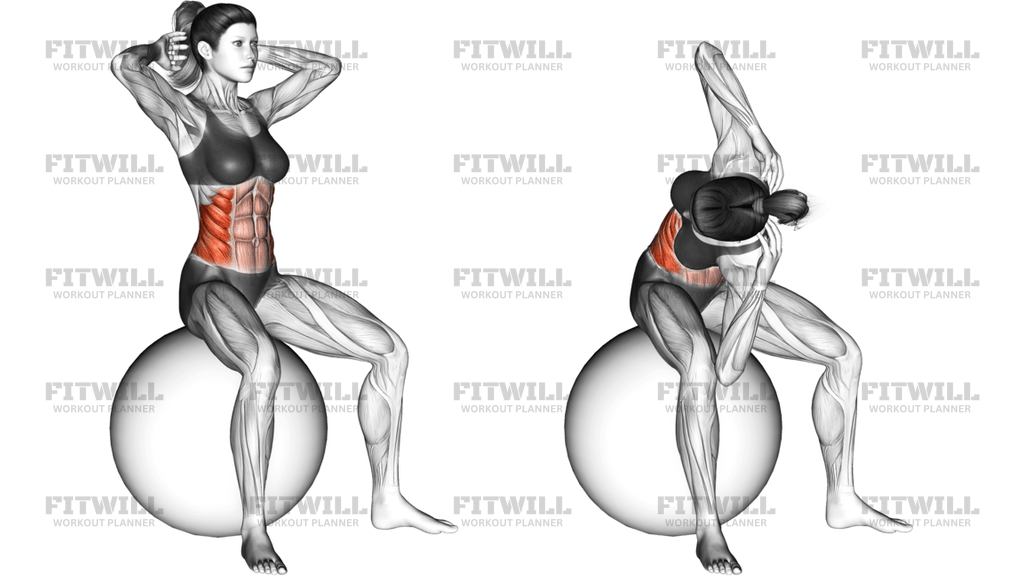
Instructions
- Sit tall on the stability ball with both feet flat, knees bent, and your hips centered so you can stay balanced without gripping the floor.
- Place one or both hands behind your head and keep your elbows relaxed and wide rather than flared hard backward.
- Brace lightly through your midsection and lengthen the spine before you start the side bend.
- Lean your torso to one side in a smooth arc, letting the rib cage move while the hips stay mostly square and grounded.
- Keep the opposite side of the waist long and open as you fold toward the end of the stretch.
- Pause briefly in the deepest pain-free position and keep breathing into the stretched side of the ribs.
- Return to the center slowly without bouncing or twisting out of the stretch.
- Repeat the same side for the planned reps, then switch sides and match the range and tempo.
Tips & Tricks
- Keep both sit bones heavy on the ball so the stretch comes from the waist, not from sliding off to one side.
- If your elbows start closing forward, you are probably rounding the chest instead of creating a true side bend.
- Think about lifting the rib cage away from the hip on the side you are stretching before you lean farther.
- A smaller range with steady breathing usually opens the obliques better than forcing the torso lower.
- Let the neck stay long instead of pulling the head aggressively with the hands.
- Use the mat only for foot placement and balance if the ball feels slippery; do not let the feet drift in and out during the rep.
- Exhale as you return to center if you tend to overarch the low back or hold tension in the ribs.
- Stop the rep if the low back feels pinched; this should feel like a side-body stretch, not lumbar compression.
Frequently Asked Questions
What does Spinal Stretch On Stability Ball target most?
It mainly stretches the obliques and the side of the torso, with the abs and spinal stabilizers helping control the position.
Why use a stability ball for this stretch?
The ball supports a tall seated posture while still challenging balance, so you can feel the side bend without collapsing on the floor.
Should my hips twist when I bend to the side?
No. Keep the hips mostly square and let the rib cage move over the pelvis instead of rotating through the waist.
How far should I lean on the ball?
Only as far as you can keep the movement smooth and pain-free. A smaller, controlled side bend is better than a forced collapse.
Where should I feel the stretch?
You should feel it along the side waist and ribs on the lengthening side, not as sharp pressure in the low back.
Are the hands behind the head mandatory?
They are common because they help keep the chest open, but you can also cross the arms lightly if that feels more comfortable.
Is this exercise good before lifting?
Yes, it works well in a warm-up or mobility sequence before pressing, overhead work, or rotational training.
What if the ball feels unstable?
Widen your foot stance and reduce the range until you can sit tall and move without wobbling.