Suspended Push-Up
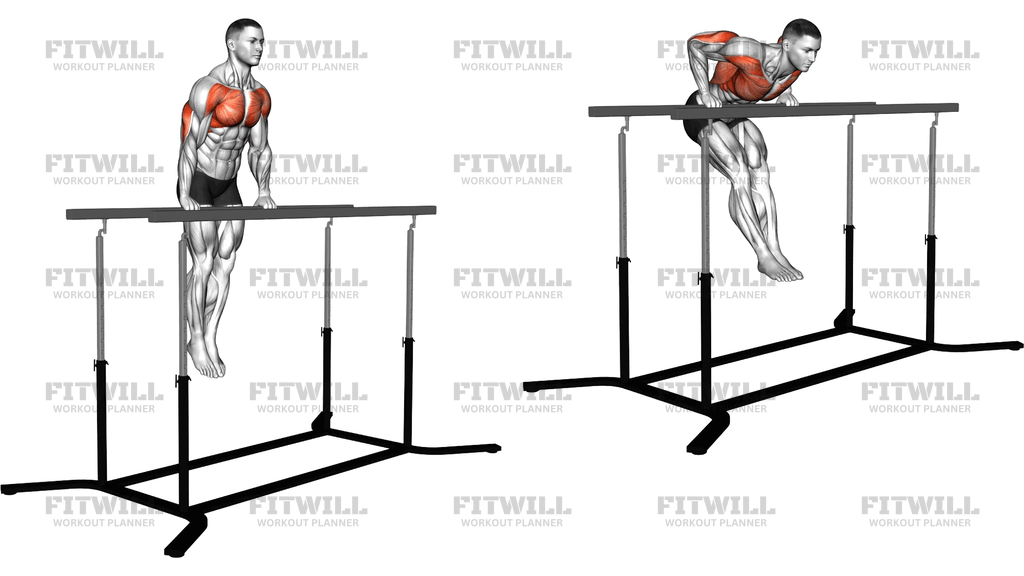
Suspended Push-Up is a body-weight pressing exercise performed with the hands in suspension straps or ring-style handles. Because the grips move, the lift asks the chest, front shoulders, triceps, and core to stabilize the body while you press, which makes the movement more demanding than a floor push-up even with the same body angle. It is a useful option when you want upper-body strength work that also challenges anti-extension control and shoulder stability.
The main target is the pectoralis major, with the anterior deltoids and triceps contributing to the press. The rectus abdominis, obliques, and the muscles around the shoulder blades help keep the torso rigid and the handles steady. That extra stabilizing demand is what gives Suspended Push-Up its value: every repetition has to be controlled through the chest, shoulders, and trunk, not just pushed quickly from the bottom.
The setup matters more here than in a standard push-up. The straps should hang evenly, the handles should sit just under your shoulders, and your body should form one long line from head to heels before the first rep starts. A more upright body angle makes the exercise easier, while walking the feet farther back increases the load. If your hips sag or the handles drift forward, the press usually turns into a shoulder-dominant rep instead of a clean chest press.
Use the descent to build tension, not speed. Lower the chest between the hands with the elbows tracking at a comfortable angle, then press the floor away while keeping the straps taut and the ribcage from flaring. At the top, finish with straight arms and an organized plank rather than relaxing into the shoulders. The range should stay pain-free and repeatable; if the front of the shoulder feels pinched, shorten the depth and reduce the body angle.
Suspended Push-Up fits well as a strength accessory, a warm-up for pressing, or a core-heavy body-weight block when you want more challenge without adding external load. It is especially useful for lifters who need to improve scapular control, pressing stability, or unilateral load tolerance before moving to heavier barbell work. Treat each rep as a controlled press with a fixed body line, and the exercise becomes a demanding but very practical upper-body builder.
Fitwill
Log Workouts, Track Progress & Build Strength.
Achieve more with Fitwill: explore over 9600 exercises with images and videos, access built-in and custom workouts, perfect for both gym and home sessions, and see real results.
Start your journey. Download today!




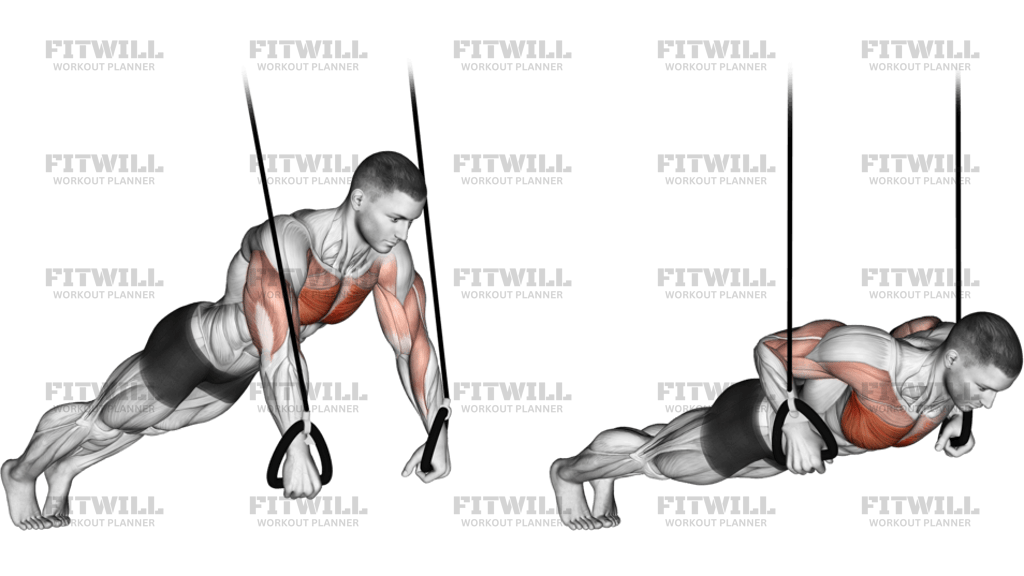
Instructions
- Set the suspension handles to an even length and face the anchor with your hands in the grips, feet behind you, and the straps hanging straight down from the anchor point.
- Walk your feet back until your body forms a straight line from head to heels, with your hands under or slightly in front of your shoulders and your weight balanced between the handles and toes.
- Lock your ribs down, squeeze your glutes, and keep your neck long so your torso stays rigid before the first rep.
- Lower your chest between the handles by bending your elbows and letting them travel back at a comfortable angle while the straps stay taut.
- Keep your body in one line as you descend, avoiding any hip drop, twist, or shoulder shrug toward the ears.
- Pause briefly near the bottom with your chest close to the handle level or as low as your shoulders can control pain-free.
- Press the handles away to return to the start, driving through the chest and triceps while keeping the straps steady instead of swinging.
- Exhale as you press up, then reset your plank at the top with straight arms and controlled shoulders before the next rep.
- Finish the set by stepping your feet forward and letting the straps go slack only after you are clear of the working position.
Tips & Tricks
- Make the exercise easier by standing more upright; the farther your feet are from the anchor, the more body weight you press.
- Keep the straps vertical and even before you start each rep so one arm does not get more load than the other.
- If the handles drift forward at the bottom, shorten the range and keep your chest from collapsing between the shoulders.
- Let the elbows track at a natural 30-45 degree angle rather than flaring wide, which tends to put more stress on the front of the shoulder.
- Press smoothly instead of bouncing off the bottom; the instability of the straps makes any rebound more obvious.
- Keep your hands firm but not death-gripped, so the shoulders can stay packed without extra tension in the forearms.
- Use a body line you can hold for every rep; once the hips start sagging, the set has turned into a different exercise.
- Stop a rep short if the handles wobble so much that you lose chest tension and start chasing balance instead of pressing.
Frequently Asked Questions
What muscles does Suspended Push-Up work most?
Suspended Push-Up mainly hits the chest, especially the pecs, while the front shoulders and triceps help drive the press. The core and shoulder stabilizers work hard to keep the handles from drifting.
Is Suspended Push-Up harder than a regular push-up?
Usually yes, because the moving handles force more stabilization through the shoulders and trunk. A more upright body angle can make it similar to an easier floor push-up.
How do I set up the handles for Suspended Push-Up?
Set both handles to the same length and start with your hands under your shoulders or just ahead of them. Walk your feet back until your body is in a straight plank and the straps stay taut.
How low should I go on Suspended Push-Up?
Lower only as far as you can keep the chest, hips, and shoulders under control. If your shoulders pinch or your torso sags, shorten the range and keep the bottom position cleaner.
What is the most common form mistake?
Letting the hips sag or twist is the biggest mistake, because it turns the press into a loose body swing. Keep the ribs down and the glutes tight so the body stays one solid line.
Can beginners do Suspended Push-Up?
Yes, if they start with a steep body angle and a short range of motion. The handles should feel stable before you try to lower deeper or walk the feet farther back.
Should my elbows flare out on Suspended Push-Up?
No, a moderate elbow angle is usually better than flaring wide. That keeps the press more chest-focused and reduces unnecessary stress at the front of the shoulders.
How can I make Suspended Push-Up more difficult?
Walk your feet farther back so your body is closer to horizontal, or slow the lowering phase for more time under tension. You can also pause briefly near the bottom without letting the straps sway.