Standing Plate Presses
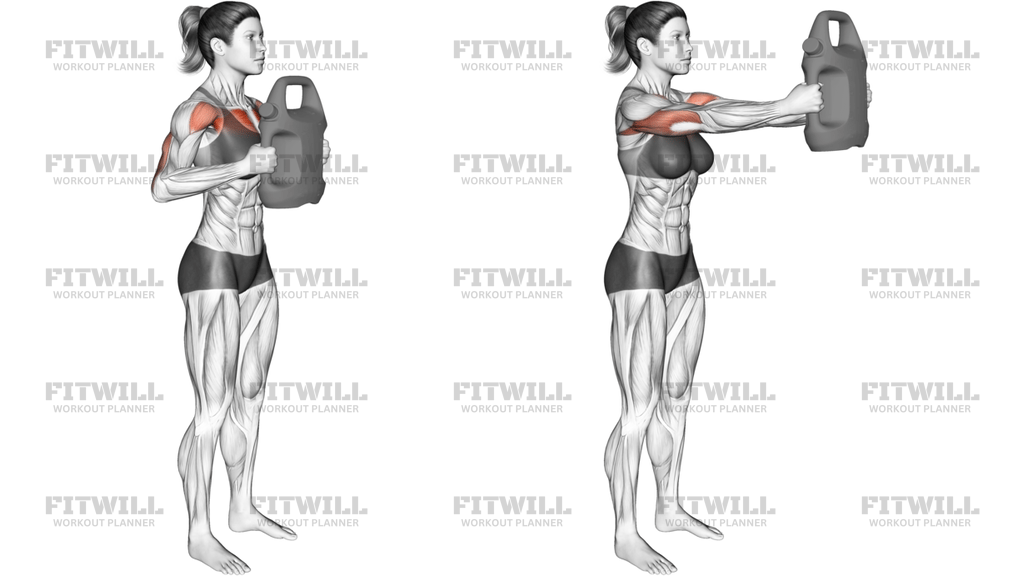
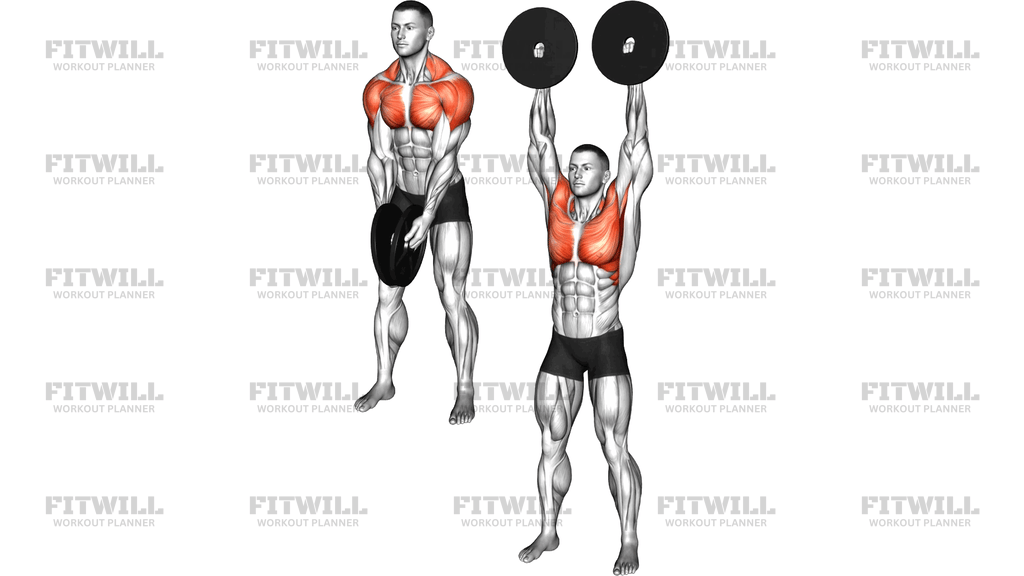
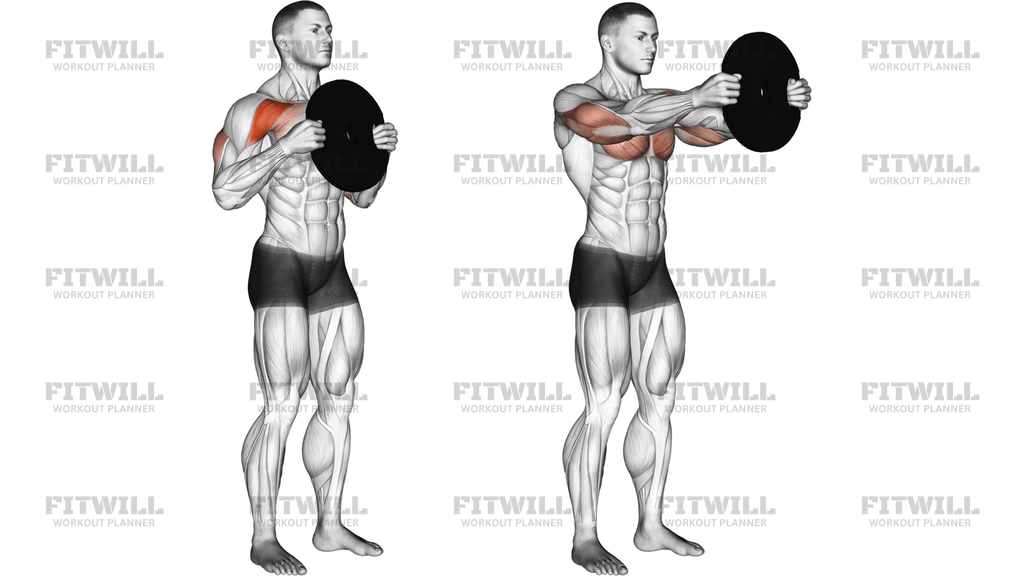
Standing Plate Presses is a standing plate-driven press that starts with the weight held close to the chest and finishes with the plate pushed straight forward at shoulder height. The movement looks simple, but the setup matters because the torso, ribs, and shoulder blades have to stay organized while the arms do the work. When the stance is steady and the elbows track evenly, the press gives the front of the shoulders, chest, and triceps a clean, repeatable training stimulus.
This exercise is useful when you want a low-complexity pressing pattern that still demands control from the shoulders and upper body. The plate keeps the hands close together, which changes the feel of the press compared with dumbbells or a barbell. That grip position can make it easier to keep the elbows aligned and the wrists neutral, but it also exposes compensations quickly if you lean back, shrug, or let the plate drift upward instead of moving forward on a controlled line.
A good rep begins with the plate set at chest height, forearms angled forward, and the feet planted firmly under the hips or slightly wider for balance. From there, the press should travel forward to near full arm extension without locking out aggressively or letting the shoulders roll up toward the ears. The return is just as important: the plate comes back to the chest under control, the ribs stay stacked over the pelvis, and the neck remains long so the shoulders can repeat the same path on every rep.
Standing Plate Presses is often used as accessory work, a shoulder and chest finisher, or a warmup press when you want joint-friendly loading and clear technique feedback. It is a good choice for lifters who need a simpler pressing pattern or who want to reinforce scapular control and trunk stability under load. Keep the motion crisp, avoid momentum, and use a resistance level that lets you keep the plate level, the torso quiet, and the return phase smooth from start to finish.
[ Workout Log & Planner ]
Put your next workout in Fitwill
Keep your plan and training log ready when you are.


Instructions
- Stand tall with your feet about hip-width apart and hold a single weight plate flat in both hands at the center of your chest.
- Keep your elbows bent and slightly below shoulder height, with your wrists straight and the plate parallel to the floor.
- Set your ribs over your pelvis, brace your midsection, and keep your shoulders down instead of shrugging.
- Press the plate straight forward until your arms are nearly straight and the plate is at shoulder height.
- Finish the rep with the plate level and your chest quiet, not with a backward lean or an upward shrug.
- Pause briefly at the end range if you can keep the shoulders packed and the wrists stacked.
- Lower the plate back to the chest under control, keeping the same path on the way down.
- Keep breathing steady and repeat for the planned reps without bouncing or driving from the hips.
Tips & Tricks
- Hold the plate with both palms centered so it does not tilt when you press.
- If your wrists bend back, lower the load and keep the knuckles aligned with the forearms.
- Do not turn the press into an incline chest lean; the torso should stay stacked and still.
- Keep the elbows from flaring hard to the sides, or the shoulders will take over too early.
- Press in a straight line from chest height rather than arcing the plate upward.
- Use a lighter plate if you cannot keep the return slow and identical to the press.
- Exhale as the plate moves away from the chest and inhale on the controlled return.
- Stop the set when the plate starts wobbling or one shoulder rises before the other.
Frequently Asked Questions
What muscle does Standing Plate Presses target most?
It mainly targets the front shoulders, with the chest and triceps helping to drive the press.
Can beginners perform this exercise?
Yes. Beginners usually do best with a light plate and a short, controlled range while they learn the path.
Where should the plate start before each rep?
Start with the plate centered at the chest, elbows bent, and wrists stacked so the press can travel straight forward.
Should I press the plate up or forward?
Press it forward at about shoulder height. If it turns into a vertical overhead press, the exercise stops matching the image and setup.
Why do my shoulders feel this more than my chest?
The front delts are heavily involved because the arms start close to the body and move the plate away from the chest on a straight path.
What is the biggest form mistake with this press?
Leaning back and shrugging the shoulders usually turns the movement into a torso-driven press instead of a controlled shoulder press.
Is this safer than using dumbbells or a barbell?
It can be easier to learn because the hands stay close together, but only if you keep the plate level and avoid forcing the range.
How do I progress Standing Plate Presses?
Increase the plate size or repetitions only after you can keep the same chest-height path and a quiet torso for every rep.