Weighted Round Arm
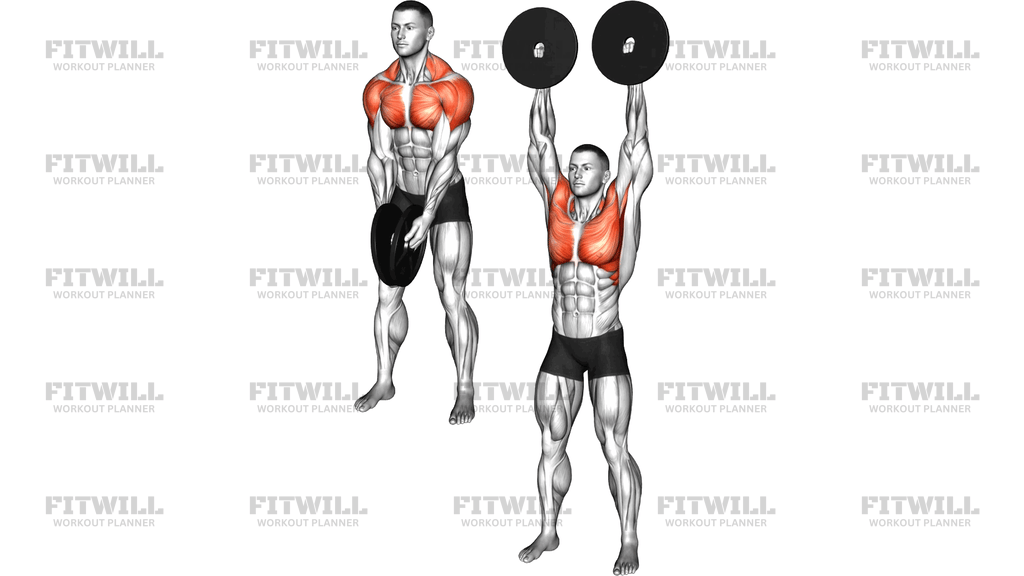
Weighted Round Arm is a standing plate-circling shoulder drill that keeps the arms long, the torso tall, and the load moving in a smooth arc in front of the body. The exercise places the greatest demand on the delts, with the upper traps, rhomboids, and triceps helping to steady the plate as it travels. It is useful when you want shoulder tension without a heavy press, and when you want to train control, posture, and coordination at the same time.
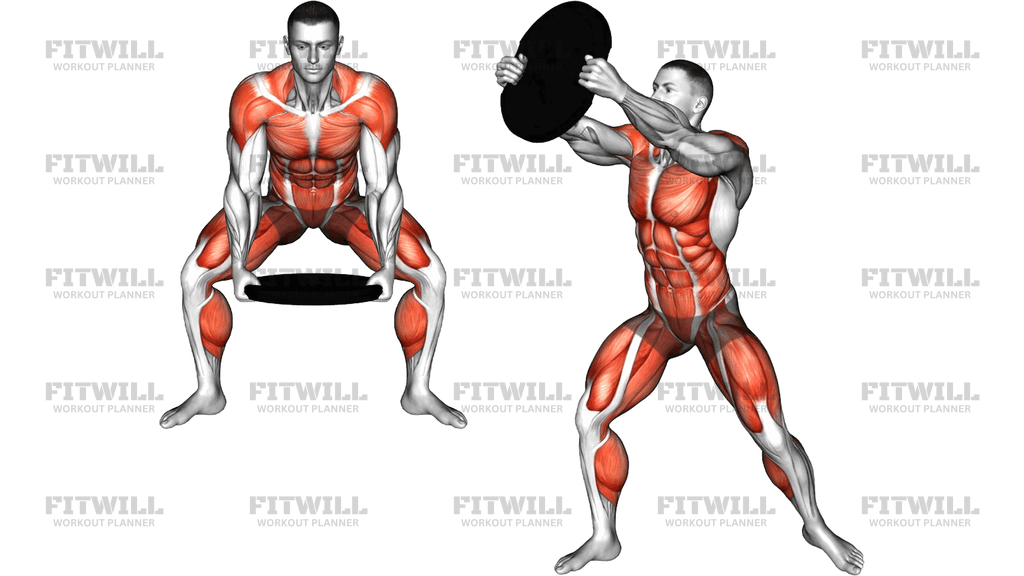
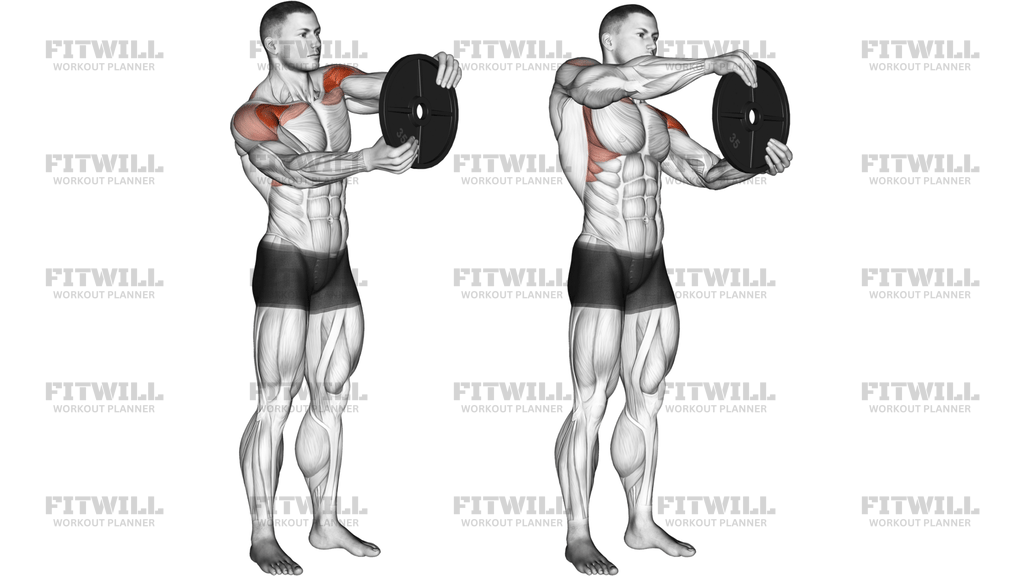
The image shows a weight plate held with both hands at shoulder height, then guided through a rounded path rather than a straight lift. That circular path is the point of the exercise. The shoulders have to keep the plate organized while the ribs stay down and the neck stays long, which makes the movement more demanding than a simple front raise. If the plate drifts away from the body or the torso leans back to help, the tension quickly shifts out of the shoulders and into momentum.
Use a load that lets you keep the plate level and the movement smooth. The start position should feel stacked: feet planted, glutes lightly engaged, core braced, and elbows softly bent so the joints are not locked out. From there, guide the plate along the intended round path with steady breathing and no jerking. The return should be just as controlled as the lift, because the lowering phase is where many people let the shoulders shrug or the lower back take over.
This drill fits well as accessory work for shoulder endurance, warm-ups before pressing, or a lighter hypertrophy block when you want direct deltoid work with a strict line of motion. It can also serve as a coordination drill for athletes who need stable shoulders and scapular control. Beginners can use it with a very light plate, but only if they can keep the torso still and the range comfortable.
Treat each repetition like a technical circle, not a speed rep. The best set is the one where every rep looks nearly identical, the plate stays under control, and the shoulders do the work instead of the lower back or neck. If the path becomes choppy, shorten the range and reduce the load until the arc is clean again.
[ Workout Log & Planner ]
Put your next workout in Fitwill
Keep your plan and training log ready when you are.


Instructions
- Stand tall with your feet about shoulder-width apart and hold a weight plate with both hands at chest height.
- Keep your elbows slightly bent, shoulders down, and ribs stacked over your hips before you start the circle.
- Brace your core and set your gaze forward so your torso stays still as the plate moves.
- Guide the plate in a smooth rounded path in front of your body, keeping it at about shoulder height.
- Let the plate travel through the top of the arc without shrugging your shoulders or arching your lower back.
- Continue the circle to the other side with the same pace and the same arm bend.
- Bring the plate back to the starting position under control instead of dropping it.
- Breathe out as you move through the hardest part of the arc and inhale on the controlled return.
- Reset your posture between reps and stop the set if the circle becomes jerky or uneven.
Tips & Tricks
- A light plate is usually enough; the exercise gets hard fast once the arc reaches shoulder level.
- If your elbows straighten completely, the plate will wobble more and the shoulders will lose tension.
- Keep the plate close to your line of sight instead of letting it drift far out in front of you.
- Do not lean back to finish the top of the circle; the movement should come from the shoulders, not a hip drive.
- Keep the neck relaxed so the upper traps assist without taking over the whole rep.
- A slow, even tempo makes the round path cleaner and keeps the reps comparable from one side to the other.
- If one side feels awkward, shorten the circle slightly before reducing the load.
- Stop before your form turns into a swing; the shoulders should stay in control from start to finish.
Frequently Asked Questions
What muscles does Weighted Round Arm work most?
The delts do most of the work, with the upper traps, rhomboids, and triceps helping control the plate.
Can beginners perform this exercise?
Yes, if they start with a very light plate and keep the torso still through the whole circle.
How should the plate move during the rep?
It should travel in one smooth rounded path in front of the body, not in a straight press or a swinging arc.
Why do my shoulders want to shrug during the lift?
The plate is probably too heavy or drifting too high. Lower the load and keep the shoulders down as the plate passes through the top of the circle.
Should my arms stay straight?
Keep a soft bend in the elbows. Locked elbows make the circle less stable and usually shift stress into the joints.
What is the biggest setup mistake with the plate?
Holding the plate too far away from the chest at the start. Begin with the load close enough that you can brace and keep the path controlled.
Is this exercise good before pressing work?
Yes. It can work well as a lighter shoulder warm-up if the reps stay smooth and the plate is not too heavy.
What should I change if my lower back arches?
Shorten the range, reduce the plate weight, and keep the ribs stacked over the pelvis so the shoulders do the work instead of the back.