Weighted Kneeling Step With Swing
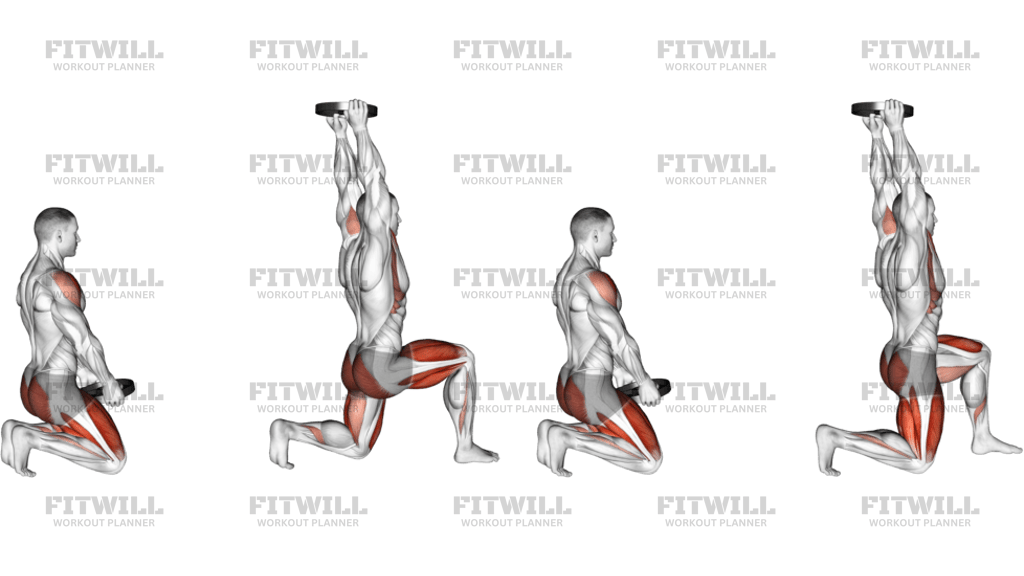
Weighted Kneeling Step With Swing is a kneeling-to-half-kneeling coordination drill that combines a lower-body step with an overhead swing or raise using a single weight held with both hands. The exercise asks you to organize the hips, ribs, and shoulders before the step so the load can travel smoothly instead of being yanked by momentum. It is not a pure shoulder isolation move; it blends shoulder control, upper-back stability, trunk bracing, and leg transition work in one sequence.
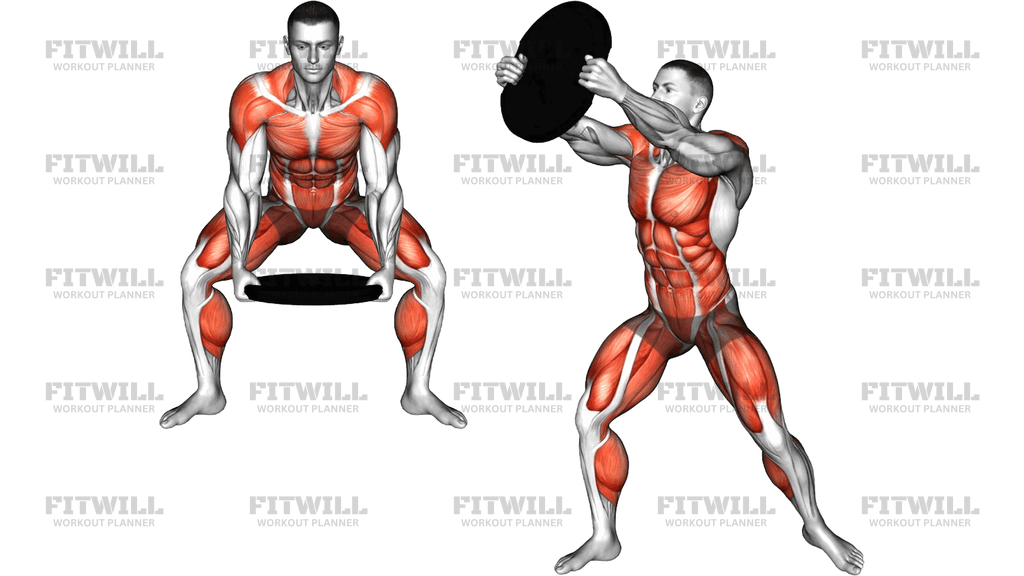
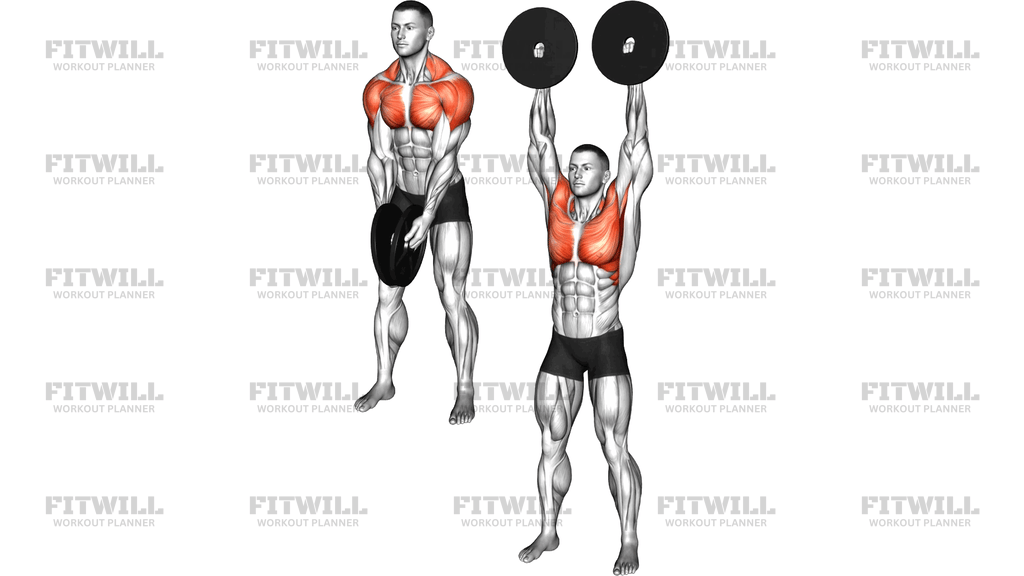
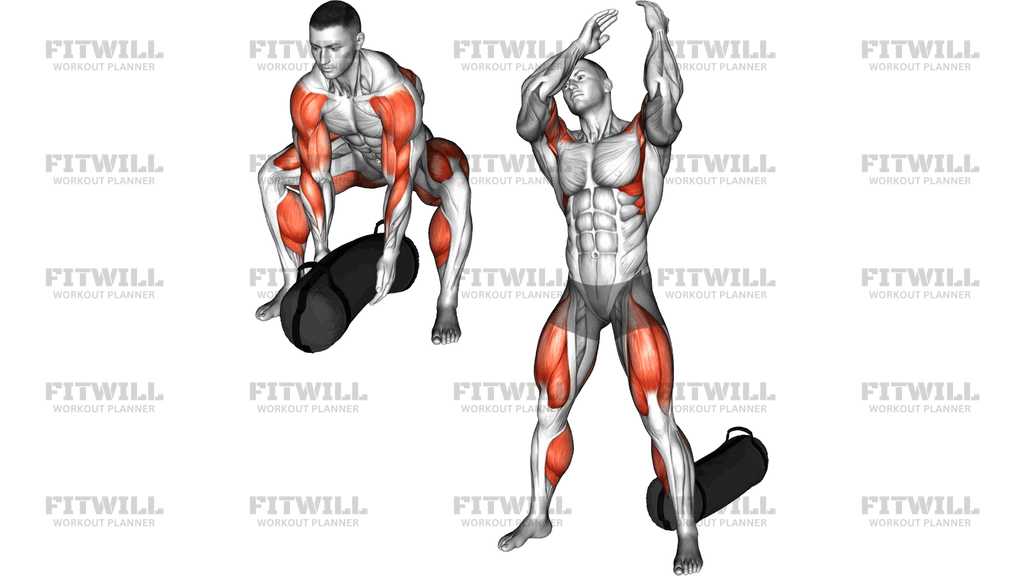
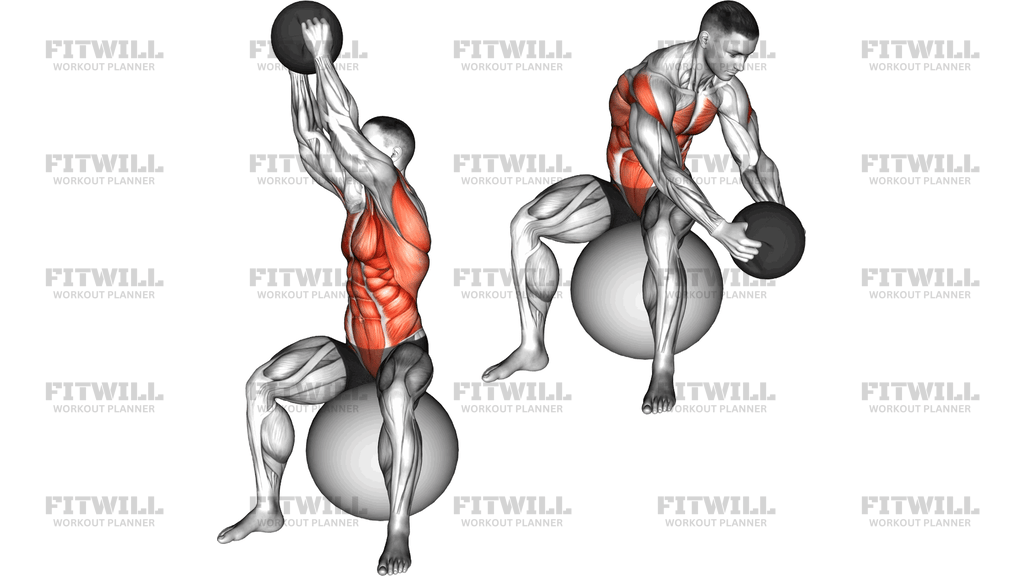
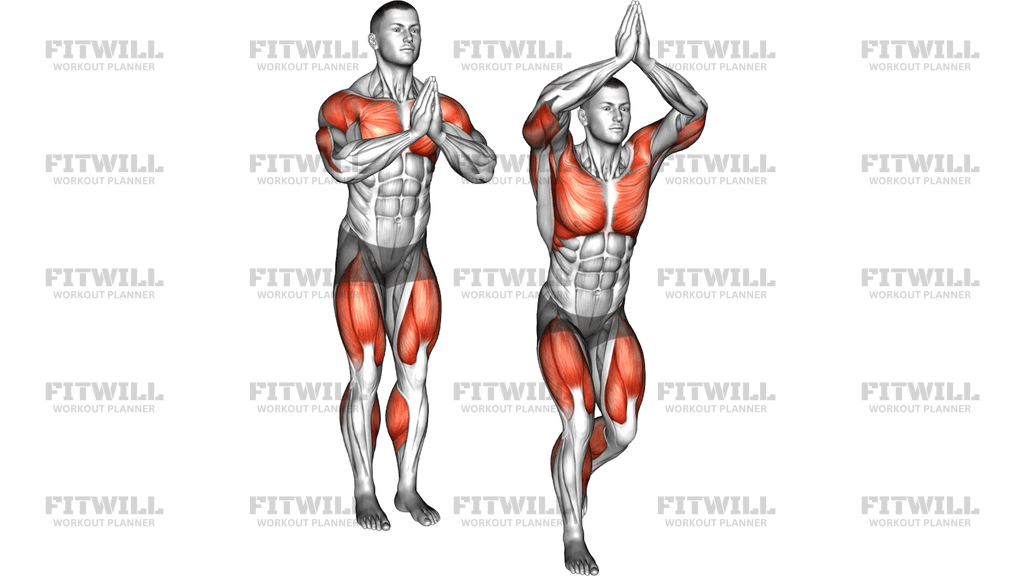
The image shows a tall-kneeling start and a half-kneeling finish with the weight carried overhead. That makes setup important: the torso should stay stacked, the front foot should land solidly, and the pelvis should not dump forward as the load rises. Delts do most of the overhead control, while traps, rhomboids, triceps, glutes, and core muscles help keep the movement clean. If the weight drifts away from the body or the back arches to force the overhead position, the exercise turns into a swingy compensation pattern instead of a controlled strength drill.
Use a pad under the knees and start in a tall kneel with the weight close to the thighs. As you step one foot forward, drive up into a stable half-kneeling stance and guide the weight overhead on a smooth path. The rep should finish with the arms long, the chest tall, and the front knee stacked over the foot. On the way down, lower the load with the same control and return to the kneeling start without collapsing into the hips or rocking side to side.
This movement works well as an accessory drill for shoulder stability, core control, and coordination between the lower and upper body. It can also be used in warm-ups, mixed conditioning circuits, or mobility-strength sessions where you want a loaded transition rather than heavy pressing. Keep the load light enough that each side looks identical, and stop the set if the torso starts leaning, the shoulders shrug hard, or the step becomes a lunge driven by momentum instead of control.
[ Workout Log & Planner ]
Put your next workout in Fitwill
Keep your plan and training log ready when you are.


Instructions
- Kneel on both shins on a pad, hold the weight with both hands in front of your thighs, and keep your ribs stacked over your pelvis.
- Set your shoulders down and back slightly, brace your abs, and keep the weight close to your body before the step begins.
- Step one foot forward into a half-kneeling stance while keeping your chest tall and your hips square.
- As the front foot plants, guide the weight up in a smooth swing or raise until your arms finish overhead.
- Lock out softly overhead with the biceps near your ears, but do not lean back or flare your ribs.
- Pause briefly in the half-kneeling finish to check balance, knee position, and shoulder control.
- Lower the weight under control, reversing the same path as you step back to both knees.
- Reset fully before the next rep or alternate sides if the set calls for switching lead legs.
Tips & Tricks
- Use a padded surface for the knees; the exercise should feel like a clean transition, not a test of knee tolerance.
- Keep the weight close on the way up. The farther it drifts from your torso, the more your lower back will try to finish the rep.
- Plant the front foot before you chase the overhead position so the step and the swing do not happen at the same time.
- Exhale as the weight rises and finish the overhead position with your ribs down instead of arching to fake extra range.
- Keep the front shin mostly vertical if you want the drill to stay more shoulder-and-core focused.
- If the shoulders shrug hard at the top, the load is too heavy or the path is too fast.
- Move slowly on the return; the lowering phase should look as organized as the step up.
- Alternate lead legs only when you can make both sides look the same.
Frequently Asked Questions
What muscles does Weighted Kneeling Step With Swing train?
The shoulders do most of the overhead work, while the upper back, triceps, core, glutes, and hips help control the step and keep you stacked.
Is this exercise more of a press or a step?
It is both. The step into half-kneeling creates the base, and the overhead swing or raise finishes the rep with shoulder and trunk control.
What should the starting position look like?
Start in a tall kneel on both shins with the weight held close in front of the thighs, ribs down, and shoulders set before you move.
How do I keep the weight path clean overhead?
Bring the front foot down first, then guide the weight upward in one smooth line. If you have to jerk it, the load is too heavy or the tempo is too fast.
What is the most common mistake with the half-kneeling finish?
Letting the lower back arch or the torso lean away from the front leg. The finish should look tall and stacked, not bent backward.
Can beginners use this movement?
Yes, but only with a light load and a short, controlled range until the kneeling transition and overhead finish feel stable.
Should both knees stay on the floor the whole time?
No. The rep moves from a tall kneel to a half-kneeling stance, so one foot steps forward before the overhead portion completes.
How do I know if the load is too heavy?
If the shoulders shrug hard, the ribs flare, or the step turns into a wobbling lunge, reduce the load.