Weighted Standing Curl
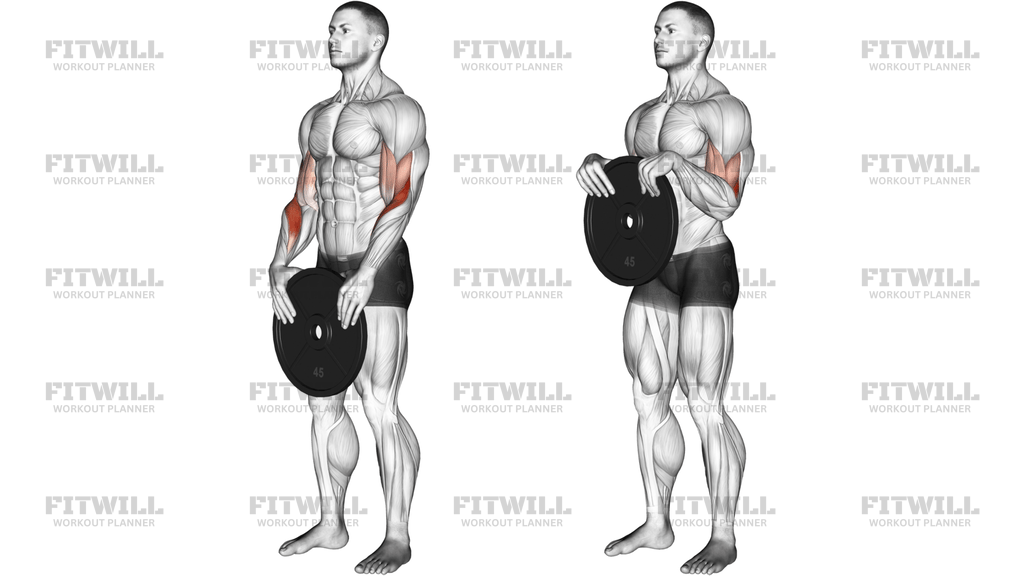
Weighted Standing Curl is a standing weight-plate curl performed with both hands on one plate. The load hangs in front of the thighs at the start, then travels upward in a controlled arc as the elbows bend. It is a simple-looking arm exercise, but the setup matters because the plate becomes much harder to control once the torso starts to sway or the wrists lose position.
The main training focus is the biceps brachii, with the brachialis, brachioradialis, and forearm flexors helping finish the curl and stabilize the grip. That combination makes Weighted Standing Curl useful when you want direct elbow-flexion work with extra demand on the hands and forearms. The shoulders should stay quiet and act only as stabilizers while the elbows do the lifting.
A good rep starts with a tall stance, a stacked ribcage, and the plate held close to the body. From there, curl the plate toward the upper abdomen or lower chest without letting the elbows drift far forward or the chest pop out to cheat the load. The top position should feel compact and controlled, with the forearms fully shortened but the shoulders still relaxed.
On the way down, resist the plate all the way back to the start instead of dropping it quickly. That lowering phase is where many people lose tension and turn the movement into a swing, so the return should stay smooth and deliberate. If the plate starts to pull the shoulders forward, shorten the range or reduce the load until the motion stays clean.
This variation fits well as accessory work, arm finisher work, or a straightforward beginner-friendly curl when the plate is light enough to control. It can also be useful for lifters who want a more grip-intensive curl than a dumbbell version. The best reps look calm from the outside: no leg drive, no back lean, no shrugging, and no rushed tempo.
Fitwill
Log Workouts, Track Progress & Build Strength.
Achieve more with Fitwill: explore over 9600 exercises with images and videos, access built-in and custom workouts, perfect for both gym and home sessions, and see real results.
Start your journey. Download today!




Instructions
- Stand tall with your feet about shoulder-width apart and hold the weight plate with both hands in front of your thighs, arms straight and chest tall.
- Keep your elbows close to your sides and let the plate hang still before you start the first rep.
- Brace your core, soften your knees, and keep your upper body stacked so the curl does not turn into a body swing.
- Curl the plate upward by bending the elbows and keep the plate close to the torso as it rises.
- Bring the plate toward the upper abdomen or lower chest without letting the shoulders shrug or the torso lean back.
- Pause briefly at the top while keeping the elbows tucked and the wrists steady on the plate.
- Lower the plate slowly until the arms are straight again and the biceps stay under tension the whole way down.
- Inhale on the way down, exhale as you curl up, and repeat for the planned number of repetitions.
Tips & Tricks
- Choose a plate you can curl without leaning back or shrugging at the top.
- If the plate brushes your thighs on the way up, step slightly forward from the start so the hands have room to travel.
- Keep the elbows close to the ribs; letting them drift forward turns the curl into a front-delt-assisted lift.
- A slow lowering phase will usually challenge the biceps and forearms more than adding extra reps.
- Keep the wrists stacked over the hands so the plate does not tip or twist as fatigue builds.
- Stop the set as soon as the hips start helping the plate move upward.
- Use a full, pain-free elbow range, but do not force the plate higher by rolling the shoulders forward.
- If your grip fails before your biceps do, reduce the load and keep the movement crisp instead of sloppy.
Frequently Asked Questions
What muscle does Weighted Standing Curl target most?
It mainly targets the biceps, with the brachialis, brachioradialis, and forearm flexors helping throughout the curl.
Why use a weight plate for Weighted Standing Curl?
A plate adds a bigger grip challenge than many curl variations, so the forearms have to stabilize the load while the elbows flex.
How should I hold the plate?
Hold the outer edge of the plate with both hands and keep the wrists stacked so the plate stays level during the rep.
Where should the plate finish at the top?
It should come up toward the upper abdomen or lower chest without forcing the elbows far forward or letting the shoulders shrug.
Is Weighted Standing Curl good for beginners?
Yes, if the plate is light enough to keep the torso still and the lowering phase controlled.
What is the most common form mistake?
People usually lean back or swing the plate with the hips instead of letting the elbows do the work.
Can I use this if regular curls bother my wrists?
Sometimes the neutral hand position feels better, but if the wrists or elbows still hurt, reduce the load or switch to a different curl variation.
How can I make Weighted Standing Curl harder without cheating?
Slow the lowering phase, add a brief pause at the top, or increase the plate only if the shoulders and lower back stay quiet.