Cable Twist Up-Down
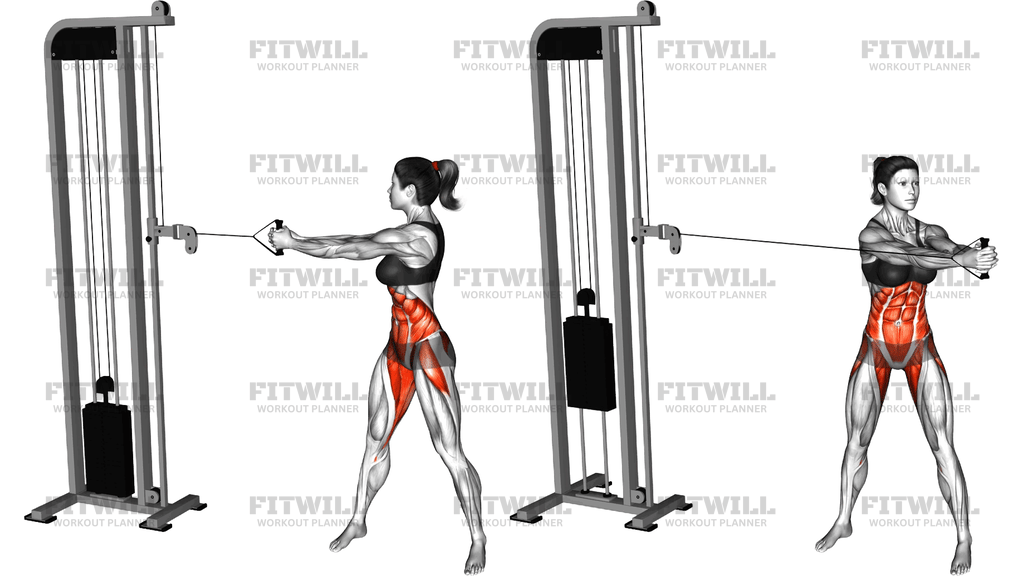
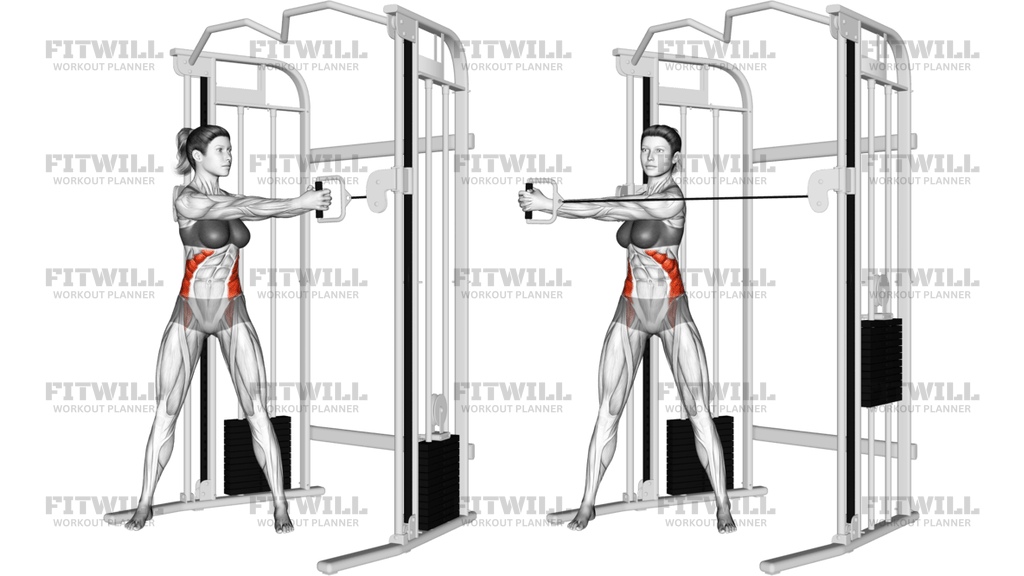
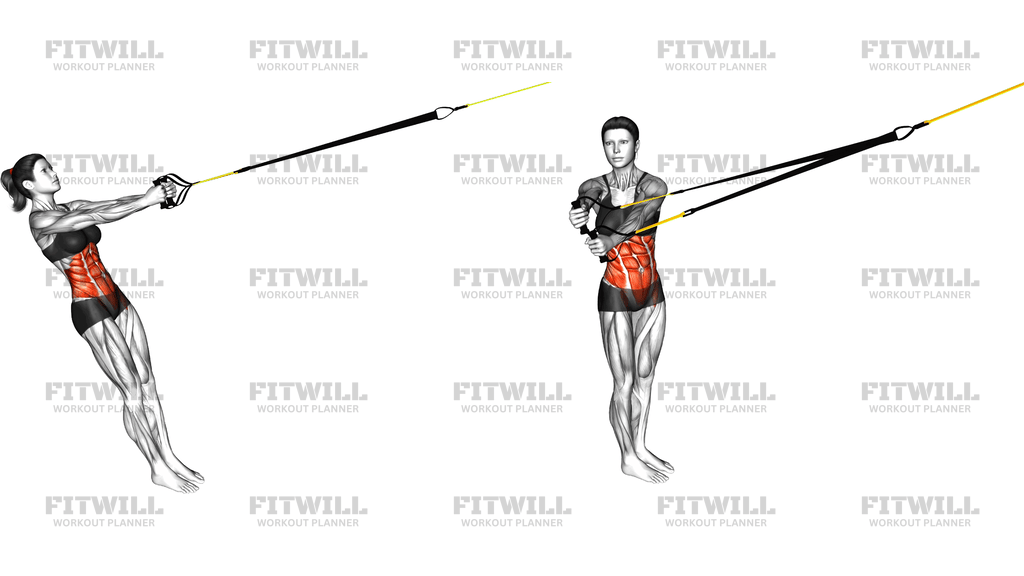
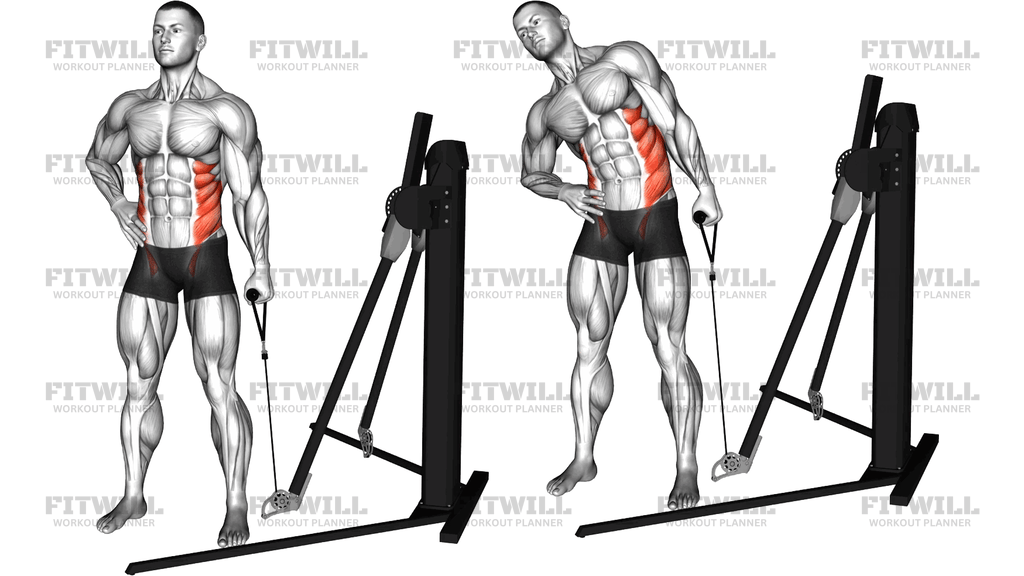
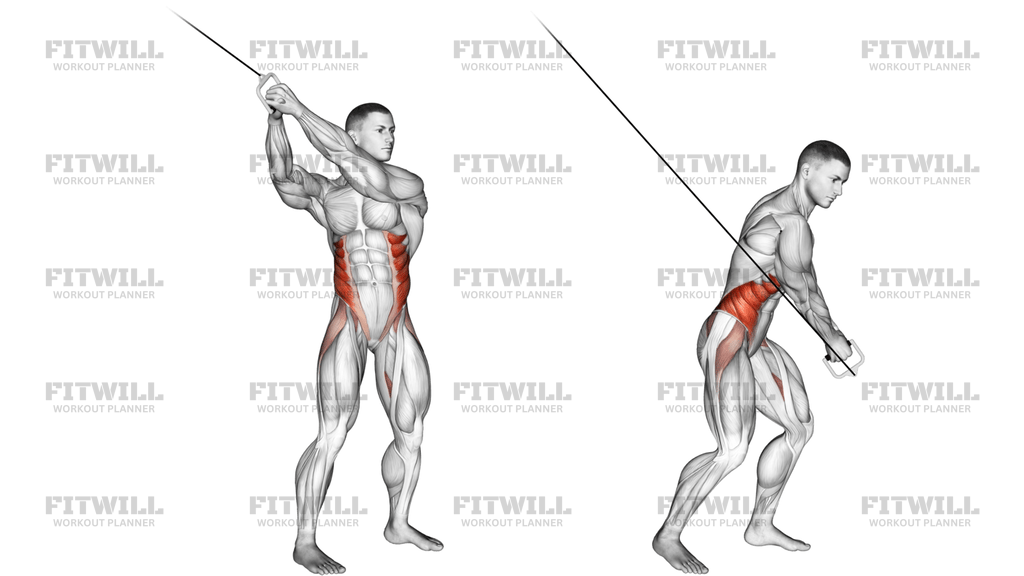
Cable Twist Up-Down is a standing diagonal cable chop that trains the trunk to resist and create rotation under constant tension. In the image, the handle starts high and outside the body and travels down across the torso to the opposite side, so the exercise is best coached as a high-to-low woodchop rather than a loose standing twist. That path matters: the cable should guide a smooth diagonal arc, while the torso stays stacked and the hips stay organized instead of spinning freely.
The main work lands on the obliques, with the rectus abdominis, transverse abdominis, and spinal erectors helping keep the rib cage and pelvis connected. Because the load pulls across the body, this movement also teaches anti-rotation control through the hips and midsection. When the weight is right, each rep feels like a clean transfer of force from the high anchor to the opposite front hip, not a jerky yank from the arms.
Setup is the difference between a useful core drill and a rushed cable swing. Use a single handle on a high pulley, step far enough away to create steady tension, and stand with a soft bend in the knees and a balanced stance. Hold the handle with both hands, keep the elbows slightly bent, and brace before you start the pull. The cable should feel loaded at the top without forcing your shoulders to shrug or your lower back to arch.
On the way down, pull the handle diagonally toward the opposite hip or front pocket while the torso rotates as one unit from the ribs through the pelvis. Keep the chest controlled, exhale through the working phase, and let the return happen slowly so the stack does not yank you back. The best reps are smooth, repeatable, and symmetric on both sides, with no bouncing at the bottom and no overreaching at the top.
Use Cable Twist Up-Down when you want a cable-based core pattern that loads the obliques through a full diagonal range, such as accessory work, athletic trunk training, or a warm-up for rotation-heavy lifts. It is usually best with moderate or light load, strict tempo, and enough control to keep the line of pull clean from start to finish. If your ribs flare, your hips drift, or the stack slams, the weight is too heavy for the quality this movement is meant to build.
[ Workout Log & Planner ]
Put your next workout in Fitwill
Keep your plan and training log ready when you are.


Instructions
- Set a single handle on a high pulley and stand sideways to the stack with the cable coming from above and outside your shoulder.
- Step away until the cable is taut, then hold the handle with both hands near the side of your head or upper shoulder.
- Plant your feet in a balanced stance, soften the knees, and keep the ribs stacked over the pelvis.
- Brace your midsection before the first rep so your torso stays organized against the pull.
- Pull the handle in a smooth diagonal arc down across your body toward the opposite hip.
- Let the torso and hips rotate together slightly as you chop, but keep the arms from taking over the movement.
- Finish with the handle low across the front of your body and squeeze the obliques for a brief pause.
- Return the handle slowly along the same path until the cable is back overhead and tension is under control.
- Exhale on the chop, inhale on the return, and reset your posture before the next rep.
Tips & Tricks
- Choose a high pulley position that keeps the line of pull above your shoulder so the rep starts with clean tension.
- A slight staggered stance usually makes it easier to keep the pelvis steady and stop the stack from dragging you off balance.
- Keep the elbows softly bent; straight arms turn the rep into a shoulder swing and make the cable feel harsher at the joint.
- Let the ribs and pelvis move together, but do not over-rotate the low back just to get the handle lower.
- If your shoulders creep toward your ears, reduce the load and reset your scapulae before continuing.
- The handle should travel diagonally, not straight down, so the cable path matches the chop pattern shown in the image.
- Pause at the bottom long enough to feel the obliques working, then return under control instead of letting the weight pull you back.
- Use a lighter load if the stack slams, your torso leans, or your hips spin faster than your rib cage.
- Train both sides with the same setup distance and stance so the rotation pattern stays symmetrical.
Frequently Asked Questions
What muscles does Cable Twist Up-Down work?
It mainly trains the obliques, with the rectus abdominis, transverse abdominis, and spinal erectors helping stabilize the trunk.
Is this basically a cable woodchop?
Yes. The image shows a high-to-low cable chop pattern, so it is best treated like a standing woodchop with a diagonal pull.
Should I use one hand or two hands on the handle?
Use both hands on the single handle so you can control the diagonal pull and keep the torso from twisting too early.
Where should the handle finish on each rep?
It should finish low across the front of the body, usually near the opposite hip or front pocket, without yanking the shoulder forward.
Can beginners do this exercise safely?
Yes, if they use light weight, keep the stance stable, and move slowly enough to control the cable on the way back up.
What is the biggest form mistake with this movement?
The most common mistake is turning it into a fast arm swing, which makes the stack slam and takes tension off the obliques.
Should my hips rotate a lot?
No. Let the hips and ribs turn together slightly, but avoid a big lower-back twist or a hard pivot through the feet.
How heavy should I load the cable?
Use a load that lets you keep the diagonal path, pause briefly at the bottom, and return without getting pulled off line.