Barbell Snatch Deadlift
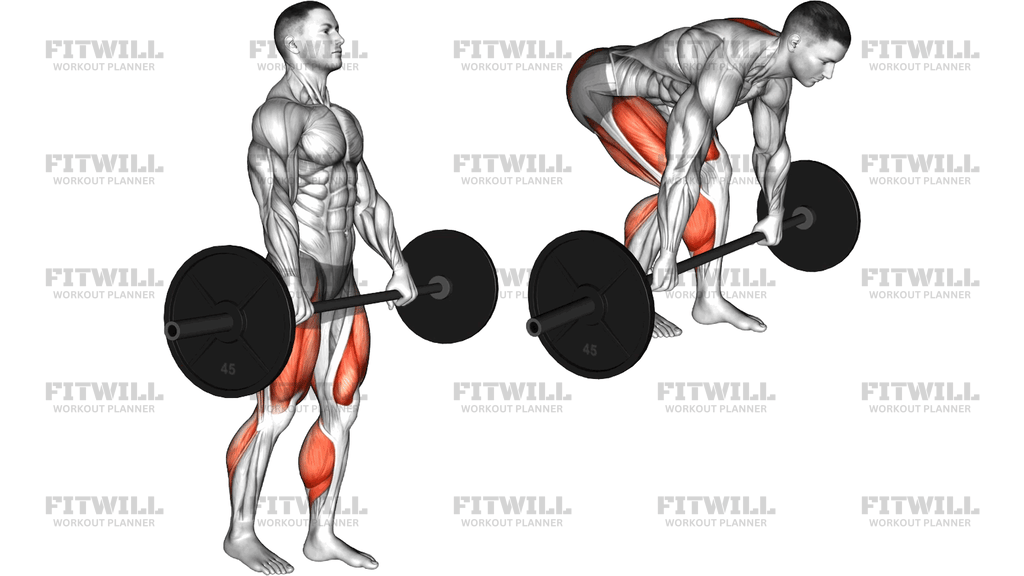
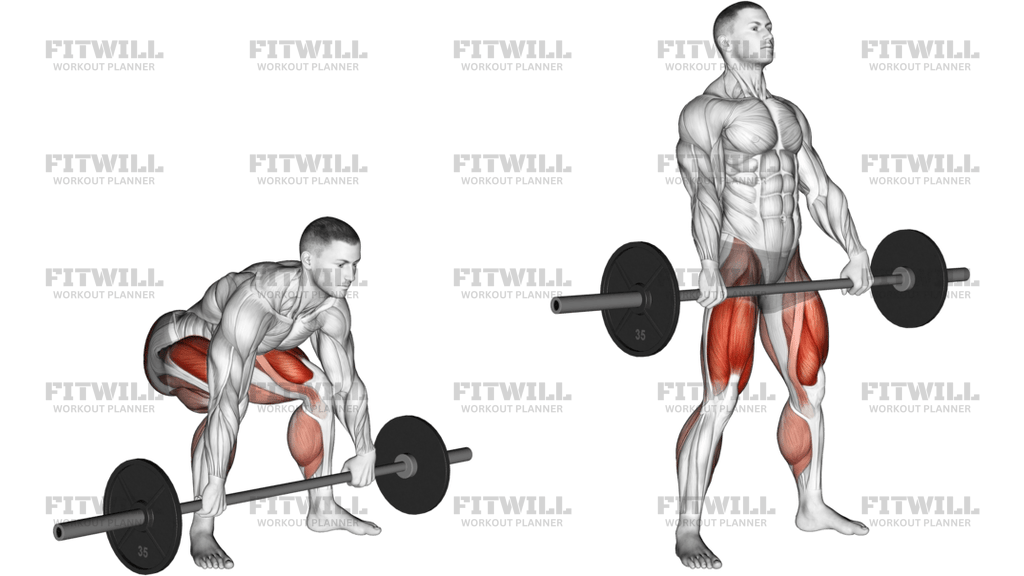
The Barbell Snatch Deadlift is a wide-grip deadlift variation that trains the thighs, glutes, back, and trunk to move a barbell from the floor with tight positions and precise control. It is commonly used to build the start position for the snatch, but it also stands on its own as a strength and positioning drill for lifters who need more leg drive, back strength, and discipline off the floor.
The snatch grip changes the mechanics immediately. Your hands are set wider than a conventional deadlift, which lowers the hips, increases the torso angle, and asks the upper back to stay locked in while the bar stays close to the body. That wider stance and grip make the setup important: if the chest collapses, the bar drifts forward, or the spine rounds early, the movement stops being a clean snatch deadlift and turns into a poor hinge.
Use this exercise when you want to reinforce a strong floor pull without the speed and catch phase of the full snatch. It is especially useful for lifters who need better leg positioning, stronger quads through the first part of the pull, and a more stable back angle under load. The bar should rise smoothly from the floor, pass the knees without swinging away, and finish with the hips and knees extended while the torso stays organized.
Because the grip is wide, the bar usually feels harder to hold and the setup can feel more demanding on the shoulders, upper back, and hips. That is normal. The goal is not to yank the bar up fast; it is to keep pressure through the whole foot, keep the bar against the legs, and stand up with control so the working muscles do the lifting instead of momentum or spinal movement.
Keep the load honest and the reps deliberate. This is a technical strength movement, not a max-effort ego lift. If the plates pull you out of position, shorten the set, reduce the weight, and rebuild the pull with a flatter back, a tighter brace, and a cleaner bar path.
[ Workout Log & Planner ]
Put your next workout in Fitwill
Keep your plan and training log ready when you are.


Instructions
- Stand over the bar with your feet about hip-width apart and your toes slightly turned out.
- Take a snatch-width grip on the bar and set it across the midfoot with the bar close to your shins.
- Hinge at the hips, bend the knees until your shins touch the bar, and flatten your back before lifting.
- Pull your chest up, brace your trunk, and set your shoulders slightly in front of the bar.
- Drive the floor away and keep the bar brushing your shins and thighs as it rises.
- Straighten the knees and hips together until you stand tall with the bar at full lockout.
- Pause briefly at the top without leaning back or shrugging the bar into a different path.
- Lower the bar by hinging back first, then bending the knees once the bar passes them.
- Reset your brace and position before the next rep or end the set by placing the bar back on the floor.
Tips & Tricks
- Set the grip wide enough that your arms stay straight without the plates or collars hitting your thighs.
- Keep the bar over the midfoot at the start so you do not chase it forward when the plates leave the floor.
- If your hips shoot up before the bar moves, lower the start position and take more slack out of the bar before each rep.
- Think about pushing the floor away with the legs on the first pull instead of yanking with the back.
- Keep the lats tight so the bar stays close to the body and does not loop away from the shins.
- Do not finish by leaning back; stand tall by extending the hips and knees together.
- Use straps if grip limits your back and leg work before the target muscles fatigue.
- Pause the set if your lower back starts to round or the bar drifts away from the legs.
Frequently Asked Questions
What muscle does Barbell Snatch Deadlift target most?
It mainly trains the thighs and glutes, with the upper back, lats, and trunk working hard to keep the bar close and the torso stable.
Can beginners perform this exercise?
Yes, if they can hinge well and keep a neutral spine. Start light and learn the wide grip and floor setup before adding load.
How heavy should I train this movement?
Use a load that lets you keep the bar close, the back flat, and the start position identical on every rep. If the grip or torso position breaks down, it is too heavy.
What is a common mistake to avoid?
Letting the hips rise too fast is a common mistake. That turns the lift into a stiff pull with a poor bar path and less leg contribution.
Why is the grip so wide on this deadlift?
The wide snatch grip matches the start position used in the snatch and forces a lower torso angle, stronger upper back tension, and better positioning off the floor.
Should the bar touch my shins and thighs?
Yes, the bar should stay close to the body without swinging away. Light contact on the legs is normal if it does not force you to lose your balance.
Is this the same as a snatch pull?
No. A snatch deadlift is slower and ends at full standing lockout without the explosive extension or shrug of a snatch pull.
What should I do if my shoulders feel limited by the wide grip?
Reduce the load, widen the stance if needed, and work only in a pain-free range. A clean hinge matters more than forcing an extreme grip width.