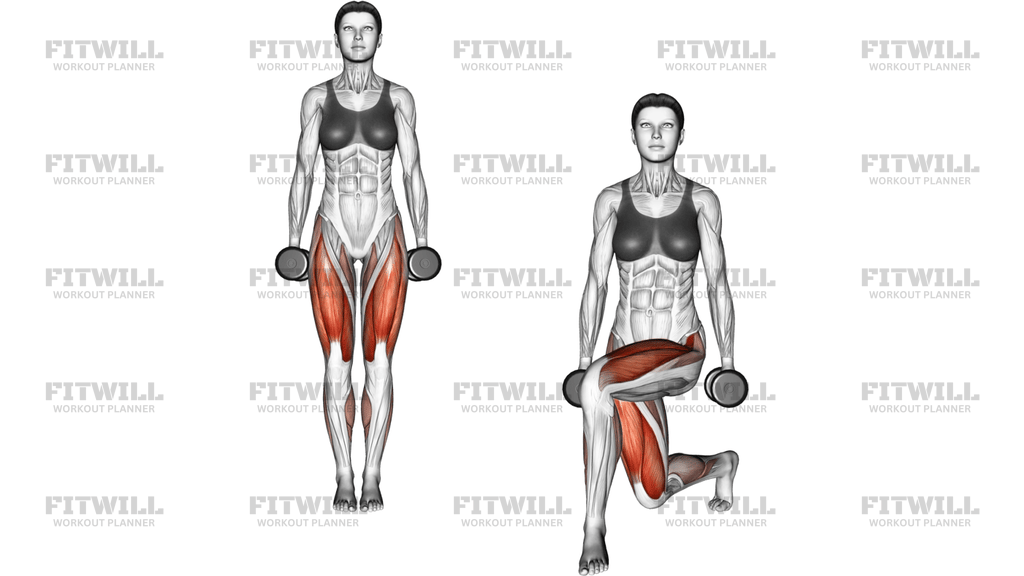
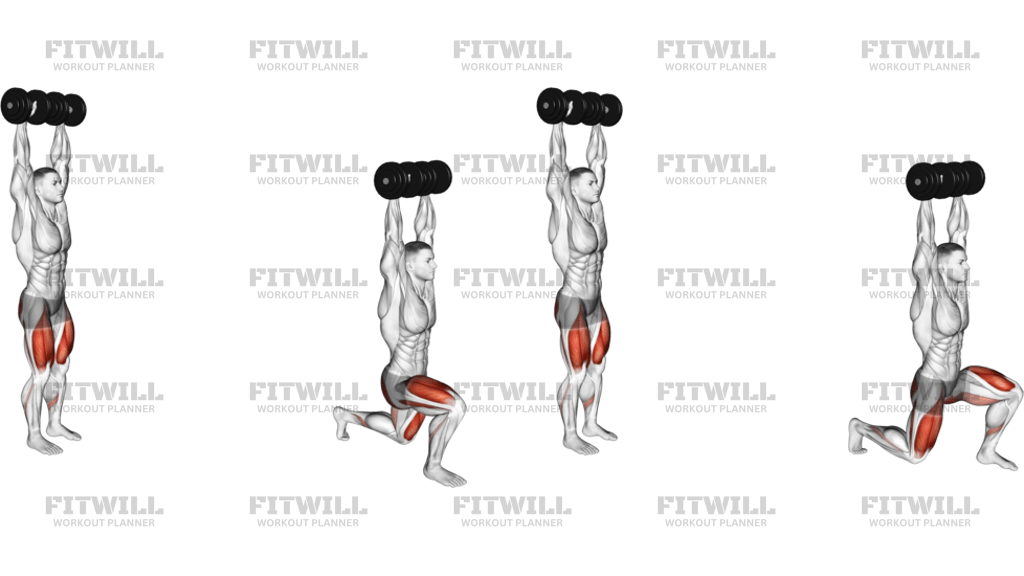
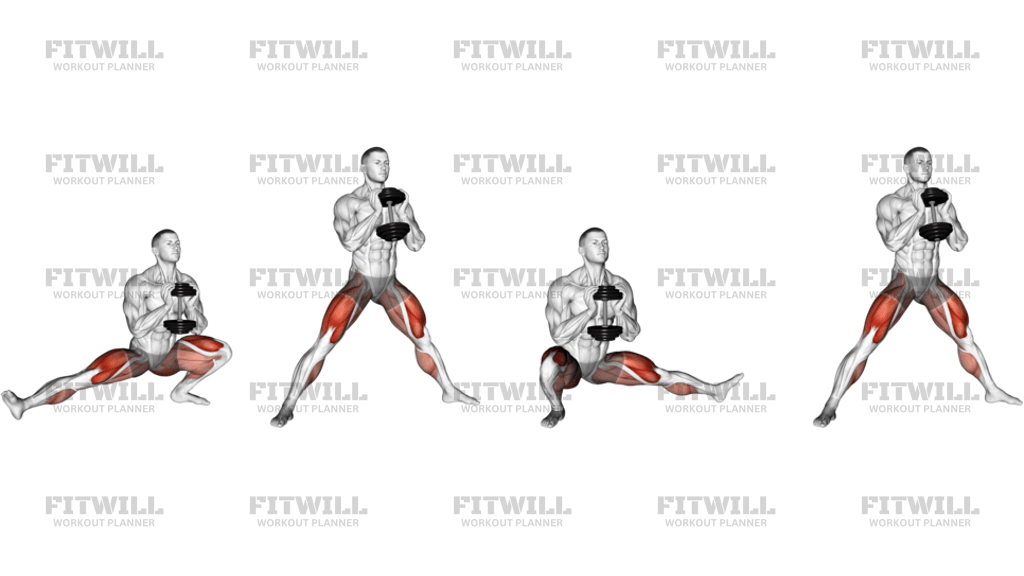
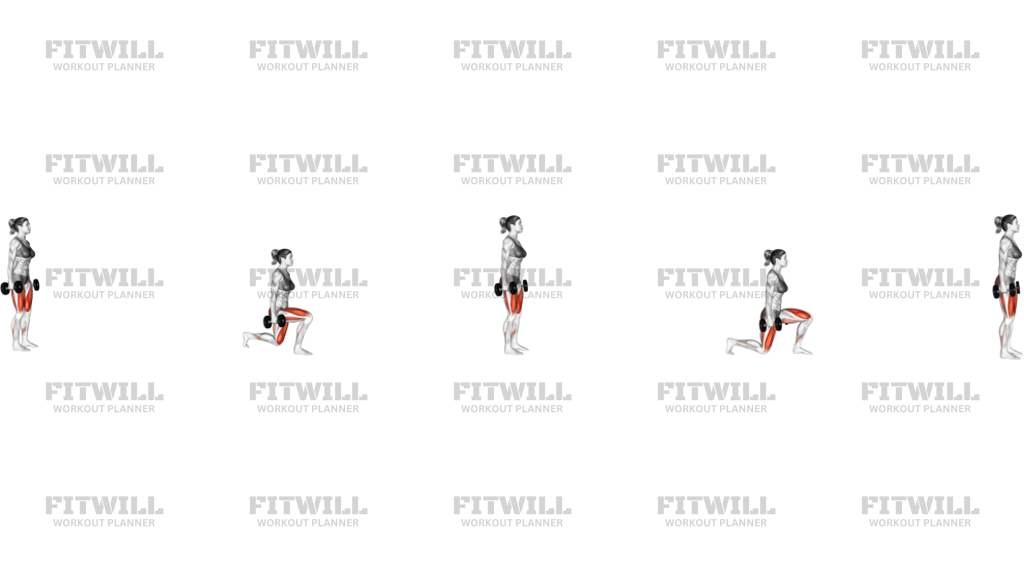
Dumbbell Split Squat Front Foot Elevanted
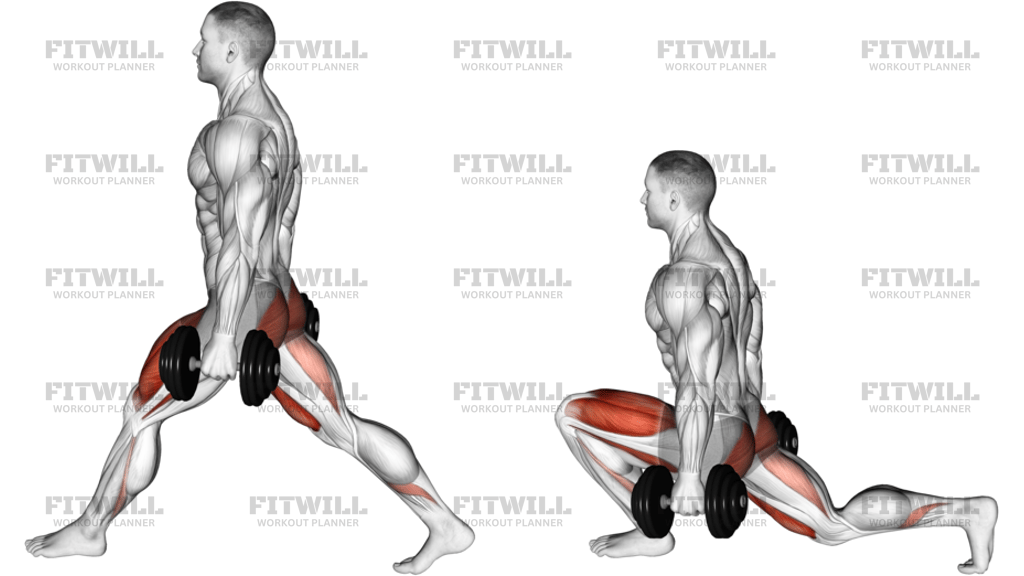
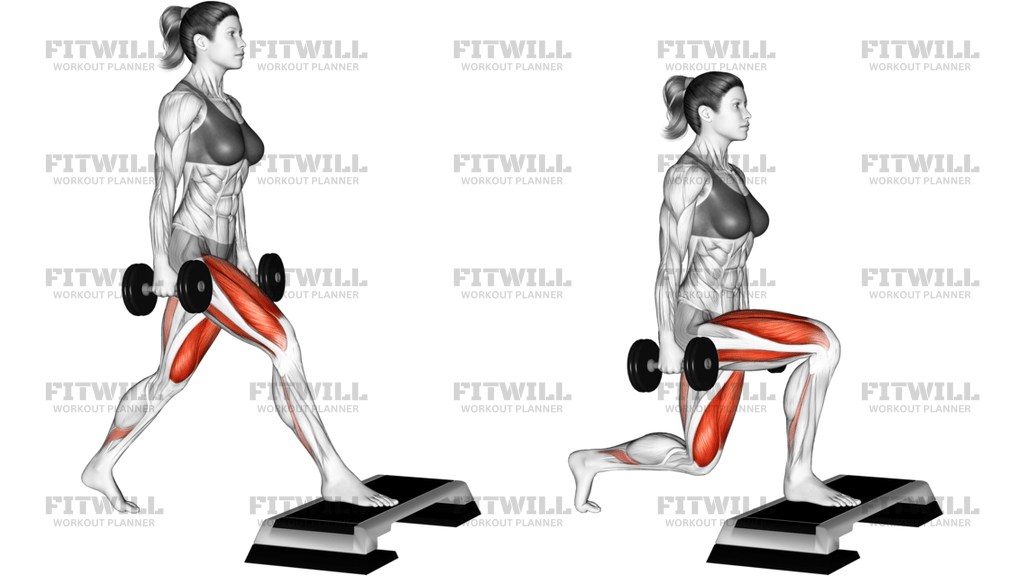
Dumbbell Split Squat Front Foot Elevanted is a unilateral lower-body strength exercise that loads the front leg while the rear leg acts as support and balance. With the front foot raised on a plate or step and dumbbells held at your sides, the movement increases the range of motion at the hip and knee, so the working leg spends more time under tension in the stretched and bottom positions.
This variation is useful when you want a split squat that emphasizes the glutes and thighs without needing a barbell or machine. The elevated front foot changes the angle of the descent, which can make it easier to sit deeper into the front hip while still keeping the torso organized. In practice, the exercise should feel like a controlled squat on one side, not a lunge step or a bouncing stretch.
The setup matters because the front foot has to stay fully planted on the raised surface while the rear leg stays long enough to give you balance. If the stance is too short, the knee can drift too far forward and the hips can feel cramped. If it is too long, you lose the clean bend in the front leg and turn the rep into a shallow balance drill. The best reps keep the front knee tracking in line with the toes, the pelvis level, and the dumbbells quiet at your sides.
Lower yourself with control until the rear knee approaches the floor or the front hip reaches a comfortable deep position, then drive up through the whole front foot. Keep the descent smooth, keep the chest tall enough to avoid collapsing forward, and use the same depth on each rep. This is a strong accessory lift for building unilateral leg strength, improving hip stability, and exposing side-to-side differences in force, balance, and mobility.
Because the raised front foot increases demand on balance and range of motion, choose a load that lets you stay smooth through every rep. If you feel pressure in the front knee or lower back, shorten the stance slightly, reduce the depth, or lower the step height before adding weight. The goal is a repeatable pattern with clear leg drive, not a fast descent or a forced bottom position.
[ Workout Log & Planner ]
Put your next workout in Fitwill
Keep your plan and training log ready when you are.


Instructions
- Place the front foot flat on a low step or plate and stand in a split stance with the rear foot back on the ball of the foot.
- Hold a dumbbell in each hand at your sides with your arms long and your shoulders stacked over your hips.
- Set your front foot far enough forward that you can lower straight down without losing balance or collapsing into the toes.
- Brace your trunk and keep your torso tall with only a slight forward lean from the hips.
- Lower your back knee toward the floor while the front knee bends and tracks in line with the toes.
- Descend under control until the rear knee is close to the floor or the front hip reaches a deep, comfortable position.
- Drive up through the full front foot, especially the midfoot and heel, until the front leg returns to a strong standing position.
- Keep the dumbbells still, exhale as you drive upward, and reset your stance before the next repetition or the next side.
Tips & Tricks
- Use a low front-foot elevation first; a higher step increases the stretch and makes balance much harder.
- Keep the front heel heavy on the platform so the front leg does the work instead of bouncing off the toes.
- Let the rear heel rise naturally and use the rear leg only as a support point, not as a push-off leg.
- Keep the front knee moving in line with the second or third toe to avoid the knee caving inward.
- Hold the dumbbells still at your sides; swinging them usually means the torso is compensating.
- Use a controlled lowering phase of about two to three seconds to keep tension on the working leg.
- Shorten the stance if the pelvis tucks under hard at the bottom or if your lower back arches to find depth.
- Stop a rep short of any sharp knee pain; this variation should feel like a deep leg effort, not a joint pinch.
Frequently Asked Questions
What muscle does Dumbbell Split Squat Front Foot Elevanted target most?
It primarily targets the glutes while also loading the quadriceps and adductors of the front leg.
Can beginners perform this exercise?
Yes, but beginners should start with a very low front-foot elevation and light dumbbells until balance and depth feel consistent.
How high should the front foot be elevated?
Low is usually better. A small plate or short step is enough for most lifters; too much height makes the bottom position unstable.
Should I keep the torso upright or lean forward?
Keep a tall torso with only a slight forward lean from the hips. Excessive folding usually shifts the load away from the front leg.
Why elevate the front foot instead of doing a regular split squat?
The elevation increases the range of motion and deepens the stretch on the working leg, which can make the glutes and thighs work harder.
What is a common mistake with the dumbbells?
Letting the weights swing or pull the shoulders down. Keep them quiet at your sides so the legs, not momentum, drive the rep.
How deep should I go at the bottom?
Go only as deep as you can keep the front foot planted, the pelvis controlled, and the front knee tracking cleanly.
Can I do this if my balance is limited?
Yes, but use a lighter load, a lower elevation, and a stance that lets you descend straight down without wobbling.