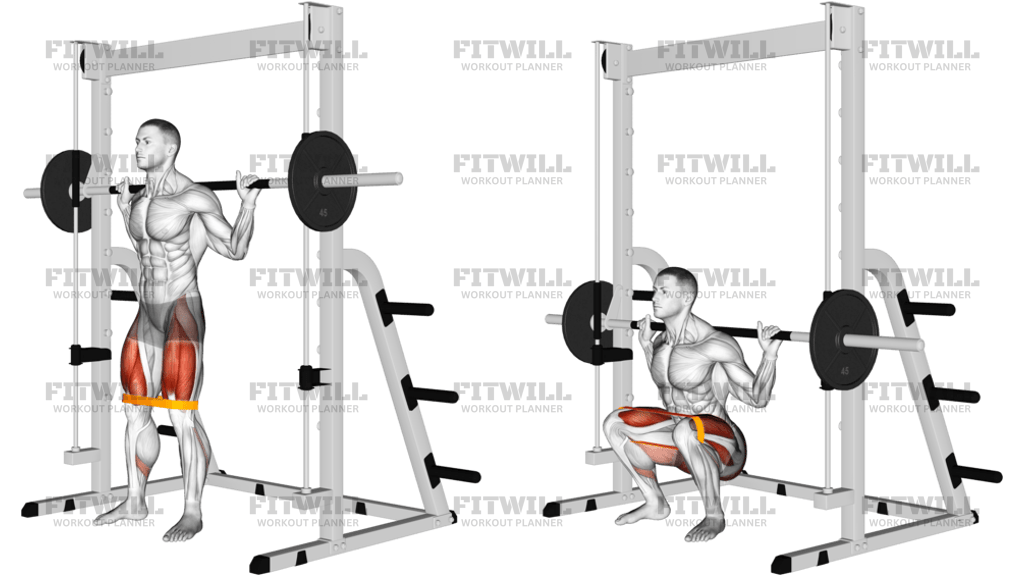
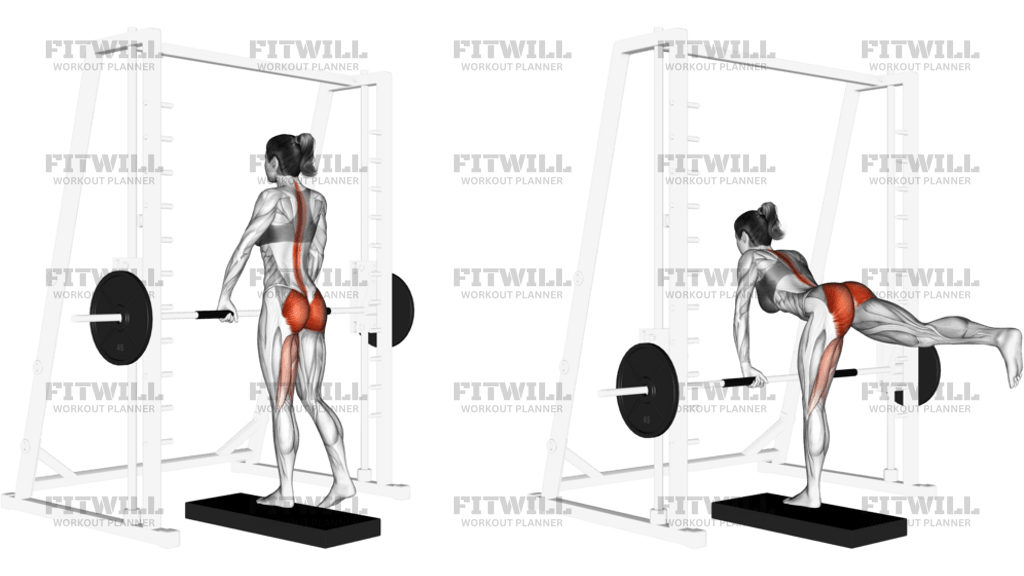
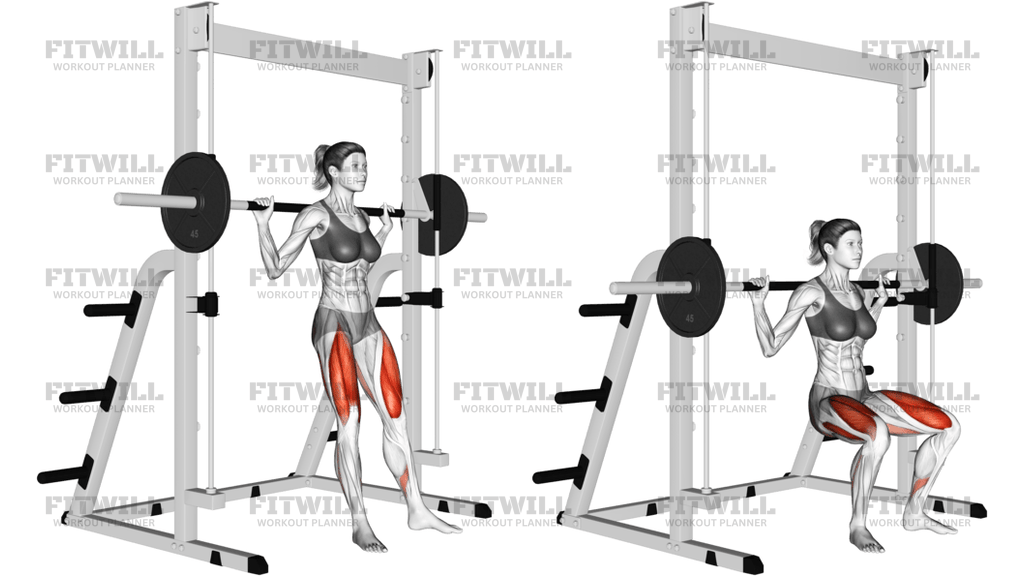
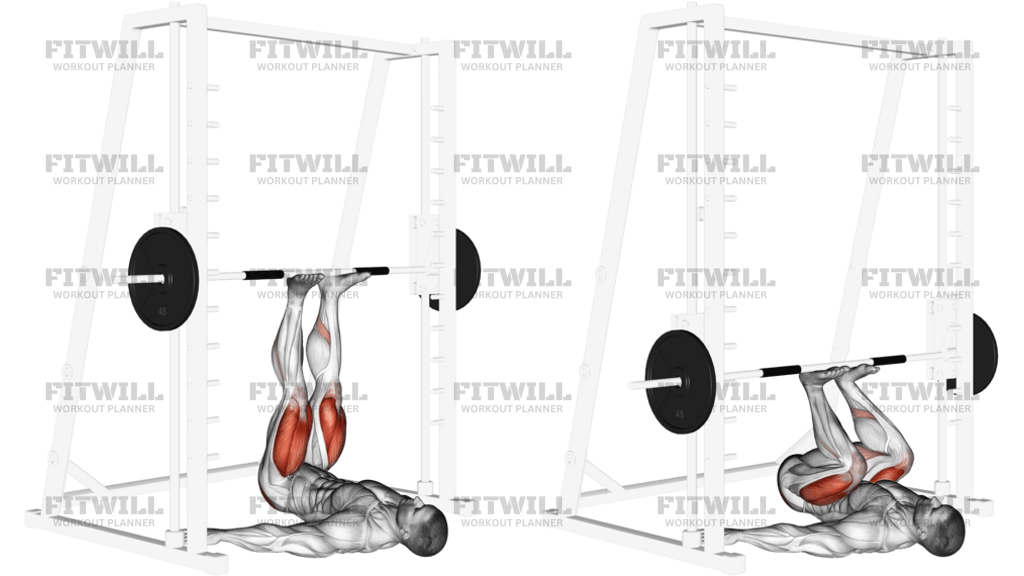
Smith Banded Full Squat
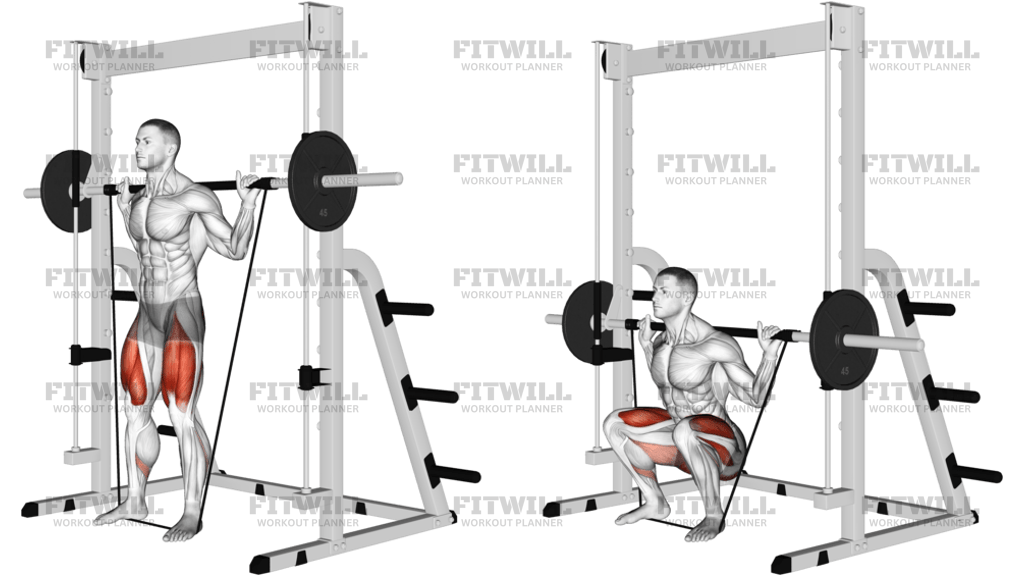
Smith Banded Full Squat is a Smith-machine squat variation that pairs a fixed bar path with band tension so the load rises as you stand up. That makes the bottom of each rep feel more controlled and the top more demanding, which is useful when you want the squat pattern to stay organized while still training hard through a full range of motion.
The movement is built for lower-body strength and hypertrophy work, with the thighs doing most of the work while the glutes and trunk help you stay stacked under the bar. The Smith machine reduces the balance demand of a free squat, but the band still punishes sloppy positioning, so foot placement and torso control matter more than simply moving the weight.
Set the bar across your upper traps or rear delts, then step onto the band and place your feet slightly forward of your torso so the bar can travel straight while you sit down between your hips. Keep your heels planted, your ribs stacked over your pelvis, and your knees tracking in line with your toes. A good rep feels smooth on the way down and deliberate on the way up, without bouncing out of the bottom or drifting onto your toes.
At the bottom, use the deepest range you can control without the lower back tucking hard or the heels lifting. Drive back up through the midfoot and heels, keep pressure even through both feet, and finish each rep with the bar fully settled before you start the next descent. The band should add challenge without throwing you forward or twisting your posture.
This variation fits well in leg-day accessory work, squat-pattern practice, or hypertrophy blocks where you want steady tension and a predictable path. Choose a band and load that let you keep the same stance, depth, and breathing pattern on every rep. If the setup forces you to lean, shorten the stance, reduce the band tension, or use less load until the squat stays clean and repeatable.
[ Workout Log & Planner ]
Put your next workout in Fitwill
Keep your plan and training log ready when you are.


Instructions
- Set the Smith bar across your upper traps or rear delts at a height you can unrack without rising onto your toes.
- Step onto the band with both feet and position your stance slightly forward of the bar so the track stays balanced over midfoot.
- Grip the bar just outside shoulder width, stack your ribs over your pelvis, and brace before you lift it out of the hooks.
- Unrack the bar by straightening your legs, then take a small step or two to lock in your squat stance.
- Inhale and sit down between your hips, letting your knees track over your toes while your heels stay planted.
- Lower until you reach the deepest controlled depth you can manage without the pelvis tucking or the chest collapsing.
- Drive up through midfoot and heels, keeping tension on the band as you stand and pushing the floor apart with your feet.
- Exhale near the top, re-stabilize under the bar, and repeat for the planned reps before racking the weight.
Tips & Tricks
- If the Smith path feels like it is pulling you forward, move your feet a little farther in front of the bar before adding more weight.
- Keep the band centered and even on both sides so one leg does not get a different line of pull than the other.
- Do not let the bar drift into your hands; the hands guide the bar, but the upper back should carry the load.
- A controlled descent matters here because the band gets most demanding near the top, not the bottom.
- Keep your heels heavy and your toes planted so the band does not turn the squat into a forward lean.
- Use a depth that you can own without the lower back rounding at the bottom.
- If your knees cave inward, lighten the load and think about spreading the floor apart as you stand.
- Stop the set when the bar path shifts or you start losing pressure through one foot.
Frequently Asked Questions
What makes Smith Banded Full Squat different from a regular Smith squat?
The band adds more resistance as you stand up, so the top half of the rep becomes harder than the bottom half.
Where should the Smith bar sit for this exercise?
It should rest across your upper traps or rear delts, just like a standard Smith squat setup.
How should my feet be placed under the machine?
They are usually slightly forward of the bar path so you can sit down and stand up without being pushed onto your toes.
How deep should I go in the squat?
Go as deep as you can while keeping your heels down, your chest stacked, and your lower back from tucking hard.
What muscles should I feel working most?
The thighs should do most of the work, with the glutes and trunk helping you stay stable under the band and bar.
Is this a good exercise for beginners?
Yes, if they start with a light band and a manageable load. The Smith track can make the squat easier to learn, as long as the stance stays comfortable.
What is the most common form mistake?
Most problems come from standing too far forward, bouncing out of the bottom, or losing pressure through the heels.
How do I progress this squat over time?
Increase the load or band tension only after you can keep the same depth, bar path, and foot pressure on every rep.