Band Single Leg Calf Raise
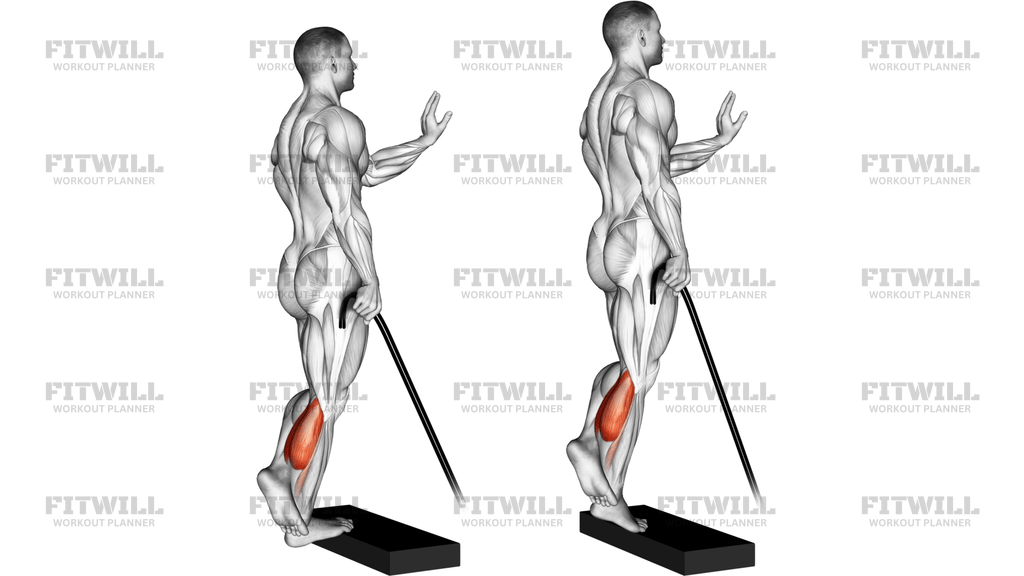
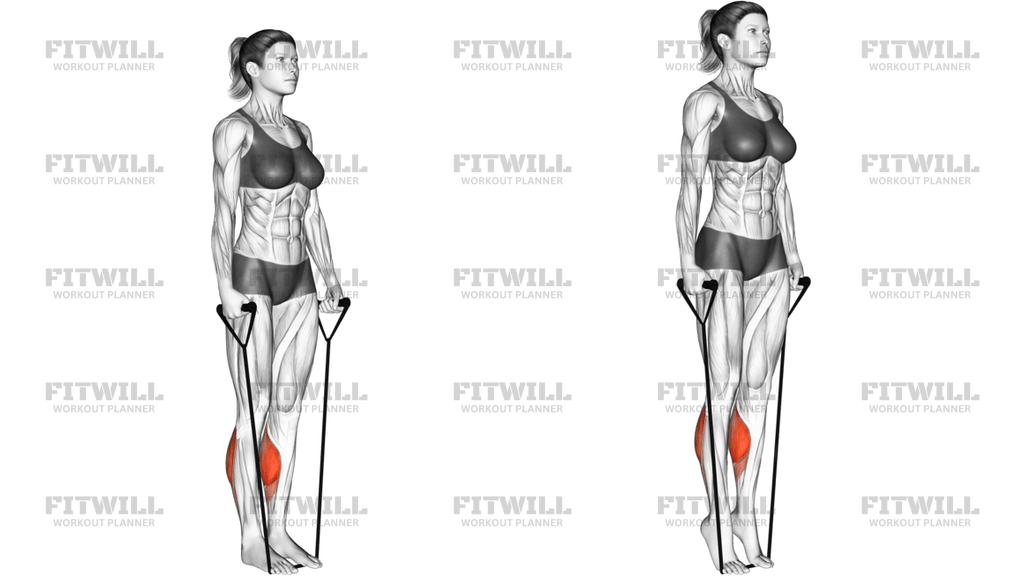
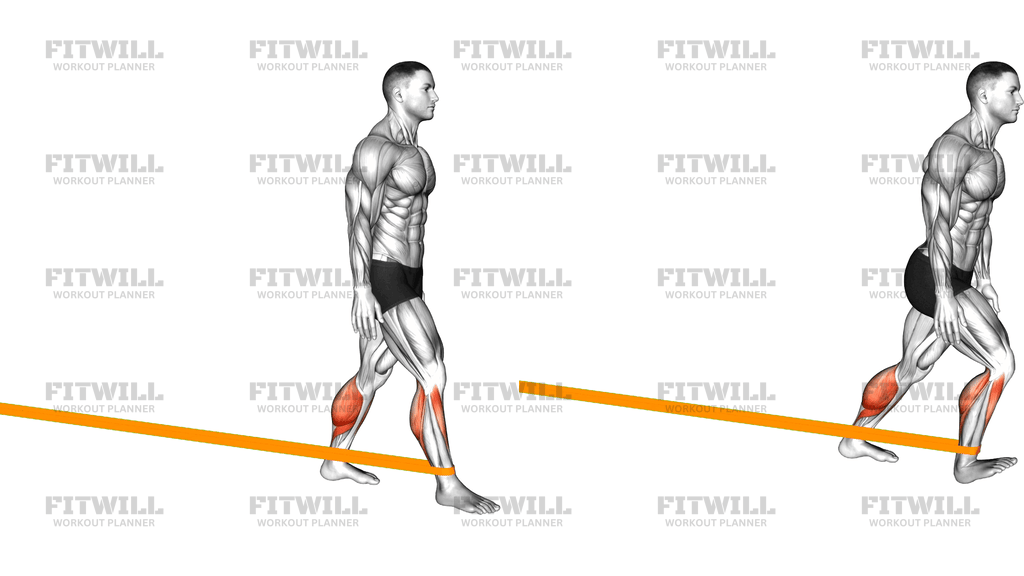
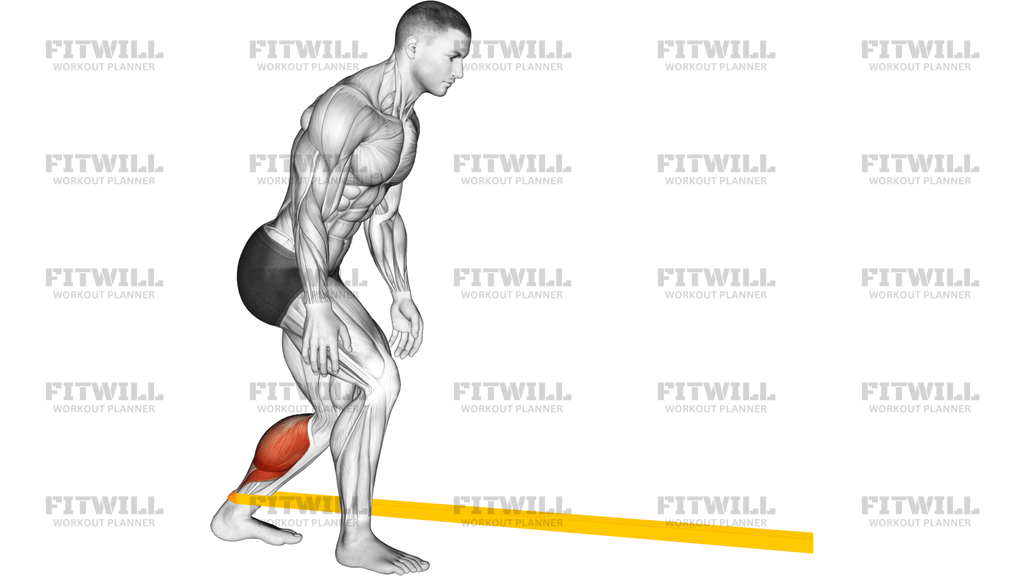
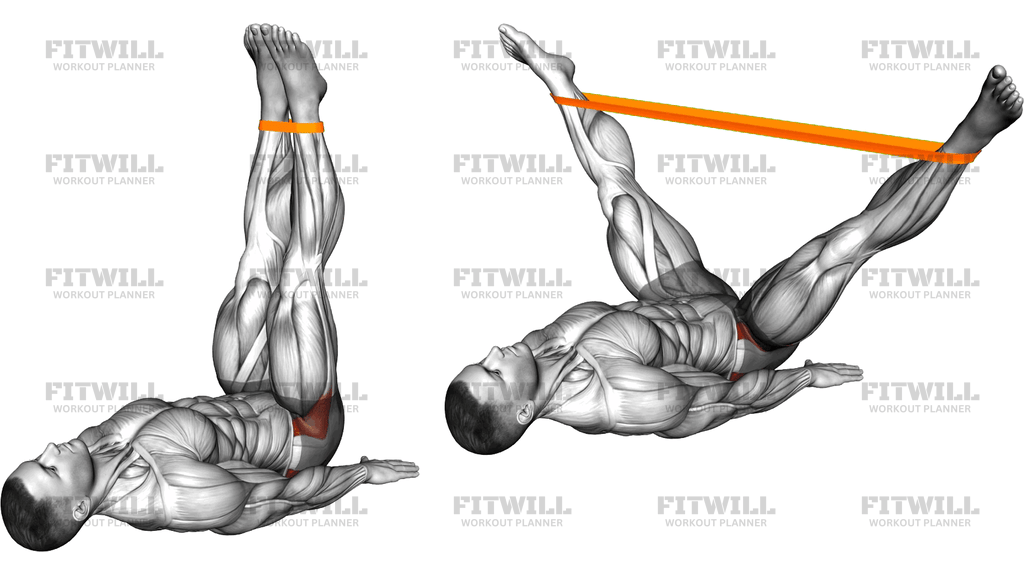
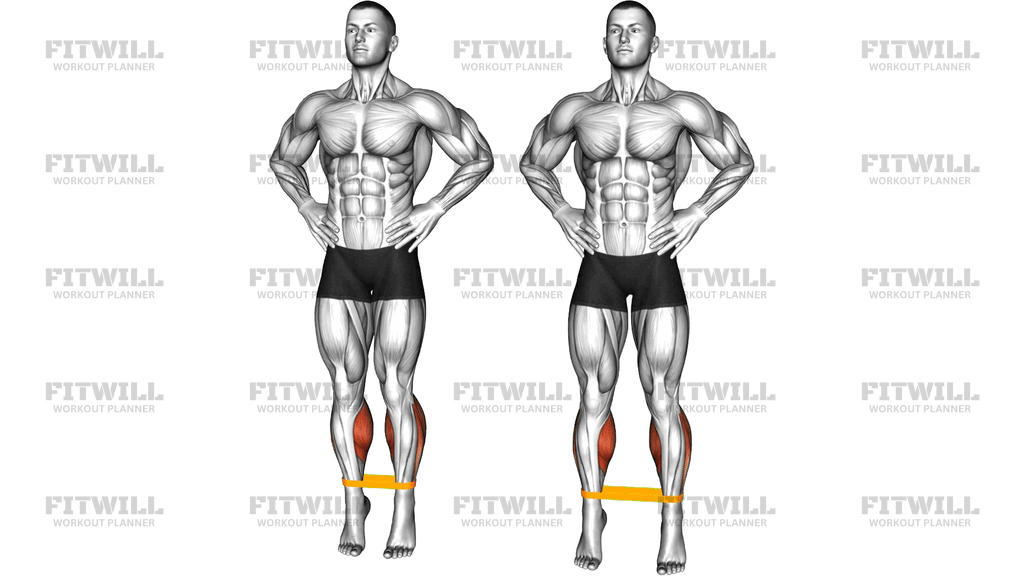
Band Single Leg Calf Raise is a single-leg ankle strength exercise that trains the calf through a full raise and lower while also demanding balance and foot control. In the image, the working foot is set on the edge of a step or block so the heel can travel below the toes, and the band is held in the same-side hand to add resistance while the torso stays tall. That setup matters: a stable forefoot, a quiet torso, and a clean vertical heel path keep the work on the calf instead of turning the rep into a hop or a body swing.
The exercise is especially useful when you want one side to work at a time. Single-leg loading exposes differences in calf strength, ankle stiffness, and control that can be hidden in two-leg calf raises. The long lower position also gives the calf a stronger stretch, which makes the bottom of the rep important instead of just the top squeeze. If the foot is planted badly, the heel path becomes sloppy and the band tension is wasted.
Start by standing on one foot with the ball of the foot on the step and the heel free to drop below the surface. Keep a small bend in the working knee, brace the trunk, and hold the band steady so you can focus on a straight up-and-down ankle action. As you rise, drive through the big toe and second toe, finish tall over the ankle, and avoid rolling to the outside of the foot. On the way down, lower slowly until you feel a clear calf stretch, then repeat with the same rhythm and breathing.
This variation fits accessory work, calf hypertrophy blocks, warmups, and sports prep because it is simple to load but still precise enough to reveal poor mechanics. It is also a good option for athletes who need stronger push-off, landing stiffness, or ankle resilience. Keep the rep pain-free, control the descent, and stop the set when the heel starts bouncing, the arch collapses, or the torso starts helping the movement.
[ Workout Log & Planner ]
Put your next workout in Fitwill
Keep your plan and training log ready when you are.


Instructions
- Stand on a step or block with the ball of one foot on the edge and the heel free to drop below the surface.
- Hold the band in the same-side hand and let the other arm float slightly away from the body for balance.
- Set a small bend in the working knee, then brace your torso and keep your hips level.
- Lower the heel slowly until you feel a clear stretch through the calf.
- Press through the big toe and second toe to rise straight up onto the ball of the foot.
- Finish tall at the top without rolling onto the outside of the foot or bouncing.
- Pause briefly, then lower under control back to the bottom position.
- Repeat for the planned reps, then step down carefully before switching sides.
Tips & Tricks
- Use a step height that lets the heel drop below the forefoot without losing balance.
- Keep the ankle stacked over the toes; if the foot wobbles, lighten the band or slow the tempo.
- Drive straight up instead of shifting the hip or torso forward to help the rep.
- Think about pushing through the big toe, not just pointing the toes.
- If the calf cramps, shorten the range slightly and hold the top position for a beat.
- Keep the non-working leg relaxed and off the floor so it does not steal load.
- Make the lowering phase at least as slow as the lifting phase.
- Stop the set when the heel starts bouncing or the arch collapses inward.
Frequently Asked Questions
What muscle does Band Single Leg Calf Raise target most?
The calves are the main target, especially when you keep the heel path straight and the rep strict.
Why is the foot placed on a step or block?
The raised surface lets the heel drop below the forefoot, which gives the calf a fuller stretch and a cleaner range of motion.
Where should the band go during the setup?
In the image, the band is held in the same-side hand while the working foot stays planted on the step. Keep enough tension to feel resistance without pulling you off balance.
Can beginners do this version?
Yes, but start with a low step and light band tension so you can control the full bottom stretch and the top finish.
What is the most common form mistake?
Letting the heel bounce or the arch collapse inward. Both usually mean the set is too fast or the load is too heavy.
How can I make the calf work harder without adding more weight?
Use a slower lowering phase, a brief pause in the stretched position, and a harder squeeze at the top instead of bouncing through reps.
What if I cannot keep my balance on one leg?
Reduce the step height, keep the free hand near a support, and focus on a controlled rep before adding more tension.
What training goal does this exercise fit best?
It works well for calf hypertrophy, ankle strength, and sports prep because it combines single-leg loading with a full stretch and finish.