Resistance Band Foot Plantar Flexion
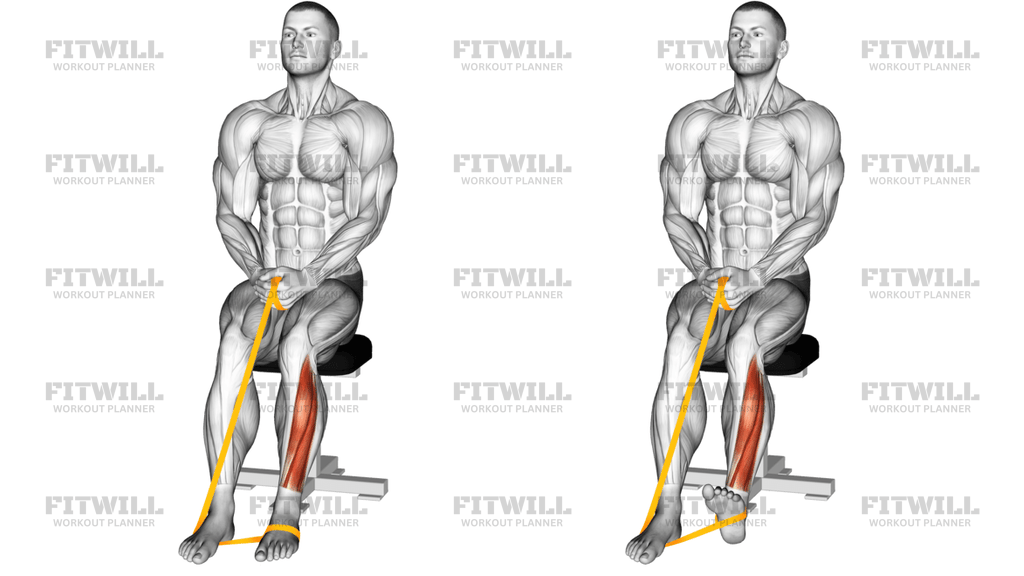
Resistance Band Foot Plantar Flexion is a seated lower-leg isolation exercise that asks the ankle to point the foot downward against band tension. The movement is small, but it is useful for building calf control, foot strength, and cleaner ankle mechanics when you want focused work without a heavy machine or standing load. It is especially helpful for athletes, runners, and anyone who needs direct calf training with a simple setup.
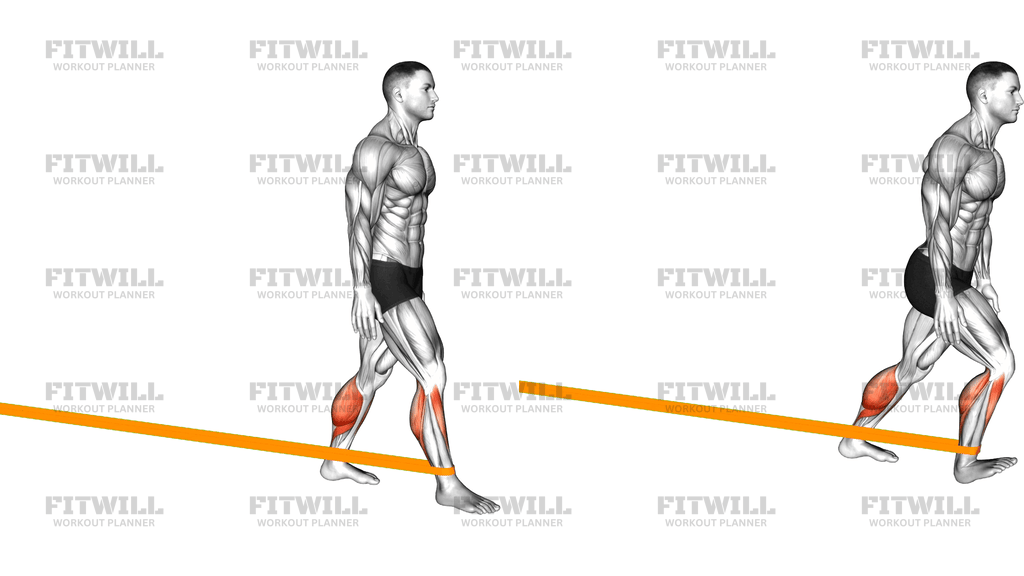
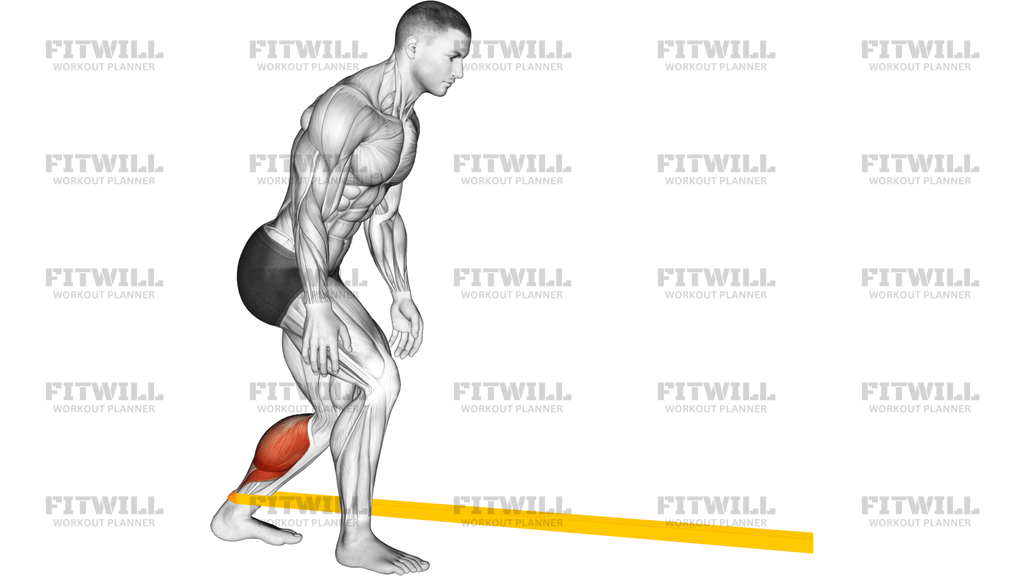
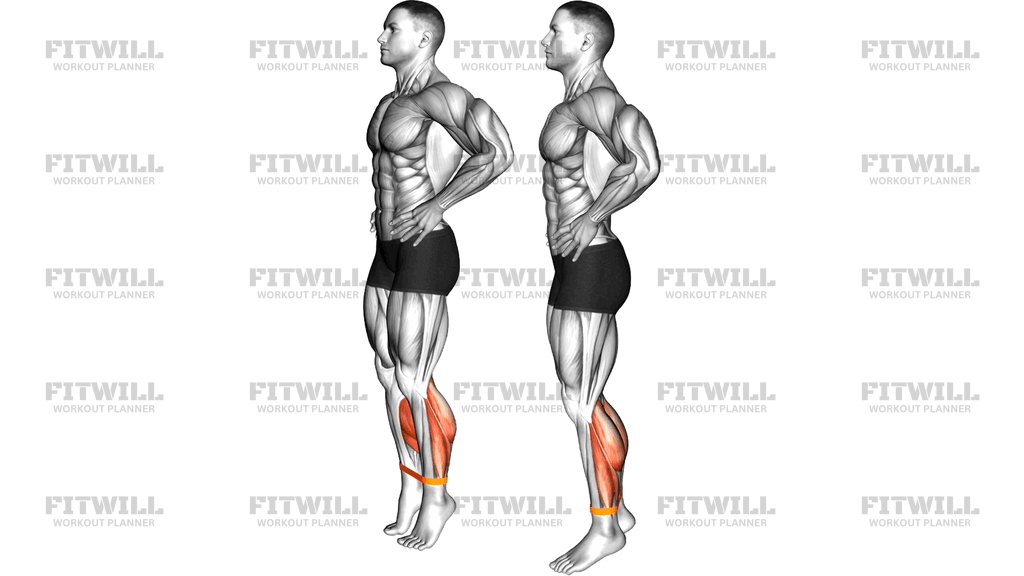
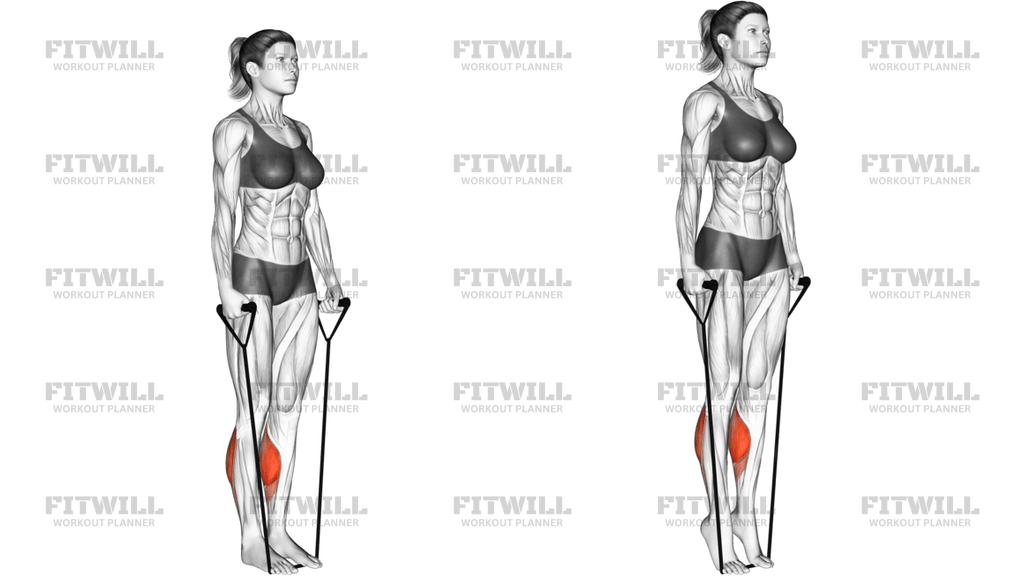
The seated position keeps the rest of the body quiet so the calves can do the work. In the image, one leg is extended while the other foot stays grounded for balance, and the band runs from the working foot to the hands so the resistance stays consistent through the rep. That setup matters because a sloppy anchor or a bent torso can turn the drill into a tug-of-war instead of a controlled ankle motion.
A good rep starts with the band snug around the forefoot and enough tension that the ankle has to work from the first inch of movement. From there, press the ball of the foot forward and point the toes away from the shin, finishing with a hard squeeze through the calf and a long line from knee to toes. Lower slowly back into dorsiflexion until the front of the ankle opens up again, keeping the heel and forefoot aligned so the foot does not roll outward.
This exercise is a practical accessory on lower-body days, warmups, or rehab-style sessions when you want calf volume without spinal loading. It usually fits best in moderate to higher reps because the resistance band creates a smooth but relatively light load, and the small range rewards patience more than brute force. The goal is not to whip the foot back and forth; it is to keep tension steady while the ankle moves cleanly from stretch to contraction.
Use it when you want better control at the ankle, stronger push-off mechanics, or a low-skill calf drill that still demands precision. It can be paired with standing calf work, tibialis raises, or foot intrinsic exercises for a more complete lower-leg routine. If the toes cramp, the ankle twists, or the band starts sliding across the foot, reduce the tension and clean up the setup before continuing.
[ Workout Log & Planner ]
Put your next workout in Fitwill
Keep your plan and training log ready when you are.


Instructions
- Sit tall on a bench with one leg extended in front of you and the other foot planted lightly for balance.
- Loop the resistance band around the ball of the working foot and hold the band ends in both hands near your lap so the band stays taut.
- Keep the working knee mostly straight but not locked, and square your hips so the foot points straight ahead.
- Start with the toes pulled slightly back toward the shin so the ankle has room to move into plantar flexion.
- Press the ball of the foot forward and point the toes away from you until the calf contracts hard.
- Pause briefly at the top without letting the ankle roll inward or outward.
- Lower the foot slowly until the toes come back toward the shin and the calf lengthens under control.
- Keep your torso upright and breathe out as you press down, then inhale as you return to the start.
- Finish the set by easing the band tension and switching sides before you stand up.
Tips & Tricks
- Keep the band line centered on the forefoot so the pressure stays on the ball of the foot instead of the toes.
- If the band feels loose at the start, move your hands closer to your thigh to create pre-tension before the first rep.
- Use a mostly straight knee to keep the calf under useful tension instead of turning the drill into a bent-knee ankle wiggle.
- Press through the big-toe side of the foot as well as the little-toe side so the ankle does not drift outward.
- Lowering should be slower than lifting; the return phase is where many people lose the calf tension.
- If your toes cramp, shorten the range and hold the band a little lower so the foot is not fighting excess slack.
- Keep the planted leg relaxed so you do not drive the movement with your hips or torso.
- Choose a lighter band if you cannot fully point the foot without jerking the knee or pulling the shoulders forward.
Frequently Asked Questions
What muscle does Resistance Band Foot Plantar Flexion target most?
It mainly targets the calves, especially the gastrocnemius and soleus as the ankle points the foot downward.
Where should the resistance band sit on my foot?
Place it around the ball of the foot or across the forefoot so the band stays on the driving surface, not the toes.
Should my knee be straight during Resistance Band Foot Plantar Flexion?
Keep it mostly straight with a soft unlock. That keeps the calf working through a cleaner ankle line without locking the joint hard.
Why does the band keep sliding off my foot?
Usually the band is too high on the toes or the tension is too loose at the start. Reposition it on the forefoot and create pre-tension before you begin.
Is this exercise good for beginners?
Yes. The seated setup and light band resistance make it easy to learn, as long as you keep the ankle motion controlled.
What should I feel at the top of the rep?
A strong calf squeeze and a pointed foot, with the ankle fully extended but not cranked through the toes.
How many reps should I use for this banded calf drill?
Moderate to higher reps work best, often around 12 to 25, because the band creates smooth but relatively light resistance.
Can I use this instead of standing calf raises?
It is a good accessory or warm-up, but it will not replace heavier standing calf work if your main goal is size or strength.