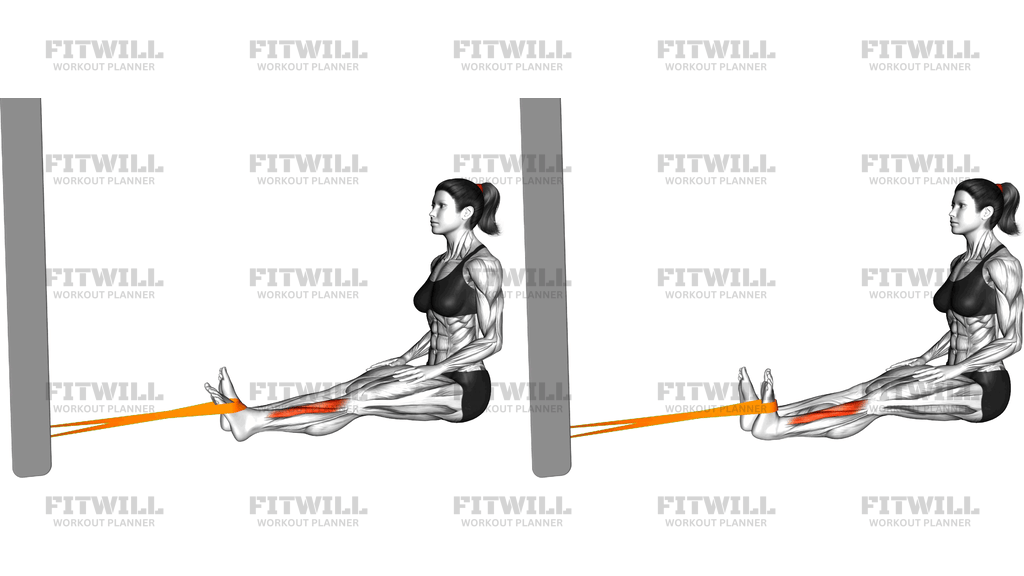
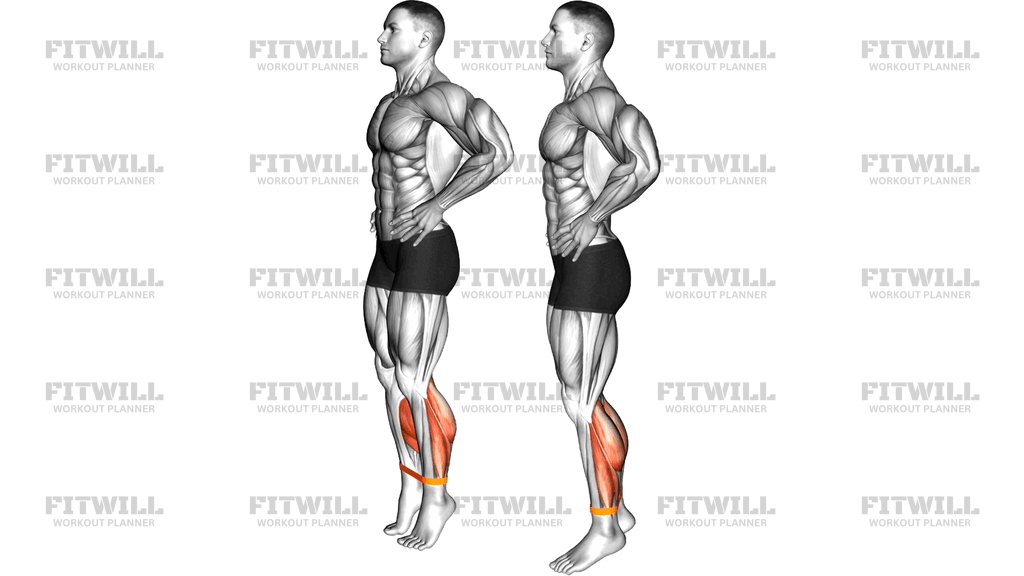
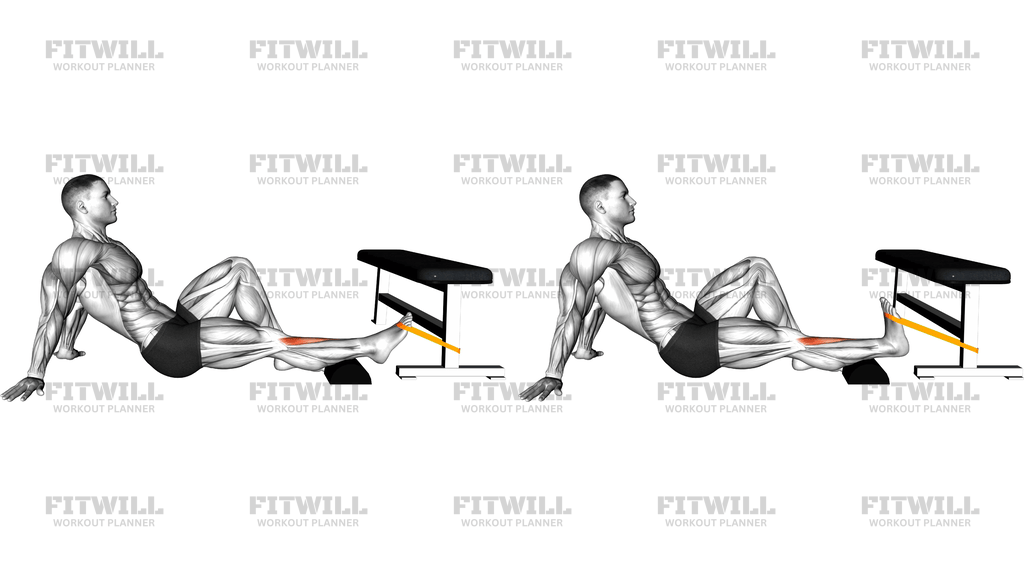
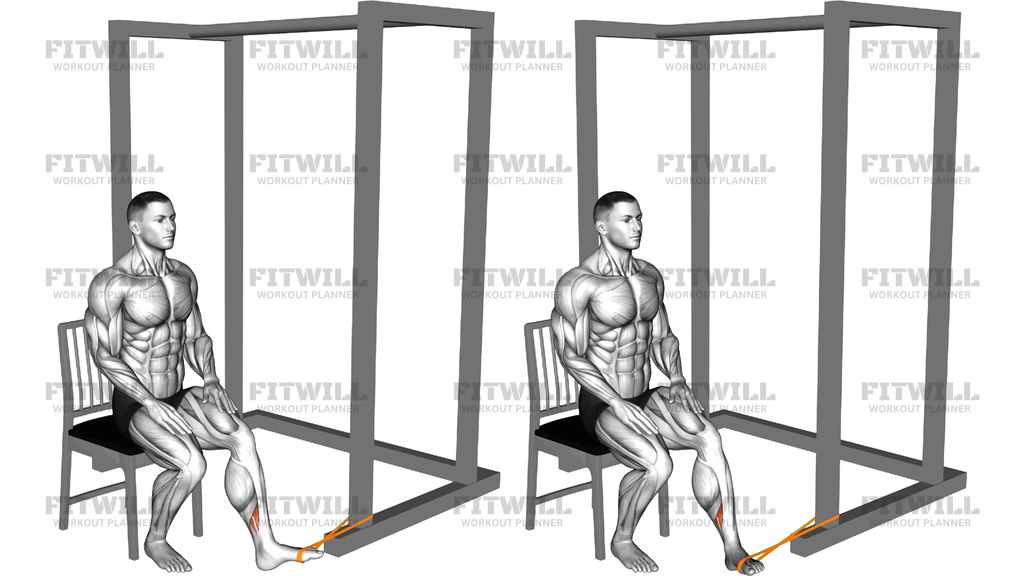
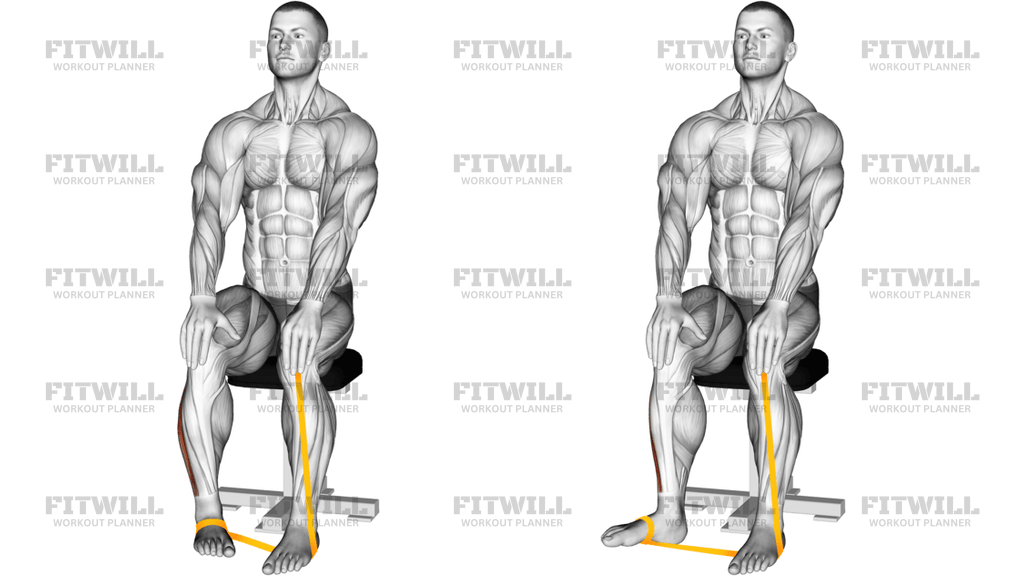
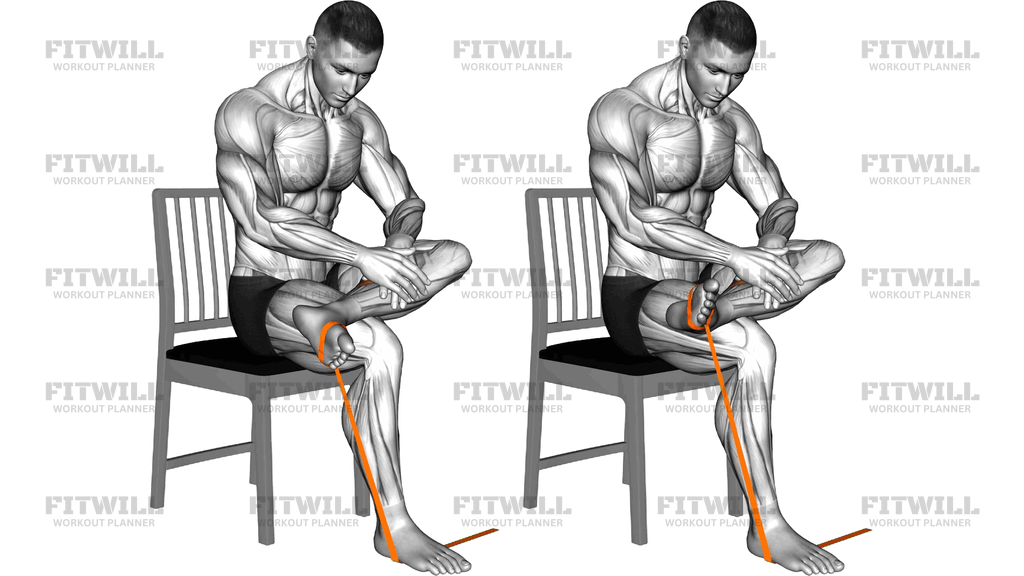
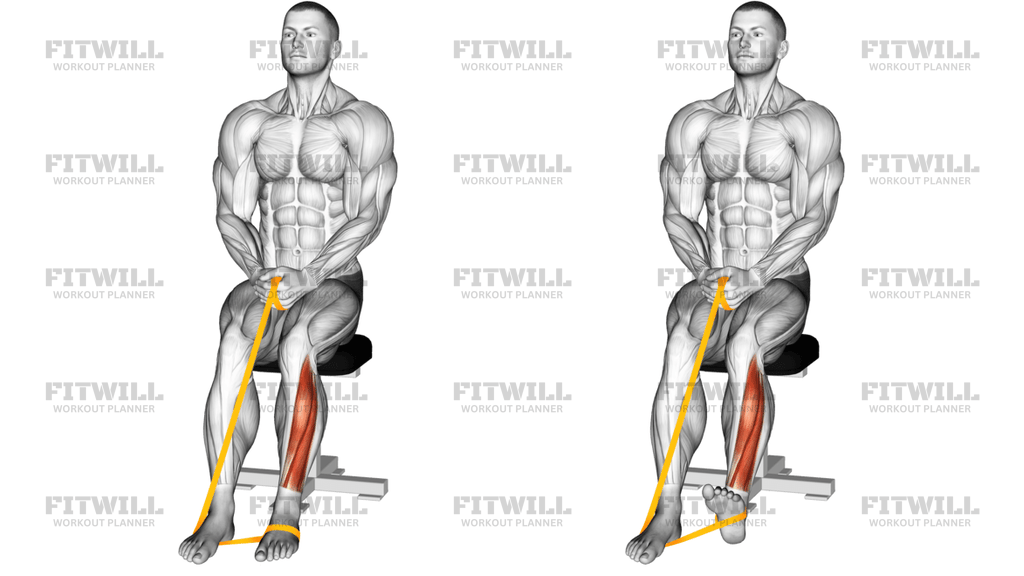
Resistance Band Seated Calf Stretch
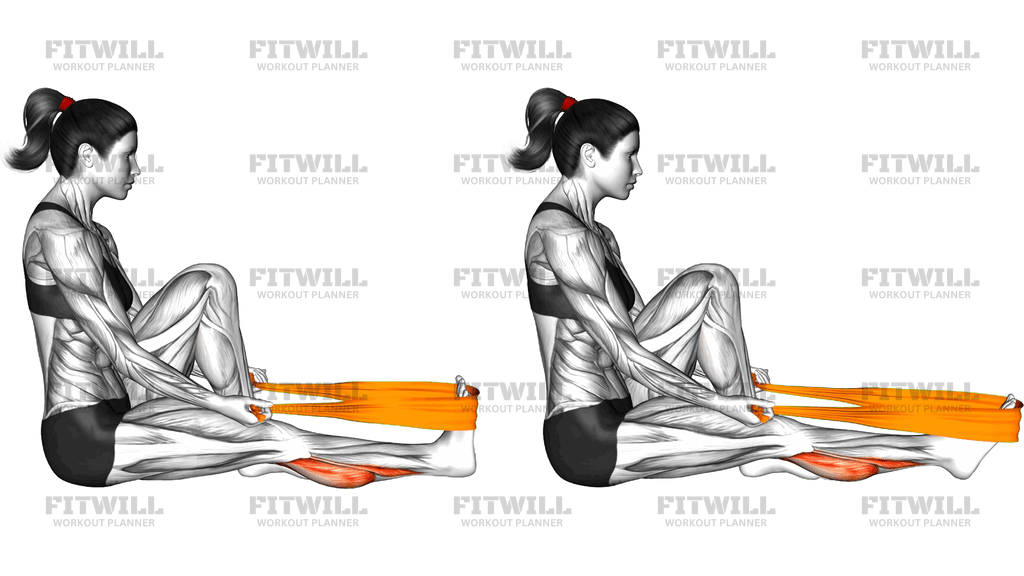
Resistance Band Seated Calf Stretch is a seated flexibility drill for the lower leg. With one leg extended on the floor or mat, the band is looped around the ball of the foot so you can gently pull the toes back toward the shin. That setup lets you control the stretch instead of yanking on the foot, which makes it easier to keep the heel heavy and the ankle in a clean line.
The main stretch target is the calf complex, especially the gastrocnemius when the knee stays straight. Because the leg is supported on the floor, this variation is useful after running, jumping, calf training, or any session where the ankles feel tight. It is also a practical choice for people who need a low-intensity stretch that can be dosed carefully and repeated on both sides.
Position matters here. A straight knee, flexed ankle, tall torso, and quiet hips keep the stretch where you want it: through the back of the lower leg rather than the low back or hamstrings. If the toes are pulled inward, the ankle twists and the calf stretch becomes less consistent. The band should stay centered on the forefoot so the pull comes straight back toward you.
Use slow breaths and a measured hold at end range. The goal is a strong but comfortable stretch, not a forced range. Ease into the position, pause when the calf tension is noticeable, then back out under control. Because this is a stretching exercise rather than a strength lift, the win is repeatable positions, steady breathing, and no bouncing or jerking at the ankle.
[ Workout Log & Planner ]
Put your next workout in Fitwill
Keep your plan and training log ready when you are.


Instructions
- Sit on the mat with one leg extended straight in front of you and the other leg bent and relaxed to the side or tucked in comfortably.
- Loop the resistance band around the ball of the extended foot and hold both ends in your hands with the band centered across the forefoot.
- Keep the heel of the stretched leg on the floor or mat, and lengthen the knee so the leg stays as straight as you can without locking it aggressively.
- Sit tall through the spine and square the hips so the working leg stays pointed straight ahead.
- Pull the band toward you until the toes come back toward the shin and you feel a clear stretch along the back of the calf.
- Pause in the stretched position and breathe slowly, keeping the ankle pulled back without letting the foot twist inward or outward.
- Release the tension gradually and let the foot return toward neutral under control.
- Repeat for the desired hold time, then switch to the other leg and match the same setup and stretch depth.
Tips & Tricks
- Keep the band on the ball of the foot, not around the toes, so the pull stays comfortable and even across the forefoot.
- If the calf stretch disappears, check that the heel is still heavy and the knee is not drifting into a bent position.
- A straight knee biases the gastrocnemius more; a small knee bend shifts some of the work toward the deeper soleus.
- Do not curl the shoulders or round the lower back to fake a bigger stretch in the leg.
- Pull the band straight back rather than diagonally across the body so the ankle does not twist.
- Hold the end range long enough to feel the calf relax, but stop before the stretch turns sharp or electric.
- Use a mat or folded towel under the calf if the heel or calf is sensitive on hard flooring.
- For a stronger stretch, draw the toes back a little farther instead of yanking harder on the band.
Frequently Asked Questions
What does the Resistance Band Seated Calf Stretch target?
It mainly targets the calf complex, especially the gastrocnemius with the knee kept straight.
Why use a resistance band instead of just reaching for the foot?
The band gives you a cleaner line of pull and makes it easier to control how much ankle dorsiflexion you take.
Should the knee stay straight or bend during this stretch?
Keep the knee mostly straight if you want the stretch to stay focused on the upper calf. A small bend shifts more emphasis toward the deeper calf.
Where should the band sit on the foot?
It should sit across the ball of the foot or mid-forefoot, not down on the toes where it can slip or pinch.
What should I feel during the stretch?
You should feel a firm, controlled pull through the back of the lower leg, not sharp pain in the Achilles or ankle.
Can beginners do this exercise?
Yes. Start with a mild pull, a relaxed breathing pattern, and a short hold so you can learn the position without forcing it.
What is the most common setup mistake?
People often let the ankle twist or the heel lift, which moves the stretch away from the calf and makes it harder to control.
When is this stretch useful?
It works well after running, calf training, jumping, or any session where the lower legs feel tight and compressed.