Band Single Leg Reverse Calf Raise
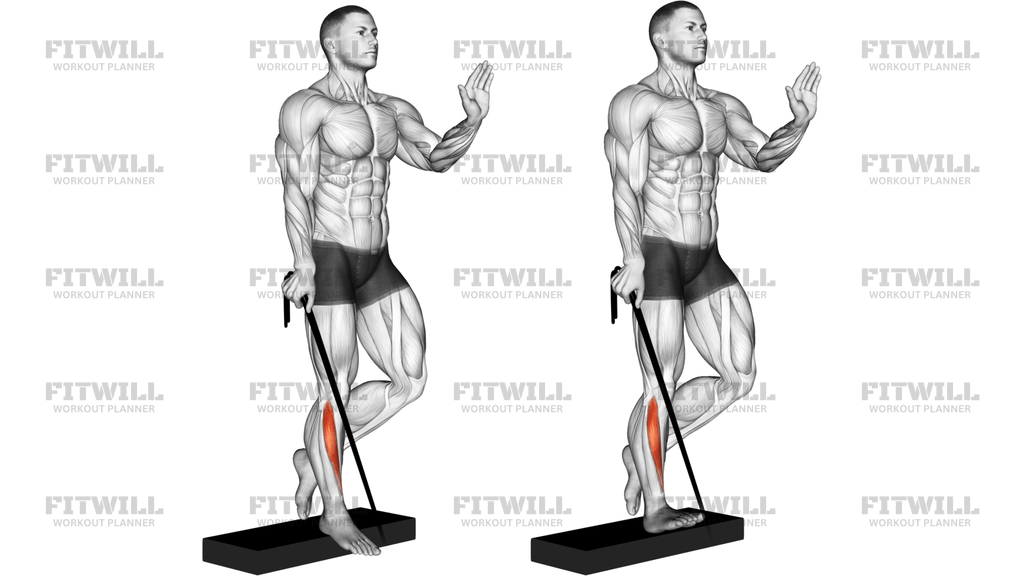
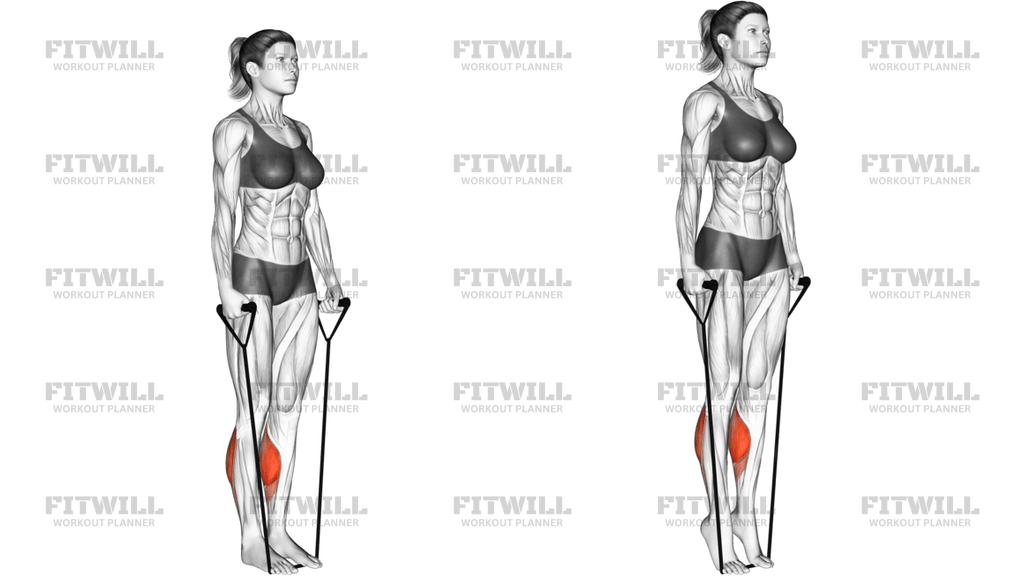
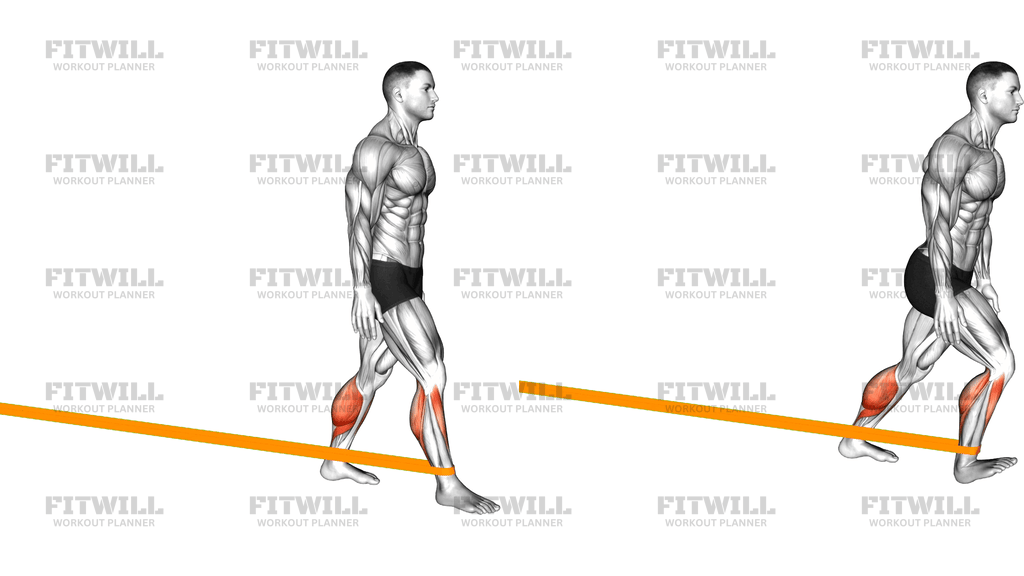
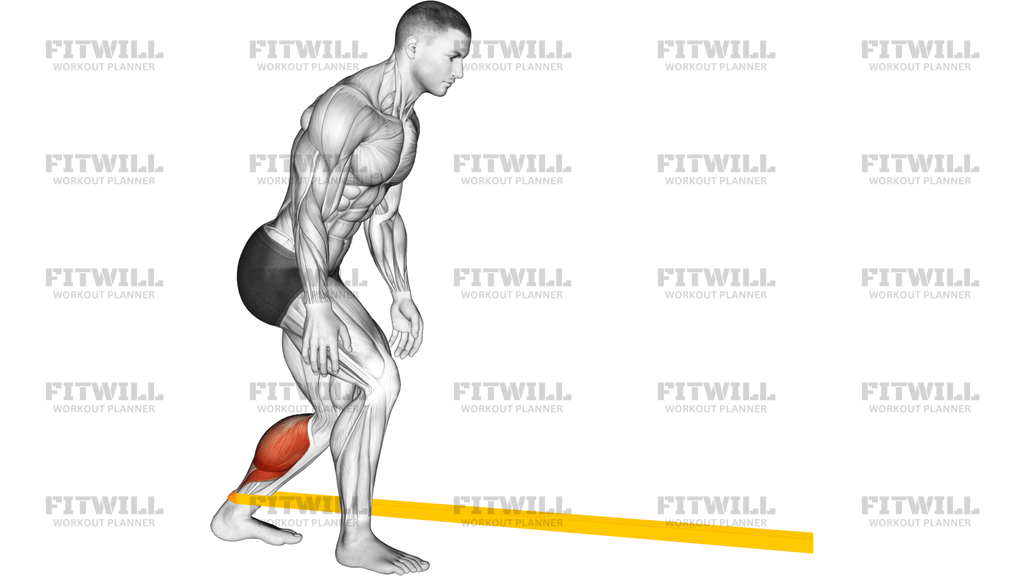
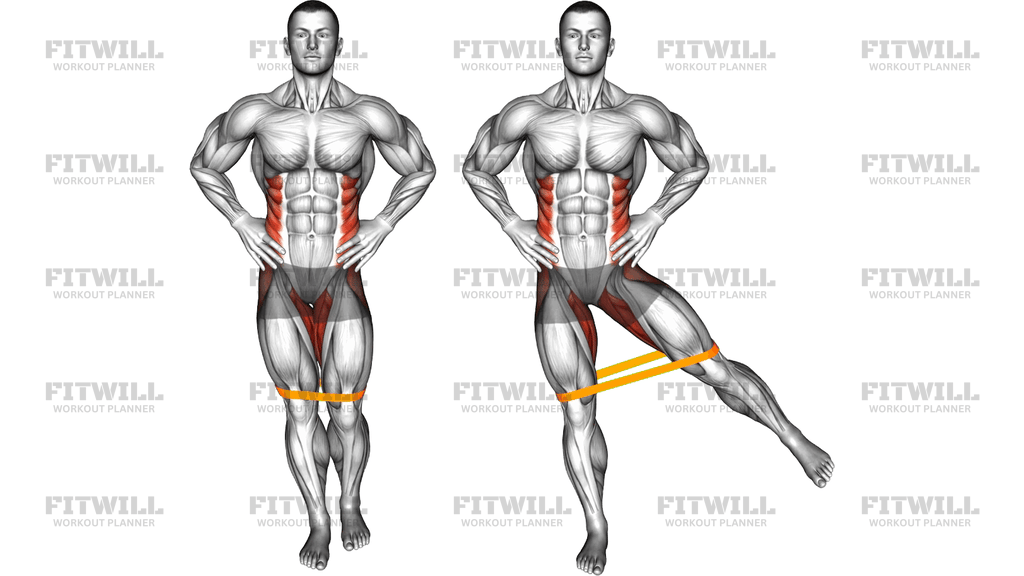
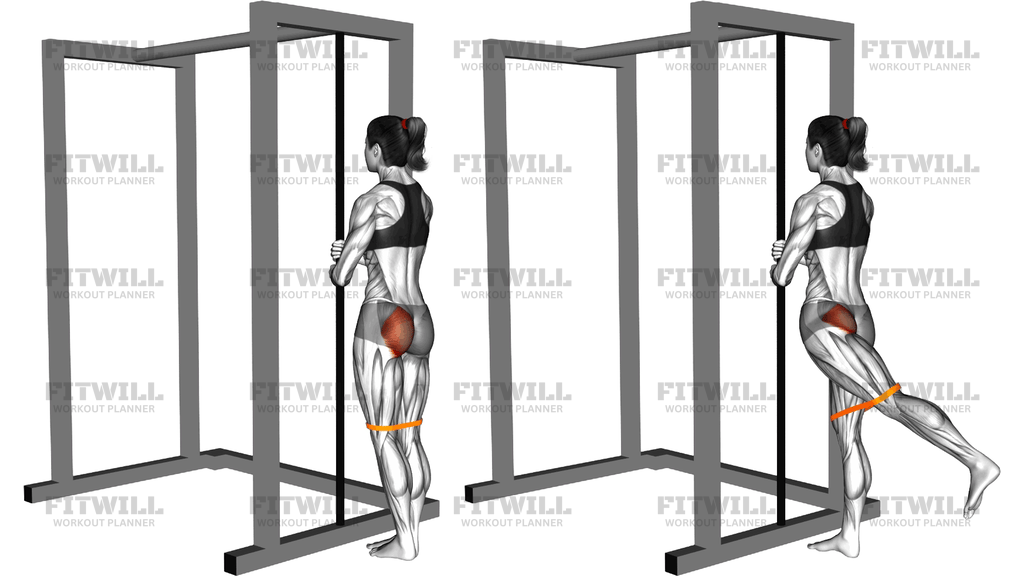
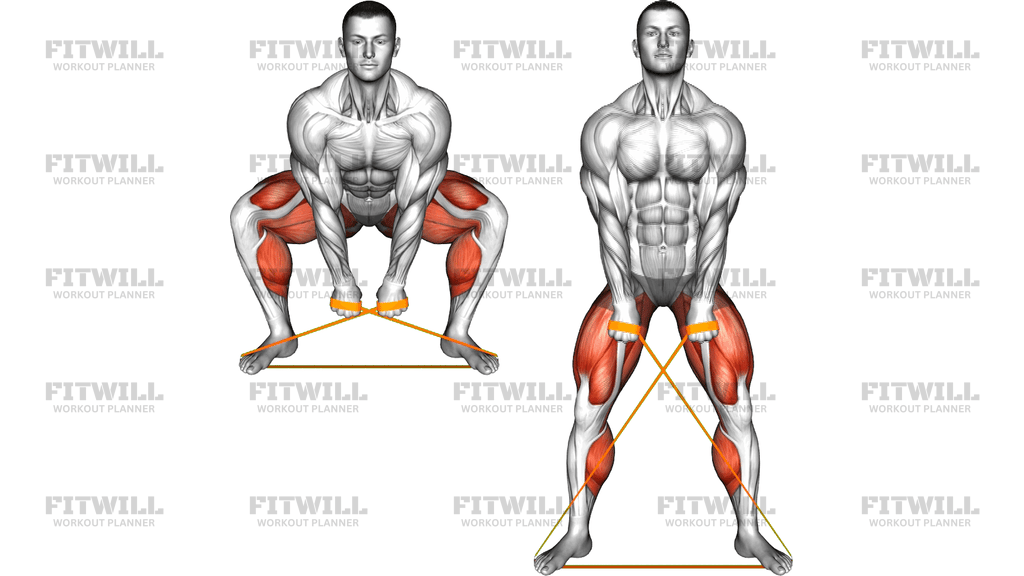
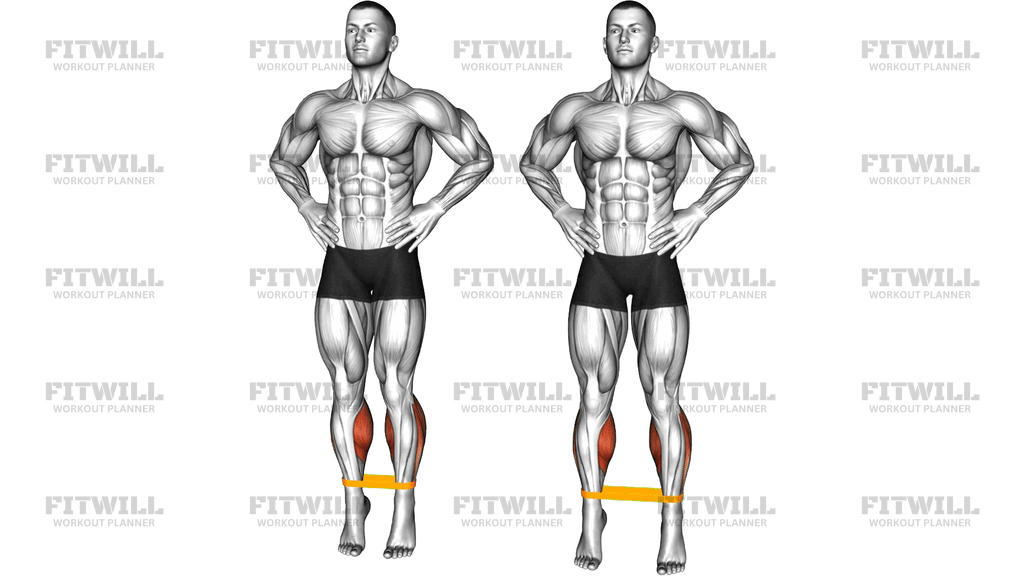
Band Single Leg Reverse Calf Raise is a single-leg lower-leg drill that uses a band to load ankle motion while you balance on one foot. In the image, the working foot is placed on a raised surface and the band runs low and forward from the foot to the hand, which lets the exercise challenge the ankle without needing a machine. The goal is not to bounce through a big range, but to make each rep deliberate enough that the foot, ankle, knee, and hips stay stacked.
This movement places the main demand on the lower leg and ankle control, especially the muscles that lift the forefoot and stabilize the shin as the body stays tall. The standing leg also has to organize the foot arch, knee, and hip so the body does not drift sideways. That is why the exercise is useful for ankle strength, lower-leg endurance, and balance work in the same pattern.
The setup matters because the working heel and forefoot need a predictable base before the band starts pulling. Stand on the edge of a step or block with the working foot secure, keep the other leg out of the way, and hold the band so it stays lightly tensioned from the start. A small bend in the knee is fine, but the torso should stay upright and the pelvis should remain level so the ankle does the work instead of the hip swaying.
During the rep, pull the forefoot and toes upward toward the shin against the band, then lower slowly until you are back to the starting position. The lift should feel clean and controlled, with no twisting through the knee or rocking through the torso. A brief pause at the top helps reinforce the contraction and makes the return phase more honest.
Use this exercise as a warm-up, accessory movement, or lower-leg conditioning drill when you want focused ankle work with minimal equipment. It is especially useful when you want to improve foot control, balance on one leg, or tolerance for repeated lower-leg loading. Keep the motion pain-free and smooth, and stop the set if the foot collapses inward, the knee starts swinging, or the band tension forces you to cheat the rep.
[ Workout Log & Planner ]
Put your next workout in Fitwill
Keep your plan and training log ready when you are.


Instructions
- Stand on a step or block with one foot secure near the edge and the other leg lifted clear of the floor.
- Place the band under the working foot and hold the free end in the same-side hand so the band stays lightly tensioned.
- Keep your torso tall, ribs stacked over the pelvis, and your standing knee soft but steady.
- Start with the forefoot relaxed and the heel supported on the step.
- Pull the toes and forefoot up toward the shin against the band.
- Pause briefly at the top without leaning back or swinging the knee.
- Lower the forefoot slowly until you reach the start position again.
- Repeat for the planned reps, then step off the platform under control.
Tips & Tricks
- Set the step height so your heel can move freely, but not so high that you lose balance on the working foot.
- Hold the band just tight enough to feel tension at the start; if it slackens completely, the first part of the rep will be sloppy.
- Think about lifting the toes straight up instead of pulling the whole leg back.
- Keep the knee tracking over the second toe so the ankle, not the hip, creates the movement.
- Use a slow lowering phase; the eccentric portion is where the band reverse calf raise usually becomes useful.
- If the arch collapses or the ankle rolls outward, reduce the band tension and clean up the foot position.
- Let the free hand help with balance, but do not use it to yank the body upright.
- Breathe out as you lift the forefoot and inhale as you lower it back down.
Frequently Asked Questions
What does the band single leg reverse calf raise train?
It primarily trains the lower-leg muscles that lift and control the forefoot, while the standing foot and hip stabilize the body.
Why is it done on one leg?
Single-leg work makes the ankle, foot arch, and hip stabilize without the other side sharing the load.
Where should the band sit on my foot?
It should stay under the working foot or forefoot so the band pulls in the same line shown in the setup image, without sliding across the toes.
Should my knee move during the rep?
The knee should stay softly bent and mostly quiet; the motion should come from the ankle lifting the forefoot.
Is this a calf raise or a shin exercise?
It is a reverse calf raise, so the emphasis is on the lower leg and ankle control rather than a traditional heel-raising calf raise.
Can I hold onto something for balance?
Yes. A light balance touch is fine as long as you are not using the support to drive the rep.
What is the biggest form mistake?
The most common mistake is swinging the torso or knee to get the foot up instead of lifting through the ankle.
How do I make it harder without changing the exercise?
Use more band tension, a slower lowering phase, or a short pause at the top while keeping the same single-leg setup.