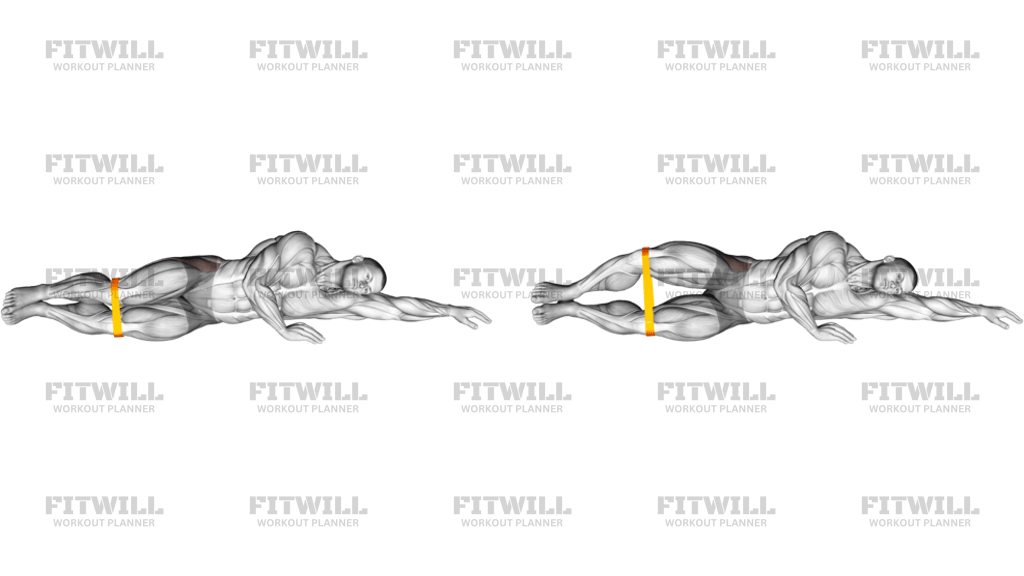
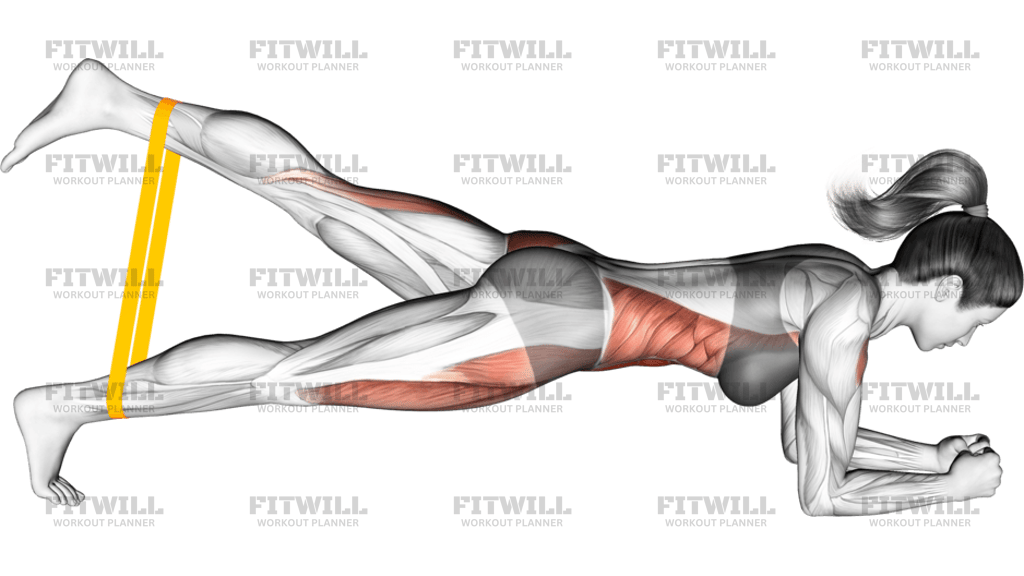
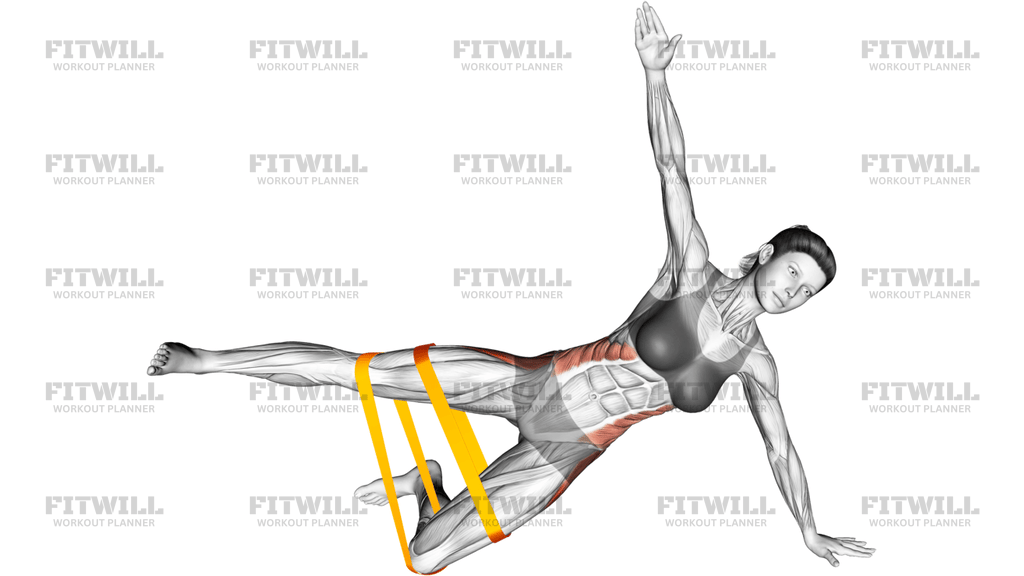
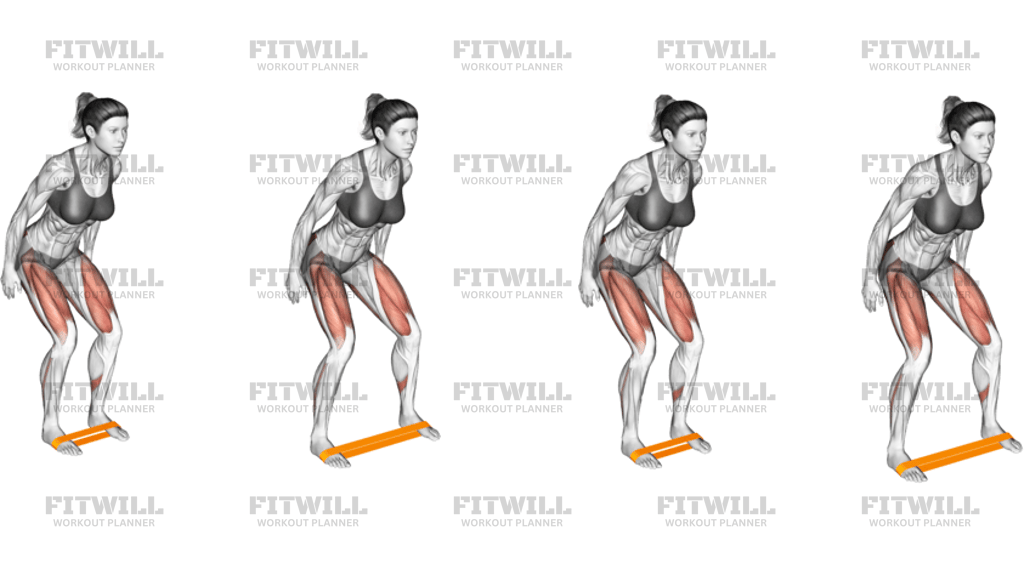
Band Hip Abduction
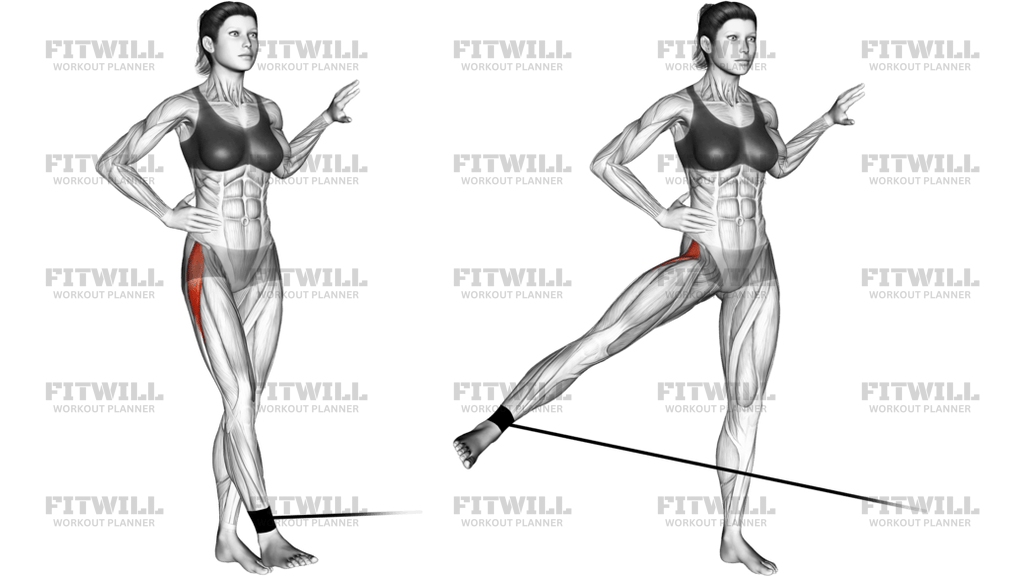
Band Hip Abduction is a standing outer-hip exercise built around moving one leg out to the side against band tension while the support leg stays planted and the pelvis stays level. It is a practical way to train the hip abductors, especially the glute medius and glute minimus, while also asking the standing leg and trunk to keep you upright and quiet. Because the resistance is constant and the movement is small, the quality of the setup matters more than chasing a big range.
This exercise is usually used to improve hip control for walking, running, cutting, squatting, and other single-leg patterns. The working leg should travel directly out to the side instead of swinging forward, twisting open, or hiking the hip. If the torso leans hard to create range, the band is too heavy or the stance is too unstable. A clean rep should feel like the outer hip is doing the work while the rest of the body stays organized.
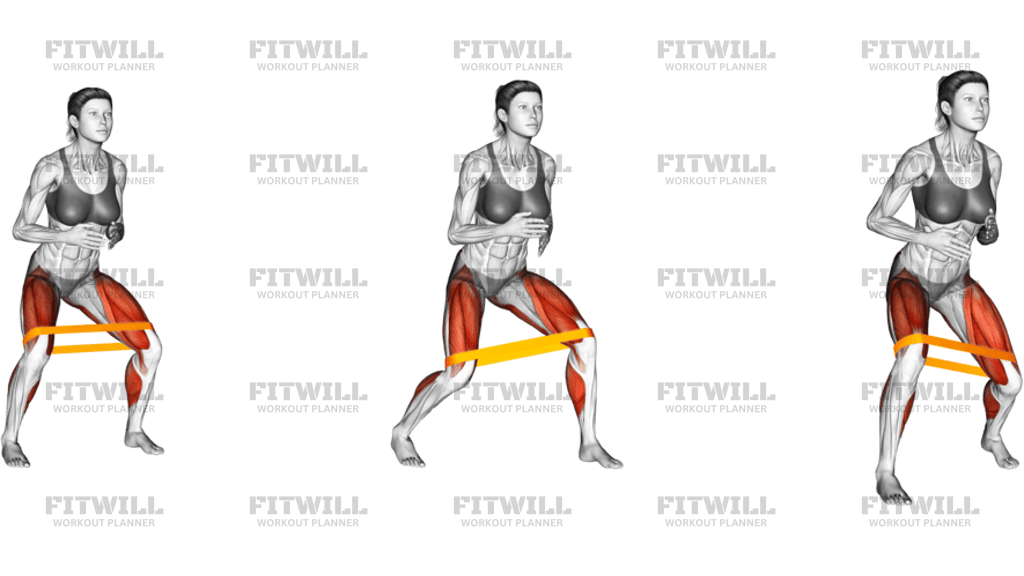
Set up tall with the band pulling the outside of the working leg inward, either from a low side anchor or a loop around the ankles. Keep the support knee softly bent, the ribs stacked over the pelvis, and the toes mostly forward. From there, lift the leg out to the side under control, pause briefly in the open position, and lower slowly without letting the band yank the leg back.
The movement is most useful when the goal is better pelvic control, glute activation, or accessory hypertrophy for the outer hip. It fits well in a warm-up, rehab-style block, lower-body accessory session, or single-leg stability circuit. Lighter resistance and slower tempo usually produce better tension than a heavy band that forces momentum or body sway.
If the lower back or front of the hip takes over, shorten the range and reduce the load until the outer hip can lead the motion. The best reps are smooth, even, and repeatable, with the support leg stable and the working leg moving in a clean side path. That makes Band Hip Abduction a simple exercise, but only when it is done with the discipline that its setup demands.
Fitwill
Log Workouts, Track Progress & Build Strength.
Achieve more with Fitwill: explore over 9600 exercises with images and videos, access built-in and custom workouts, perfect for both gym and home sessions, and see real results.
Start your journey. Download today!




Instructions
- Stand tall with the band pulling the outside of the working leg inward, using either a low side anchor or a loop band around the ankles.
- Shift your weight onto the support leg, keep a soft bend in that knee, and square your hips and chest to the front.
- Place one hand on your hip or hold a stable support if needed, then set the working foot just inside the band line.
- Brace your trunk and keep your ribs stacked over your pelvis before the leg moves.
- Lift the working leg out to the side by driving from the outer hip, keeping the knee mostly straight and the toes facing forward or slightly in.
- Stop the rep when the pelvis starts to tip, the torso leans, or the leg can no longer move cleanly without twisting.
- Pause for a brief squeeze at the top, then lower the leg slowly until the band returns near the start position.
- Exhale as the leg lifts, inhale as it lowers, and repeat for the planned reps before switching sides.
Tips & Tricks
- Keep the support knee softly bent so you can balance without locking out the leg.
- Think about moving the thigh away from the midline, not swinging the foot outward.
- If your torso leans to cheat the range, make the band lighter or hold a wall for balance.
- Keep the toes mostly forward; opening the foot too much shifts work away from the outer hip.
- Use a shorter range if the pelvis starts to hike on the working side.
- Lower the leg slowly so the band stays under tension instead of snapping the foot back in.
- A light band with strict reps usually trains the glute medius better than a heavy band with body sway.
- If the band rolls or pinches, adjust the contact point before starting the set.
- Stop the set when the standing hip or low back starts doing the work for the moving leg.
Frequently Asked Questions
What muscles does Band Hip Abduction work?
It mainly targets the outer hip, especially the glute medius and glute minimus, with the standing leg and core helping you stay level.
Do I need a loop band or a side anchor?
Either setup can work as long as the band pulls the working leg inward from the side and you can lift the leg out cleanly against that tension.
How should my working foot point during the rep?
Keep the toes mostly forward, or only slightly turned in, so the movement stays on the outer hip instead of turning into a twist.
Should I hold onto something?
Yes if balance is limiting the exercise. A light hand support can help you keep the pelvis still and focus on the hip moving sideways.
What is the most common mistake?
Leaning the torso or hiking the hip to fake more range is the biggest issue. A smaller, cleaner arc is better than a bigger, sloppier one.
Can beginners use this exercise?
Yes. Start with a light band, a short range, and a wall or rack for balance until you can keep the support side stable.
How many reps should I do?
This move usually works well for 12 to 20 controlled reps per side, especially when the goal is hip activation or accessory work.
Why do I feel it in my front hip or low back?
That usually means the range is too big or the rib cage is flaring. Reduce tension, stack the ribs over the pelvis, and let the outer hip lead the motion.
How do I make the exercise harder without cheating?
Use a stronger band, slow the lowering phase, or add a brief pause at the top before increasing range.