Band Hip Extension
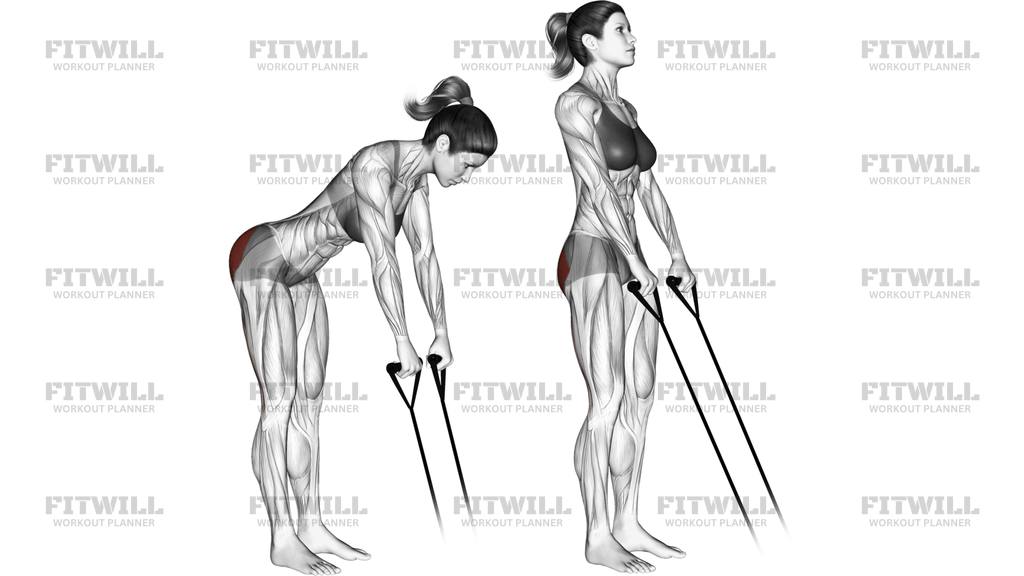
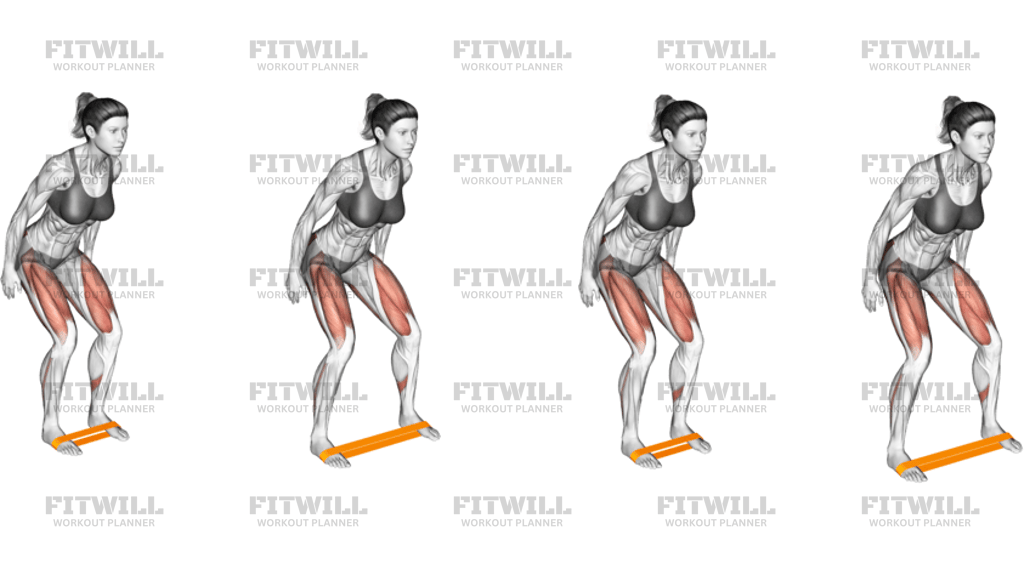
Band Hip Extension is a standing hip-hinge exercise that uses a resistance band under both feet to load the glutes as you extend the hips from a folded position to a tall finish. The band creates the most tension near the top of the rep, which makes the lockout and the transition from hinge to full extension the main part of the lift. That makes the setup important: if the band is not centered under the feet or the handles are not even, the pull can shift side to side and the rep stops feeling like a clean hip extension.
The exercise trains the glutes first, with the hamstrings, spinal erectors, and deep core muscles helping you keep the torso braced and the spine long. In anatomy terms, the main mover is the Gluteus maximus, while the Biceps femoris, Rectus abdominis, and Erector spinae help control the hinge and finish the rep without dumping tension into the lower back. Because the band gets tighter as you rise, the movement rewards patience and control more than speed.
A good rep starts by standing on the band with feet about hip-width apart, gripping the handles, and sending the hips back before the torso drops forward. The knees stay softly bent, but the movement should look and feel like a hinge, not a squat. From there, the band should hang close to the legs as you lower into the stretched position. If the back rounds, the shoulders creep up, or the handles drift away from the thighs, the band path is usually wrong and the glutes lose the best line of pull.
On the way up, drive the feet into the floor and extend the hips until you are tall through the glutes without leaning backward. The finish should feel like a strong squeeze, not a spinal arch. That distinction matters for safety and for results: the goal is hip extension, not throwing the ribs forward to fake a higher top position. For that reason, this exercise fits well in glute-focused sessions, lower-body warmups, posterior-chain accessories, and high-rep conditioning work where smooth tension is more useful than heavy loading.
Use a band that lets you keep the same torso angle, foot pressure, and breathing pattern on every repetition. Light bands are useful for beginners learning the hinge, while stronger bands or slower eccentrics make the drill more demanding once the movement stays clean. If the lower back starts taking over, shorten the range and reset the brace before adding more tension. Done well, Band Hip Extension is a simple way to train hip drive, glute strength, and hinge control in a compact home or gym setup.
[ Workout Log & Planner ]
Put your next workout in Fitwill
Keep your plan and training log ready when you are.


Instructions
- Stand on the middle of the band with both feet about hip-width apart and hold a handle in each hand so the band is even on both sides.
- Soften your knees slightly, keep your chest open, and send your hips back until your torso starts to tip forward in a true hinge.
- Let your arms hang straight in front of your thighs and keep the handles close to your legs instead of swinging them away from your body.
- Lower until you feel a strong stretch through the hamstrings while your spine stays long and your weight stays through the mid-foot and heels.
- Brace your core, then drive your feet into the floor and extend your hips to stand up tall against the band.
- Finish by squeezing the glutes and stacking your ribs over your pelvis without leaning backward or shrugging the shoulders.
- Pause briefly at the top, then lower under control by pushing the hips back and keeping the handles tracking close to the thighs.
- Breathe in as you hinge down and exhale as you drive up for each repetition.
Tips & Tricks
- Keep the band centered under both arches; if one foot is farther forward, the pull will feel uneven immediately.
- Think hinge first, not squat first. The knees should unlock, but the hips should travel back to start the rep.
- Brush the handles close to your thighs on the way up and down so the band keeps a straight line of tension.
- Stop the descent when your lower back wants to round, even if that means a shorter range of motion.
- Do not turn the top into a lean-back. The rep ends when the hips are fully extended and the glutes are tight.
- Keep the shoulders down and the neck long so the upper body does not help finish the lift.
- Choose a band that lets you control both the stretched bottom position and the hard top lockout.
- If the lower back takes over, reduce the band tension and slow the eccentric before adding more reps.
Frequently Asked Questions
What muscle does Band Hip Extension target most?
The glutes are the main target, especially through the top half of the hip extension.
Can beginners perform this exercise?
Yes. Beginners can start with a light band and a shorter hinge range while they learn to keep the spine long.
How do I set up the band correctly?
Stand on the middle of the band with both feet, grab one handle in each hand, and make sure the tension is even before you hinge.
Should my knees bend a lot during the rep?
No. Keep only a soft bend in the knees so the movement stays a hip hinge instead of turning into a squat.
Where should I feel Band Hip Extension?
You should feel a stretch in the hamstrings at the bottom and a strong squeeze in the glutes at the top.
Is this the same as a band deadlift?
It is very close. This version is usually taught as a hip-extension hinge with emphasis on standing tall through the glutes.
What is the most common mistake with the handles?
Letting the handles drift away from the thighs or yanking them with the arms instead of driving the hips forward.
How can I make the exercise harder without changing the setup?
Use a thicker band, slow the lowering phase, or add a brief pause at the top without leaning back.