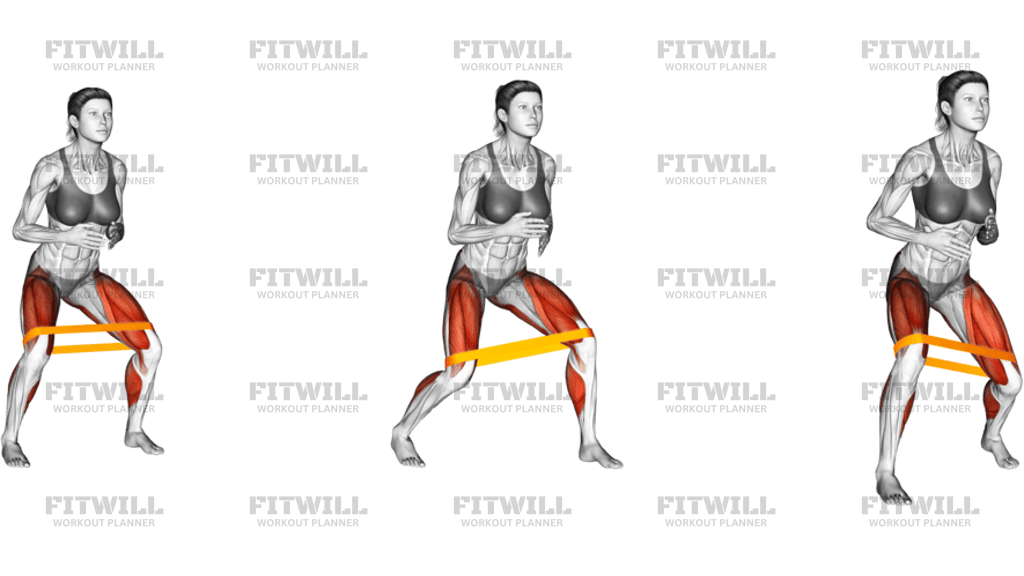
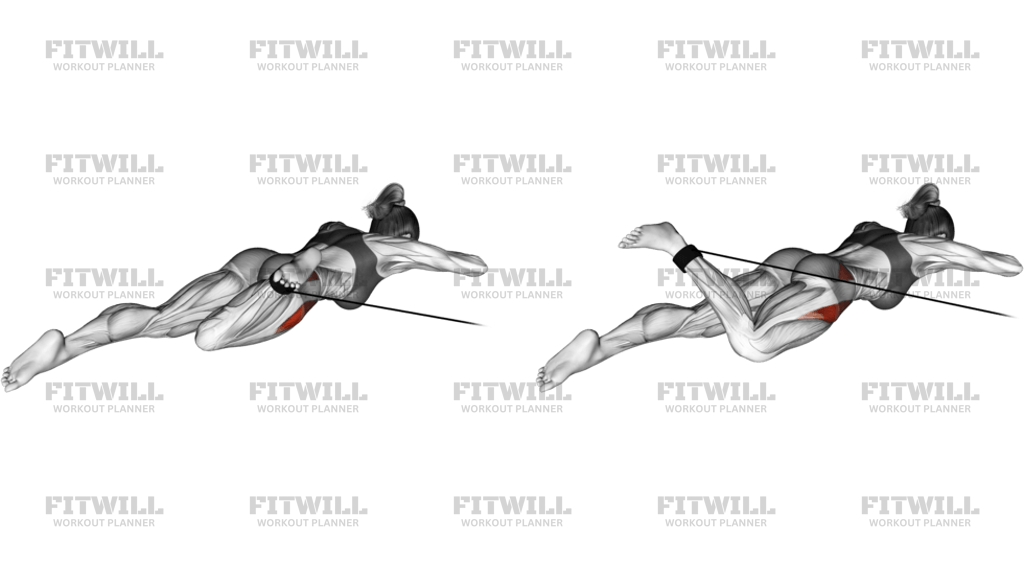
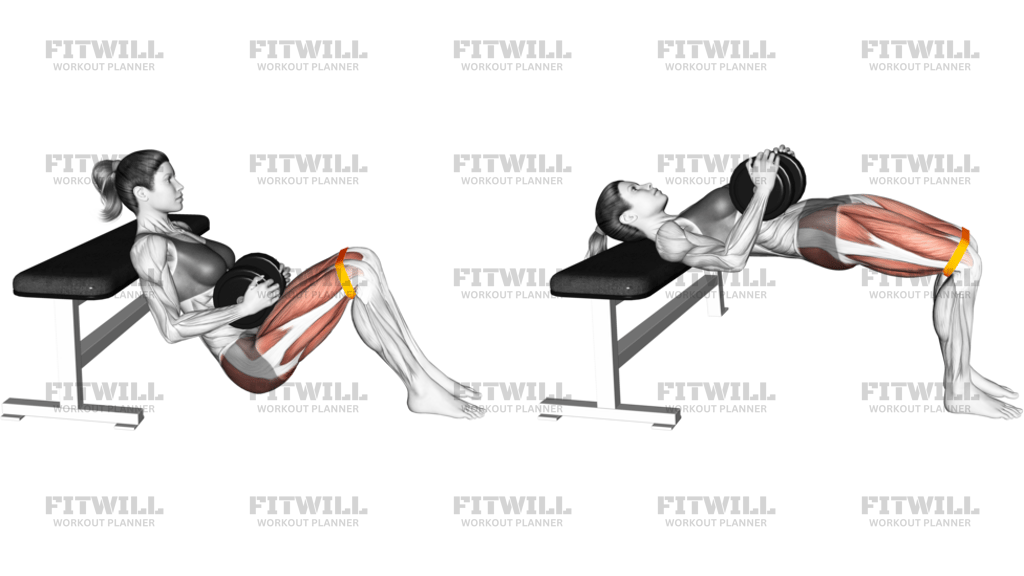
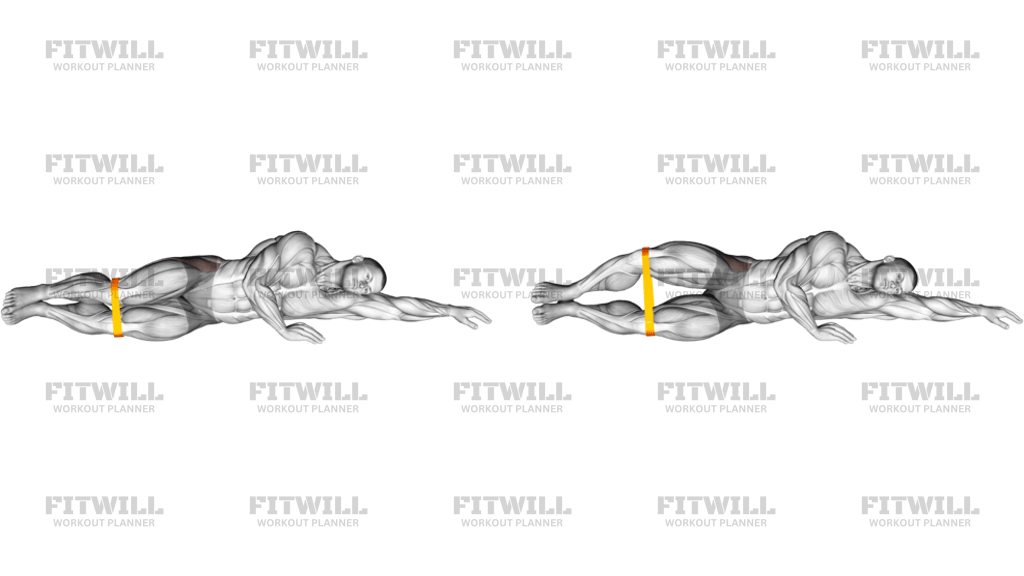
Band Lying Leg Raise
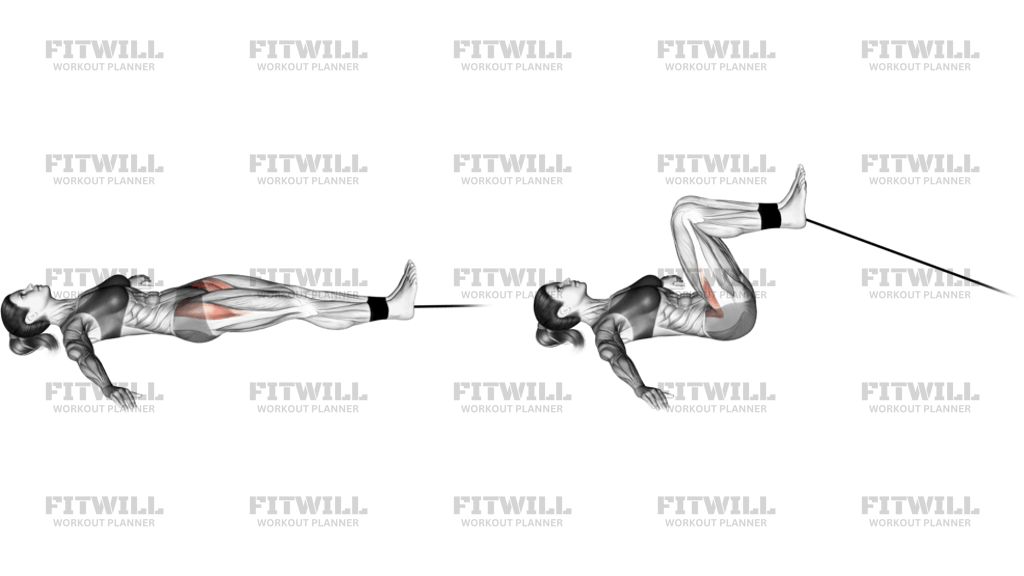
Band Lying Leg Raise is a floor-based band exercise that challenges you to raise one leg while keeping the pelvis quiet and the trunk braced. The band adds tension through the lift, so the movement rewards smooth control instead of speed. It is useful when you want to train hip control, lower-ab stability, and clean unilateral work without loading the spine.
The exercise is performed lying on your back, usually with one leg working at a time and the other leg staying long or softly bent for balance. The band should be secure around the foot or ankle so the resistance stays consistent through the whole range. That setup matters because if the band line is loose or the pelvis starts to rotate, the rep turns into a swing instead of a controlled leg raise.
Although the motion looks simple, the quality comes from keeping the ribcage down and the low back from arching as the leg rises. The front of the hip does the lifting, while the glutes, abs, hamstrings, and lower back work to keep the torso steady. A well-done rep finishes when you have reached your best range without the hips tipping, the neck tightening, or the band pulling you out of position.
Band Lying Leg Raise is a good accessory drill for warm-ups, core work, rehab-style control, or lighter lower-body sessions where you want precision more than load. It can also help lifters who struggle to keep their pelvis fixed during leg raise variations. If you cannot keep the motion smooth, shorten the range and use less band tension rather than forcing the leg higher.
Because the band is attached to the foot or ankle, the exercise can feel deceptively heavy near the top of the raise. That makes tempo and reset important: lower under control, keep tension on the band, and start each rep from a stable base on the floor. Stop the set if the low back starts to lift, the working hip opens up, or you need momentum to get the leg moving.
Fitwill
Log Workouts, Track Progress & Build Strength.
Achieve more with Fitwill: explore over 9600 exercises with images and videos, access built-in and custom workouts, perfect for both gym and home sessions, and see real results.
Start your journey. Download today!




Instructions
- Lie on your back on a mat with the band looped around the working foot or ankle and anchored low and slightly to the side.
- Keep the other leg long on the floor or bent with the foot planted if that helps you keep your hips square.
- Set your arms out to the sides for balance and press your lower back gently toward the floor.
- Start with the working leg long and only slightly off the floor so the band is already under light tension.
- Inhale to brace, then lift the leg by flexing at the hip instead of swinging the foot or arching the low back.
- Raise the leg until your pelvis is about to tilt or the band line begins to pull you out of position.
- Pause briefly at the top, keeping the toes up and the knee mostly straight with only a soft bend if needed.
- Exhale as you lower the leg slowly until it is just above the floor, then reset before the next rep.
- Keep the non-working leg quiet throughout the set, and unhook the band only after you finish the final repetition.
Tips & Tricks
- Place the band low enough that you feel steady tension from the first inch of the raise, not a slack start.
- If your pelvis twists or the opposite hip lifts, shorten the range before adding more band tension.
- Keep the toes pulled up so the leg stays honest and the lift comes from the hip rather than a kicked foot.
- A small knee bend is fine if a perfectly straight leg makes your low back arch or the band pull you off line.
- Let the floor hand position do the balancing work so your neck and shoulders stay relaxed.
- Lower the leg slower than you lift it; the return should feel controlled instead of dropping against the band.
- If you feel the front of the hip cramping, reduce the range and pause lower in the lift on the next rep.
- Use the lightest band that still makes the last few reps deliberate, because this exercise is about control more than load.
Frequently Asked Questions
What does Band Lying Leg Raise work most?
It mainly challenges the front of the hip and the lower abs while the glutes and hamstrings help keep the pelvis from rocking.
Where should the band sit for Band Lying Leg Raise?
Loop it around the working foot or ankle and anchor it low and slightly to the side so the line of pull stays consistent through the raise.
Should my leg stay straight during Band Lying Leg Raise?
Keep it mostly straight with a soft knee if needed. The important part is that the leg rises from the hip without the low back arching.
What is the biggest mistake with Band Lying Leg Raise?
Letting the pelvis tip or the low back lift off the floor. If that happens, cut the range and slow the lowering phase.
Can beginners do Band Lying Leg Raise?
Yes, if they use a light band and a short range. Beginners usually do best when they learn to keep the trunk quiet before chasing a higher lift.
Why does my hip cramp during Band Lying Leg Raise?
That usually means the band is too heavy or the range is too high. Reduce tension and stop the lift before the pelvis starts to rotate.
Is Band Lying Leg Raise a good core exercise?
Yes, especially if you treat it as a pelvic-control drill. The abs work hardest when the low back stays flat as the leg moves.
What can I use if I do not have a band?
A bodyweight lying leg raise or a cable/resistance-band version with a similar line of pull will give you a close substitute.