Band Standing Hip Extension
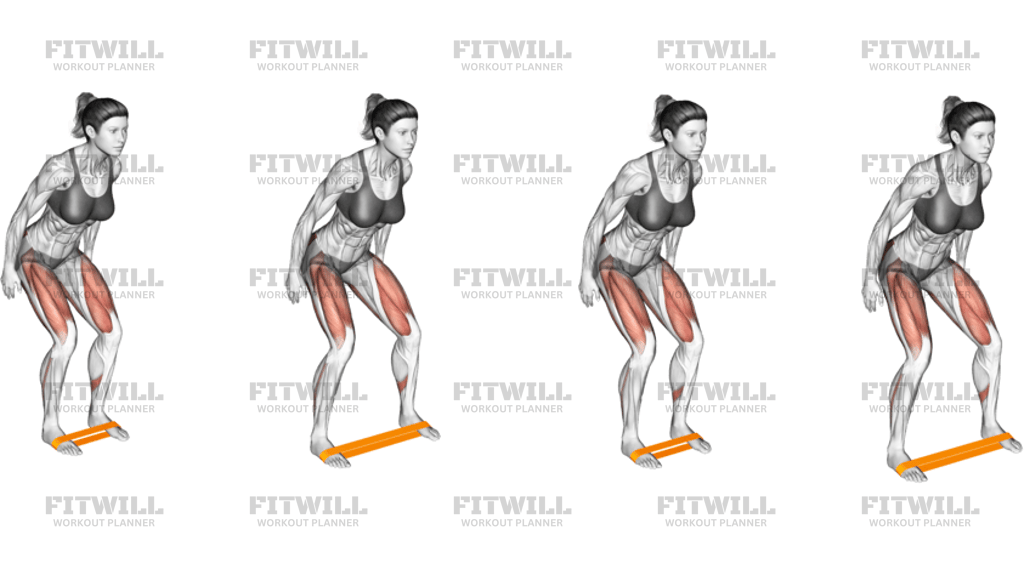
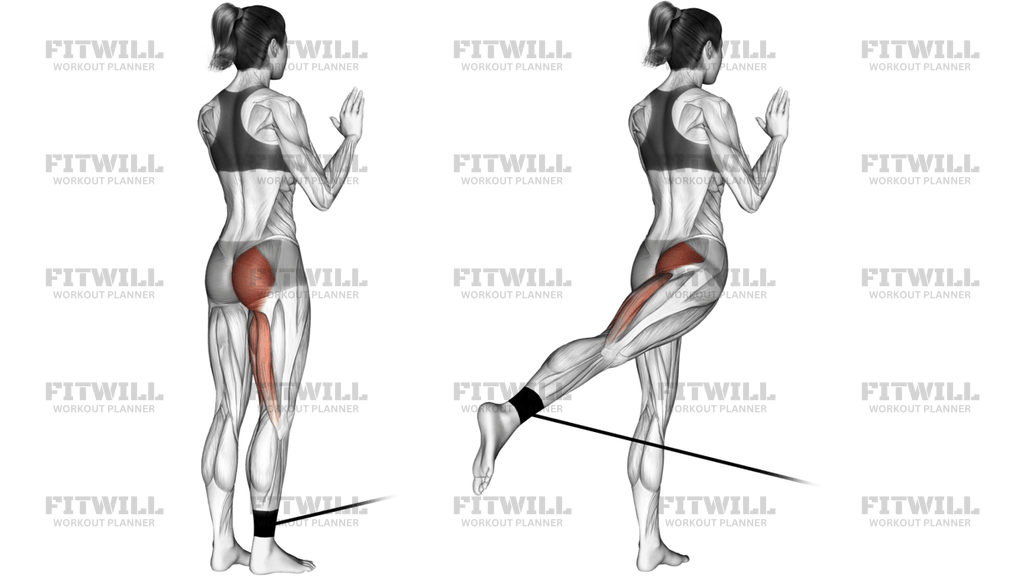
Band Standing Hip Extension is a standing, band-resisted hip-extension drill built to load the glutes without a bench, machine, or heavy spinal compression. In the image, the band is anchored low behind the body and looped around the working ankle, which means the leg starts under tension and has to keep working all the way back to the start. That makes the movement useful for glute activation, accessory work, and unilateral hip control when you want a simple setup with a clear line of pull.
The main driver is the Gluteus Maximus, with the hamstrings helping finish the hip extension and the core, obliques, and lower back keeping the torso from rotating or arching. Because the support leg stays planted while the working leg moves behind the body, the exercise also exposes side-to-side stability gaps quickly. If the pelvis tilts, the ribs flare, or the trunk sways, the band tension stops going to the hip and starts leaking into compensation.
Band Standing Hip Extension works best when the setup is exact. Stand facing away from a low anchor point, keep the support foot grounded, and start with the working ankle slightly behind the body so the band is already loaded. From there, the rep should feel like a clean hip drive backward rather than a kick, swing, or lower-back extension. The best range is usually the one where the glute stays in charge and the pelvis stays level.
That makes the exercise a good fit before squats, deadlifts, running, or any session where you want the glutes to wake up and fire cleanly. It can also sit in a lower-body accessory block or rehab-style routine because the resistance is easy to scale and the line of pull is easy to feel. If balance is the limiting factor, a light fingertip touch on a wall or rack is fine, but the working leg should still move from the hip instead of the torso.
Form quality matters more than reaching a huge range. A clean rep finishes with the heel traveling back, the glute squeezed, and the pelvis still square to the floor, then returns slowly so the band does not yank the leg forward. If the lower back takes over or the movement turns into a twist, shorten the range and reduce the band tension until the glute can own the entire path again.
[ Workout Log & Planner ]
Put your next workout in Fitwill
Keep your plan and training log ready when you are.


Instructions
- Loop a light band around one ankle and anchor it low behind you, then stand facing away from the anchor on your other leg.
- Plant the support foot flat, soften the support knee, and keep both hip bones pointed straight ahead.
- Stack your ribs over your pelvis and keep your chest tall without leaning forward.
- Start with the working foot slightly behind your body so the band already has tension.
- Drive the heel straight back by extending the hip, keeping the knee almost straight and the toes mostly forward.
- Stop the rep when the glute is fully squeezed and the pelvis stays level.
- Lower the leg slowly until you return to the starting position, resisting the band on the way forward.
- Finish the set, release the band tension, and switch sides.
Tips & Tricks
- Choose a band that lets you keep your hips square; if you have to twist to finish the rep, the band is too heavy.
- Think about driving the heel back instead of swinging the foot up so the motion stays at the hip.
- Keep the working leg on a straight-back path rather than letting it drift out to the side.
- A small knee bend is fine, but a deep bend turns the rep into more of a hamstring-driven curl.
- Let the lowering phase last longer than the lift so the band stays under control instead of snapping the ankle forward.
- If you only feel a stretch in the hamstring, shorten the range and finish with a smaller hip squeeze.
- Light fingertip support from a wall or rack can keep the support hip steady without changing the exercise.
- Exhale as the leg moves back to help stop the ribs from flaring and the lower back from taking over.
Frequently Asked Questions
What muscle does Band Standing Hip Extension target most?
Gluteus Maximus is the primary mover. The hamstrings help finish the hip extension, while the core and lower back stabilize the torso.
Where should the band sit for Band Standing Hip Extension?
Loop it around the working ankle and anchor it low behind you. That setup keeps tension on the hip through the whole rep.
Do I need to keep my knee straight in Band Standing Hip Extension?
Keep the knee mostly straight with only a soft bend. Too much knee flexion makes the movement less like hip extension and more like a leg curl.
Why do I feel Band Standing Hip Extension in my lower back?
Usually the pelvis is tipping forward or the ribs are flaring. Shorten the range and keep your ribs stacked over your pelvis so the glute can finish the rep.
Can beginners use Band Standing Hip Extension?
Yes, if they start with a light band and a small controlled range. Light fingertip support from a wall or rack can make the balance demand easier.
What is the best tempo for Band Standing Hip Extension?
Move smoothly on the way back, squeeze briefly at full extension, and lower slowly against the band. The controlled return keeps tension on the glute.
How can I make Band Standing Hip Extension harder?
Use a stronger band, add a pause at the top, or slow the lowering phase. Keeping the support knee slightly softer also increases the stability demand.
What is a common mistake on Band Standing Hip Extension?
Letting the leg swing out to the side or twisting the torso to fake more range. Keep the pelvis facing forward and drive the leg straight behind you.